Floral & Botanical Antique Jewellery: The Language of Flowers
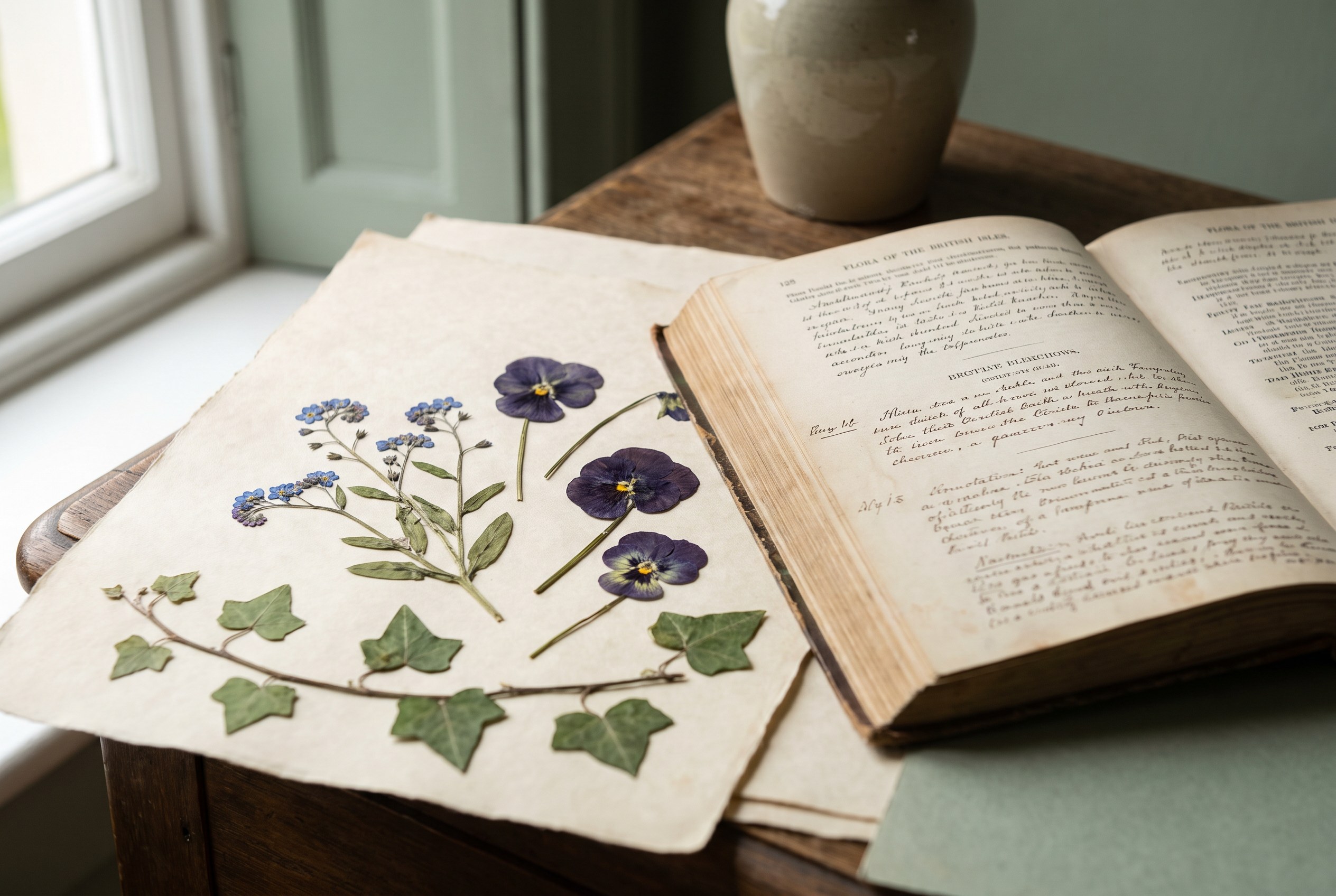
Flowers are everywhere in jewellery right now. The difference with antique pieces is that they were saying something: for most of the 1800s a flower worn as a brooch was a message, and the wearer expected you to read it.
Botanical motifs are back at the centre of jewellery design in 2026, British Vogue called it the season's defining look. Antique floral pieces do the same job with more meaning behind them, and often for less money than a new designer equivalent of the same gold weight. Here is how to read them, date them, and check one before you buy.
Quick answer: what did the flowers mean?
Forget-me-nots meant remembrance. Pansies meant 'think of me'. Ivy meant fidelity. Victorians bought flower dictionaries by the thousand and jewellers designed straight to them.
Because the brooch market has been quiet for years, a Victorian flower spray with genuine handwork often costs less than a new designer piece of similar gold weight.
What the flowers meant
Floriography reached Britain in the early 1800s and became a Victorian obsession. A brooch was effectively a sentence, and the recipient was expected to decode it.
| Flower | Meaning | Usually seen as |
|---|---|---|
| Forget-me-not | Remembrance, true love | Turquoise-set brooches, lockets, mourning pieces |
| Pansy | "Think of me" (from pensée) | Enamel brooches, Art Nouveau pendants |
| Ivy | Fidelity, lasting attachment | Engraved bands, carved jet, mourning jewellery |
| Lily of the valley | Return of happiness | Seed-pearl sprays |
| Thistle | Scottish identity, resilience | Agate and silver brooches |
There is a second layer: acrostic pieces spell a word with the first letter of each stone: Ruby, Emerald, Garnet, Amethyst, Ruby, Diamond = REGARD.
Spot the era in about five seconds
Victorian: the flower actually moves
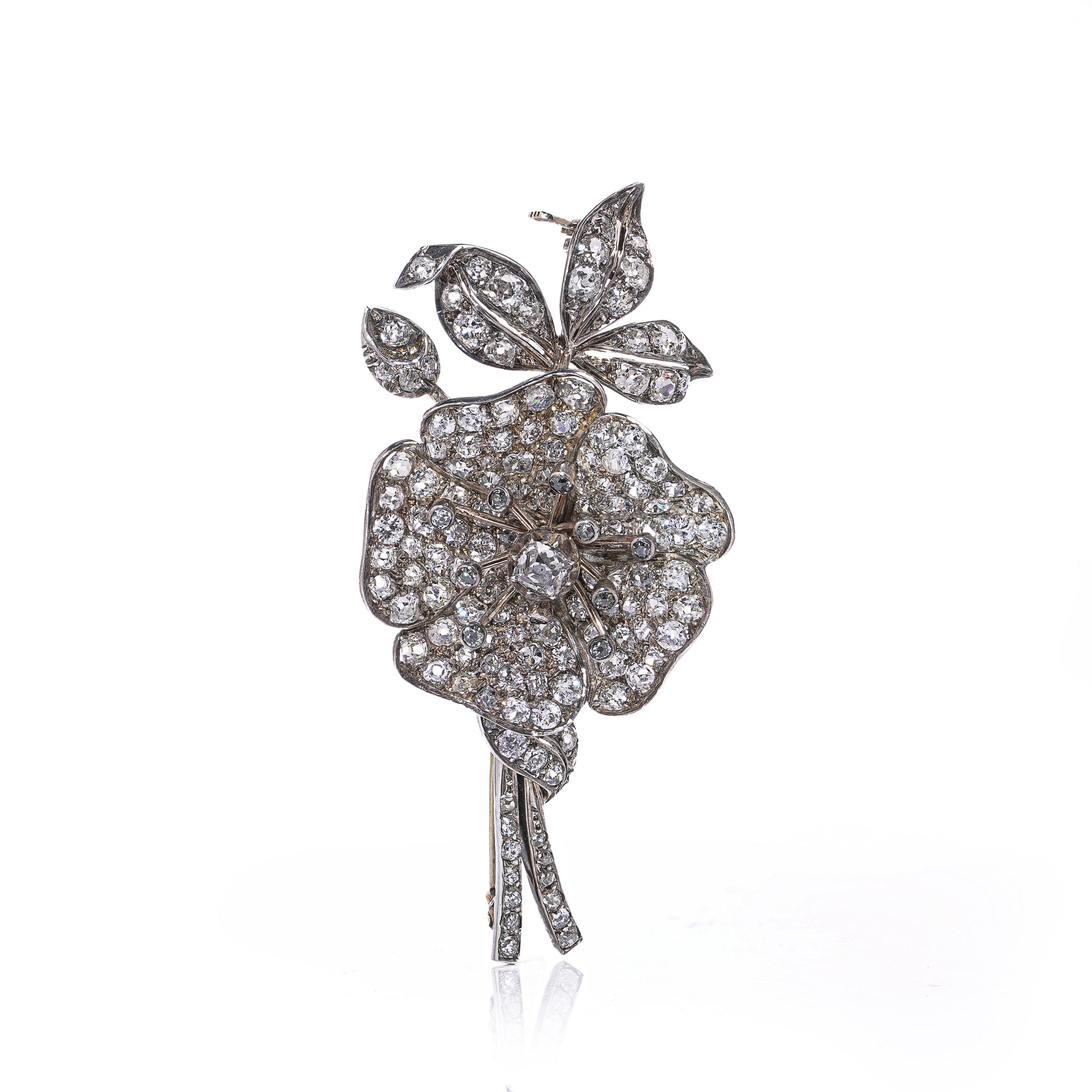
The best Victorian sprays are en tremblant: the flower head sits on a tiny spring so it trembles as you walk. It was designed to catch candlelight. Nothing modern does this, and it is the fastest way to tell you are holding serious 19th-century work.
Art Deco: flowers go geometric
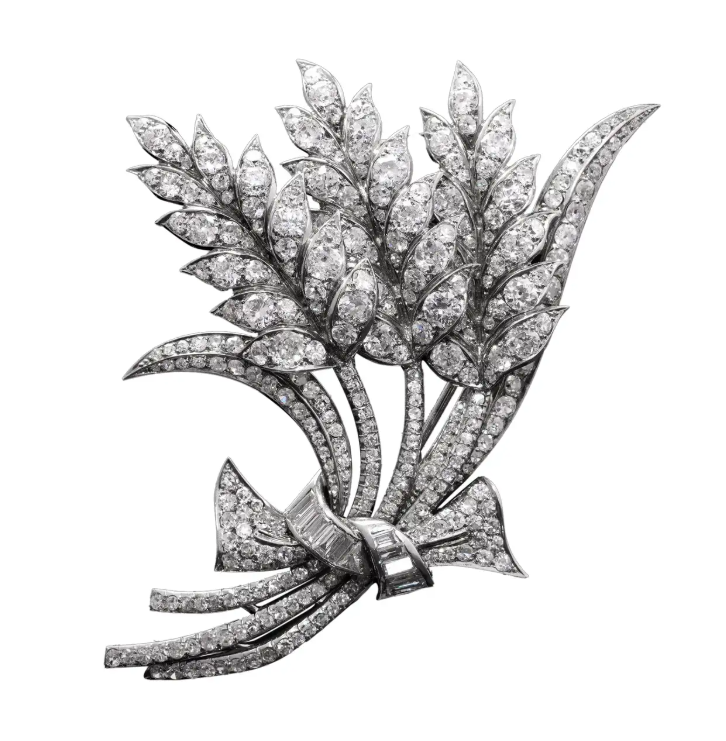
Bouquets get tied, stems straighten, and everything moves into platinum. Sharper and more architectural than anything Victorian.
1960s–70s: big, gold and cheerful
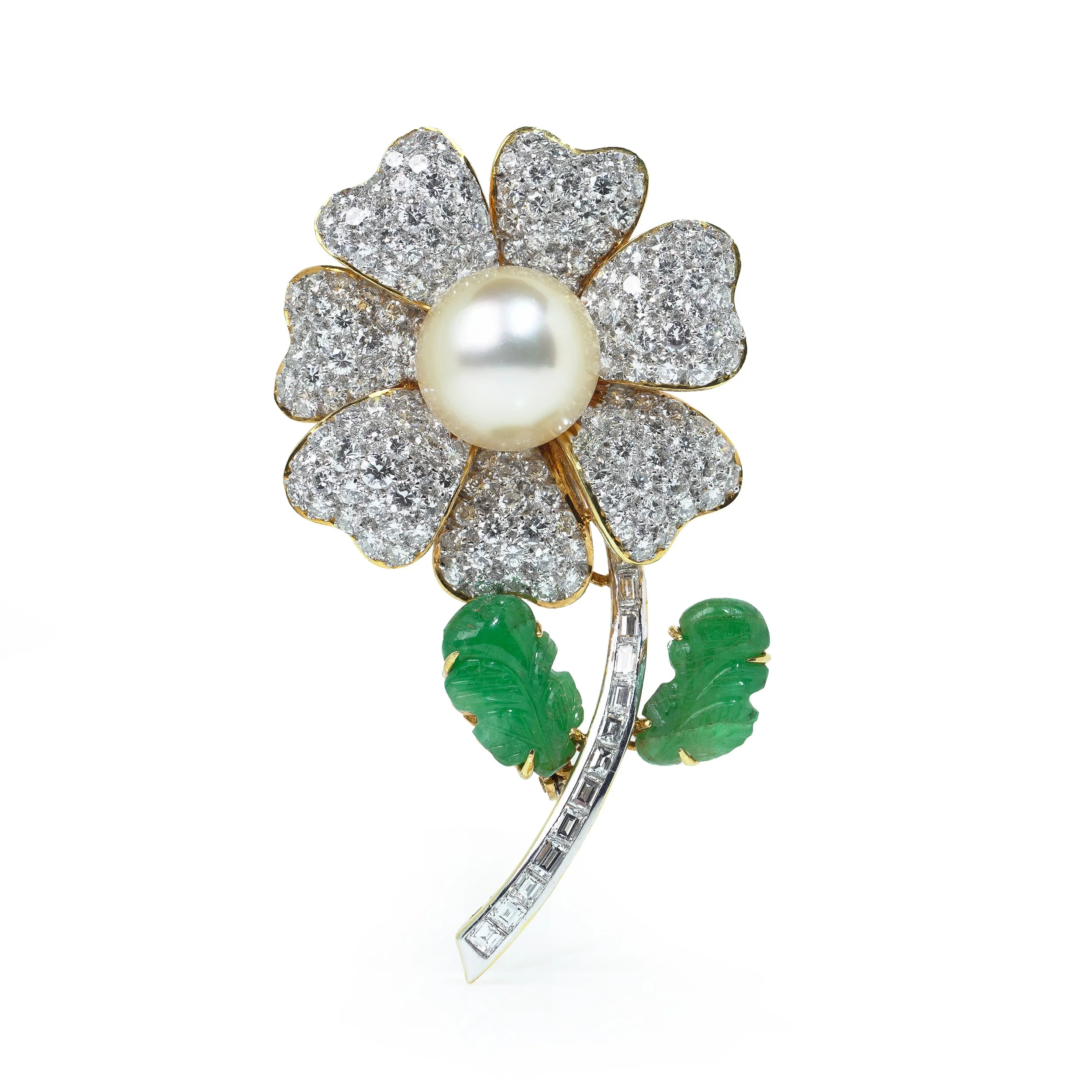
Textured gold, one bold stone, no sentiment required. Currently the best value in the whole floral category.
These are floral pieces from our current stock: the same eras described above, so you can see the differences side by side:



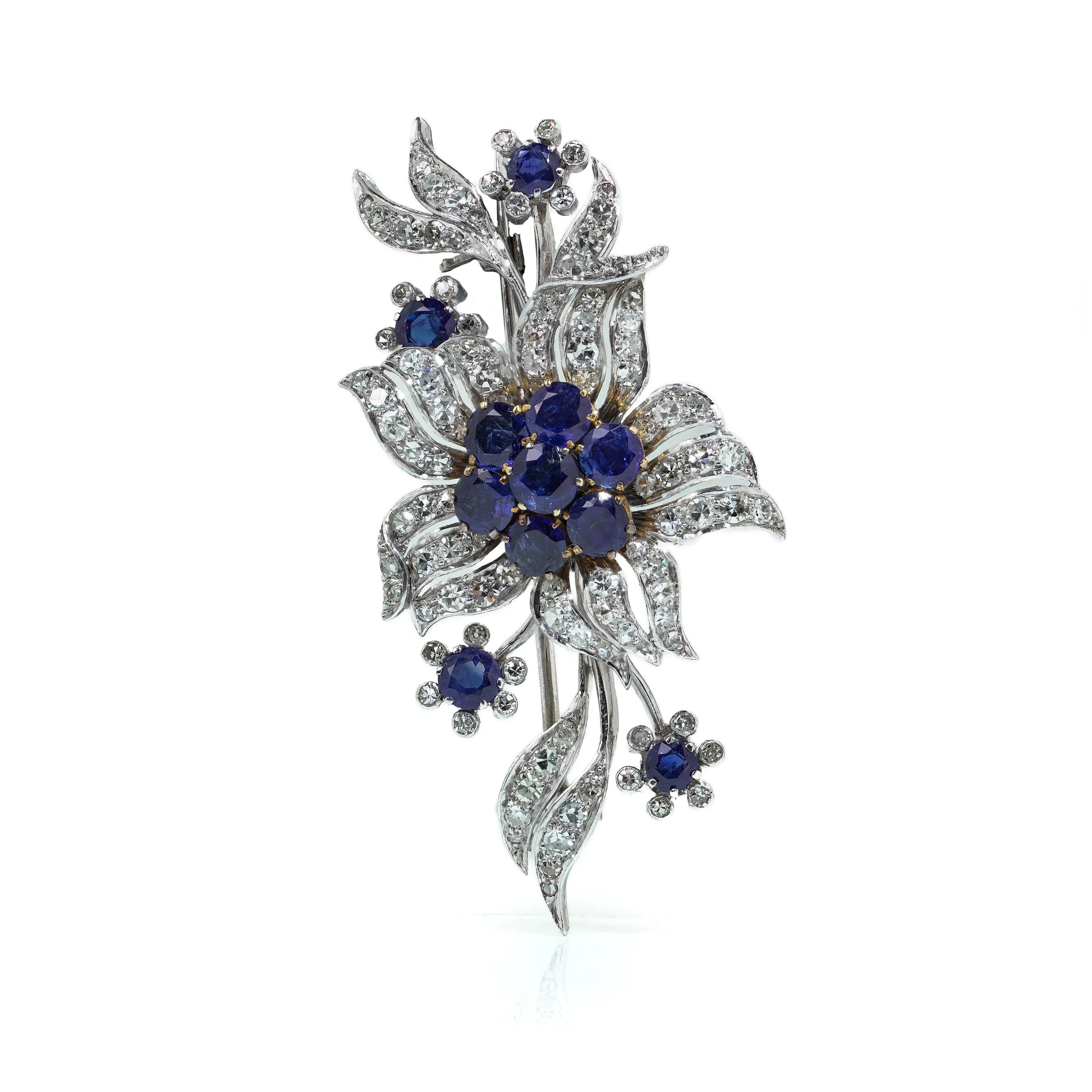
Four things to check before you buy
- Turn it over. Good work is finished on the back and every petal is shaped differently. Cheap castings are flat behind and identical petal to petal.
- Test the trembler. If it is en tremblant, the spring should still move freely. Seized springs are repairable but affect price.
- Look for colour mismatch. Odd turquoise, or a stone that does not quite match its neighbours, usually means replacements.
- Check the pin fitting. A long pin extending past the body suggests pre-1900. A modern safety catch on a "Victorian" brooch means it has been repaired or converted.
How to actually wear one
Not on an evening coat. On denim, on a knit, on a bag strap, or three small ones grouped on a lapel. If you want it as a pendant, have a jeweller fit a proper conversion, threading a chain through the pin wrecks the fitting.
Think you own one? Find out what it’s worth.
Inherited something floral and want to know what it actually is? Send photographs: dating brooch fittings and identifying period work is everyday work for us, and the valuation is free.
✓ Free expert valuation in 24h ✓ Same-day payment ✓ 10,000+ items traded · 5★ rated
Explore Further
Frequently Asked Questions
Floral jewellery, answered.
What is en tremblant?
A flower head mounted on a small spring so it trembles as the wearer moves, designed to catch candlelight. It is a reliable sign of good-quality 19th-century work, and the springs should still move freely.
Are antique floral brooches worth much?
It depends entirely on materials and workmanship, not the motif. A gold and diamond en tremblant spray is a serious piece; a mid-century gilt-metal flower is costume jewellery. Both are collectable, at very different prices.
What is a giardinetti ring?
Italian for "little garden", an 18th-century ring set with a spray of small stones forming a bouquet or flowerpot. Genuine Georgian examples are scarce.
What does a forget-me-not brooch mean?
Remembrance and enduring love. It appears constantly in Victorian sentimental and mourning jewellery, most often set in turquoise because the blue matched the real flower.
How can I tell if a floral brooch is Victorian or a later copy?
Check the back for hand-finishing, look for a long pin extending past the body (pre-1900), and examine whether petals vary slightly, hand-made work is never perfectly uniform. A modern safety catch suggests repair or reproduction.
Is it safe to wear an antique brooch every day?
Generally yes, but check the pin and catch first, and avoid en tremblant pieces for heavy daily wear, the springs are delicate and expensive to repair properly.