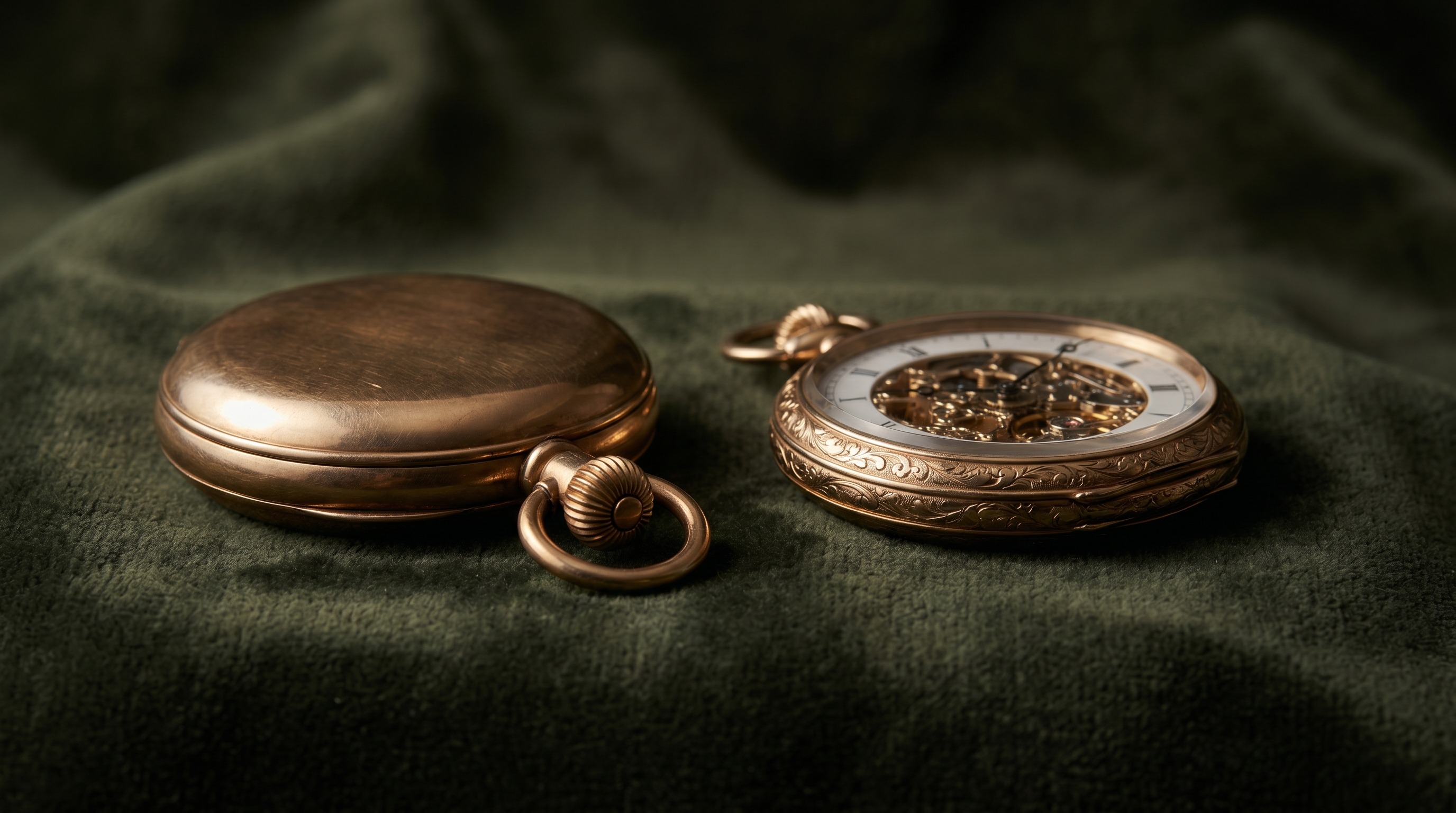
English vs Swiss Antique Gold Watches: How to Tell the Difference
Two great traditions of watchmaking, two very different watches. Learn to tell an English gold watch from a Swiss one by the movement, the case, the hallmarks and the hand — and understand what each means for value.
Not Sure What Your Watch Is Worth?
Send us a photo for a free, no-obligation valuation — or simply ask for honest advice. Our specialists reply within one working day.
For much of the 18th and 19th centuries, two nations defined the gold watch. England led the world in precision and robust, hand-built quality; Switzerland answered with slimness, decoration and, eventually, the industrial brilliance that would come to dominate. Tell them apart and you understand not just where a watch was made, but how — and often what it is worth.
At Mozeris Fine Antiques we handle both traditions constantly. This guide sets out the tells that separate an English antique gold watch from a Swiss one, from the movement inside to the marks on the case.
The big picture
The English Watch
Typically heavier and thicker, built around a full-plate movement, often with a chain-driven fusee for accuracy. Conservative, superbly made, and slower to adopt the keyless winding and slim cases that Switzerland embraced. The watch of solidity and craft.
The Swiss Watch
Generally slimmer and more decorative, with bar or bridge movements, frequently engine-turned cases and earlier adoption of keyless winding. The watch of elegance, variety and, in time, industrial precision.
The movement tells the clearest story
Open the case-back and the mechanism usually reveals the origin at once. The classic English watch uses a full-plate movement — a single large plate covering the works — very often with a fusee, the little chain-and-cone device that evens out the mainspring's power for better accuracy. It is robust, serviceable engineering, and a hallmark of the English tradition well into the 19th century.
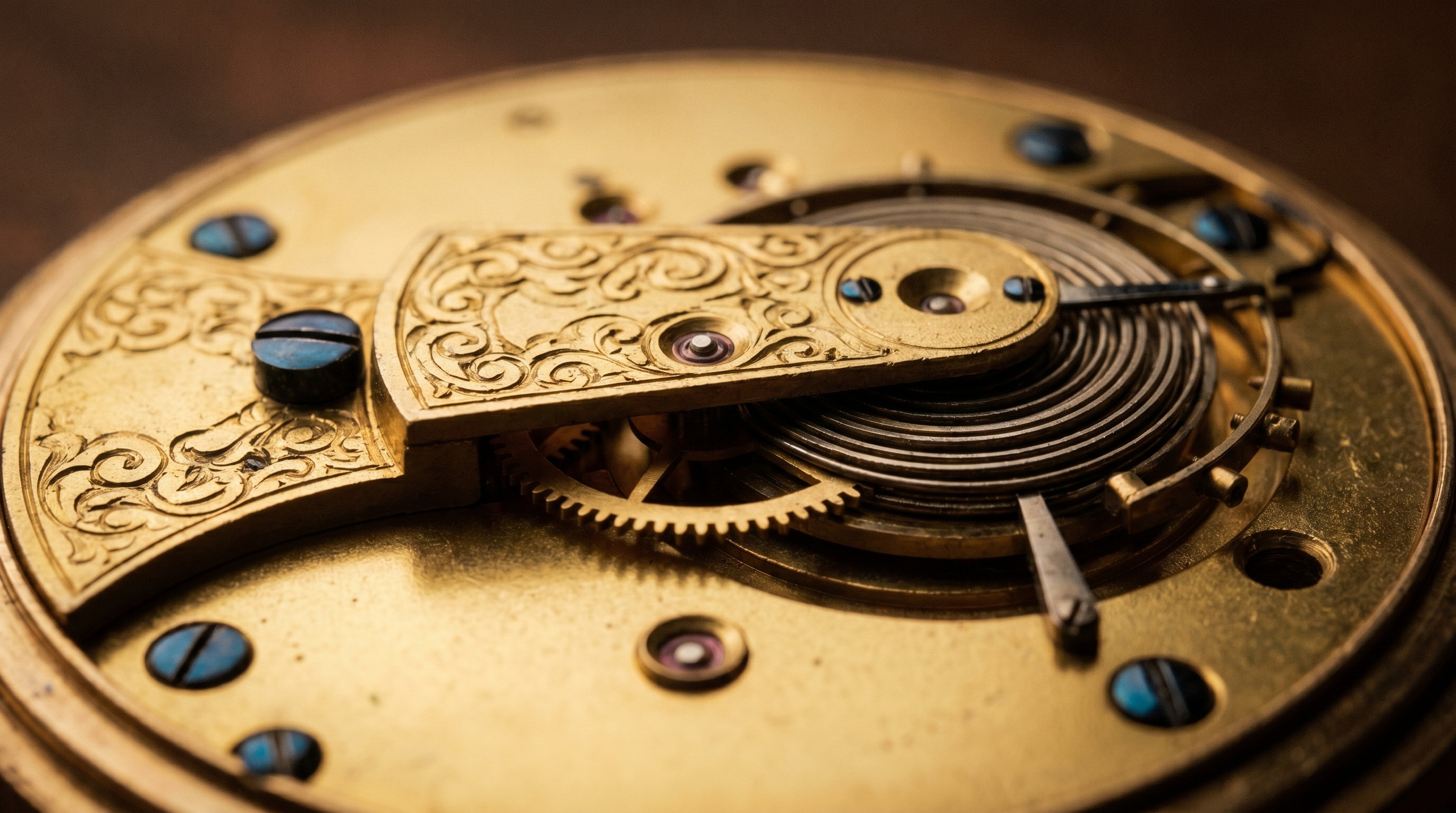
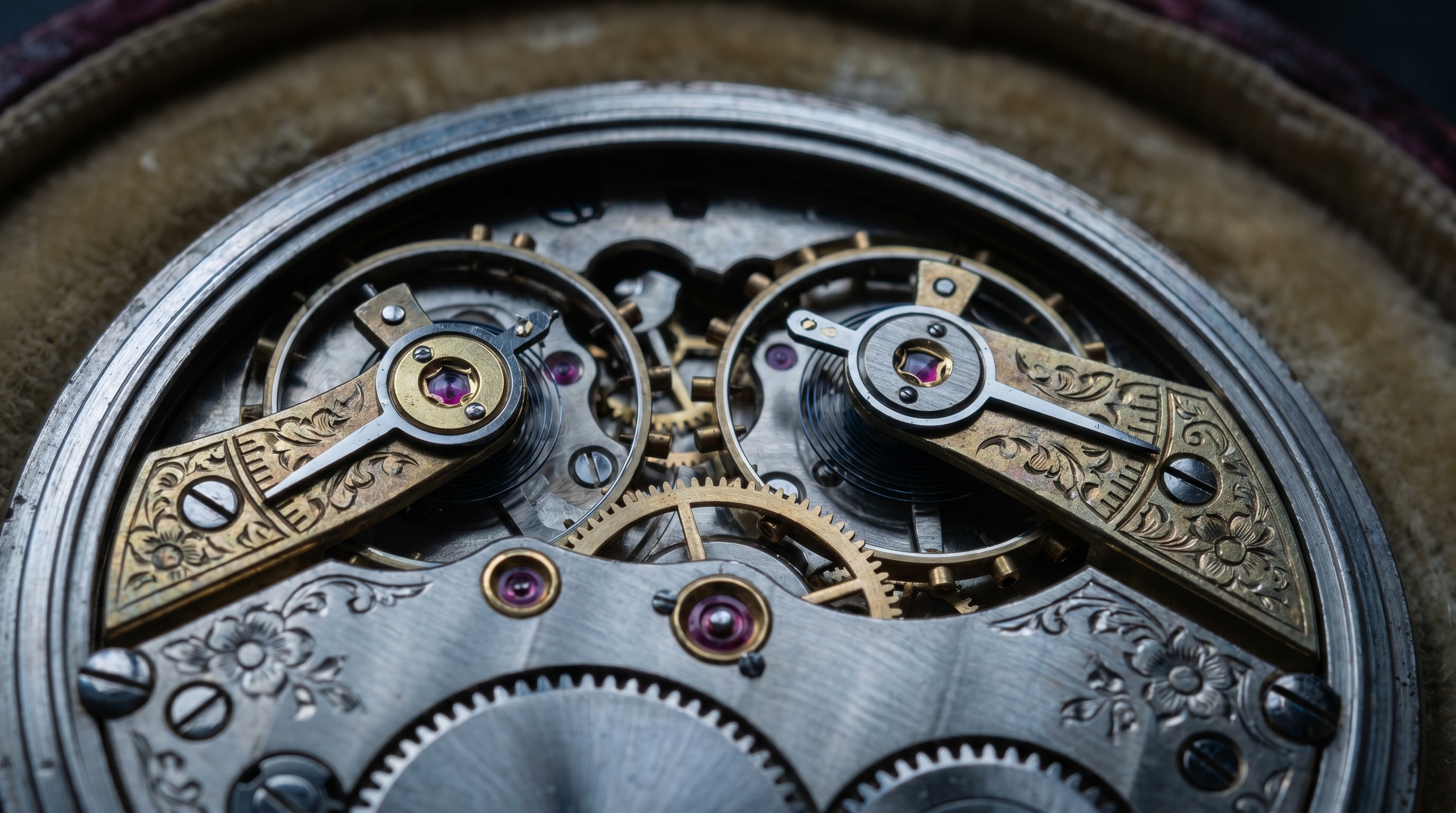
The Swiss watch, by contrast, typically uses a bar or bridge movement — separate, often beautifully engraved bridges holding the wheels — and dispensed with the fusee earlier in favour of the going barrel. Swiss movements tend to be thinner, more decorated and made in far greater variety, reflecting an industry built on specialisation and scale.
Hallmarks & Other Tells
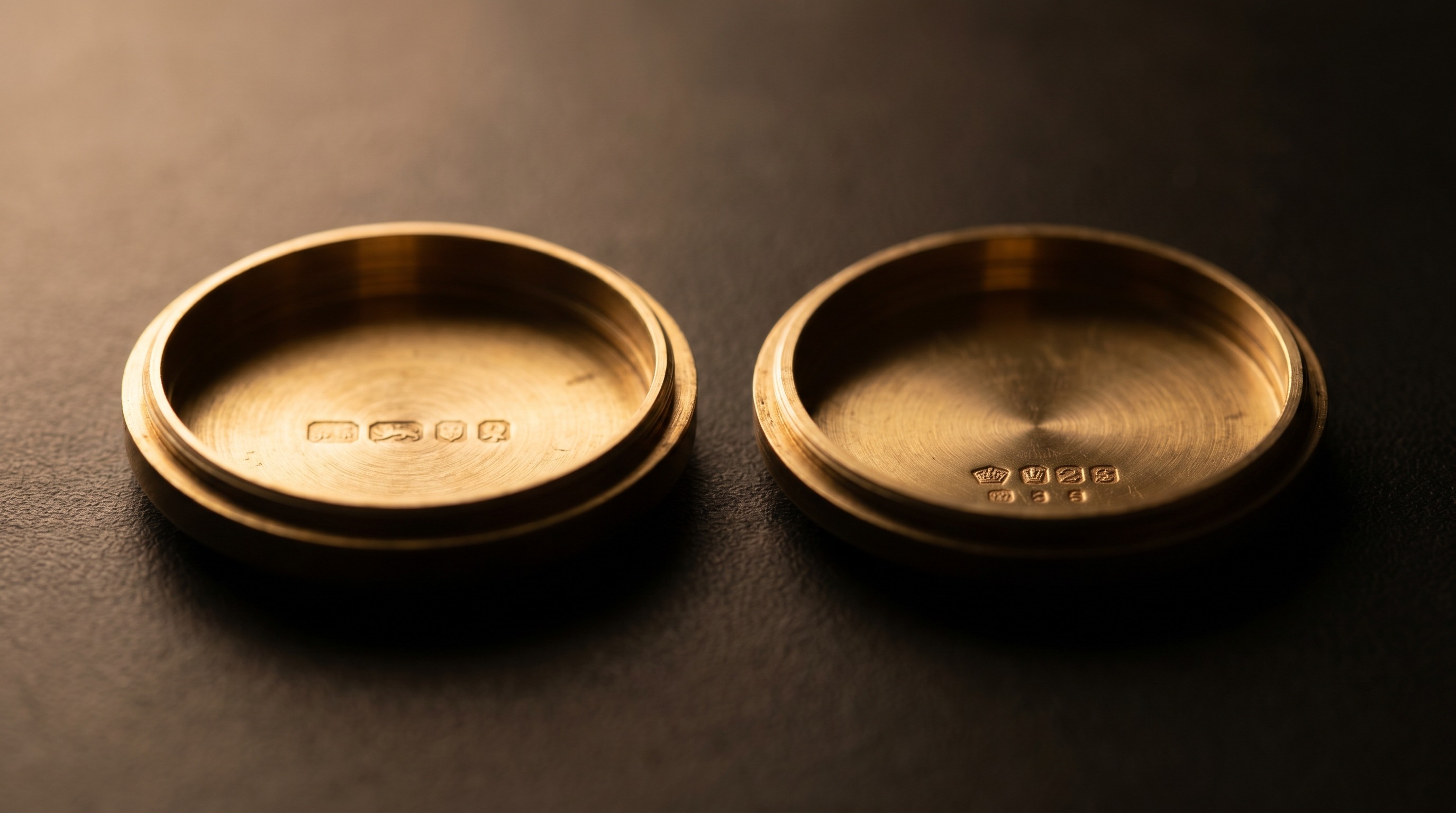
The case marks are decisive. The differences to look for:
- British hallmarks — A full set (assay office, fineness, date letter, sponsor) on an English case; the same set as import marks on a Swiss case assayed for the UK.
- Continental marks — Swiss and European cases may carry a fineness number (0.750, 0.585), a helvetia head or other national marks rather than a British date letter.
- Winding — Early English watches cling to key-wind longer; Swiss watches adopt keyless (crown) winding earlier.
- Case style — Heavier, plainer English cases versus slimmer, often engine-turned Swiss ones.
- Signatures — English makers and retailers were often local town names; Swiss watches carry Swiss maker or retailer names.
Remember the dial name may be the retailer, not the maker — read it alongside the movement.
What it means for value
Neither tradition is automatically "worth more" — value follows maker, gold, complexity and condition above nationality. A fine English fusee watch by a celebrated London maker can be highly valuable, as can a complicated or beautifully finished Swiss piece. What matters is reading the watch correctly: a watch wrongly attributed is a watch wrongly valued.
Once you've placed the origin, work through the rest with our companion guides. The antique gold pocket watch identification guide covers movement, case and maker in order; the guide to hunter, half-hunter and open-face cases explains the case forms; and to fix the year, see how to date a vintage gold watch. To confirm the metal, our solid-gold-versus-plated guide walks through every check.
Identify & Value Your Antique Gold Watch
Send photographs of the dial, the open movement and the case-back marks, and we'll tell you whether it's English or Swiss, identify the maker and give you an honest, no-obligation valuation.
⚠️ Strictly by appointment only — no walk-ins at either showroom.
Frequently Asked Questions
Common questions about English and Swiss antique gold watches.
How can I tell if my pocket watch is English or Swiss?
The movement is the clearest sign: a full-plate movement, often with a chain-driven fusee, points to English manufacture, while a slimmer bar or bridge movement points to Swiss. The case marks confirm it — British hallmarks with a date letter versus Continental fineness marks.
What is a fusee?
A fusee is a cone-shaped pulley linked to the mainspring barrel by a tiny chain. It evens out the spring's power as it unwinds, improving accuracy. It is strongly associated with English watchmaking and generally indicates an early, hand-built watch.
Is an English watch worth more than a Swiss one?
Not as a rule. Value depends on the maker, the gold, the complexity and the condition far more than nationality. A celebrated English maker and a fine Swiss house can both be highly valuable; correct attribution is what matters.
My Swiss watch has British hallmarks — why?
Foreign gold cases sold in Britain had to be assayed here and carry British import hallmarks. So a Swiss watch may legitimately bear UK marks. The movement style and other marks reveal its Swiss origin.
The dial has an English town name — does that make it English?
Not necessarily. Many Swiss movements were cased and retailed by English firms, whose name appears on the dial. The name may be the retailer rather than the maker, so the movement should always be read alongside it.
Send Us Your Watch Photographs
Attach photos of the dial, the movement and the case-back marks. We'll respond within one working day.