How to Identify an Antique Gold Pocket Watch
Four things identify an antique gold pocket watch: the case type, the movement, the hallmarks and the maker. The case tells you the style, the movement the technology and rough age, the hallmarks the exact year and the metal, and the names on the dial and movement who made and sold it. This guide takes each in turn.
Have a pocket watch to identify?
Free, no obligation, returned at our cost if you decline.
- Read our Google reviews (opens Google)
- Free, no obligation
- A reply within one working day
- Paid the same day after inspection
Step one: the case
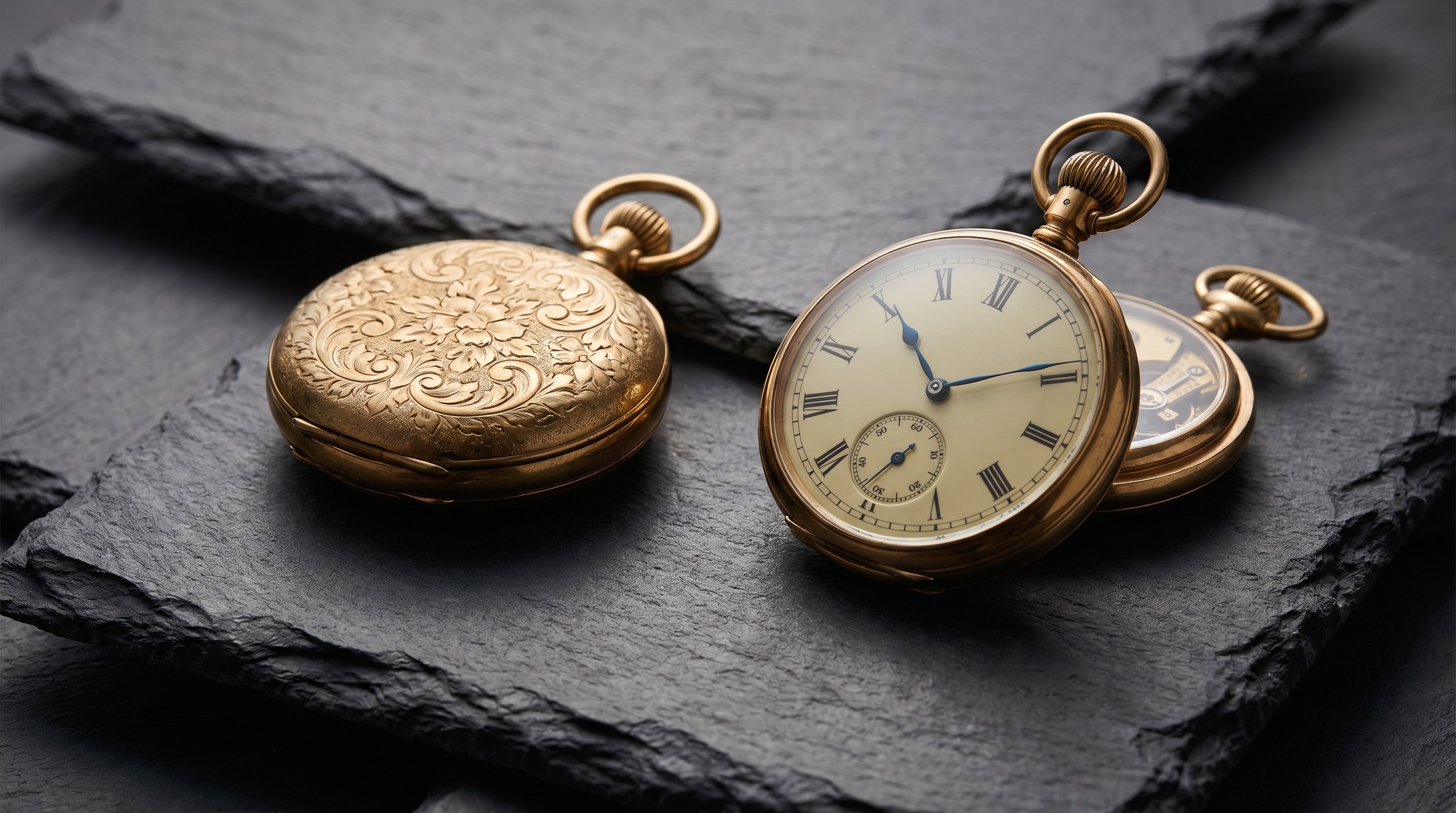
- Full hunter. A hinged cover closes over the dial.
- Half hunter. The cover has a small window and a ring of numerals.
- Open face. No cover; the dial under glass.
- Pair case. An inner and an outer case, on 18th and early 19th-century watches.
Step two: the movement
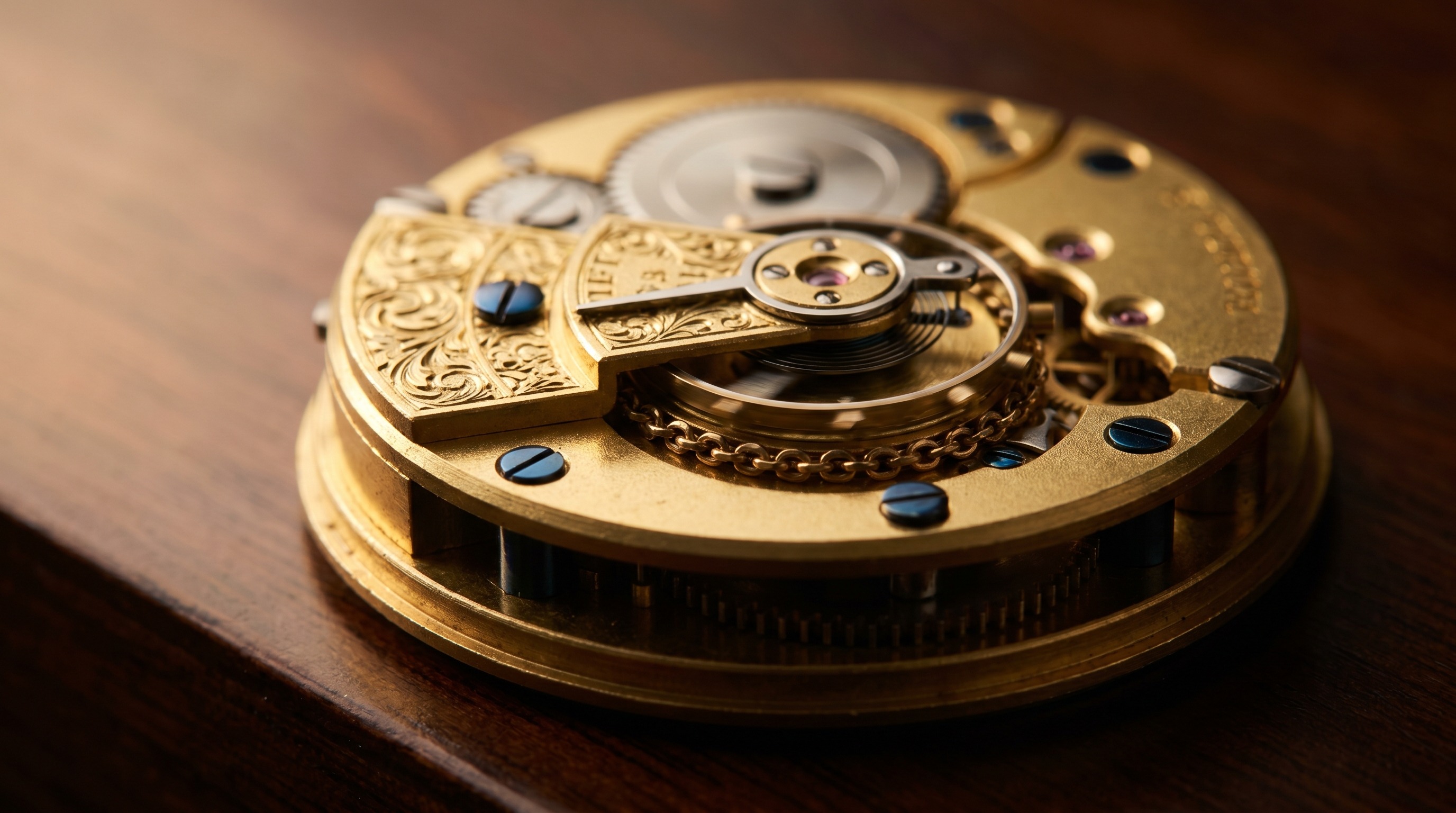
Open the back. A verge fusee movement uses a tiny chain wound round a cone to even out the mainspring’s power, usually before about 1850. Later watches use a lever escapement. Key-wound watches are generally older; crown-wound (keyless) watches later.
- 1Fusee chain and cone
- 2Lever escapement
Step three: the hallmarks
See also how we check a watch in our watch guides.
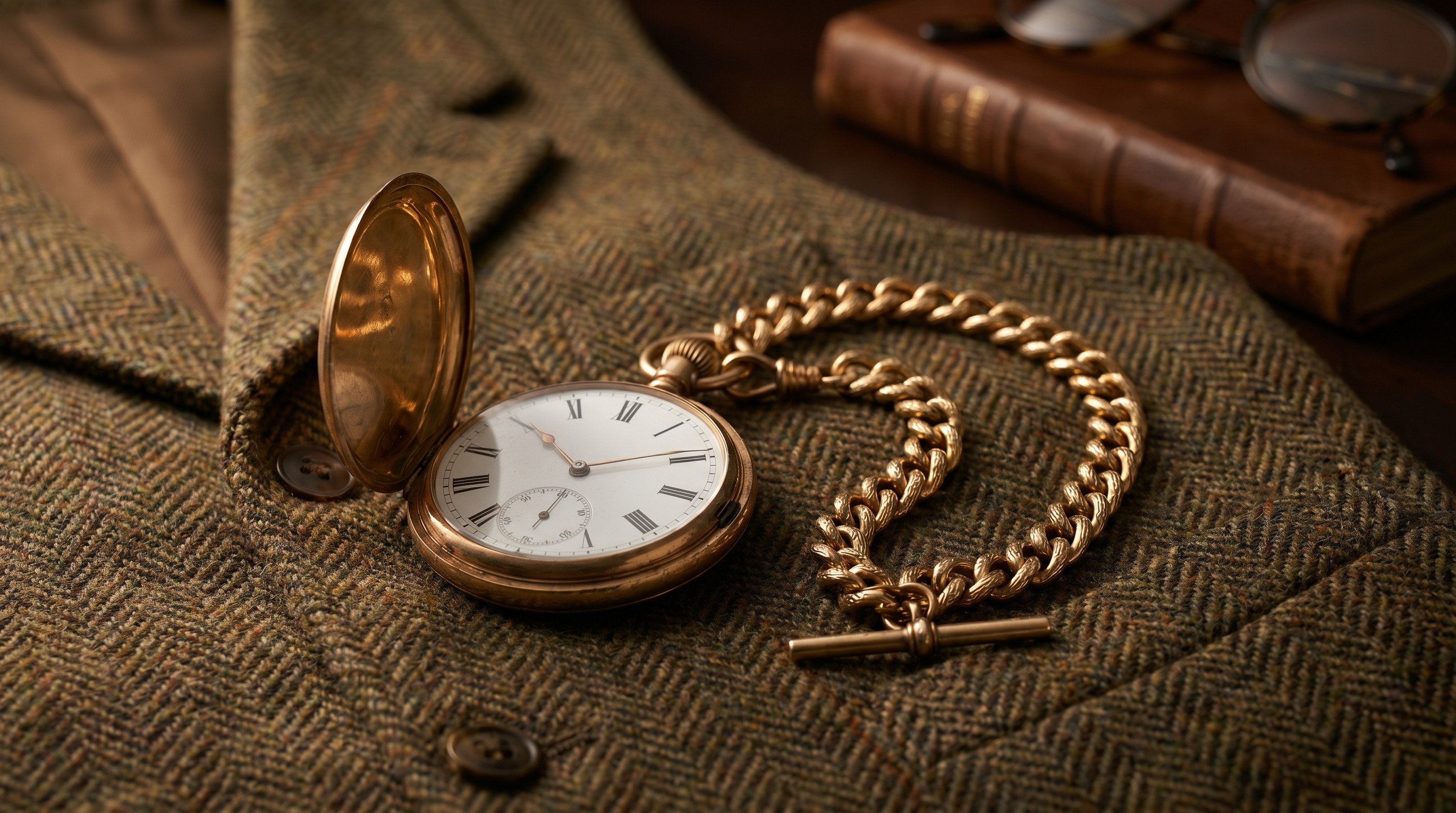
- 1Maker’s mark
- 2Gold standard (18 or 750)
- 3London leopard’s head
- 4Date letter
0 of 5 checked
1Fineness
Fineness 18 or 750, 9 or 375 for solid gold.
2Assay office
London’s leopard’s head, Birmingham’s anchor, Chester, Sheffield.
3Date letter
The year of assay.
4Sponsor's mark
The case maker’s initials.
5Import marks
On Swiss cases assayed in Britain.
Found the hallmarks? Send a close-up of them and the movement for a free, honest check and a date.
Free, no obligation, returned at our cost if you decline.
Step four: the maker
The name on the movement is usually the maker; the name on the dial may be the retailer who sold it. Both matter, and they are read together. Great English makers and the leading Swiss houses are named on the movement, often with a serial number.
What is my gold pocket watch worth?
Whether a gold pocket watch holds its value comes down to the maker, the movement and any complication (a repeater or chronograph), the case type, its condition and originality, the chain or box with it, and recent sales of similar watches. A watch that does not run can still be valued. We never publish figures.
Free, no obligation, and returned at our cost if you decline.
Read our Google reviews (opens Google)
- Maker
- Movement and complications
- Case type
- Condition
- Originality
- Recent sales
How selling works
- 1
Send photographs
of the dial, the open case-back with its hallmarks, and the movement.
- 2
Free value inspection
We reply within one working day with an estimate, subject to inspection. If our offer differs, you can decline and we return it at our cost.
- 3
Paid the same day after inspection
by bank transfer or in cash, in Mayfair, at our Braintree office, by post or by free collection.
Insured up to £10,000 per parcel when you send to us.
Questions people ask
How do I identify my antique pocket watch?
Work through four things: the case type (hunter, half hunter, open face), the movement (fusee or lever, key or crown wound), the hallmarks inside the case-back, and the names on the movement and dial. Send photographs of each and we will identify it for you, free.
What is the difference between a hunter and a half hunter?
A full hunter has a solid hinged cover over the dial. A half hunter has a small glazed window in the cover, usually with a ring of numerals, so the time can be read without opening it. An open-face watch has no cover.
Is the name on the dial the maker?
Not always. The dial often carries the name of the retailer who sold the watch, while the movement was made by someone else. The name on the movement is usually the maker. We read both together. Send a clear photograph and we will tell you honestly what we see.
How do I know my pocket watch is solid gold?
Look inside the case-back for a fineness mark (18 or 750, 9 or 375) with an assay office mark and date letter. "Gold filled", "rolled gold" or a guarantee of years mean it is not solid. Our solid gold guide covers every check.
My pocket watch does not work. Can I sell it?
Yes. Many antique pocket watches have not run for years, and we value them on the maker, movement, case and condition. Please do not have it repaired before we see it. Send photographs and tell us what happens when you wind it.
Where can I sell an antique gold pocket watch?
To a buyer who reads hallmarks and movements and checks in person. We buy antique pocket watches directly: a free value inspection from photographs, then an appointment in Mayfair or at our Braintree office, post or free collection. You are paid the same day after inspection.
How do I date a gold pocket watch?
On a British gold case, the date letter in the hallmark gives the year the case was assayed. Read it with the assay office mark and match it to the date letter table for that office.
Related guides
Have a pocket watch to identify?
Send photographs of the dial, the case-back marks and the movement for a free value inspection, with no obligation.
Free, no obligation, returned at our cost if you decline.