Designer Jewellery · Cartier · New York 1969
Aldo Cipullo: The Designer Behind Cartier Love & Juste un Clou
In 1969, an Italian-American designer working at Cartier in New York created a bracelet that turned the idea of romantic commitment into solid gold. Aldo Cipullo's Love bracelet — and his Juste un Clou two years later — remain two of the most recognised pieces of twentieth-century jewellery.
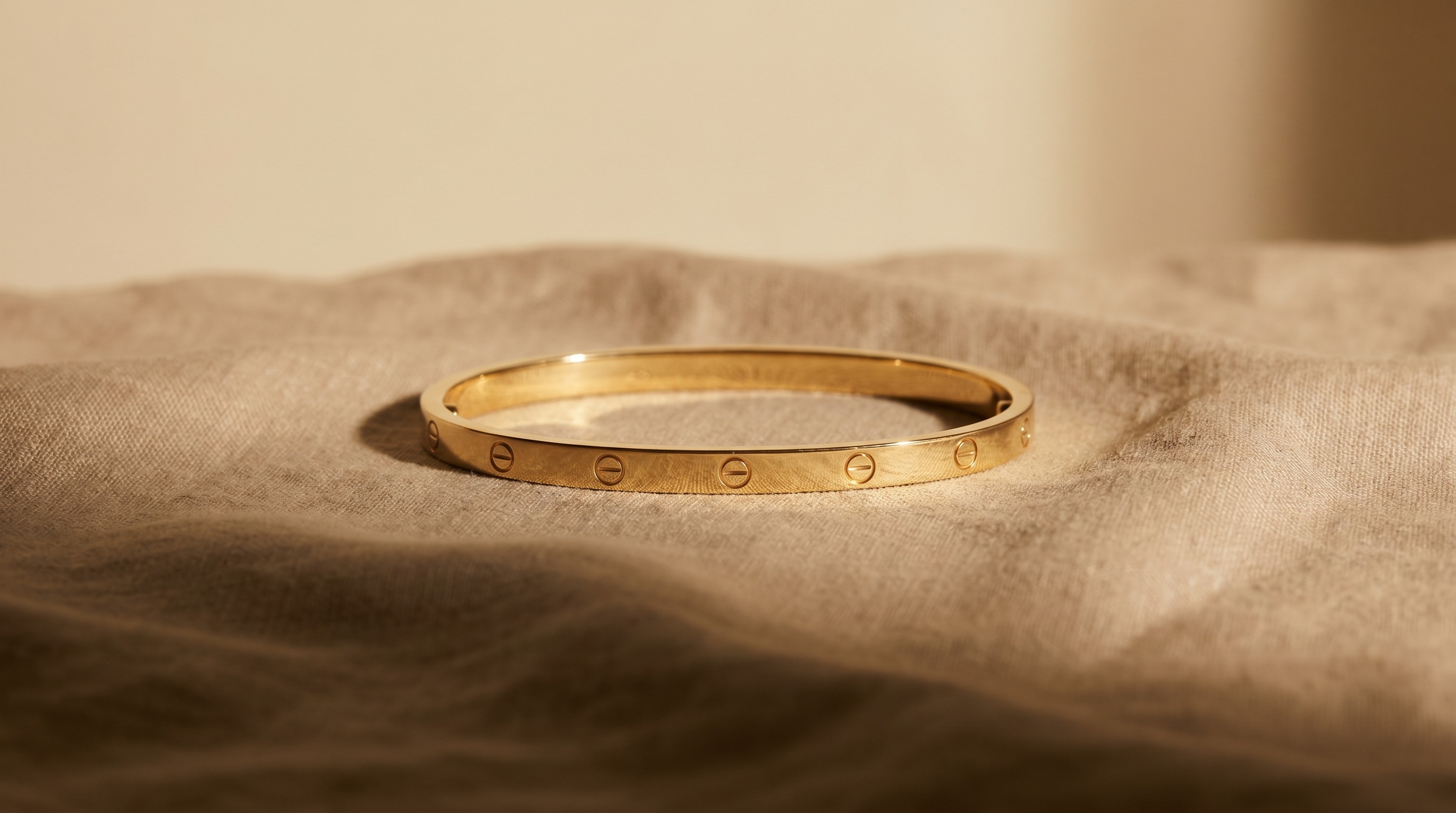 The Love bracelet, designed 1969
Selling a Cartier Love Bracelet?
We buy genuine Cartier Love bracelets, Juste un Clou and other Cipullo-era pieces outright — fair prices, no auction wait, no commission. Get a free valuation from our specialists today.
The Cartier Love bracelet was designed by Aldo Cipullo in 1969, while he was working for Cartier in New York. A slim oval bangle that fastens to the wrist with two functional screws — and a small screwdriver to fit and remove it — the Love bracelet reframed jewellery as a symbol of committed, "locked-in" devotion. This guide covers Cipullo's life and career, his years at Cartier, his two enduring designs, how to identify genuine pieces, and what they are worth on the UK market today.
Who was Aldo Cipullo?
Aldo Cipullo (1935–1984) was an Italian-American jewellery designer born in Naples, Italy. He came from a jewellery family — his father ran a costume jewellery business — and he emigrated to the United States in the late 1950s, settling in New York. There he worked first for David Webb and then for Tiffany & Co. before joining Cartier in 1969.
Cipullo belonged to a generation of designers who brought a bold, modern, unmistakably 1960s sensibility to fine jewellery. His instinct was to take everyday objects and ideas — a nail, a screw, the act of fastening — and translate them into precious metal. Where earlier fine jewellery prized ornament and gemstones, Cipullo prized concept and form. That conceptual approach is exactly why his designs have endured: they are ideas as much as objects.
His career was relatively short — he died in 1984 at the age of 49 — but in the space of a few years at Cartier he created two designs that the house still produces and that remain among the most copied (and counterfeited) pieces of jewellery in the world.
Aldo Cipullo's years at Cartier and his creative role
Cipullo joined Cartier in New York in 1969. The Love bracelet was among the first things he designed there, and it was an immediate cultural phenomenon. The concept was simple and radical: a bracelet that could not be casually slipped on and off, but had to be fixed to the wrist with screws, ideally by a partner, using a small screwdriver supplied with the piece. The symbolism — love that is deliberate, permanent and shared — caught the mood of the era precisely.
Cartier understood what it had. The house launched the Love bracelet with a piece of marketing that has become legend: it gave bracelets to high-profile celebrity couples. Early recipients included Ali MacGraw and Steve McQueen, and Elizabeth Taylor and Richard Burton, among other famous pairs. The image of these couples wearing the screwed-on bracelet did more for the design than any advertisement could.
Two years later, in 1971, Cipullo produced his second great design for Cartier: the Juste un Clou — French for "just a nail." It was exactly what the name described, a bracelet (and later rings and necklaces) shaped like a single bent nail, the most ordinary object imaginable rendered in gold. Like the Love bracelet, it took a humble industrial object and made it precious through wit and craftsmanship.
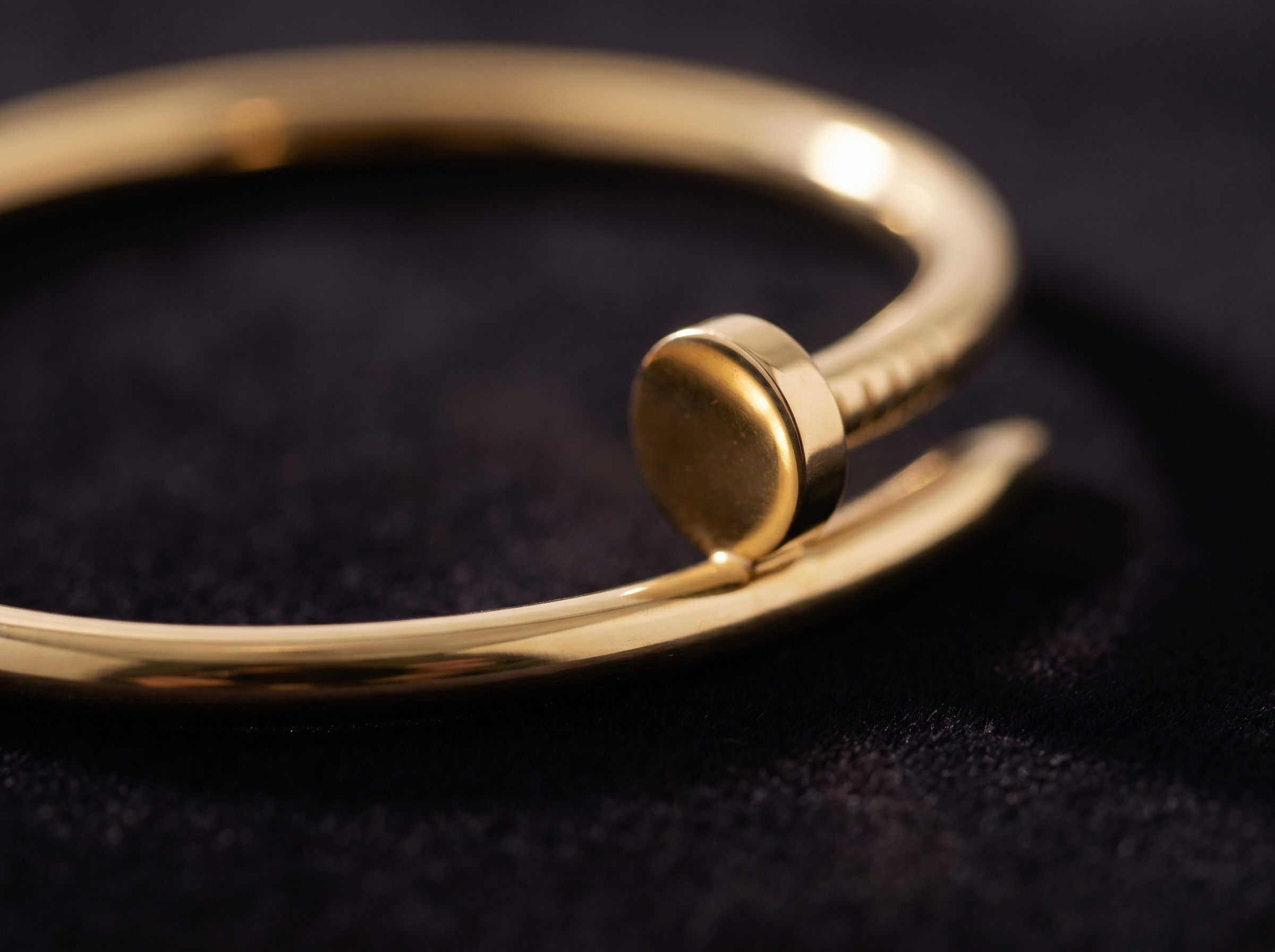
The Juste un Clou — Cipullo's 1971 "just a nail" design
Iconic pieces: Love, Juste un Clou and the Cipullo legacy
Two designs define Cipullo's place in jewellery history, and both remain core Cartier collections today:
- The Love bracelet (1969): The signature piece. An oval bangle in 18-carat gold (yellow, white or rose), decorated with a circuit of screw motifs and closing with two real, functional screws. Variants include plain gold, half-diamond and full-pavé versions. The original concept — fastened with a screwdriver — remains central to its identity.
- Juste un Clou (1971): The nail. Originally a bracelet, later expanded into rings, necklaces and earrings. Produced in 18-carat gold with plain and diamond-set versions. Reissued by Cartier in 2012 to renewed acclaim.
- The broader Cipullo aesthetic: Beyond these two, Cipullo's work is characterised by the elevation of everyday hardware — screws, nails, fastenings — into objects of desire. This conceptual wit influenced a generation of designers and is the reason his Cartier pieces feel as modern now as they did in 1969.
"Cipullo took the most ordinary objects — a screw, a nail — and made them into symbols of permanence and love. That is why, half a century on, his designs have never gone out of fashion."
How to identify a genuine Cartier Love or Juste un Clou piece
Because the Love bracelet is among the most counterfeited pieces of jewellery in the world, careful authentication is essential before buying or selling. Key checks include:
- Hallmarks and signature. Genuine pieces are engraved "Cartier", carry the 750 mark for 18-carat gold, a serial number, and usually a country-of-origin or assay mark. The engraving should be crisp, even and precisely positioned.
- Serial number. Authentic Cartier pieces carry a unique serial number. Cartier can verify a piece against its records; reputable dealers cross-check this. Be wary of duplicated or missing serials.
- The screws. On a genuine Love bracelet the screws are real, functional and engineered to a high tolerance. They turn smoothly and sit flush. Crude, fixed or decorative-only "screws" indicate a fake.
- Weight and proportion. Solid 18-carat gold has a specific heft. A bracelet that feels light or hollow is suspect. The oval profile and screw spacing on genuine pieces are exact.
- Box, papers and screwdriver. Original Cartier packaging, certificate and the matching screwdriver add to both authenticity assurance and value. Their absence does not make a piece fake, but their presence helps confirm it.
For a detailed walkthrough of common counterfeits, see our guide on how to spot a fake Cartier Love bracelet.
Current market value and resale
Cartier Love bracelets and Juste un Clou pieces hold their value strongly on the secondary market — among the best of any modern jewellery design. Values depend on metal, gemstone content, size, age and condition, but as a general guide:
- Plain 18ct gold Love bracelet: strong resale, typically retaining a high proportion of retail value
- Diamond-set (half or full pavé) Love bracelet: commands a significant premium over plain versions
- Vintage Cipullo-era pieces (1969–1980s): early examples with period hallmarks attract collector interest beyond their gold value
- Juste un Clou: similarly strong resale, with diamond versions at a premium
For the question of how well these pieces hold up as an asset, see our analysis: does Cartier hold its value? Authenticated pieces with box and papers always achieve the strongest prices. Cartier's own price increases over the years have also supported secondary-market values.
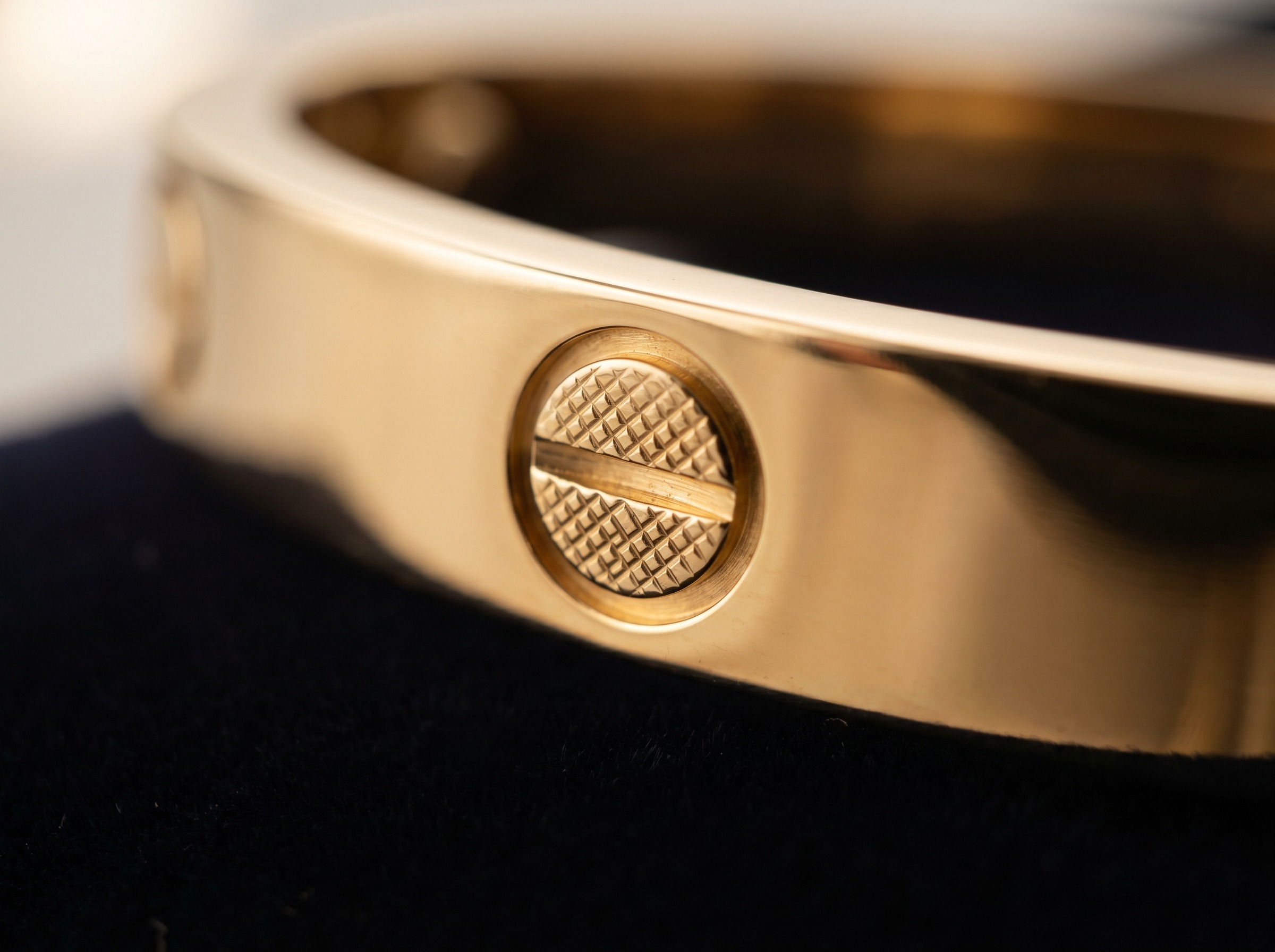
The functional screw — the detail that defines the Love bracelet
How to sell a Cartier Love bracelet or Juste un Clou in the UK
If you own a Cipullo-era Cartier piece and are considering selling, you have two main routes: auction or a specialist dealer. Auction can work for rare diamond-set or vintage examples, but involves commission, delay and uncertainty. A specialist dealer offers an immediate, firm price.
At Mozeris Fine Antiques we buy Cartier Love bracelets, Juste un Clou and other designer pieces outright. We authenticate, value against the live secondary market, and pay promptly — with no commission deducted. For more on choosing between routes, read selling designer jewellery: dealer vs auction. To begin, visit our sell your Cartier jewellery page or our designer jewellery hub.
For the wider story of Cartier's animal heritage by another of its great designers, see our guide to Jeanne Toussaint and the Cartier Panther, and our overview of the Cartier Love bracelet itself. You may also be interested in vintage jewellery from the same era.
Frequently asked questions
Who designed the Cartier Love bracelet?
The Cartier Love bracelet was designed by Aldo Cipullo, an Italian-American jewellery designer, in 1969 while he was working for Cartier in New York. It was one of his first designs for the house and became an instant icon.
When was the Love bracelet first made?
The Love bracelet was created in 1969. Cartier launched it by gifting examples to famous celebrity couples, and it became a cultural phenomenon almost immediately. It has remained in production ever since.
What inspired Aldo Cipullo to design the Juste un Clou?
The Juste un Clou (French for "just a nail"), created in 1971, was inspired by a real nail. Cipullo's signature approach was to take ordinary industrial objects — a nail, a screw — and reimagine them in gold, turning everyday hardware into fine jewellery.
Did Aldo Cipullo design anything for Cartier besides the Love bracelet?
Yes. His other major design for Cartier was the Juste un Clou (1971), the nail bracelet, which has since expanded into rings, necklaces and earrings. The Love bracelet and Juste un Clou are the two designs that define his legacy at Cartier.
Why did Cartier gift Love bracelets to celebrity couples?
It was a deliberate marketing strategy. By giving Love bracelets to high-profile couples such as Ali MacGraw and Steve McQueen, and Elizabeth Taylor and Richard Burton, Cartier associated the design with real, public romance. The images of these couples wearing the screwed-on bracelet established the Love bracelet as a symbol of committed devotion.
How can I tell if my Cartier Love bracelet is genuine?
Check for crisp "Cartier" engraving, the 750 mark for 18-carat gold, a unique serial number, functional high-tolerance screws, and the correct weight for solid gold. Original box, papers and screwdriver support authenticity. Because counterfeits are common, professional authentication is strongly recommended before buying or selling.
How to Sell Your Cartier Cipullo Piece
- Free valuation Send photos — the piece, the engraving and serial number. We respond same day with an indicative range.
- Authentication We verify hallmarks, serial number and construction against the genuine article.
- Firm offer A real price based on the live secondary market — not an auction estimate.
- Insured collection Fully insured courier from your address, or visit our Mayfair or Essex offices by appointment.
- Same-day payment BACS transfer the day we receive and verify your piece.
Related Reading
Visit Us or Send Your Jewellery by Insured Post
01376 334 482
01376 334 482
Response within 2 hours
Our Mayfair showroom is by appointment. Please call ahead before visiting.