Verge Fusee Pocket Watches: How They Work, How to Spot One and What They Are Worth
The key wound watches of the 1700s: what the fusee and the verge do, how to recognise one from the back, how to date it, and what they sell for.
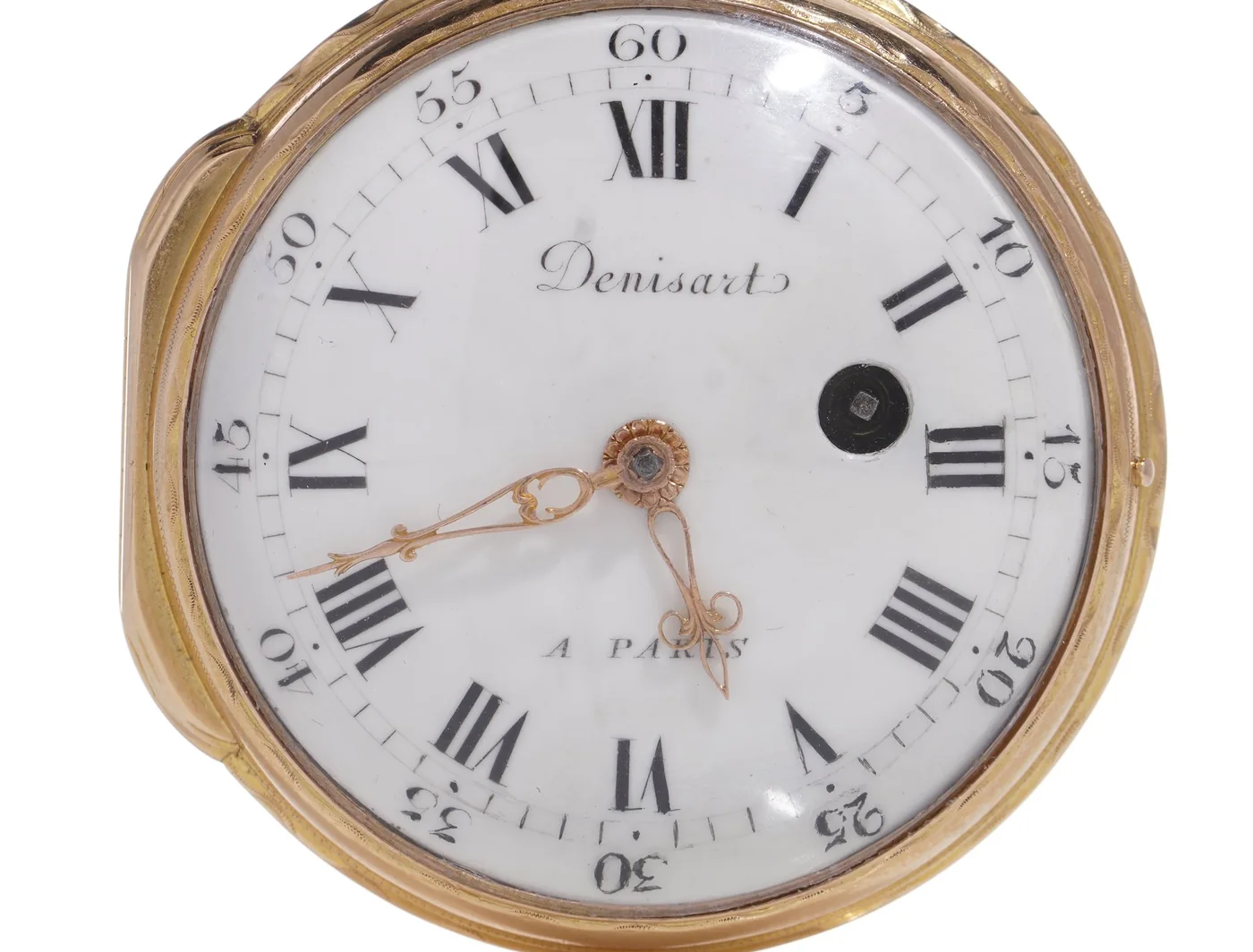
A verge fusee pocket watch is the standard watch of the 18th century:
- Fusee: a grooved cone and fine chain that keep the mainspring's pull even.
- Verge: the oldest escapement, a crown wheel pushing two pallets on the balance staff.
- Spot one: key winding, a pierced balance cock or bridge, a silver regulator disc, a deep movement, often a pair case.
- Value: from a few hundred pounds for plain silver to tens of thousands for a top London maker such as Tompion.
In this article
What a verge fusee watch is
A verge fusee pocket watch pairs two old inventions. The fusee evens out the pull of the mainspring. The verge is the escapement that lets the wheels turn one tooth at a time. Most 18th century watches are verges, and every verge watch needed a fusee to keep even rough time.
The fusee: a cone and a chain
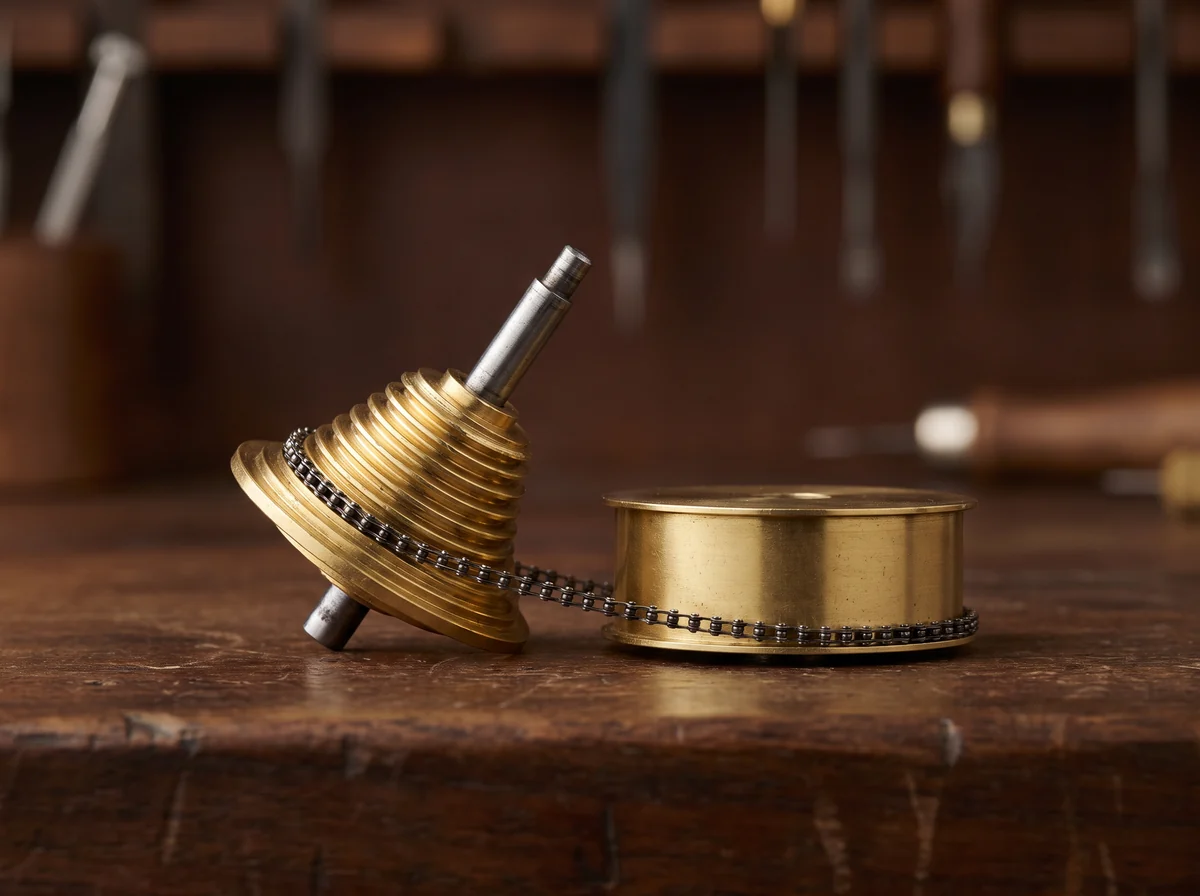
A mainspring pulls hard when fully wound and weakly when nearly run down. The fusee is a grooved cone linked to the spring barrel by a fine steel chain.
At full wind the chain pulls on the narrow top of the cone, a short lever. As the spring weakens, the chain reaches the wide base, a long lever. The force reaching the wheels stays nearly the same all day.
Fusee chains were made by hand. In Christchurch, Dorset, Robert Cox began making them in 1790 and employed children from the workhouse to punch and rivet the tiny links.
The verge: the oldest escapement
The crown wheel has its teeth standing up like the points of a crown. The verge, the balance staff, runs across the teeth and carries two small flags, the pallets, set at about 90 degrees. A tooth pushes the top pallet and turns the balance one way, then a tooth on the far side pushes the bottom pallet and turns it back.
The crown wheel stands on edge and the fusee is tall, which is why verge watches are thick. The verge was used in clocks from the late 13th century and in watches until the mid 19th century.
How to recognise one
You can usually tell a verge fusee without taking anything apart. Four checks, all visible on watches that have passed through our hands:
It winds with a key
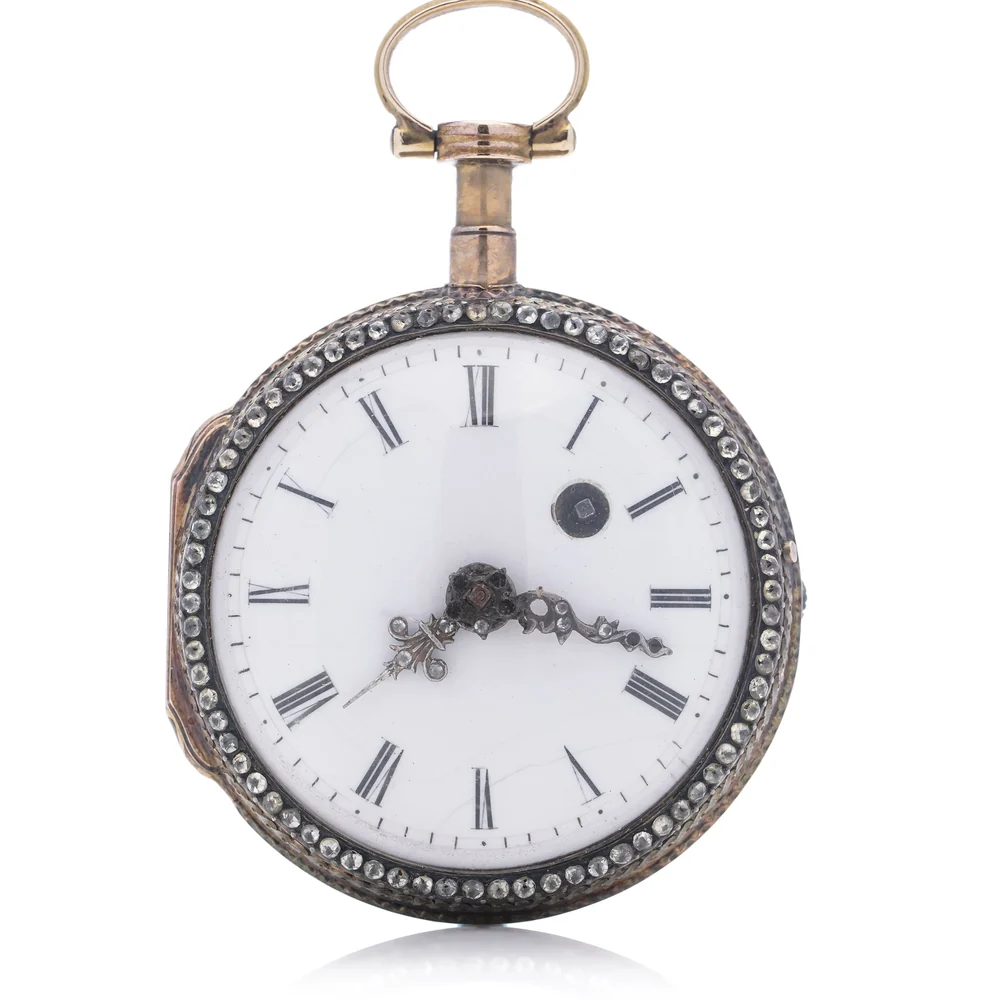
There is no winding crown. A square arbor sits behind a hole, either in the dial, as here, or in the back of the movement. Setting the hands is also done with the key. Many English lever watches of the 1800s are key wound too, so this alone does not prove a verge.
A pierced balance cock or bridge
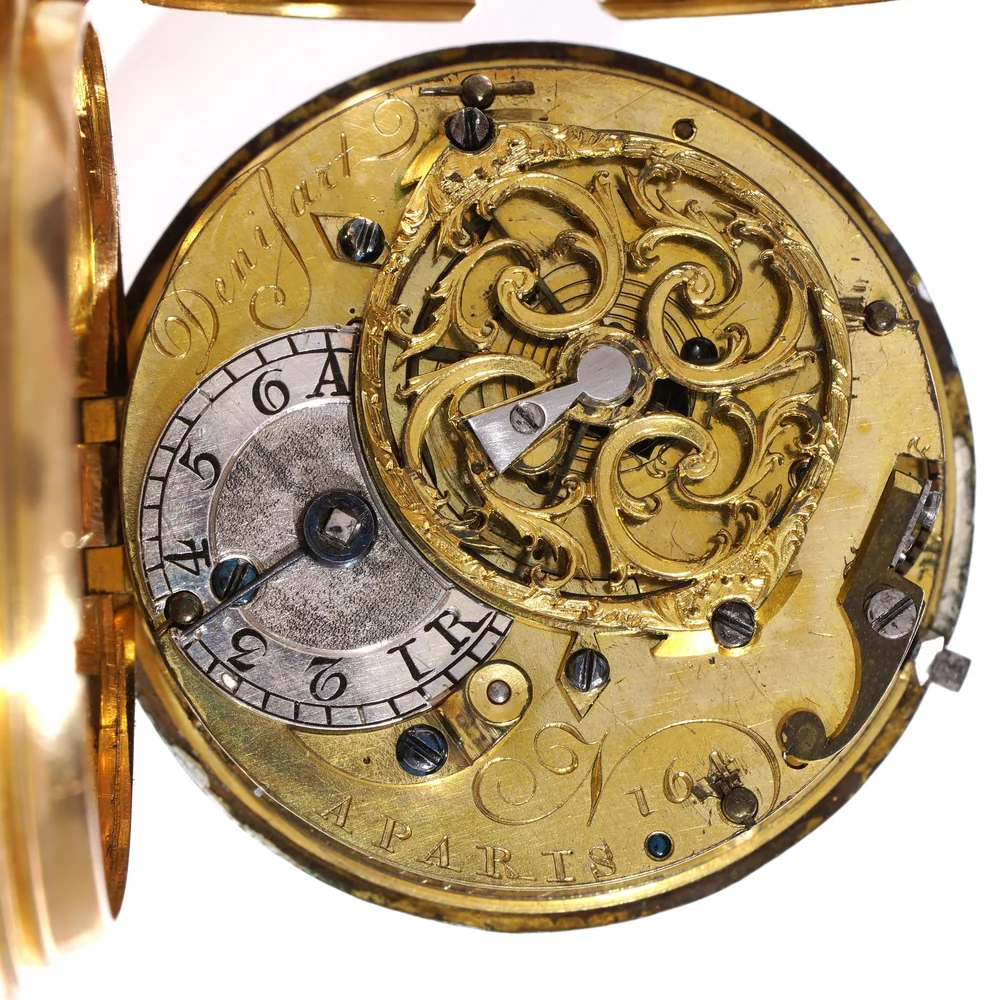
Open the back and look for a large, pierced and engraved plate covering the balance. On English watches it is a cock fixed at one end; on continental watches it is usually a round bridge screwed down at both sides, like this one.
A silver regulator disc
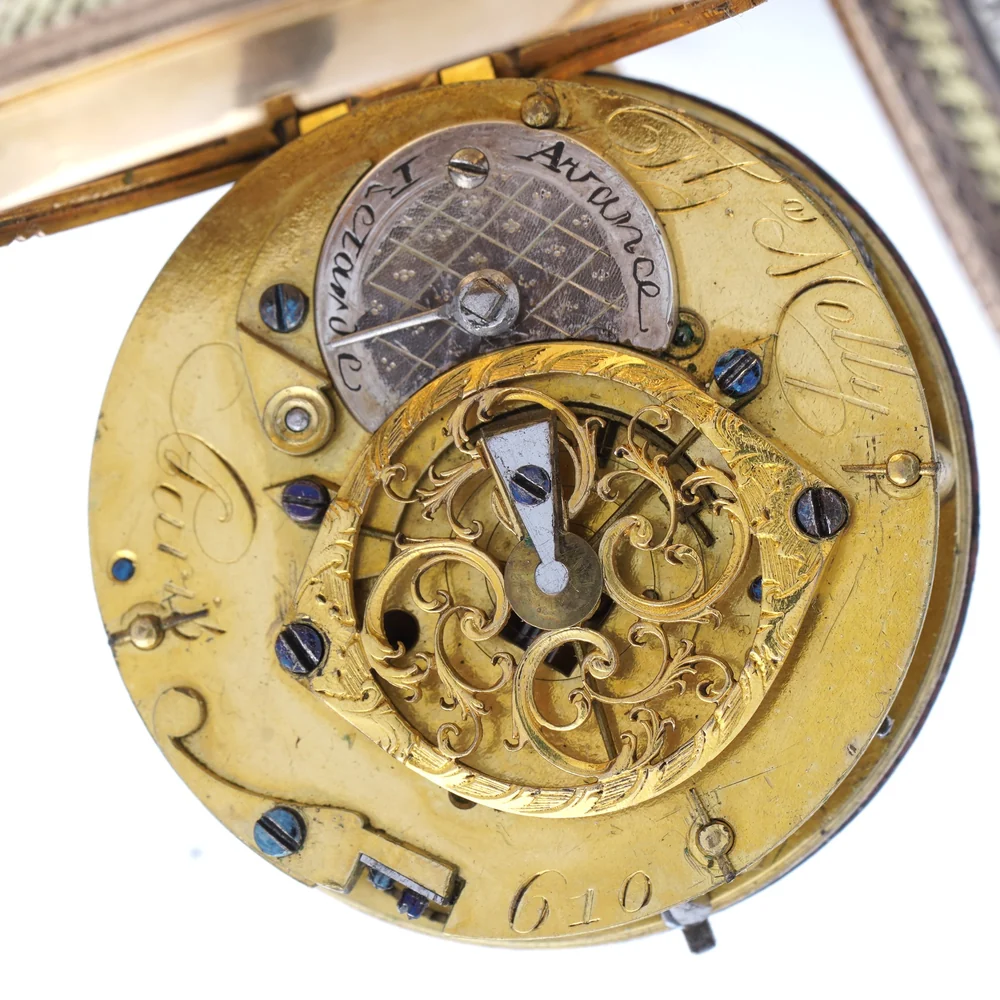
Beside the balance sits a small silver dial with a pointer. Turning it makes the watch gain or lose. French discs often read Avance and Retard, or A and R, as on both of ours.
A full plate movement with a chain inside
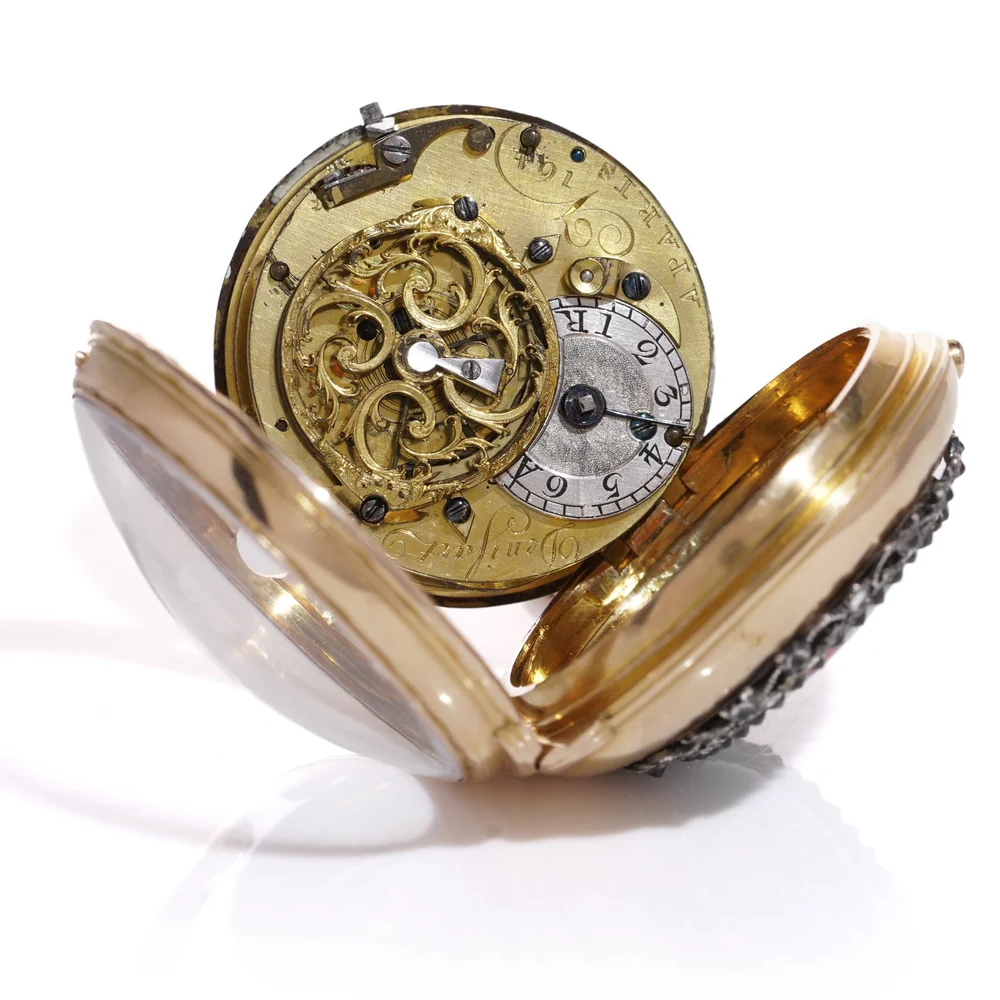
The works sit between two full plates, and they are deep. Seen from the side, between the plates, a fusee watch shows its fine chain running from the barrel to the cone. Ask a watchmaker to look if the movement does not hinge out easily.
Verge, or one of its successors?
Keys and fusees outlived the verge. An English watch of 1870 can be key wound with a fusee and a lever escapement. These dates help place what you have:
| When | What changed |
|---|---|
| About 1650 | Steel fusee chains replace gut cords; Gruet of Geneva is credited with them in 1664 |
| About 1754 | Thomas Mudge invents the detached lever escapement |
| 1791 | Peter Litherland of Liverpool patents the rack lever |
| About 1815 to 1820 | Edward Massey's lever leads to the standard English lever, still with a fusee |
| By 1850 | Swiss and American makers have dropped the fusee |
| Through the 1800s | Cheap verges are still made, then the lever takes over |
| About 1900 | English makers stop putting fusees in pocket watches |
For the general features of gold cased watches, see our antique gold pocket watch identification guide and watch anatomy explained.
Pair cases, watch papers and English or continental
Pair cases
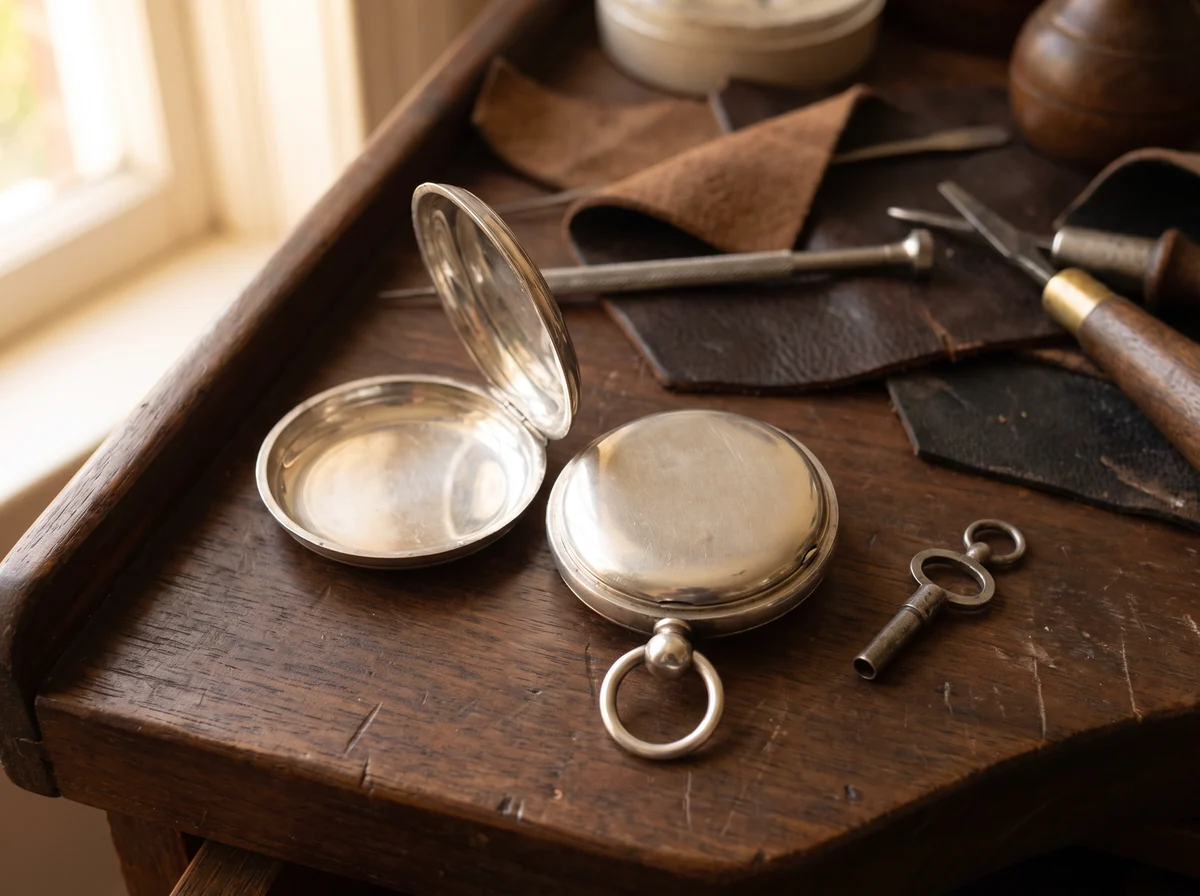
Many English verges came in two cases. The inner case holds the movement. A plain outer case, in silver, gold, shagreen or tortoiseshell, slips over it for protection.
Check that both cases belong together. Outer cases were often replaced, and auction catalogues say so: a Bonhams lot of 2012 had an "unassociated tortoiseshell outer case".
Watch papers: small trade cards inside
Open an outer case and you may find one or more round paper discs. From the early 18th century watchmakers slipped these watch papers into the outer case. The first ones printed an equation of time table, for setting the watch from a sundial, and the maker's name.
Repairers soon added their own, so a well used watch can hold several, a record of the towns where it was serviced. Keep them in place: they are part of the watch's history.
English or continental?
English and continental verges look alike at first glance. The clues below come from an NAWCC study of 18th century imitations. Each is a tendency, not a rule.
| Clue | Usually English | Usually continental |
|---|---|---|
| Balance support | A cock fixed by one foot | A bridge screwed down at both sides |
| Where the key goes | Through the back, on the backplate | Through a hole in the dial |
| Dial | Round minute ring | Dutch market watches: an arched (arcaded) minute ring |
| Backplate | Less heavily decorated | Often more heavily decorated, especially Swiss |
Both of our verge fusees were made in Paris: round pierced bridges, regulator discs marked A and R, and a winding hole in the dial. For later English and Swiss gold watches, see English vs Swiss antique gold watches.
Dating a verge, and why so many survive
Start with the case marks
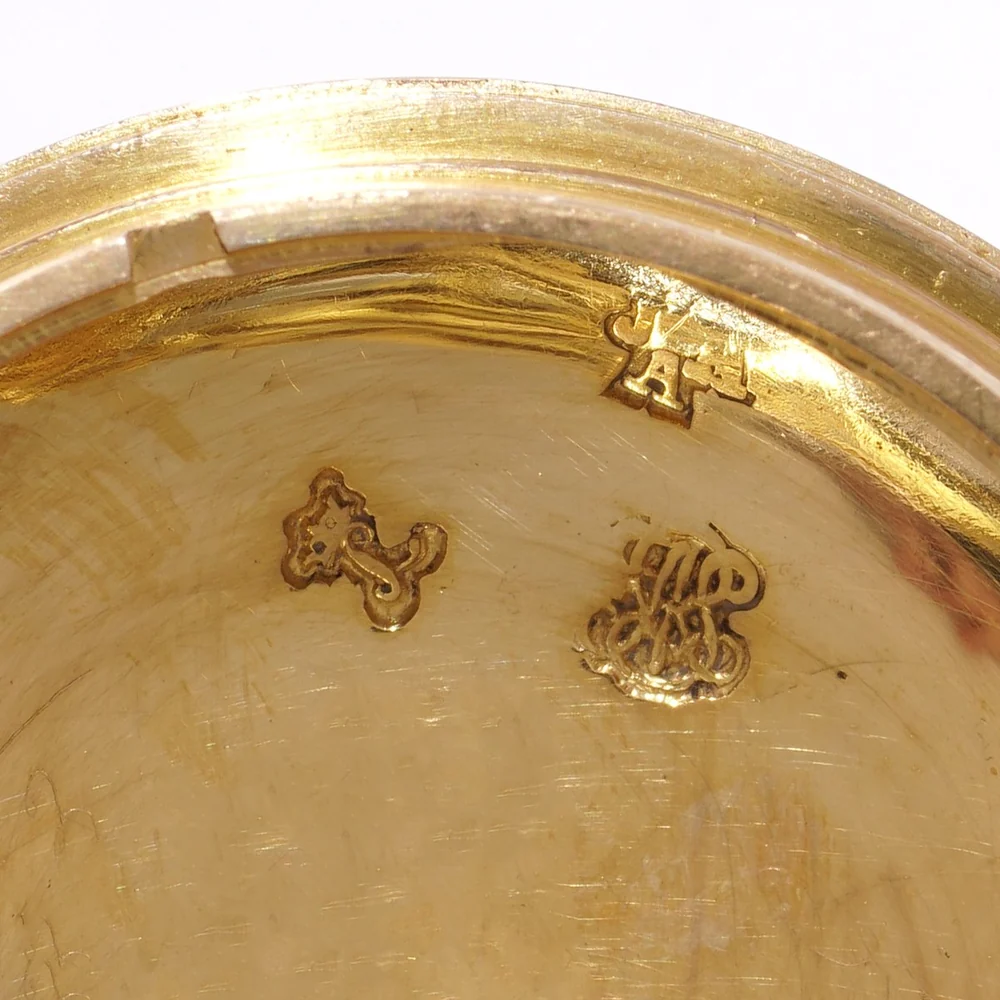
A British silver or gold case carries a maker's mark, the assay office mark and a date letter, which give the year the case was marked. Our pocket watch hallmarks guide lists them.
Continental cases carry their own national marks instead, so a French case is not dated by a British letter.
- Before 1739 silver watch cases are rarely hallmarked; the Plate Offences Act of 1738 brought them in.
- 1784 to 1798: a sovereign's head duty mark can appear in a watch case. Watch cases were freed from the duty from 25 March 1798, so it is not found after that.
- Pair cases: both cases are normally marked. A different date or maker on the outer case can mean it was replaced.
- The movement is signed with a maker, town and number. Look the name up in Loomes or Baillie, and treat "London" with care (see the fakes section below).
Why so many survive
They were made in huge numbers. A House of Commons committee in 1818 put the number of watches stamped at Goldsmiths' Hall in 1796 alone at 191,678, gold and silver together, probably including many inferior watches with forged makers' names.
Hallmarked gold and silver cases were worth keeping. Broken watches were not always lost either: from the mid 1880s jewellery made from pierced watch cocks became fashionable, a common fate for watches that were broken up.
What a verge fusee pocket watch is worth
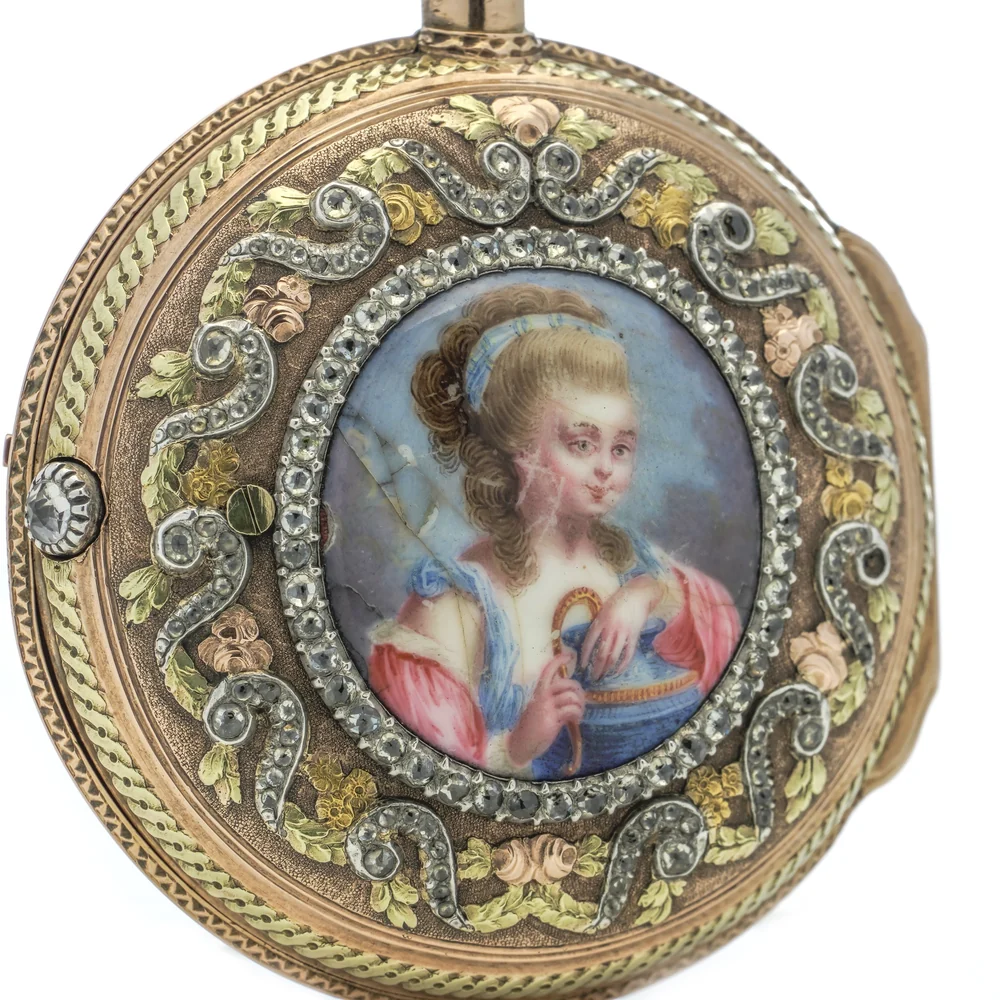
What moves the price
- Maker. A real London name of the first rank, such as Tompion, is in a different league.
- Case. Gold over silver; enamel, paste and repoussé work add more.
- Originality. Matching cases, the original dial and an unconverted movement.
- Condition. Chips to an enamel dial, a broken chain or a worn crown wheel all cost money to put right.
Real sale results show the spread. All are Bonhams, with buyer's premium:
| Sold | Watch | Result |
|---|---|---|
| Bonhams, Nov 2021 | Three London verges, about 1740 to 1760, sold as found in one lot | £382.50 the lot |
| Bonhams, Nov 2017 | A. Verdiere, Paris: gold, enamel and seed pearls, fusee verge, about 1780 | £625 |
| Bonhams, Feb 2025 | Silver pair cased verge signed Samson, London, on a Dutch silver chatelaine | £832 |
| Bonhams, Feb 2023 | Denis, Paris: gold case of about 1780, movement converted to a lever | £1,275 |
| Bonhams, Nov 2015 | Julien Le Roy, Paris: gold and enamel, fusee verge, about 1780 | £3,125 |
| Bonhams, Dec 2012 | Tompion and Banger, London: silver pair case, fusee verge, about 1710 | £15,000 |
| Bonhams, Nov 2020 | Thomas Tompion, London: gold pair case, hallmarked 1700 | £31,500 |
Plain silver and gilt metal verges by lesser makers sit at the bottom of that table. Decorated gold cases and good names climb fast. For pocket watches of every type, see our pocket watch value guide.
Have a verge fusee watch? Get a free quote
Fakes, Dutch forgeries and marriages
Dutch forgeries are 18th century continental watches made to pass as English. Their movements carry English sounding names, often of makers who never existed or had died, and the word London.
Most were made in Switzerland, with some possibly in southern Germany. They are called Dutch because many reached Britain by way of Holland, though most were sold in Scandinavia, central Europe and the colonies. Many sit in genuine, properly hallmarked English cases.
A balance bridge with large rectangular wings, rather than an English single foot cock, is the classic sign of a Dutch forgery movement. An arcaded minute ring on the dial is another.
Marriages and conversions
- Married cases. A movement put into a case it was not made for. Check that the case fits, that numbers agree and that the hinge lines up with the dial.
- Converted movements. Many verges were later fitted with a lever. Bonhams sold a Paris watch of about 1780 in February 2023 with a "converted Swiss lever" movement for £1,275.
- Replaced dials and hands. Later dials are common and lower the value.
None of this makes a watch worthless. The NAWCC study notes that some imitation movements have merit; a watch only has to be described for what it is.
Care: chains, keys and servicing
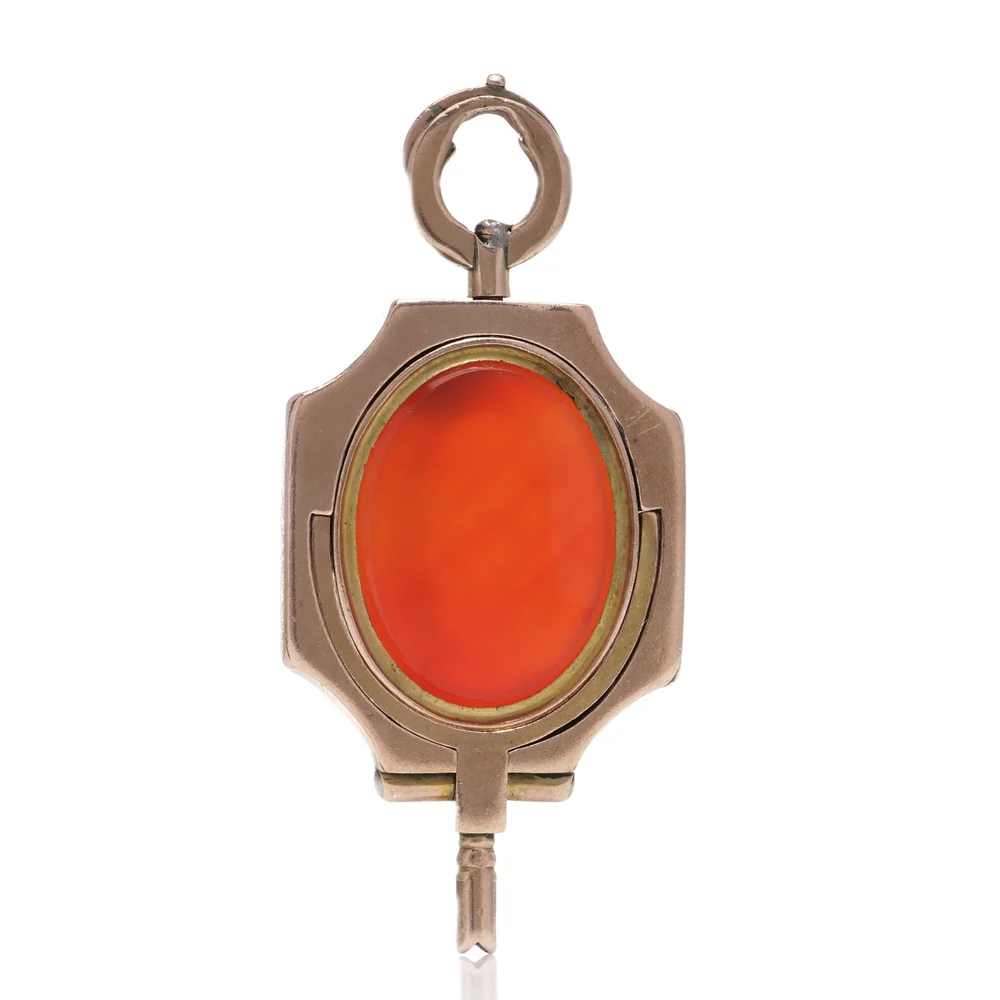
Wind it gently, with the right key
Use a key whose square fits snugly; a loose key rounds off the arbor. Wind slowly and stop at the first firm resistance: a stop lever at the top of the fusee is there to end the winding.
- Never wind a watch with a broken or slack chain. If the fusee chain breaks, the mainspring whips the loose end around the inside of the movement and damages it.
- If it stops, stop. Do not keep turning the key or push the hands to start it.
- Use a specialist. Fusee chains, crown wheels and pallets need a watchmaker who works on verges, not a general repairer.
- Keep the parts. The outer case, watch papers, key and any old dial are all part of the value.
For chains and how they attach, see pocket watch chain styles and the history of Albert chains.
Free valuation, selling and buying
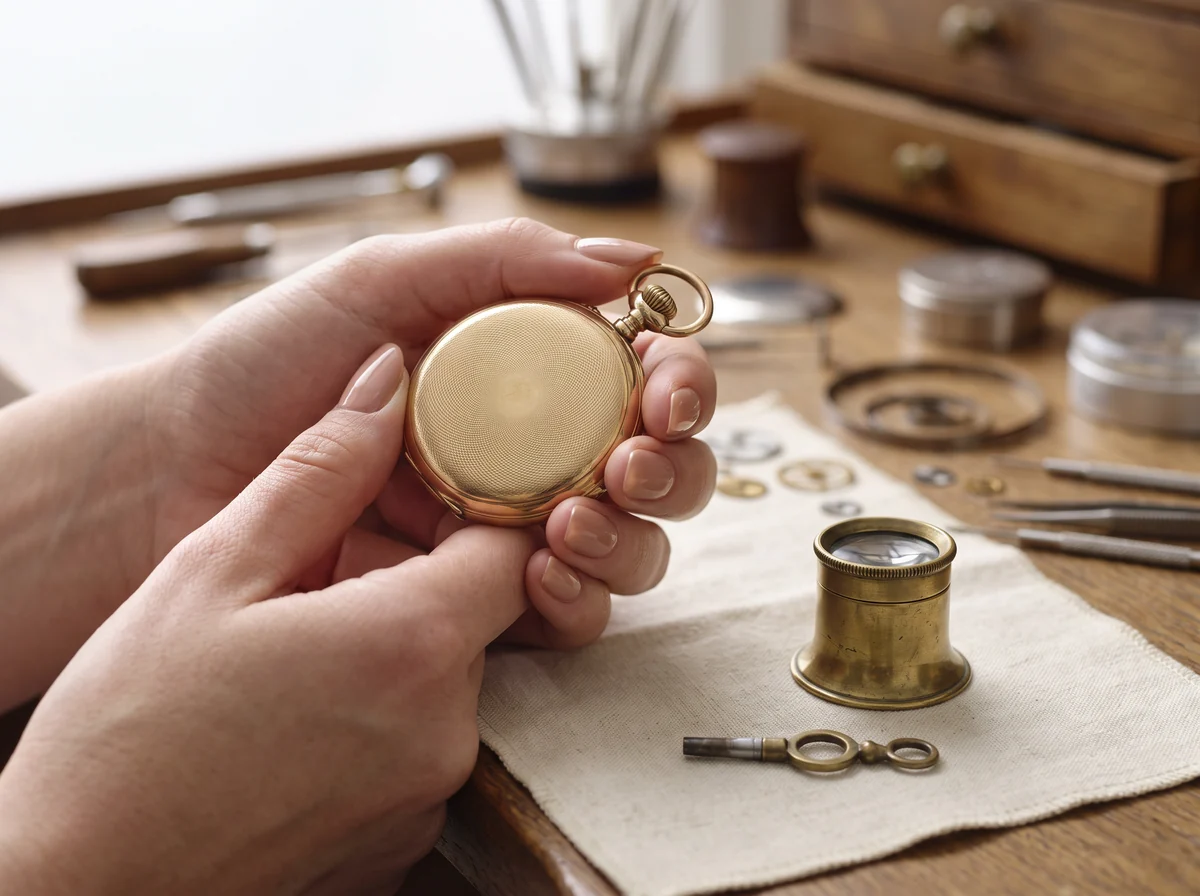
Send us photos
We value and buy verge fusee watches and other antique pocket watches, and we have handled 18th century verges in gold and enamel. Photographs are enough to start: the dial, the case back, the movement with the back open, and any marks inside the cases.
- Photograph
Dial, back, movement and case marks, plus the outer case and any watch papers.
- Send
Use the form below, call 01376 334482 or WhatsApp us. See also selling your pocket watch.
- Visit
Bring it to 47 Maddox Street, Mayfair (by appointment) or to Braintree, Essex. Contact us to book.
Buying? See the antique pocket watches in our collection now, or all our watches.
Request a free valuation
- A verge fusee is a key wound watch with a crown wheel escapement and a cone and chain to even out the mainspring.
- Look for a pierced cock or bridge, a silver regulator disc and a deep movement; English ones are often pair cased.
- Date British cases by their hallmarks; treat "London" on the movement with care.
- Values run from a few hundred pounds to five figures; we give free valuations from photos.
Questions we are asked
What is a verge fusee pocket watch?
A key wound watch with a verge escapement, a crown wheel pushing two pallets on the balance staff, and a fusee, a cone and chain that even out the pull of the mainspring. Most 18th century watches are verge fusees.
How do I know if my pocket watch is a verge fusee?
Look for key winding, a large pierced cock or bridge over the balance, a small silver regulator disc and a deep full plate movement. Seen from the side between the plates, a fusee shows its fine chain.
How much is a verge fusee pocket watch worth?
It depends on maker, case and originality. At Bonhams, three London verges sold as found for £382.50 the lot in 2021, a Paris gold and enamel verge by Julien Le Roy made £3,125 in 2015, and a gold Tompion £31,500 in 2020.
What is a pair cased pocket watch?
A watch in two cases: an inner case holding the movement and a separate outer case that slips over it for protection. Most English verges of the 18th century were pair cased.
When did they stop making verge watches?
Verges were used in watches until the mid 19th century, and cheap ones were made through the 1800s. English makers kept the fusee, with a lever escapement, until about 1900.
What is a Dutch forgery watch?
An 18th century watch made on the continent, mostly in Switzerland, signed with an invented or borrowed English name and "London" to sell as English. A winged balance bridge is the usual sign.
Is it safe to wind an old fusee watch?
Only if the chain is intact. Wind slowly with a key that fits and stop at the first firm resistance. A broken chain lets the mainspring whip round and damage the movement.
What are the papers inside the case of my old watch?
Watch papers: small printed discs left by the maker or by later repairers, from the early 18th century onwards. They record who sold and serviced the watch.
Value or sell your verge fusee watch
Send photos of the dial, case and movement for a free valuation, or visit us in Mayfair or Braintree.
- We buy directly
- Free valuation from photos
- Appointments in Mayfair and Braintree
- Insured postage or collection
New pieces reach our list first: join the Mozeris list.