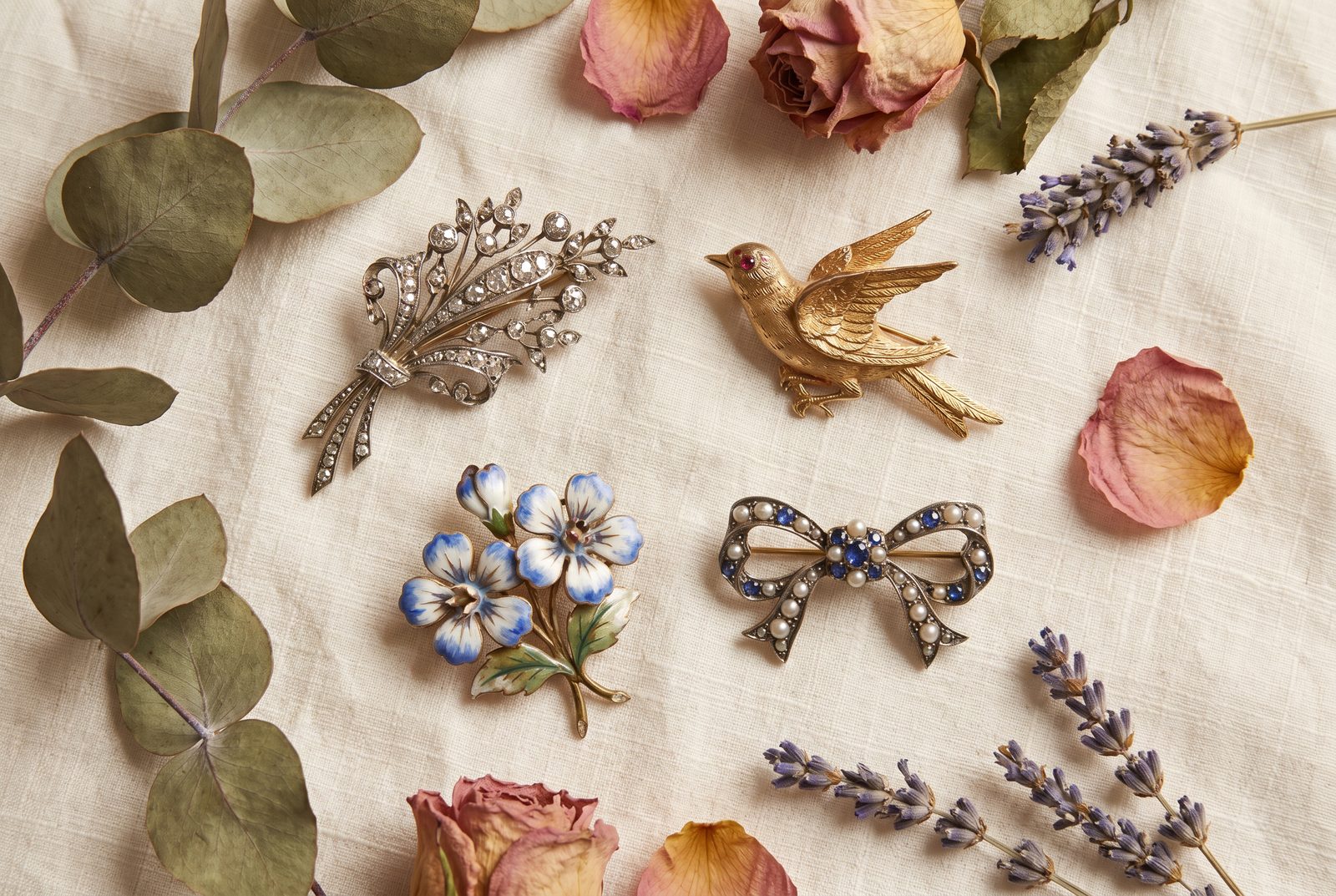
The Twelve Antique Brooches Worth Collecting
From Victorian insects to Deco double-clips: the twelve types collectors hunt, what separates a good example from a poor one, and what you should expect to pay.
Brooches are having their loudest moment in thirty years — Pinterest's trend data shows "brooch aesthetic" searches up 110% this year. Fashion moments pass, though. This guide is about the twelve types of antique brooch that collectors were hunting long before the runway noticed, and will still be hunting after.
Quick answer: which antique brooches are worth collecting?
The most collectable antique brooches fall into twelve recognisable types — from Victorian insect and mourning brooches to Art Deco double-clips and signed maison pieces. Value rests on four things: maker, rarity of form, originality of condition, and quality of materials. A signed or mechanically intact rare form can be worth ten times an ordinary equivalent.
1. Georgian & early mourning brooches
The oldest brooches most collectors will handle. Mourning pieces — woven hair panels, seed pearls, jet, sepia miniatures, often inscribed — were made to remember the dead, and the best carry names and dates that let you trace a real person. Look for: original closed-back settings, legible inscriptions, untouched hair-work. What goes wrong: replaced pins, moisture under the crystal, and "married" pieces assembled from parts. Band: £150–£1,500; documented or gold-cased examples more.
2. Victorian insect & bug brooches
The Victorians pinned beetles, bees, dragonflies and spiders to everything — a craze fed by the era's natural-history obsession, and figural pieces are among the most searched antique jewellery forms right now. Look for: naturalistic modelling, trembling wings, gem-set bodies — garnet abdomens, rose-cut wings. What goes wrong: missing antennae and legs, replaced wing stones. Beware modern cast copies: genuine Victorian insects have hand-finished backs, crisp claw work and honest wear on the pin. Band: £300–£3,000; diamond-set or trembling examples well beyond.
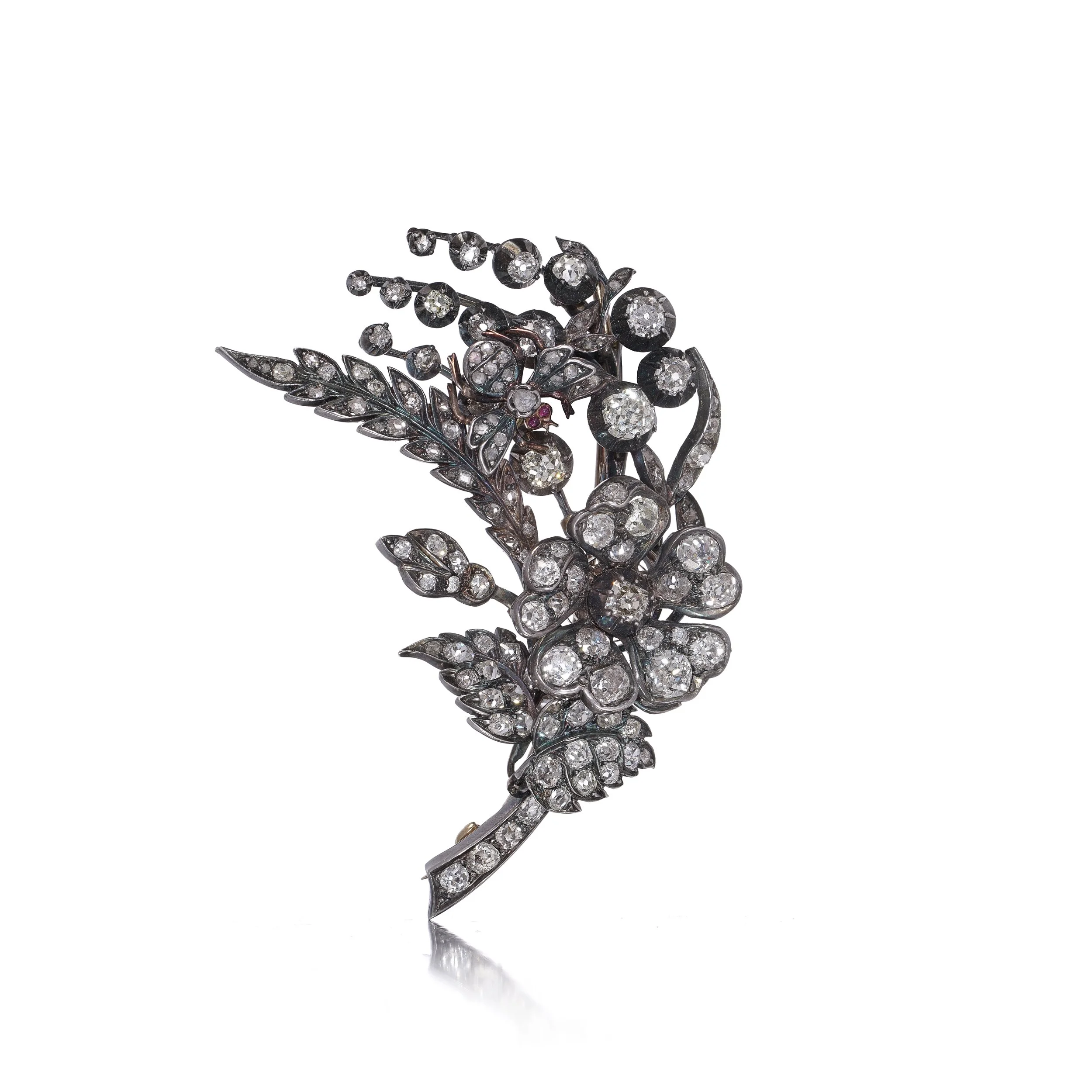
3. The tremblant
Flowerheads mounted on tiny coiled springs so the diamonds shiver with every movement — jewellery engineered for candlelight. Few survive with the mechanism intact, which is the whole game. Look for: a working, original tremble; detachable stems; a fitted case. What goes wrong: springs soldered rigid during clumsy repairs — a killed mechanism removes most of the premium. Band: £2,000–£15,000+ for diamond-set Victorian examples. We currently hold a c.1870s tremblant with the mechanism intact — the type in its best form; its full story is here.
4. Cameo brooches — shell and hardstone
The souvenir of the Grand Tour that became a collecting field of its own. Shell cameos are carved from layered shell; hardstone examples (agate, sardonyx) took vastly longer to cut and command multiples of shell prices. Look for: undercutting and fine detail in hair and drapery; signed Italian workshops; hardstone over shell. What goes wrong: cracks visible against the light, polished-out detail, and moulded resin fakes — a genuine carved cameo shows tool marks under a loupe and feels cool to the touch. Band: shell £150–£800; hardstone £600–£5,000.
5. Scottish pebble brooches
Agate, jasper and cairngorm set in engraved silver — Queen Victoria's Balmoral enthusiasm made Scottish jewellery a national fashion. Strong, graphic, and still undervalued relative to the workmanship involved. Look for: tight stone-to-mount fit, crisp engraving, unusual forms — dirks, buckles, serpents. What goes wrong: cracked or replaced stones with mismatched banding. Band: £120–£900.
6. Micromosaic & pietra dura
Rome's micromosaics (thousands of glass tesserae) and Florence's pietra dura (inlaid hardstone flowers) — the two great Italian souvenir arts. Quality varies enormously, which is exactly what makes connoisseurship pay. Look for: tesserae so fine you need a loupe to count them; smooth, gap-free inlay. What goes wrong: missing tesserae, filled losses, later frames. Band: tourist-grade from £150; fine early examples £1,000–£6,000.
7. Essex crystal (reverse intaglio)
Rock crystal carved from behind and painted, so a dog, bird or fox appears three-dimensional inside the stone — Victorian sporting taste at its most charming, and heavily faked in flat-backed glass. Look for: genuine depth of carving when viewed side-on; crisp painting. What goes wrong: glass copies with painted flat backs — no depth from the side. Band: £400–£4,000 depending on subject and size.
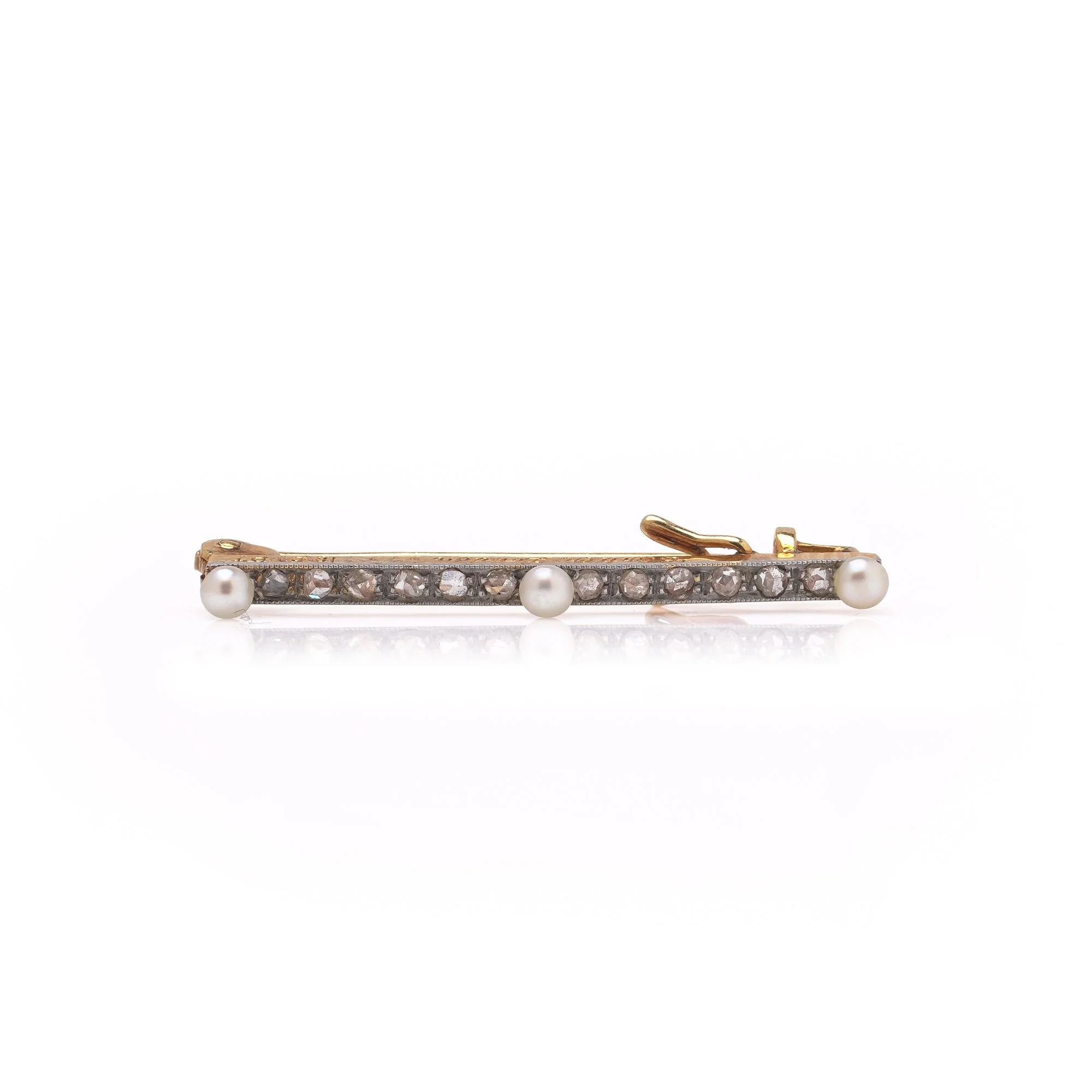
8. The bar brooch & the honest everyday Victorian
The plainest way into the field: gold bar brooches with a single stone or motif, name brooches, mizpah pieces. Ordinary — and that is their appeal: wearable antique gold at accessible money. Look for: 15ct examples (a standard discontinued in 1932, so a date clue in itself) and original pins. Band: £80–£400. A sensible first purchase for learning hallmarks, handling and wear patterns before spending seriously.
9. Edwardian & Belle Époque garland pieces
Platinum, knife-edge settings, bows, swags and lace-like openwork — the lightest, most refined brooches ever made. Look for: millegrain intact, fine knife-edge work, and natural pearls — worth testing, as our pearls guide explains. What goes wrong: bent openwork, and later brooch fittings replacing tiara or corsage mounts — not fatal, but it should be disclosed and priced accordingly. Band: £800–£8,000+.
10. Art Deco geometric & plaque brooches
The 1920s–30s brooch at its most architectural: platinum or white gold plaques, calibré-cut sapphires, onyx and diamond contrast. The most faked category on this list. Look for: hand-cut calibré stones fitted to the millimetre, old-cut diamonds (searches for old cuts are up sharply this year — collectors have noticed), and a back finished as well as the front. What goes wrong: cast reproductions with modern brilliants — check the fittings, the cut style and the finishing under magnification. Band: unsigned quality Deco £1,500–£10,000.
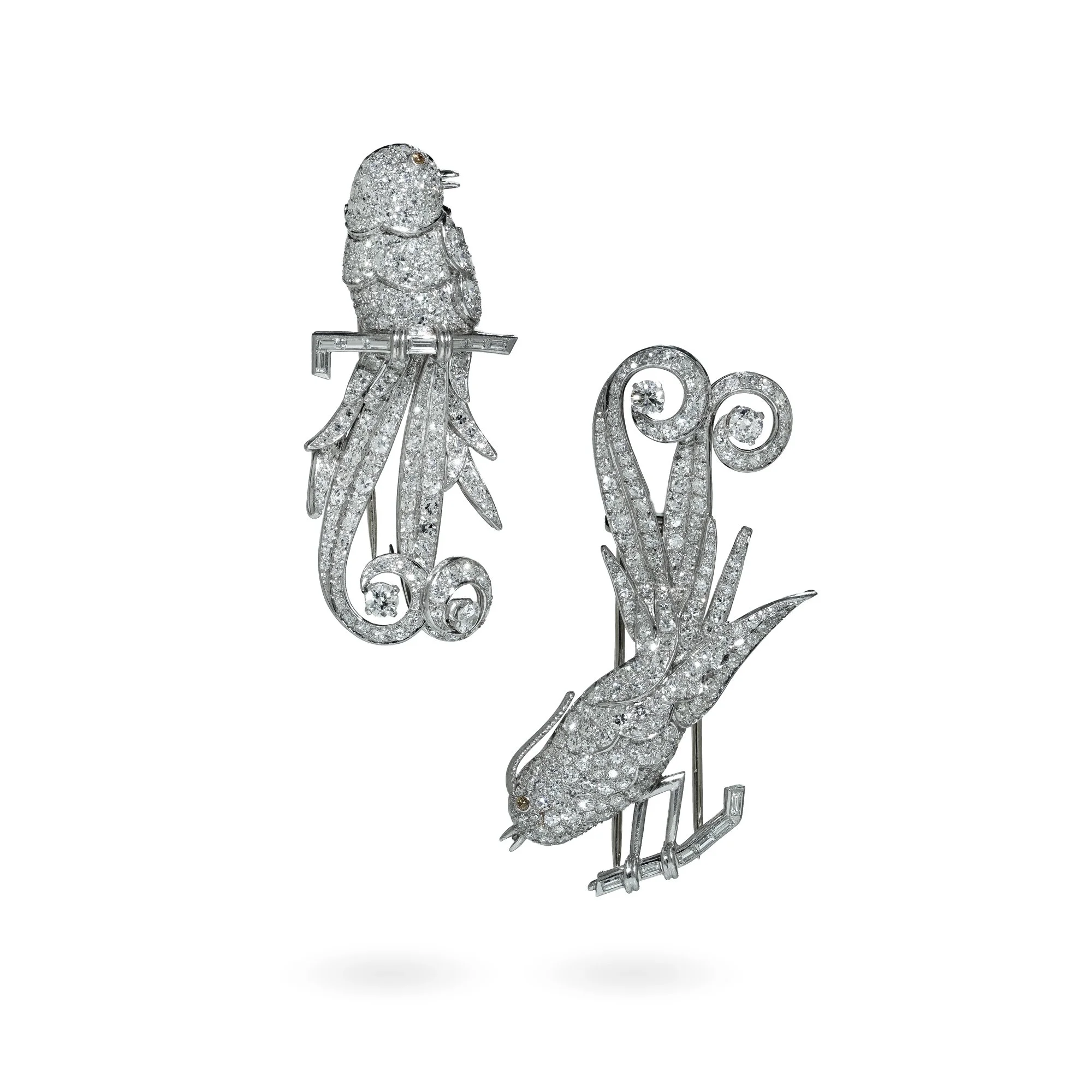
11. The double-clip
Deco's cleverest invention: a brooch that splits into two dress clips. The mechanism is the value — a matched figural pair that separates cleanly is the rarest form, and figural Deco clips have been among the strongest performers in recent jewel sales. Look for: the original frame, both clips matching, a crisp mechanism. What goes wrong: single clips sold as "brooches" with the frame lost; sympathetic frame replacements should be disclosed and priced in. Band: £2,000–£35,000 — the widest range here, because form, stones and signature stack.
12. Signed maison brooches — Cartier, Van Cleef & Arpels, Tiffany
The signature multiplies everything above. A signed brooch carries the archive, design language and market of a great house, and signed period pieces consistently outperform unsigned equivalents at auction. Look for: the correct signature style for the period, serial numbers, original fittings. Signatures are faked — buy from sellers who verify against reference archives (our authentication guide explains how we do it). What goes wrong: later-added "signatures" on genuine period pieces — the cruellest fake, because the jewel itself is real. Band: entry pieces from roughly £2,000–£3,000; important signed Deco into six figures.
Examples currently in our collection
To put shapes to the names — a few pieces we hold that illustrate the types above (each links to full photography and condition notes):
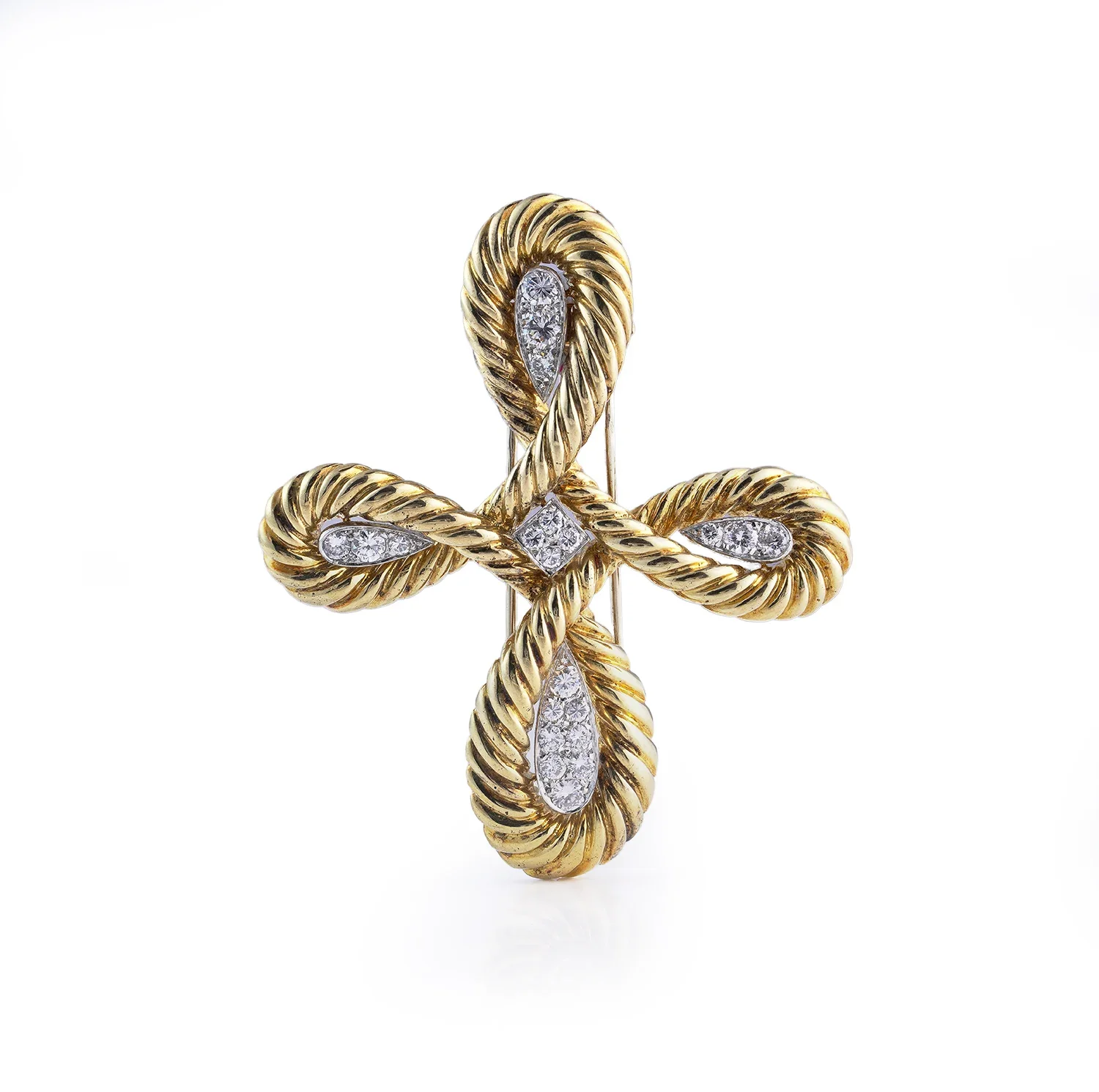
The full antique brooch collection includes further examples across most of the twelve types, including signed Tiffany and 1970s naturalistic pieces.
Condition: the five faults that halve a brooch's value
- Replaced pin assembly on a piece where originality matters — acceptable on everyday Victorian, damaging on signed Deco.
- Killed mechanisms — soldered tremblants, seized clips.
- Lead solder repairs — grey, soft, and a sign of amateur work; proper repairs use gold.
- Replaced stones that mismatch in cut or colour — check with a loupe against their neighbours.
- Over-polishing that rounds crisp edges and erases engraving — original surface is worth paying for.
Three honest ways to start collecting
Buy the type, not the trend
Choose one category above and learn it properly — handling ten pieces teaches more than reading a hundred pages.
Auction, with eyes open
Hammer prices look tempting; add roughly 30% buyer's premium, no returns, and condition risk. Good for education, less forgiving for early purchases.
A specialist dealer
Costs more per piece — but authentication, condition vetting and return protection are what you're paying for. At this level, that's usually the cheaper mistake to make.
Own a brooch already? Find out what it's worth.
Signed and mechanical pieces in particular are often worth more than owners expect — and we buy as well as sell. Send a photo for a free, no-obligation valuation; at the very least you'll know what you have.
✓ Free expert valuation in 24h ✓ Same-day payment ✓ 10,000+ items traded · 5★ rated
First look at new arrivals
Join our list to see new antique and signed brooches before they reach the site — one email when something worth your time arrives, nothing more.
Get first look →For wearing rather than collecting, our brooch styling notes and the trend piece on whether brooches are back cover the how; the Victorian and Art Deco collections cover the what.
Explore Further
Frequently Asked Questions
Collecting antique brooches, honestly answered.
Are antique brooches actually back in fashion?
Yes — trend data agrees (Pinterest's "brooch aesthetic" is up 110% this year). But the twelve types in this guide were collected steadily before the trend and will be after; buy the piece, not the moment.
What is the single biggest driver of brooch value?
A genuine signature from a major house, followed by rarity of form (tremblants, double-clips) and originality of condition.
How can I tell if a cameo is real?
Carved shell shows tool marks under a loupe, feels cool, and has translucency against the light. Moulded resin is warm, waxy and shows rounded, identical detail.
Are reproduction Art Deco brooches worthless?
Not worthless — but they are new jewellery at new-jewellery prices. The problem is reproductions sold as period. Buy from sellers who put authentication in writing.
Is a replaced pin a dealbreaker?
On an everyday Victorian piece, no — it is normal working history. On a signed or museum-grade piece originality matters, and the price should reflect any replacement.