Panda Dial Watches Explained: What a Panda Dial Is, and Which Ones Collectors Want
White dial, black counters: what makes a panda dial, where it came from, the references collectors want, and Seiko's new watch that takes the name literally.
A panda dial is a chronograph dial with a white or silver base and black sub-dials:
- Reverse panda: the opposite, a black dial with white or silver sub-dials.
- Origin: 1960s racing chronographs, where contrast made elapsed time quick to read.
- Famous examples: the Rolex Daytona and its Paul Newman dial, Heuer Carrera and Autavia, Omega Speedmaster, Breitling Navitimer, Seiko 6138.
- News: Seiko's HHK001 and HHK002, with panda ear pushers, arrive in November 2026.
- Value: an original, evenly aged dial matters most; a redial or service dial costs value.
,_1977.jpg)
In this article
What is a panda dial?
A panda dial is a chronograph dial in two contrasting colours: a white or silver base with black sub-dials, the small counters that record elapsed seconds, minutes and hours. Two or three dark circles on a pale face look like a panda's eyes, and with a third counter at six, its nose.
A reverse panda is the opposite: a black dial with white or silver sub-dials. Phillips uses both terms in its catalogues, describing a Heuer Carrera with an “inverse Panda” dial as black with white subsidiary dials.
Panda is a collectors' nickname, not a technical term, and it describes colour only. A panda dial can sit on a two-counter or a three-counter chronograph, on a hand-wound 1960s watch or a quartz one made this year.
Latest: Seiko turns the panda dial into a panda (October 2026)
On 6 October 2026 the watch press reported that Seiko is putting a concept watch from its 2024 Power Design Project into production. Designed by Kiyotaka Sakai, it takes the nickname literally:
- Two limited editions: HHK001, white with black, 3,000 pieces; HHK002, pink with black, 2,000 pieces. Seiko's UK site lists both at £510 for release in November 2026.
- Panda ears: the two chronograph pushers sit on top of the case, shaped as ears, in the 1970s “bullhead” layout.
- A panda from behind: the caseback is shaped as the panda's rear, with a small tail.
- Bamboo details: hands shaped as bamboo leaves and a “sasameter” scale named after sasa, the Japanese word for bamboo.
- Movement: Seiko's 8T61 quartz chronograph in a 43 mm steel case.
It is a playful watch, but it points straight back to Seiko's own 1970s panda chronographs, one of which appears below.
Where the look came from, and the panda dials collectors want
The panda dial belongs to the 1960s, when the chronograph was a racing instrument. A driver or timekeeper had to read elapsed time at a glance, and dark counters on a pale dial, or the reverse, could not be mistaken for the hour and minute hands. Heuer in particular built its racing chronographs around legibility. Five families define the style.
Rolex Daytona and the Paul Newman dial
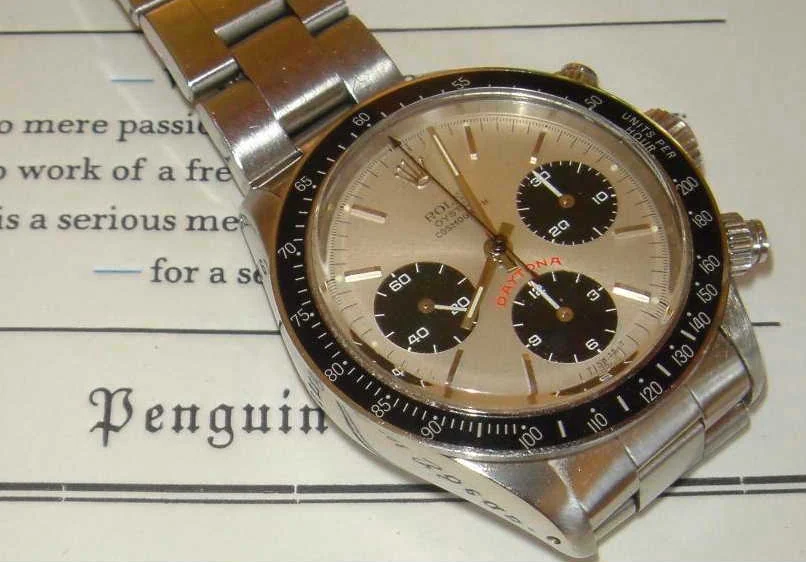

Rolex became official timekeeper at Daytona International Speedway in 1962 and launched its Cosmograph, ref. 6239, in 1963, with light dials and black counters as well as black dials. The 6263 and 6265 that followed added screw-down pushers.
In 1965 Rolex introduced a second, “exotic” dial: Art Deco-style numerals, counter markers finished with tiny squares, and a contrasting outer track. Bob's Watches estimates about one vintage Daytona in 20 has one. Collectors began calling it the Paul Newman dial in the 1980s.
The modern steel Daytona, ref. 126500LN of 2023, comes in white or black; collectors call the white one the Panda, as they did the 116500LN of 2016. For rare Daytona dials in detail, see our Daytona guide.
Heuer Autavia and Carrera
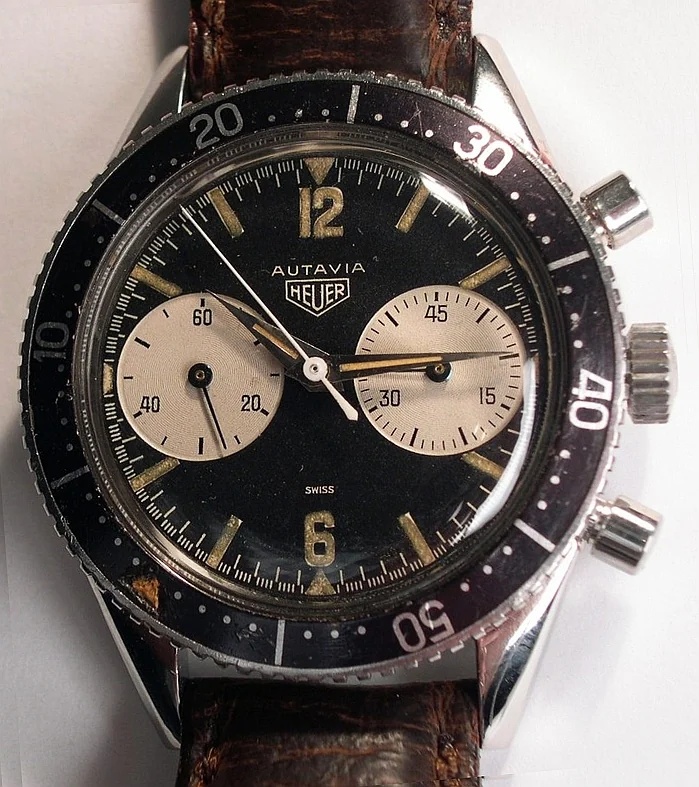

Heuer launched the Autavia wrist chronograph in 1962, its name joined from AUTomobile and AVIAtion, and the Carrera in 1963, named after the Carrera Panamericana road race in Mexico.
Early Carreras were offered with black, silver and black-on-white panda dials, and Phillips has sold a Carrera ref. 7753 of about 1970 with an inverse panda dial. The Autavia above shows the reverse version. For later TAG Heuer models, see our TAG Heuer value guide.
Omega Speedmaster
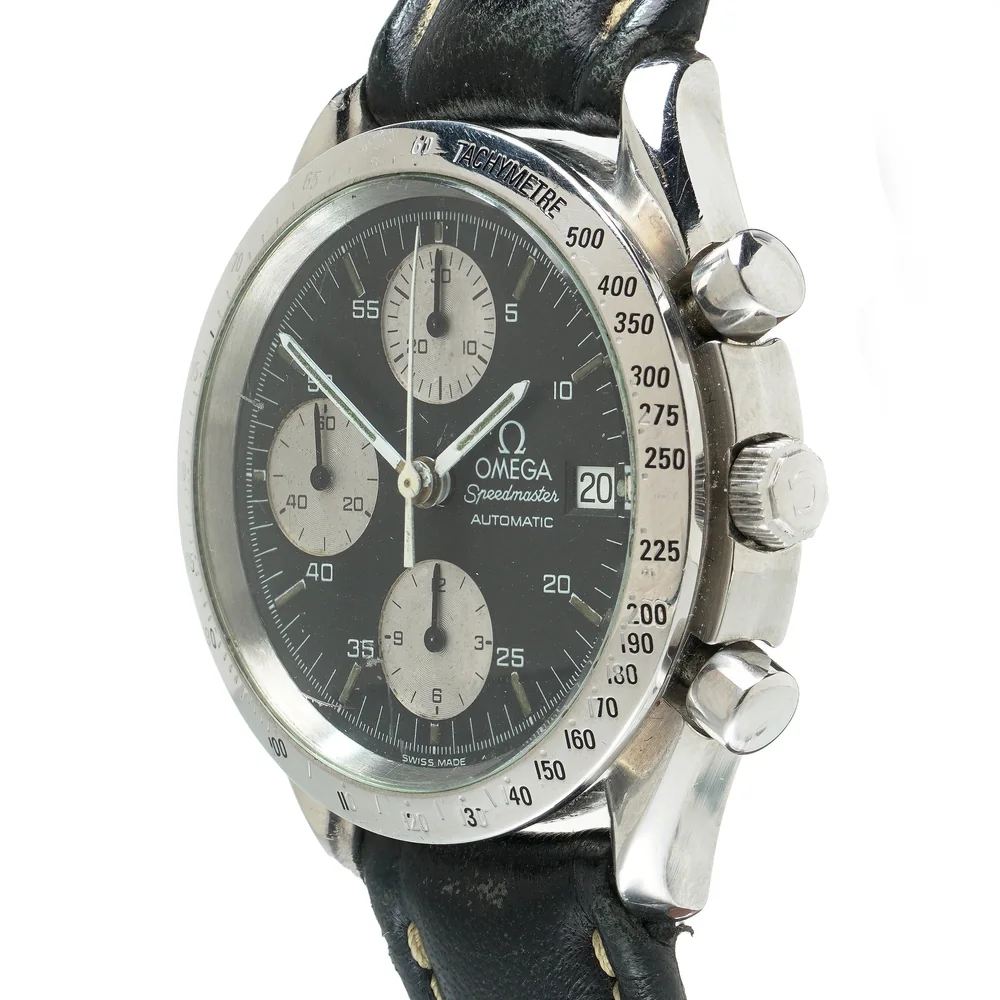
The Speedmaster is best known with an all-black dial. The Speedmaster Date in our collection is a reverse panda: a black dial with three silvered registers, seconds at 9, 30 minutes at 12 and 12 hours at 6.
It runs on Omega's automatic calibre 1155, the firm's version of the Valjoux 7750, and its dial, hands, bezel and pushers are original.
For the Moonwatch and its values, see our Omega Speedmaster guide.
Breitling Navitimer
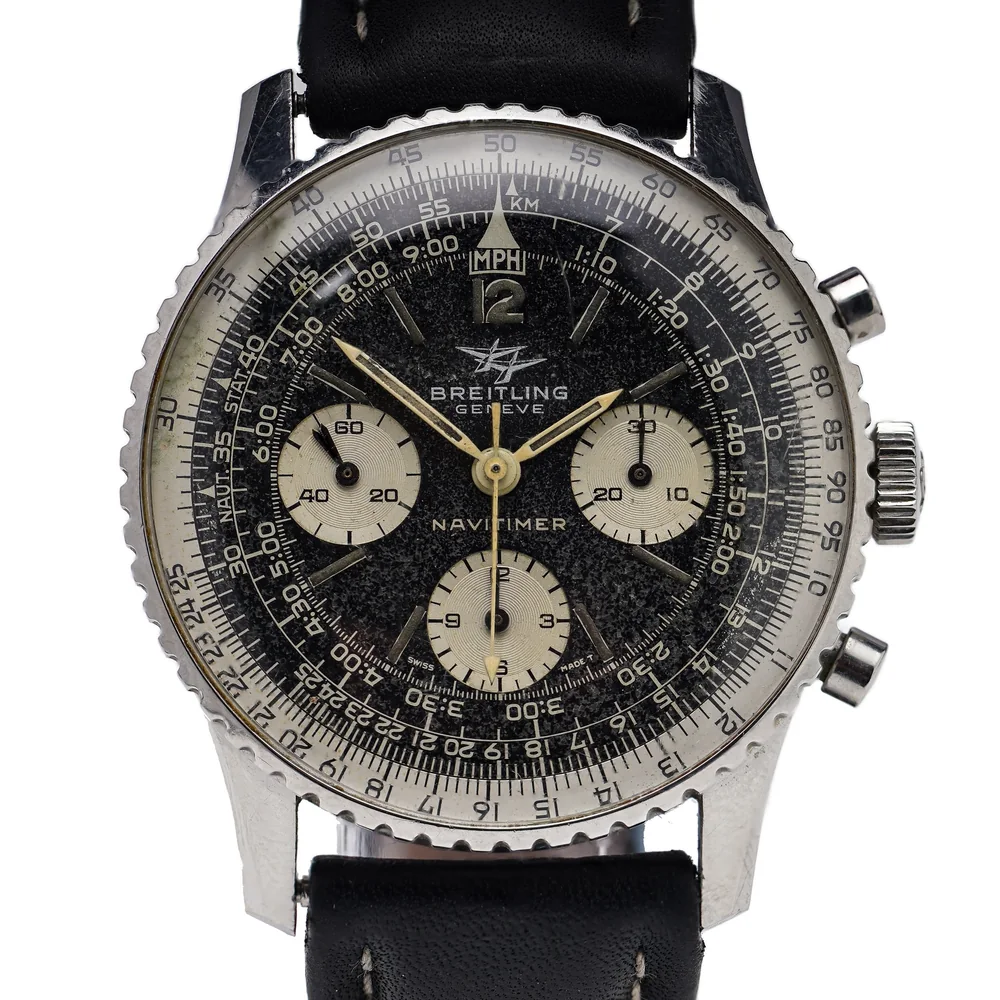
The Navitimer began in 1952, when the Aircraft Owners and Pilots Association asked Willy Breitling for a chronograph for its members. He put a logarithmic slide rule into the rotating bezel, and the model became reference 806.
The 806 of the 1960s pairs a black dial and dense slide rule scales with pale counters: a reverse panda. The watch shown carries the twin-jet logo of the mid-1960s.
Selling one? See selling your Breitling.
Seiko 6138, 6139 and the Speed-Timer
,_1976.jpg)
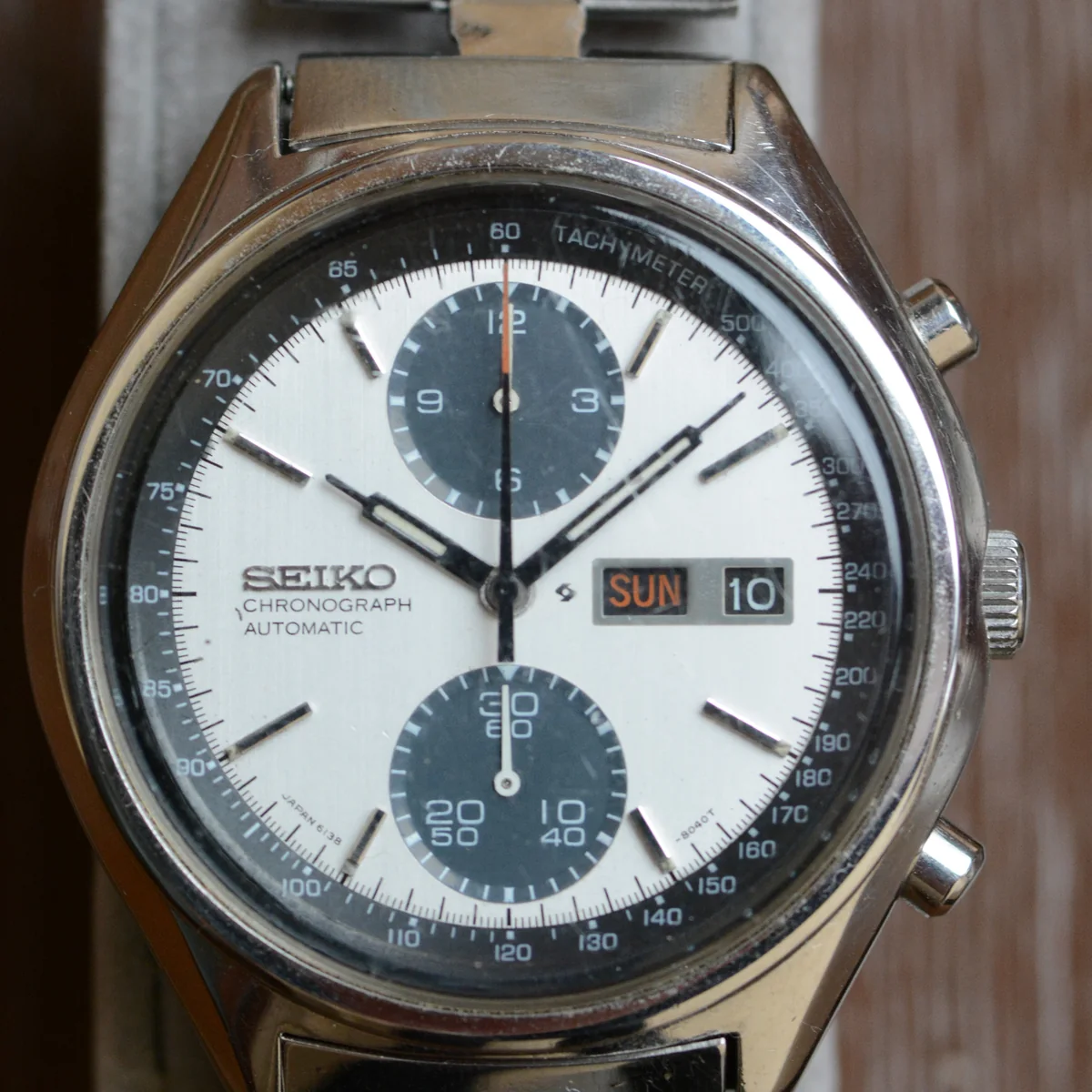
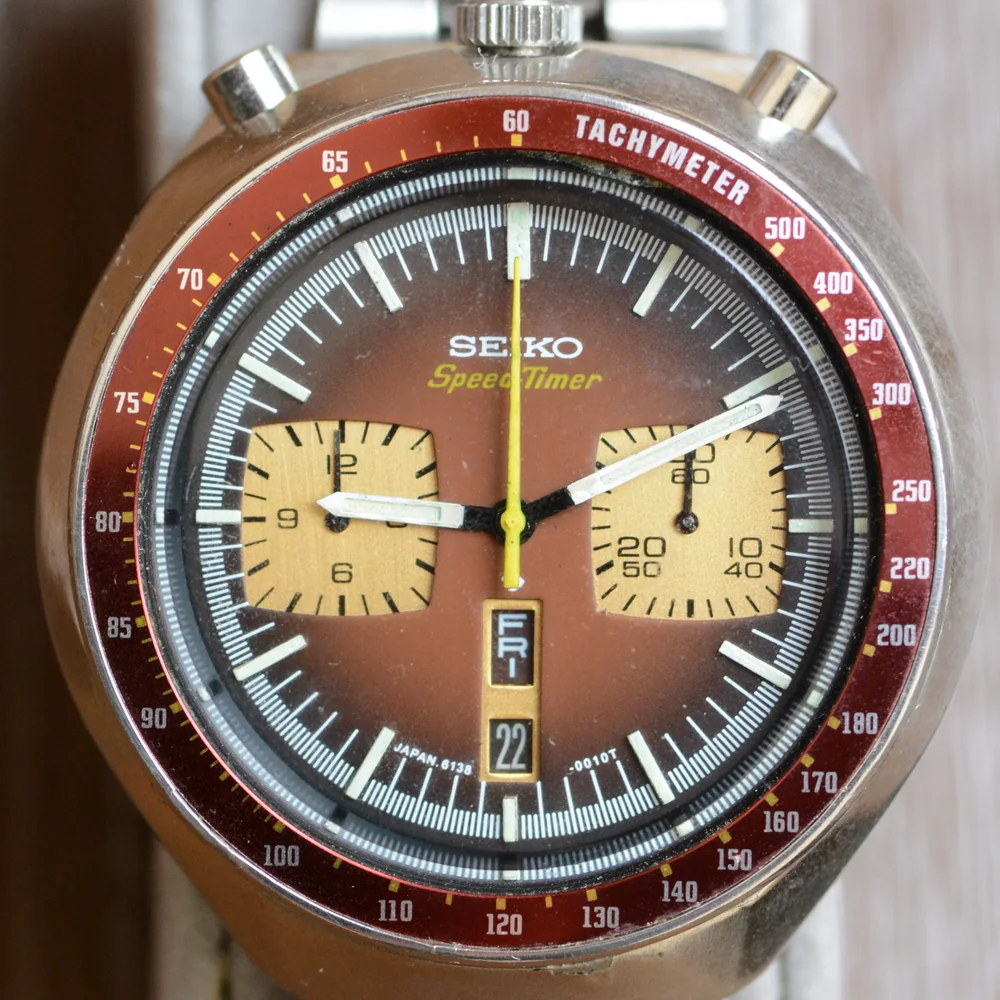
Seiko's calibre 6139 of 1969 was an automatic chronograph with a column wheel and vertical clutch. Its 6138 sibling powered the watch at the top of this page, the 6138-8020 of the early 1970s, nicknamed the Panda: two dark blue counters, at 12 and 6, on an off-white dial.
Some carried the Speed-Timer name on the dial, like the brown Bullhead shown here. In 2023 Seiko brought the look back in the Prospex Speedtimer: SRQ047 in white, and SRQ049, a blue reverse panda limited to 1,000 pieces.
What makes a panda dial valuable
On a vintage chronograph the dial carries much of the value, and on a panda the contrast shows every change. These are the points collectors and auction houses look at.
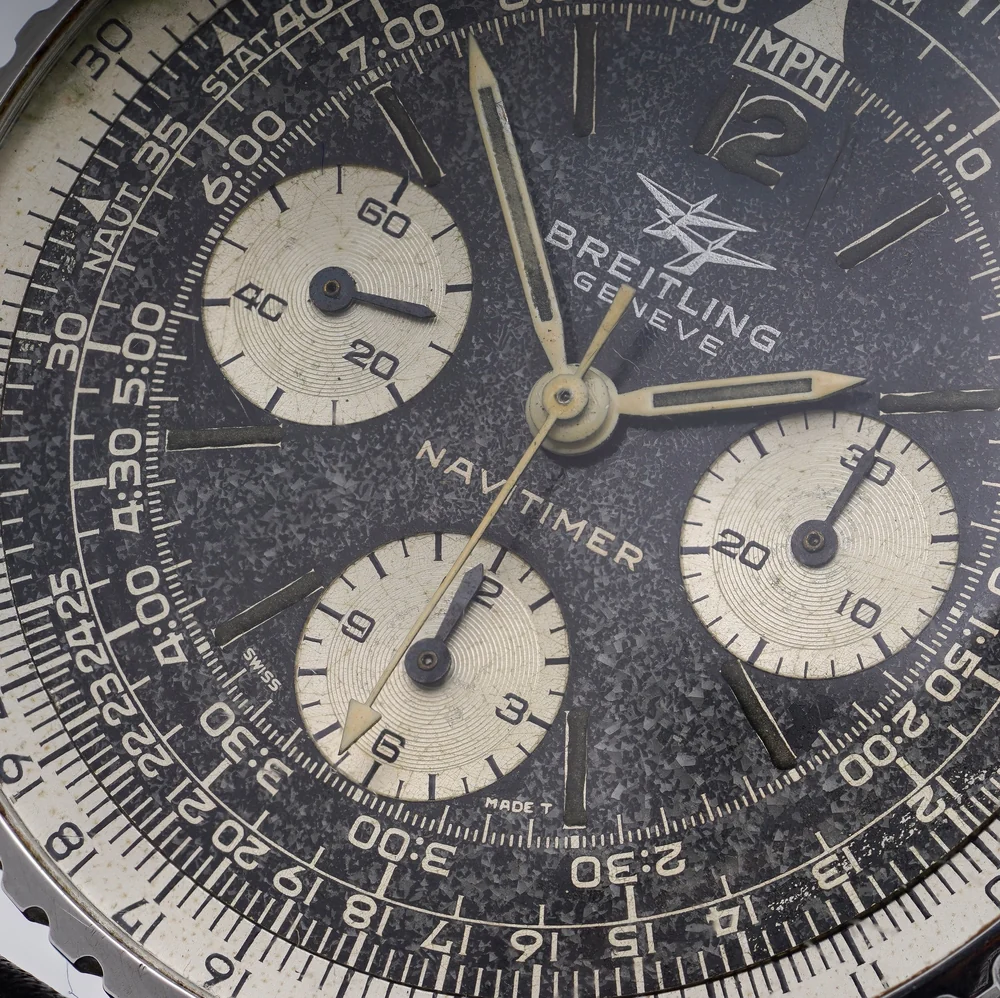
Original, and evenly aged
- The original dial. A dial that left the factory with the watch comes first. A redial, a repainted original, takes away most of the collector premium.
- Honest ageing. White bases turn cream and black can fade to brown, the “tropical” dial. Collectors prize it when the change is natural and even.
- Matching hands and lume. Hands and plots that have aged with the dial.
- Service dials. Makers often fitted new dials at service. A service dial is genuine, but the original is usually not returned, and collectors pay less for it.
- Rare variants. An exotic Daytona dial, or a short-lived colourway, sits above the standard dial of the same reference.
- Provenance. A known first owner can change everything, as the most famous panda dial of all showed.
Paul Newman's own Daytona, ref. 6239, had a white exotic dial with black counters and a caseback engraved “Drive Carefully Me”, a gift from his wife, Joanne Woodward. Estimated by Phillips at over $1 million, it sold for $17.8 million in New York on 26 October 2017, then the highest price paid for a wristwatch at auction.
Every watch is different. Send us a few photos and we will tell you what yours is worth, free and with no obligation.
Own a vintage chronograph? Get a free valuation
How to spot a redialled panda dial
Redialling means stripping an original dial and repainting it, or fitting a dial from another watch. On a two-colour dial the joins are hard to hide. Check the numbered points with a loupe, in daylight:
- Sub-dial edges
Crisp, round and evenly spaced. Paint creeping over the edge, or a sub-dial sitting off centre, points to a dial that has been repainted.
- Both colours aged together
A white base turns ivory or cream with time. Jet-black sub-dials on a yellowed base, or a bright white base around faded sub-dials, suggest one part was redone.
- Luminous plots and hands
The plots on the dial and the paint on the hands should match in colour and age. Fresh lume beside old lume means a change.
- The small print at six
Read the tiny lines along the bottom edge. Rolex dials of the tritium era carry a marking for it; Bob's Watches notes that later service dials with SuperLuminova lack it. Fuzzy or uneven sub-dial numbers are a classic sign of a redial.
- Hands and layout for the reference
Each calibre puts its counters in set places: the Seiko 6138-8020 at 12 and 6, the Speedmaster Date at 9, 12 and 6. Hands should be the right shape and length for the model; see our guide to watch hands.
- Papers and service history
A service receipt that lists a new dial tells you the original has gone. Keep any old dial or hands you were given back: they belong with the watch.
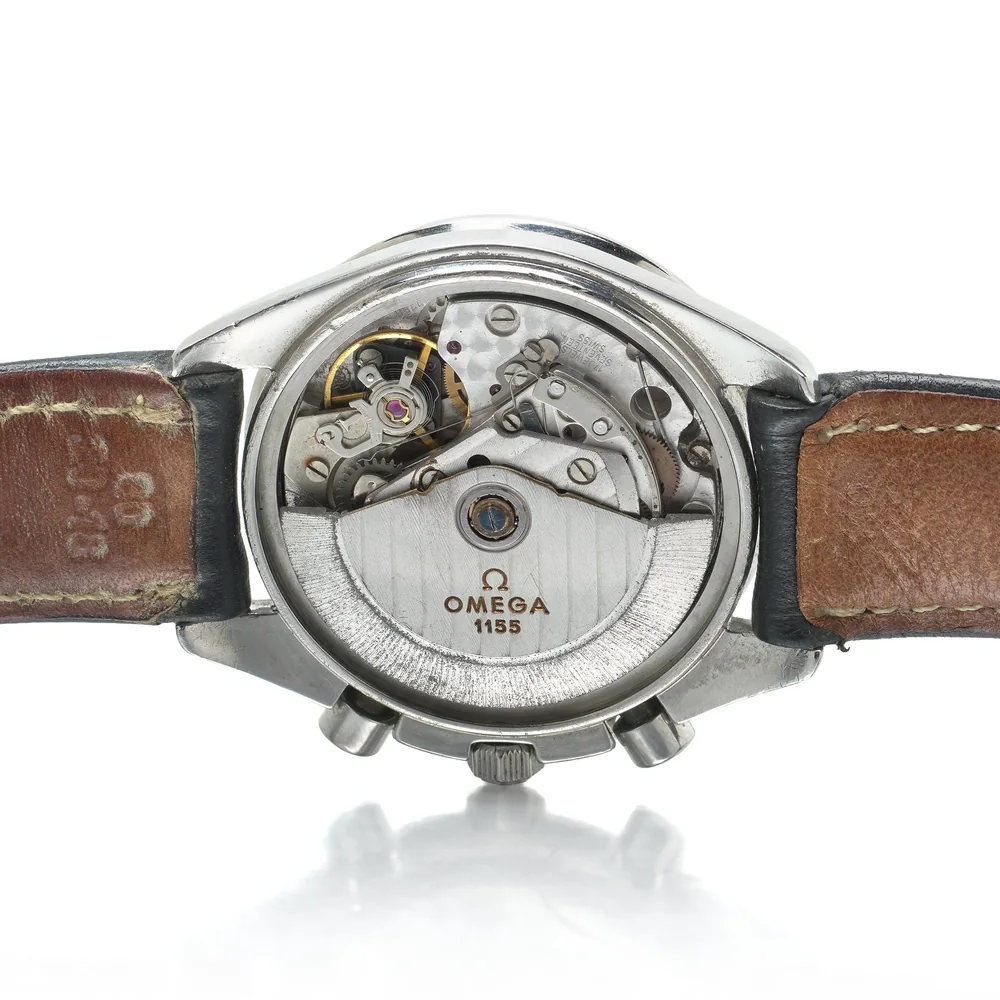
Then turn it over
The movement should be the calibre the reference was made with, and its counters should match the dial printed above them. A dial with three counters on a two-counter movement cannot be right.
For Daytona-specific checks, see our Daytona guide; for vintage Rolex generally, our Rolex value guide.
Selling or buying a panda chronograph
We value vintage and modern chronographs from photographs, free and without obligation. Send:
- Photograph
The dial square on in daylight, the caseback, the movement if you can open it safely, and any box, papers or service receipts.
- Send
Use the form below, call 01376 334482 or WhatsApp us.
- Visit
Bring it to 47 Maddox Street, Mayfair (by appointment) or to Braintree, Essex. Contact us to book.
Brand guides: selling a Rolex, Omega, TAG Heuer, Zenith and vintage watches. Weighing up your options? Read where it is best to sell a watch.
Buying one
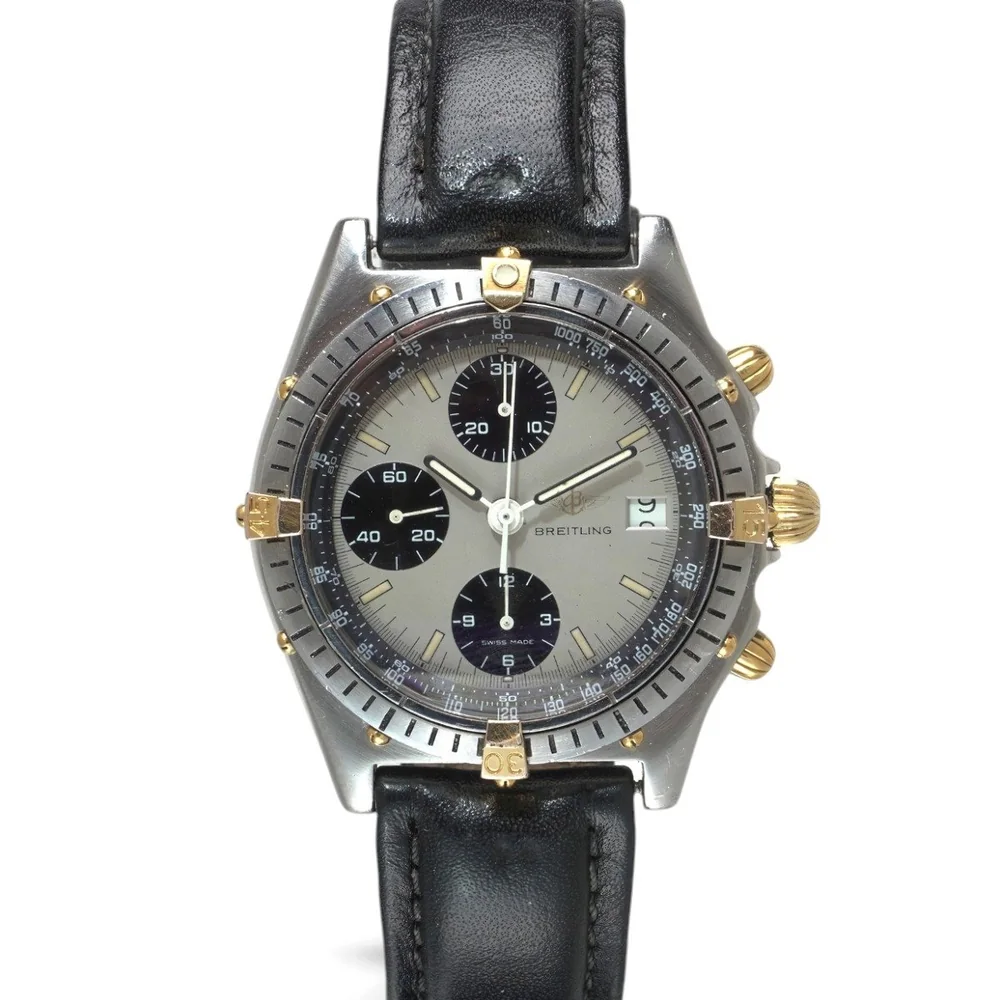
The panda idea works in other colours too. Our Breitling Chronomat B13047, made between 1989 and 1995, has a grey dial with three black registers and gold rider tabs on the bezel.
See our Speedmaster Date and every other chronograph in our watches, or read where the vintage Rolex market stands in vintage Rolex in 2026.
Request a free valuation
- Panda: white or silver dial, black sub-dials. Reverse panda: the opposite.
- The look comes from 1960s racing chronographs: Rolex, Heuer, Omega, Breitling and Seiko all made them.
- Value follows the dial: original and evenly aged beats redialled, restored or replaced.
- We value vintage chronographs free from photos, with no obligation.
Questions we are asked
What is a panda dial?
A chronograph dial with a white or silver base and black sub-dials, so the counters look like a panda's eyes. The name is a collectors' nickname for the colour scheme.
What is a reverse panda dial?
The opposite colour scheme: a black dial with white or silver sub-dials. The Breitling Navitimer 806 of the 1960s and many Heuer Autavias are well known examples.
Is the Rolex Daytona a panda?
Steel Daytonas with a white dial and black counters are called pandas, from the early references to the modern 126500LN. The rarest vintage version is the exotic or Paul Newman dial.
What is a Paul Newman dial?
An exotic Daytona dial introduced in 1965, with Art Deco-style numerals, square-tipped counter markers and a contrasting outer track. The actor's own Daytona, a 6239, fetched $17.8 million at a Phillips sale in New York in 2017.
What is the Seiko Pandagraph?
A quartz chronograph from Seiko's Power Design Project with ear-shaped pushers on top and a panda tail on the caseback, in two limited editions, HHK001 and HHK002, due in November 2026.
How can I tell if a panda dial has been redialled?
Look for crisp sub-dial edges, a white base and black counters that have aged together, lume on the dial and hands that matches, sharp small print and the right counter layout for the movement.
Does a tropical or faded panda dial lose value?
Not necessarily. Collectors often prefer natural, even ageing to a dial that has been restored or replaced. Damage from water is not the same thing, and collectors treat it as a fault.
Where can I get a vintage chronograph valued?
Send us photos of the dial, caseback and any papers for a free valuation, or book a visit to Mayfair or Braintree. There is no obligation to sell.
Value your panda dial chronograph
Send photos of the dial, caseback and any papers for a free valuation, or visit us in Mayfair or Braintree.
- We buy directly
- Free valuation from photos
- Appointments in Mayfair and Braintree
- Insured postage or collection
New pieces reach our list first: join the Mozeris list.