Military Pocket Watches: The Broad Arrow, GSTP and What They Are Worth
How to identify a British military pocket watch from the marks on its case back, which makers supplied them, how to spot an added arrow, and what they sell for.
A military pocket watch is a watch bought for official issue. On British watches:
- The broad arrow on the case back, with a service number, marks government property.
- G.S.T.P. is the Army's Second World War watch: a Swiss base metal open face with a luminous dial, by makers such as Helvetia, Cyma, Leonidas, Jaeger-LeCoultre and Omega.
- Royal Navy deck watches are marked H.S.3; RAF navigation watches 6E/50.
- Typical G.S.T.P. watches sell for under £200; Rolex, Omega and boxed deck watches can pass £1,000.
In this article
What makes a pocket watch military
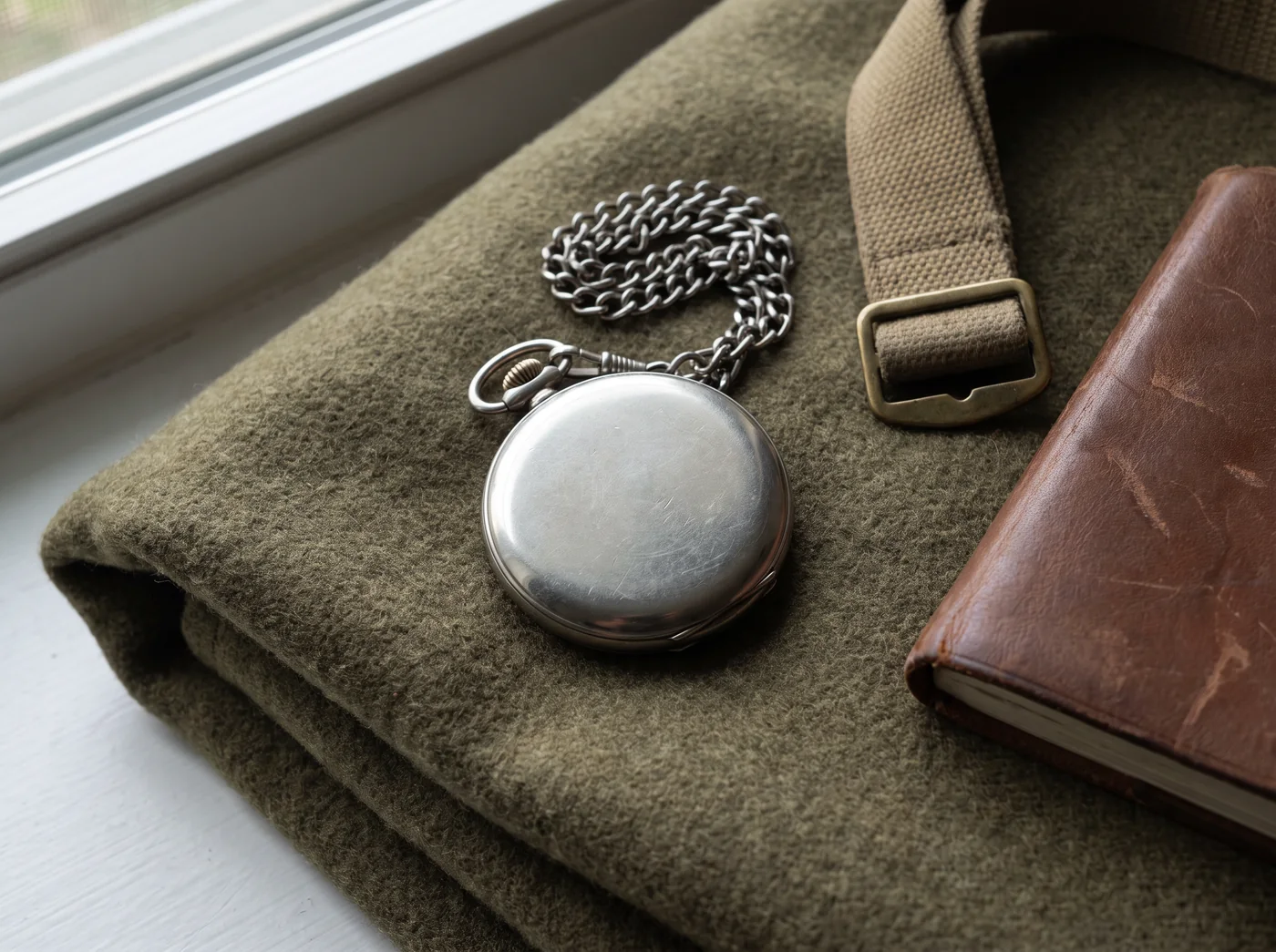
A military pocket watch is one the government bought for issue, not a watch a serviceman happened to own. On a British watch the proof is the broad arrow, a three-stroke arrowhead stamped or engraved on the case back, and often on the dial and movement too.
- Government property. The arrow was used in England from the 14th century and widely from the 16th. It became the mark of the Board of Ordnance, then the War Department (1855), the War Office (1857 to 1964) and the Ministry of Defence, until it was phased out in the 1980s.
- Sold out of service. When an item was sold off, a second arrow was struck nose to nose with the first.
- Protected by law. Under the Public Stores Act 1875, applying the mark without authority was an offence.
Source: Wikipedia, Broad arrow, summarising the Public Stores Act 1875.
A watch with no arrow and no service number is a civilian watch, however close its link to a soldier. That is no slight on it: many family watches carried through both wars were bought from a jeweller. For gold cases and their marks, see our antique gold pocket watch identification guide.
First World War pocket watches
Issued watches were few
In 1914 an infantry battalion of about 1,000 men received just eight issued watches, for signallers, telegraphists and telephonists, according to watch historian David Boettcher.
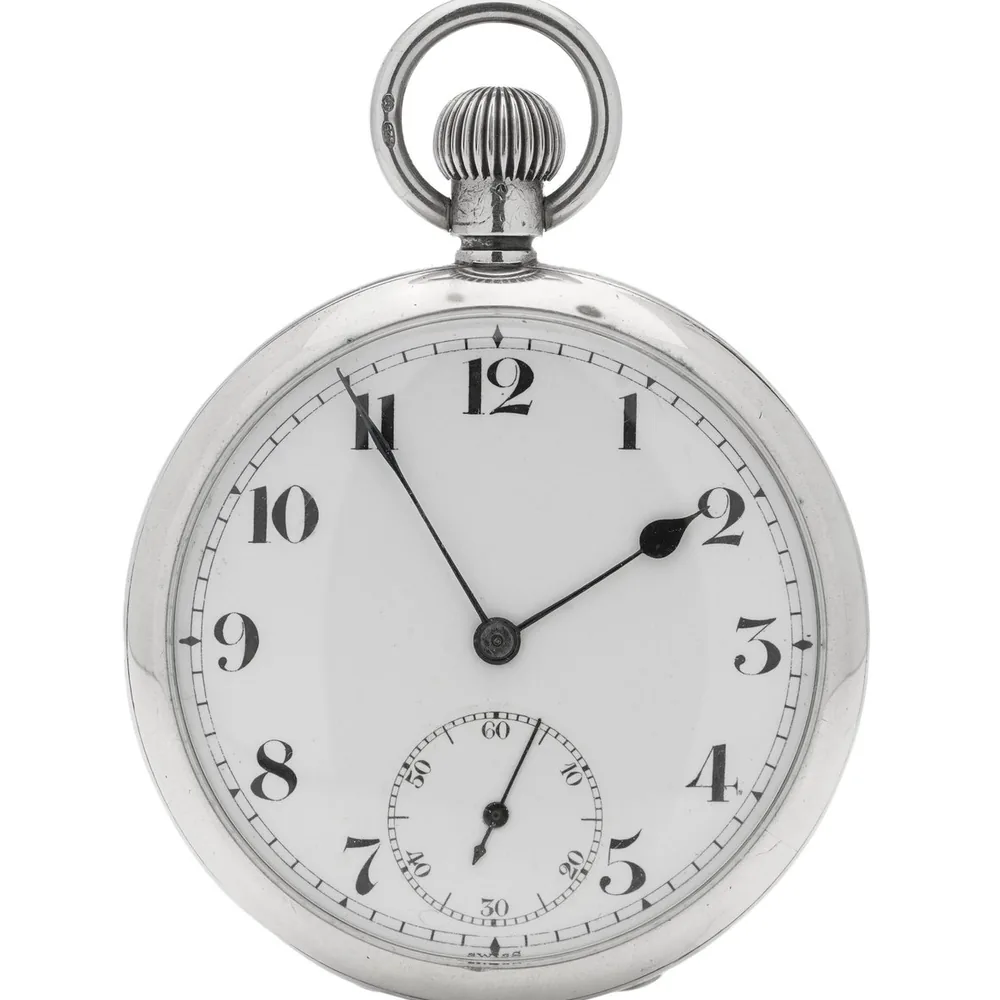
Officers were given a kit allowance of around £50 and bought their own watch from a jeweller or outfitter. Those are civilian watches, often silver open faces like this one, and carry no arrow.
Source: vintagewatchstraps.com (David Boettcher), the first military wristwatches.
Issue pocket watches by H. Williamson
The issued pocket watches are plainer. A typical example is the H. Williamson watch of about 1915: black dial with luminous numerals, 7 jewel movement, heavy Dennison case, and the same issue number on the dial and the screw back beside the arrow. One sold at Noonans in 2020 for £160.
Royal Flying Corps cockpit watches
The Mark IV.A (1914) and Mark V (1916) are pocket watches built to sit in an aircraft's instrument panel, with long winding stems. The Mark V was made by Zenith, Omega, Doxa and Electa. Royal Naval Air Service watches were mostly 8-day, Royal Flying Corps watches mostly 30-hour, and RFC pieces carry a capital A over the arrow.
Source: Monochrome Watches, history of the pilot watch, part III.
Inscriptions and family history
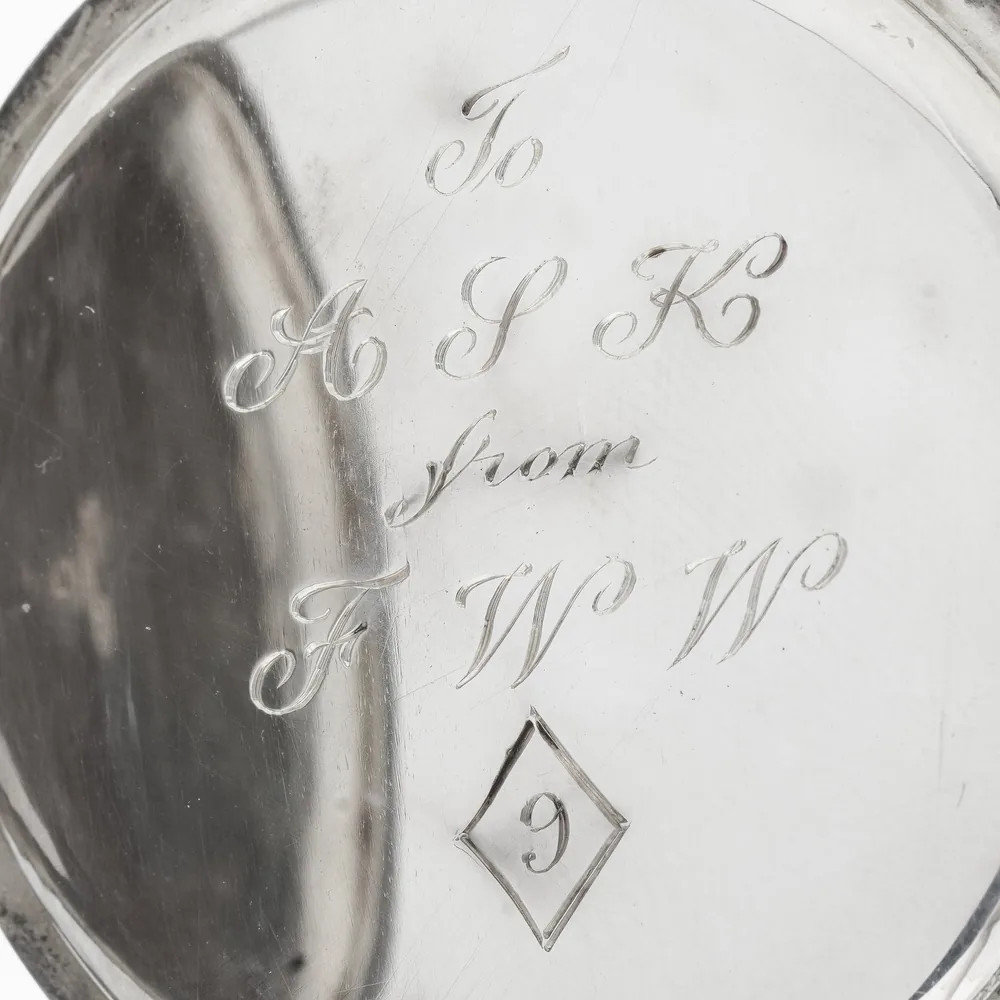
An engraved name, unit or presentation inside the case is often the only link between a civilian watch and a serviceman. Keep any letters, photographs or medals with the watch: provenance that can be checked is what collectors pay for.
Silver cases of the period are hallmarked, which dates them. See how to read silver hallmarks and how to date a vintage gold watch.
Second World War: G.S.T.P., G.S. Mk II, Navy and RAF
G.S.T.P.: the Army's general service watch
G.S.T.P. (also stamped GS/TP) is the main British Army pocket watch of the Second World War. It is usually expanded as General Service Trade Pattern, meaning a watch bought from the trade to a common specification; many people call it General Service Time Piece.
- Case: plain chrome or nickel plated base metal, about 50 to 53 mm, snap-on back.
- Dial: black or white, luminous numerals and hands, small seconds at six.
- Movement: Swiss, typically 15 jewels.
- Marks: the arrow, G.S.T.P. and an issue number with a letter prefix, such as P 23766.
Makers named on catalogued examples include Helvetia, Leonidas, Cyma, Cortebert, Doxa, Tissot, Buren, Frenca, Jaeger-LeCoultre and Omega. Many surplus watches were sold after the war by the London jewellers Bravingtons, whose name appears on some dials and boxes.
Source: Helvetia History, British GS/TP pocket watches; auction catalogues from Fellows, Roseberys, Antiquorum and Sheffield Auction Gallery.
G.S. Mk II: Rolex and Elgin
Also found is the G.S. Mk II (General Service Mark II), stamped with an issue number beginning A. Catalogued examples are by Rolex and Elgin, with black luminous dials, dated from the 1930s to about 1940.
Royal Navy deck watches
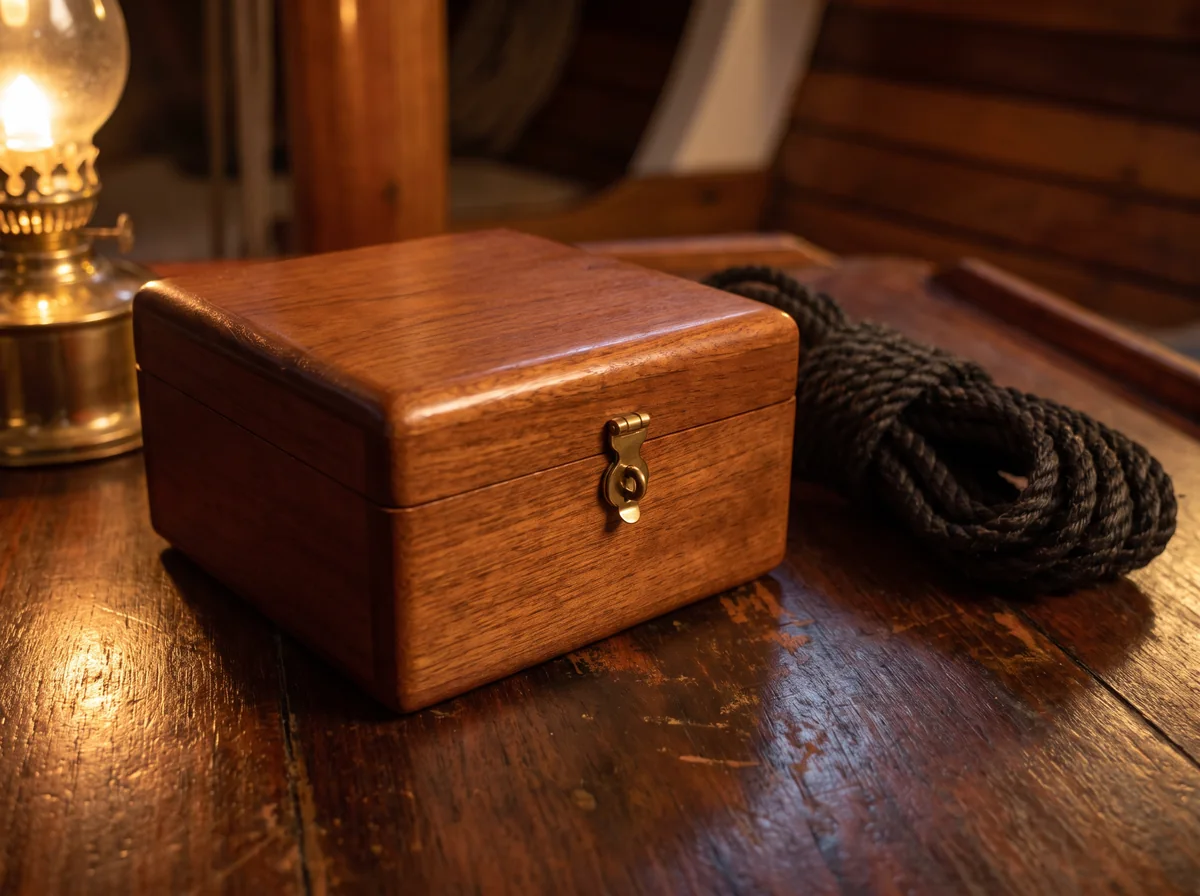
A deck watch was set to the ship's chronometer, kept below in its gimbals, and carried on deck for star and sun sights. A four second error is about one nautical mile of longitude at the equator.
Look for H.S. with the arrow and 3: Hydrographic Supply category 3. Greenwich holds IWC deck watches marked G.M.T. or SIDEREAL above it, with matching movement and case numbers, white enamel dials and spade and poker hands.
Source: Royal Museums Greenwich, deck watches ZAA0114 and ZAA0172; Wikipedia, Hack watch.
RAF navigation watches
Second World War RAF navigation pocket watches carry the arrow and the Air Ministry stores reference 6E/50 above a serial. One in the City of Armadale History House, Western Australia, is marked 6E/50 A29768 and is linked to an RAAF instrument maker.
Railway watches and other countries
Railway companies issued watches too, engraved with initials such as GWR or L.N.E.R.: service watches, but not military, and they carry no arrow. In the United States, the Hamilton 4992B was a 22 jewel navigation watch with a 24-hour dial and hacking seconds.
Source: Science Museum Group collection, railway timepieces.
Case-back markings decoded
Most of what a military pocket watch is lies on its back. These four layouts are copied from catalogued watches; spacing and lettering vary from maker to maker.
| Mark | What it means | Where you see it |
|---|---|---|
| Broad arrow | British government property | Case back, often the dial and movement too |
| Two arrows nose to nose | Sold out of service | Beside the first arrow |
| G.S.T.P. or GS/TP | Army general service pocket watch, Second World War | Case back, with a letter and number |
| G.S. Mk II | General Service Mark II, 1930s to 1940s | Case back, with an A number |
| H.S. with arrow and 3 | Royal Navy deck watch, Hydrographic Supply category 3 | Case back or a paper tag |
| 6E/50 | Air Ministry stores reference, RAF navigation watch | Case back, with a serial |
| A over an arrow | Royal Flying Corps aviation equipment, First World War | Case and movement |
| A.T.P. or W.W.W. | Wristwatch marks, not pocket watches | Wristwatch case backs |
All the watches above are open face; for case styles in general see full hunter, half hunter and open face cases.
How to spot a fake or altered military watch
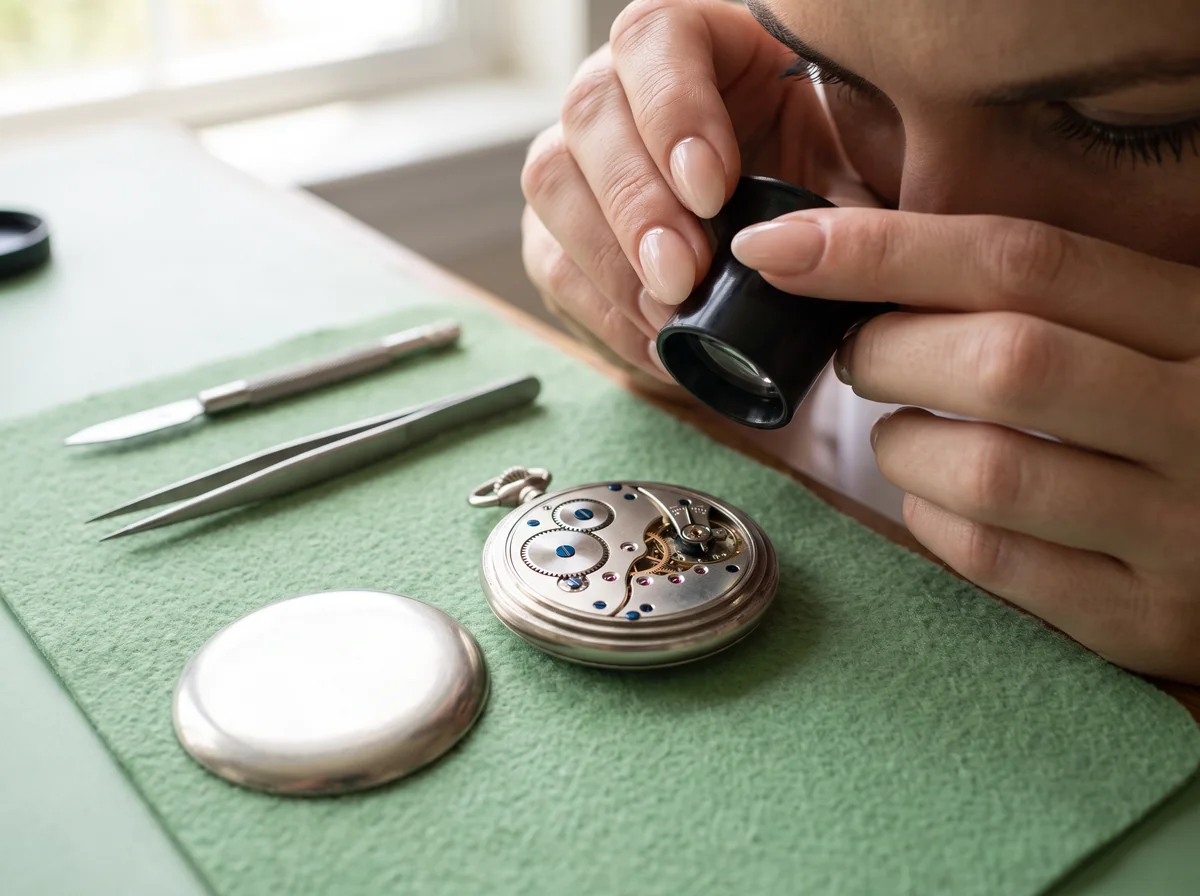
Why fakes exist
An arrow and service number add a premium to an otherwise plain watch, so they are sometimes added to civilian cases. Dials are also reprinted and luminous paint re-applied: Antiquorum catalogued one Rolex G.S. Mk II with a reprinted dial and another with its luminous material reapplied.
- Read the wear
Genuine marks have worn with the case. Sharp, bright cuts on a scuffed back are a warning, although wartime engraving was often rough, so roughness alone proves nothing.
- Check the specification
A G.S.T.P. is a base metal open face of about 50 to 53 mm. The same marks on a gold hunter or a ladies' watch should be questioned.
- Match the numbers
Issue numbers are often repeated on the dial or case side, and deck watch movements and backs carry the same number.
- Look at the dial
Compare the print and luminous colour with known examples. A redial is not always a fake, but it lowers the value.
- Do not fear Bravingtons
A Bravingtons name on a G.S.T.P. dial or box is genuine post-war surplus, not a sign of tampering.
Most luminous dials of this period were painted with radium. A 2018 University of Northampton study found 30 such watches kept in a small unventilated room raised radon to 134 times the safe level. Do not open, scrape or reluminise a radium dial yourself; store watches in a ventilated room.
What is a military pocket watch worth?
Most G.S.T.P. watches by lesser makers sell for under £200 at UK auction. Better makers, G.S. Mk II watches and boxed Admiralty deck watches reach several hundred pounds to over £1,000. These are dated, named results:
| Watch | Sale | Result |
|---|---|---|
| G.S.T.P. retailed by Bravingtons, number P 23766, about 1940 | Roseberys, London, March and June 2023 | Unsold at £150 to £250; sold at the second try for £143 with premium |
| First World War issue watch by H. Williamson, black dial, Dennison case, about 1915 | Noonans, Culling Collection, 15 September 2020 | £160 hammer, against £40 to £80 |
| Omega G.S.T.P., near unworn, original radium dial | Antiquorum, Geneva, May 2025 | CHF 875, about £790, against CHF 2,000 to 4,000 |
| Rolex G.S. Mk II, A.9563, about 1940, dial reprinted | Antiquorum, New York, June 2012 | $1,375, about £890 |
| Rolex G.S. Mk II, A.1763, luminous reapplied | Antiquorum, Hong Kong, December 2021 | HK$15,000, about £1,450 |
| Admiralty deck watch by W.J. Johnson, silver, London 1914, box and Greenwich card | Bonhams, London, November 2004 | £740.90 with premium |
| Deck watch by H. Williamson, silver, London 1914, box with H.M. Chronometer Depot label | Bonhams, Knightsbridge, February 2019 | £1,062.50 with premium |
Foreign currency results converted at the rate of the month of sale and rounded.
What moves the price
- Maker: Rolex and Omega have outsold lesser Swiss names at auction.
- Complete marks: arrow, designation and number, clear and matching.
- Original dial and hands: reprints and relumes cost money.
- Box, papers and story: a deck box, an issue card or a named serviceman's group.
- Condition: running order and an unpolished case help.
If yours is a solid gold watch carried by an officer, its metal may count for more than any service link: see how to tell if a vintage watch is solid gold.
Free valuation: send us photos of the dial and case back
Inherited one? Selling or valuing a military pocket watch
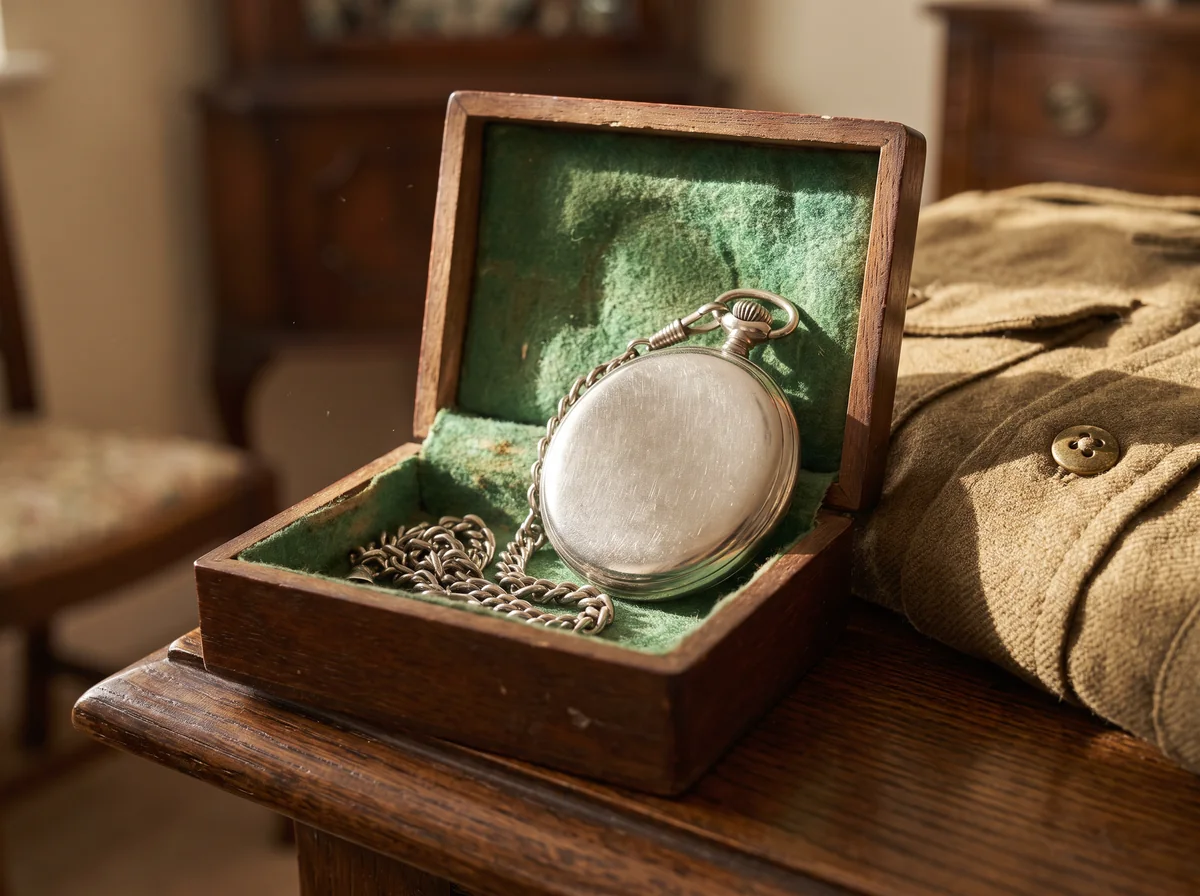
Start with what you already have
Many of these watches belonged to a father or grandfather. Before deciding anything, photograph the case back, dial and any inscription, and write down what the family knows: name, unit, ship or squadron. Keep medals and papers together with the watch.
Do not polish the case or open a radium dial.
- Send photos
Use the form below, WhatsApp 07494 214652 or call 01376 334482. We reply with a free valuation.
- See us
Bring the watch to 47 Maddox Street, Mayfair (by appointment) or to Braintree, Essex. See contact us.
- Sell or keep
If you sell, we buy directly and pay by bank transfer. How it works: sell your pocket watch. Chains too: sell your Albert chain.
Buying instead? Browse our antique pocket watches and the wider watch collection.
Request a free valuation
- No broad arrow and service number, no proof of issue: most family First World War watches are civilian.
- G.S.T.P., G.S. Mk II, H.S.3 and 6E/50 identify Army, Navy and RAF pocket watches of the 1930s and 1940s.
- Check wear, specification, matching numbers and the dial before trusting the marks; treat radium with care.
- We value military pocket watches free from photos and buy directly in Mayfair and Braintree.
Questions we are asked
What does GSTP mean on a pocket watch?
G.S.T.P. (or GS/TP) marks the British Army's general service pocket watch of the Second World War. It is usually read as General Service Trade Pattern, often as General Service Time Piece.
What does the arrow on my pocket watch mean?
It is the broad arrow, the mark of British government property. With a service number it shows the watch was bought for official issue. Two arrows nose to nose mean it was sold out of service.
Who made GSTP pocket watches?
Swiss makers to a common specification. Catalogued examples include Helvetia, Leonidas, Cyma, Cortebert, Doxa, Tissot, Buren, Frenca, Jaeger-LeCoultre and Omega.
How much is a WW2 military pocket watch worth?
A typical G.S.T.P. sells for under £200 at UK auction; a Bravingtons example made £143 at Roseberys in 2023. Omega, Rolex G.S. Mk II and boxed deck watches have made several hundred pounds to over £1,000.
What does H.S.3 mean on a watch?
H.S. with the arrow and 3 marks a Royal Navy deck watch: Hydrographic Supply category 3, per Royal Museums Greenwich.
Were soldiers issued pocket watches in the First World War?
Only a few. Issue watches went to signallers and telephonists; officers bought their own with a kit allowance, so most First World War watches are civilian.
Is a radium dial dangerous?
Radium paint gives off radon and loose flakes are hazardous if swallowed. Do not open or scrape it, and keep collections in a ventilated room.
Do you buy military pocket watches?
Yes. Send photos of the dial, case back and any inscription for a free valuation, or visit us in Mayfair or Braintree.
Value or sell your military pocket watch
Send photos of the dial, case back and any inscription for a free valuation, or bring it to Mayfair or Braintree. Call 01376 334482.
- We buy directly
- Free valuation from photos
- Appointments in Mayfair and Braintree
- Insured postage or collection
New pieces reach our list first: join the Mozeris list.