Inherited a Pocket Watch? What to Do Next
If you have inherited a pocket watch, from a grandfather, a father or a great-aunt, here is what to do, step by step: what not to touch, how to find out what it is, and how to decide what happens next.
Inherited a pocket watch? In brief:
- Leave it as it is. Do not polish it, prise it open or force the crown or key.
- Photograph it and keep the chain, key, box and papers with it.
- Read the marks inside the case: they say gold, silver or plated, and often the year.
- Get a free valuation before you decide to keep, wear, insure, share or sell it.
- For probate, the value is what it would have sold for on the date of death.
In this article
- First, three things not to do
- Then find out what you have
- What most inherited pocket watches turn out to be
- Keep, wear, service, insure or sell
- Inscriptions and family history
- The chain, the key and the box
- Dividing a watch among the family
- UK probate basics for a pocket watch
- A free valuation, an offer, or a watch to buy
- Questions
First, three things not to do
Most harm to inherited watches is done in the first few days, with the best intentions. Before anything else, leave the watch as it is.
Do not polish, clean or force it open
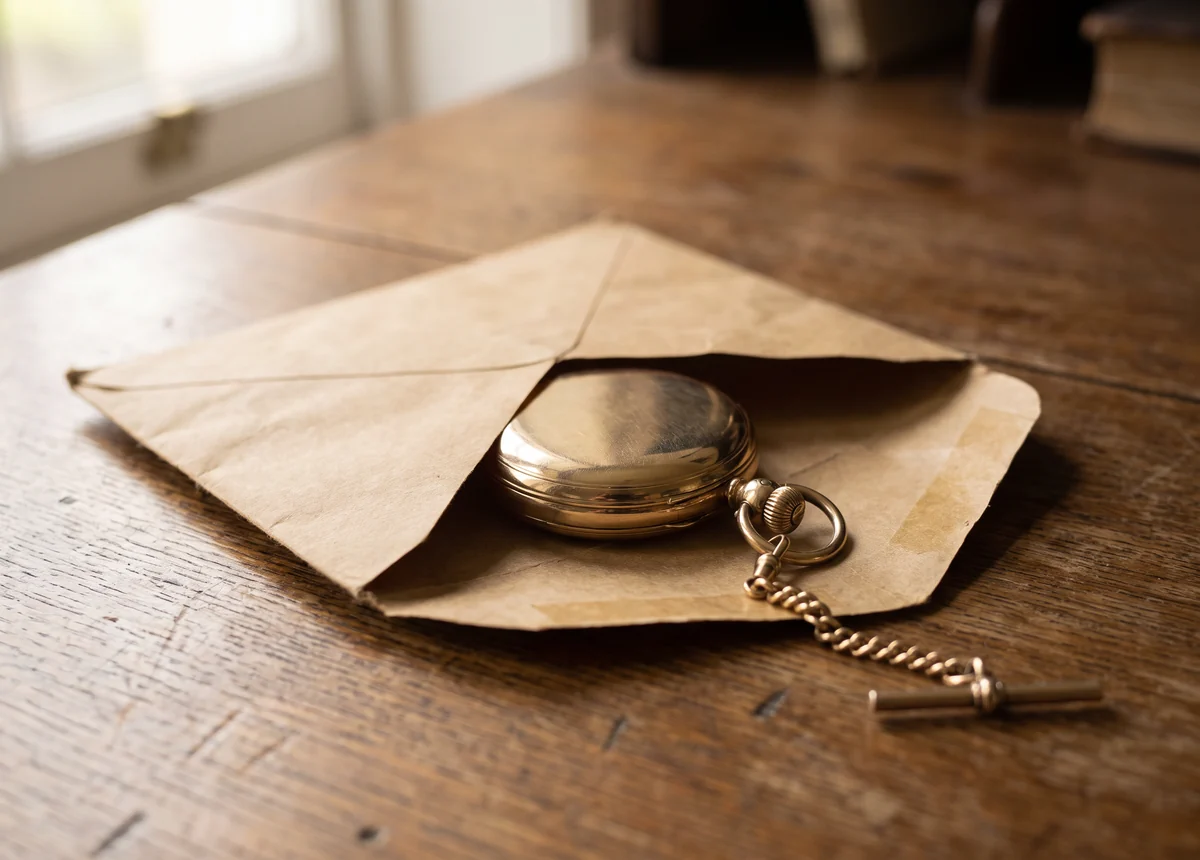
Polishing wears away hallmarks, case marks and fine engraving, and a valuer can see that it has been done. Leave dust and tarnish alone.
Do not prise the back or the lid with a knife. Some backs screw off and some snap, and a slipped blade scratches the case. Our guide to opening a pocket watch shows the safe way, or leave it closed for the valuer.
Do not force the crown or the key
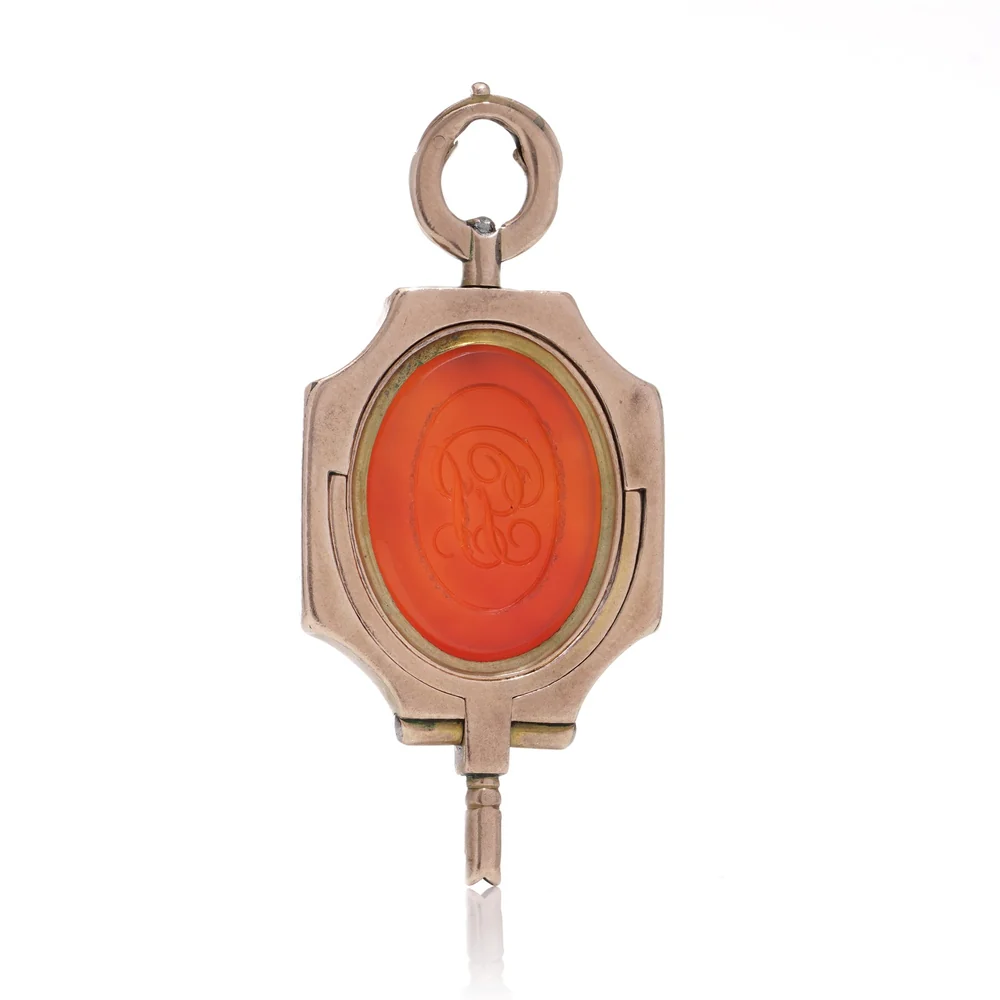
Winding a healthy watch until it stops does no harm; overwinding is a myth. The real risk is forcing a stiff crown, or a key that does not fit snugly.
A watch that is fully wound but will not run is not overwound. Old, thickened oil or a damaged part is the usual cause. See how to wind and set a pocket watch, including key sizes, and keep any key you find with the watch.
Photograph it and keep everything together
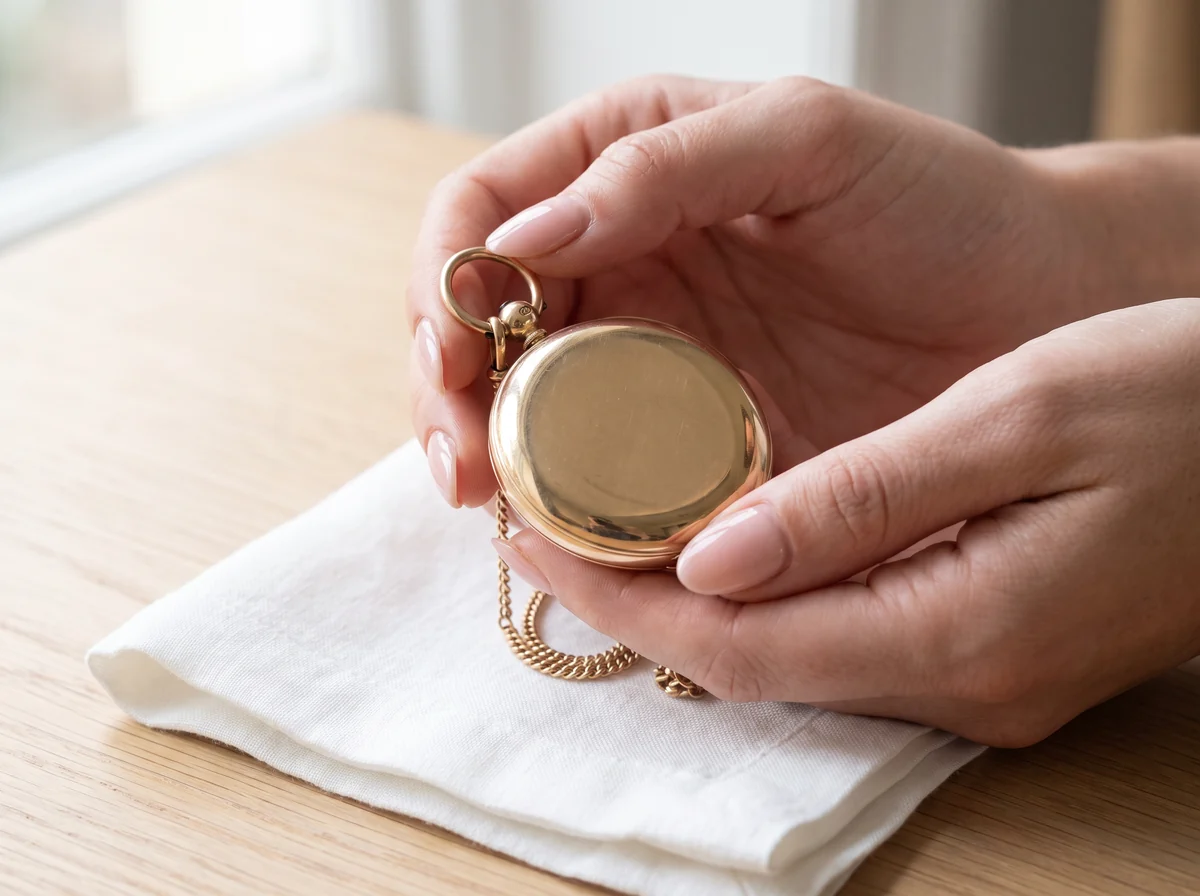
Hold it over a soft cloth, by the edges. Photograph the front, the back, the inside of the case if it opens easily, and any marks or engraving. Note where it was found.
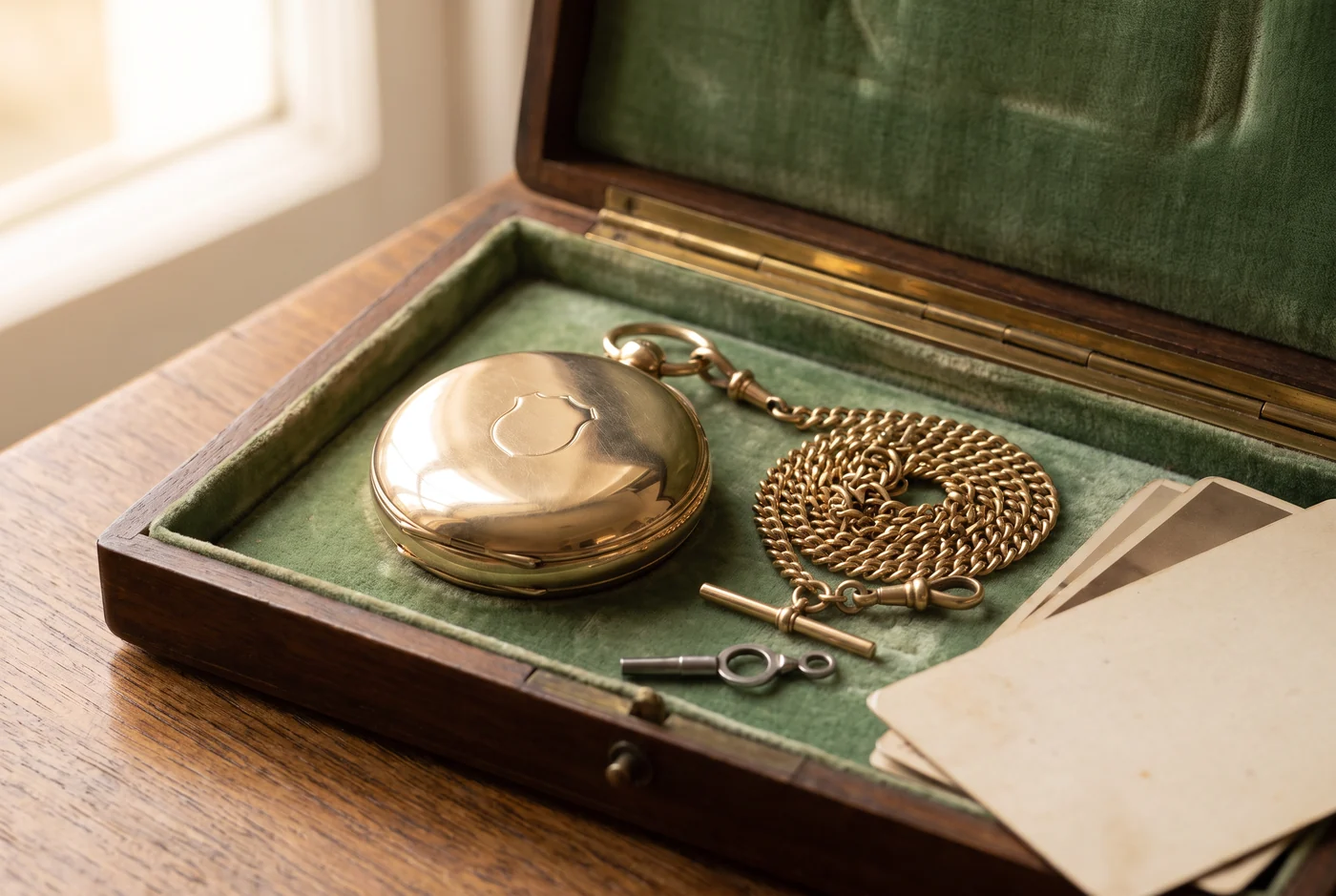
Keep the chain, key, box, pouch, receipts, service papers and old insurance schedules with it. Photographs of the person wearing it help to date it, and the set stays together.
Sources: Vintage Watch Straps, on overwinding.
Then find out what you have
Read the marks inside the case
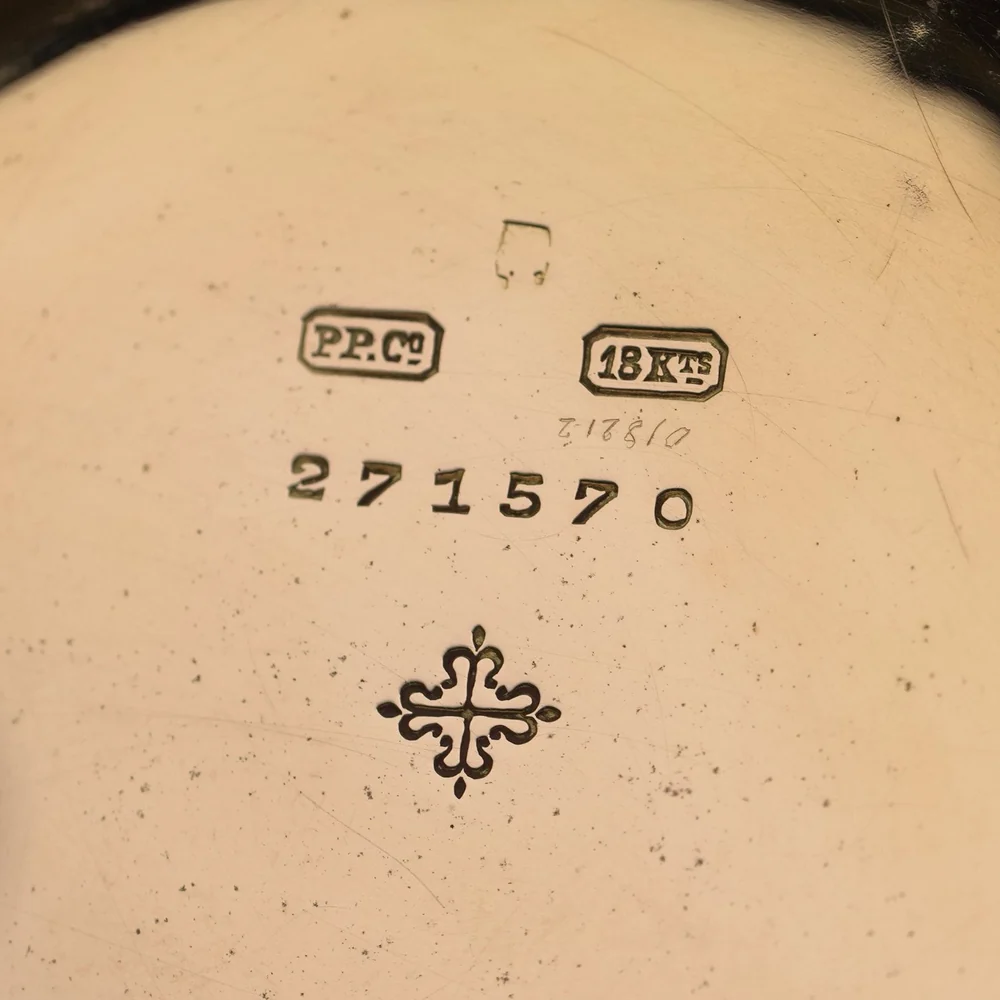
Inside the case back you may find hallmarks, a maker's mark, a case number, and on the movement a name and a serial. Each one answers part of the question.
- British hallmarks and date letters: pocket watch hallmarks.
- Initials and numbers: case makers marks.
- Turning a date letter into a year: dating a gold watch.
05 of 7 · Gold, silver or plated?
This is the question that matters most for value, and the marks usually settle it. Look for numbers and words, not colour: a plated case can look exactly like gold.
| What you find inside the case | What it usually means |
|---|---|
| 9, 375, 14, 585, 18 or 750, with British hallmarks or Swiss marks | Solid gold of that standard |
| 925, Sterling, or a lion passant | Solid silver |
| "Gold filled", "rolled gold", "plaqué", or "warranted" for 10, 20 or 25 years | Plated or gold-filled base metal: not solid gold |
| No marks at all, or brass showing at the rim and hinges | Usually base metal |
For the full method, with photographs, see how to tell if a vintage watch is solid gold. English and Swiss cases are marked differently: English vs Swiss gold watches explains why.
06 of 7 · Get a free valuation
Once you have photographs, a valuation takes the guesswork out. Send them to us and we will tell you what the watch is, roughly when it was made and what it is worth, free and with no obligation to sell. Working or not, it does not matter.
Inherited a pocket watch? Send photos for a free valuation
What most inherited pocket watches turn out to be
Families often hope for a treasure and fear it is worthless. The truth is usually in between, and most watches fall into one of a few groups. For what drives value by type, see our pocket watch value guide.
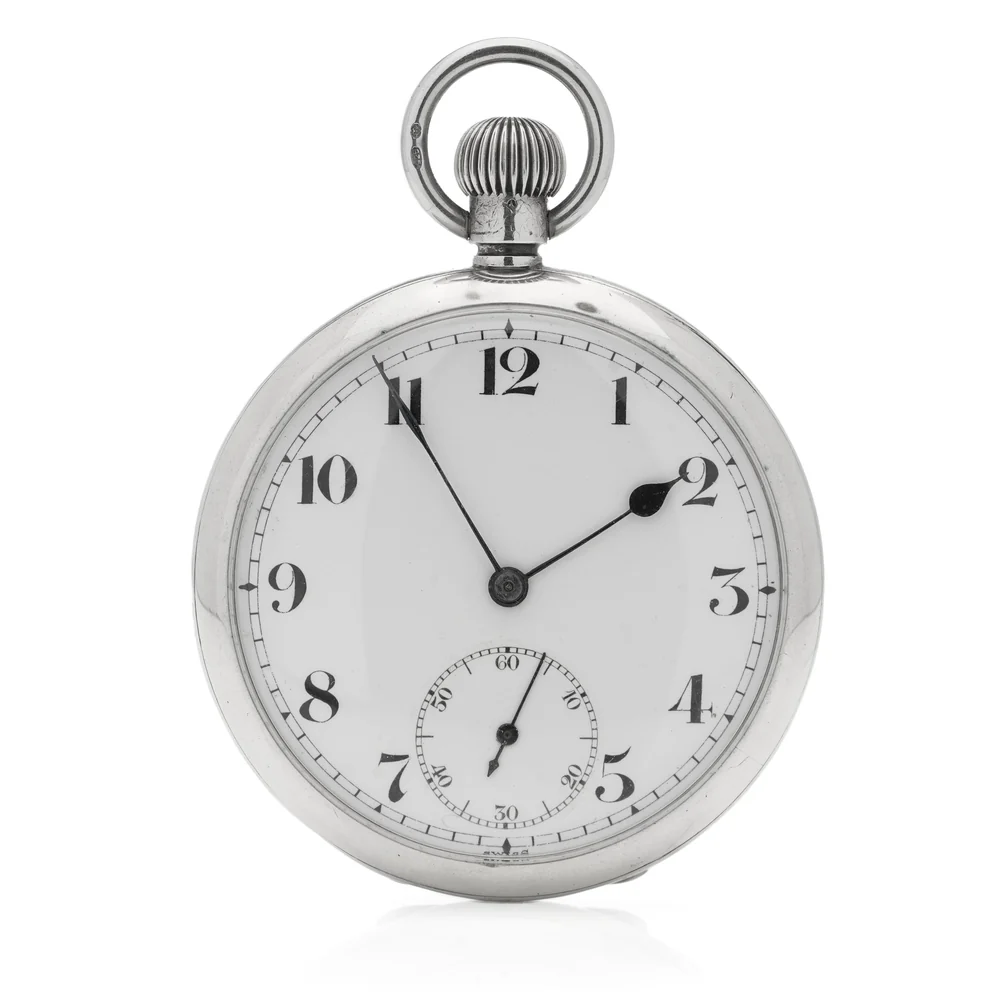
Silver open face and hunter watches
Many inherited watches look like this: a silver case, often with Birmingham or Chester hallmarks, an English or Swiss movement and a white enamel dial.
Age alone does not make them valuable. The maker, the condition and whether it runs count for more.
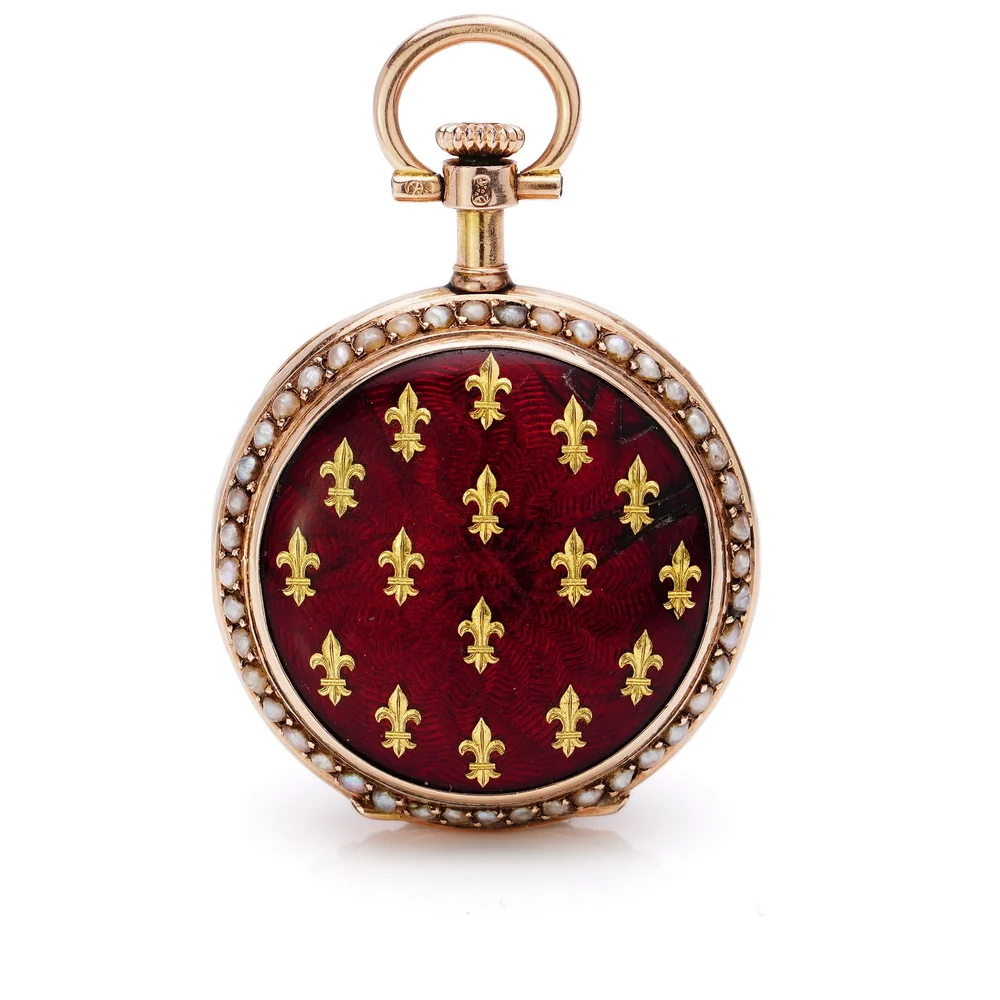
Gold-cased watches, large and small
A gold case, usually 9ct, 14ct or 18ct, counts for a great deal, and a good maker and fine condition can count for more.
Small gold watches were made for women, worn on a chain or a brooch: see antique fob and ladies pendant watches.
Names such as Waltham and Elgin, often in gold-filled cases, sometimes in British hallmarked ones. See Waltham and Elgin values.
Mass-made watches in base metal. Ingersoll's Yankee sold for one dollar from 1896, and its British Crown for five shillings from 1905.
Plain watches with marks or numbers from the forces or a company. See military pocket watches.
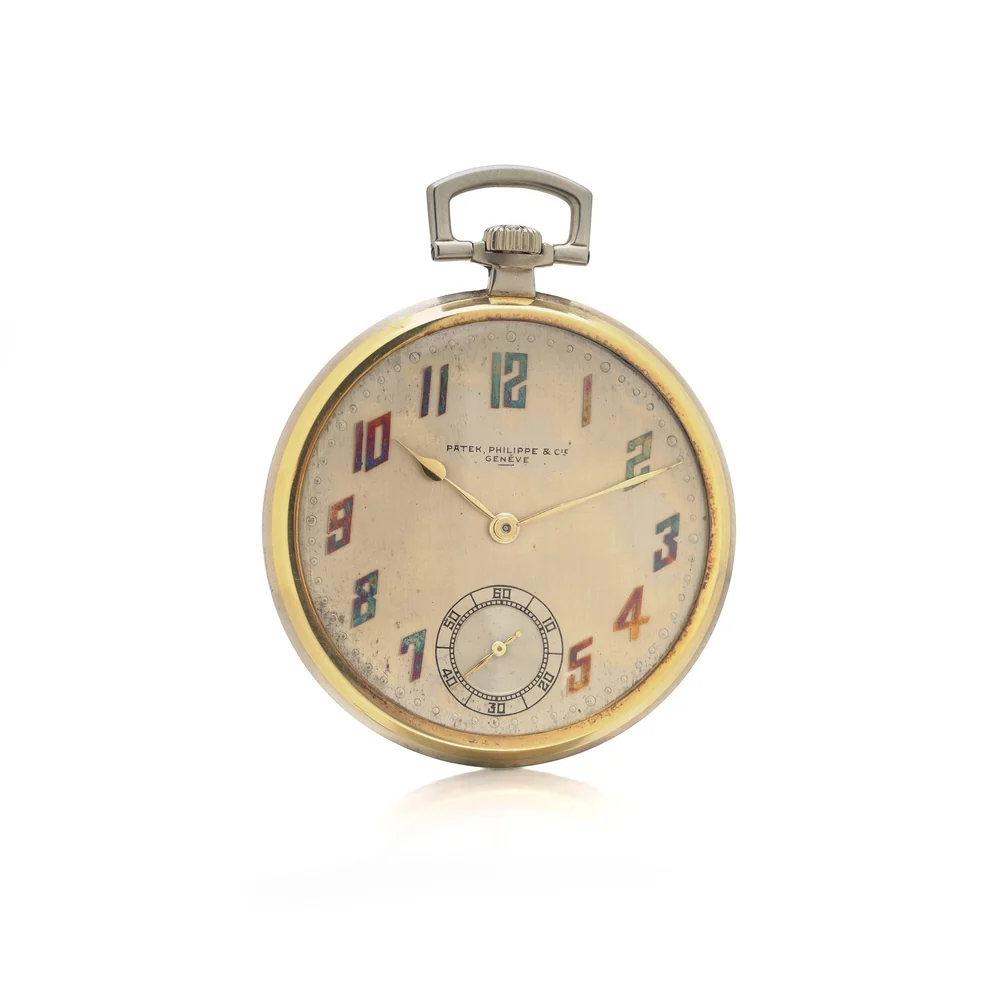
Now and then, a famous name
Occasionally the name on the dial matches the name in the case and on the movement, and it belongs to a maker collectors seek out. That is when a professional opinion matters most.
A famous name on the dial alone proves nothing: well-known makers were copied, and retailers put their own names on dials.
Other rare finds: a striking repeater, or an early verge fusee with a key-wound movement.
Sources: Wikipedia, Ingersoll Watch Company.
Keep, wear, service, insure or sell
There is no right answer, only the one that suits your family. The last step is deciding.
Choose what happens next
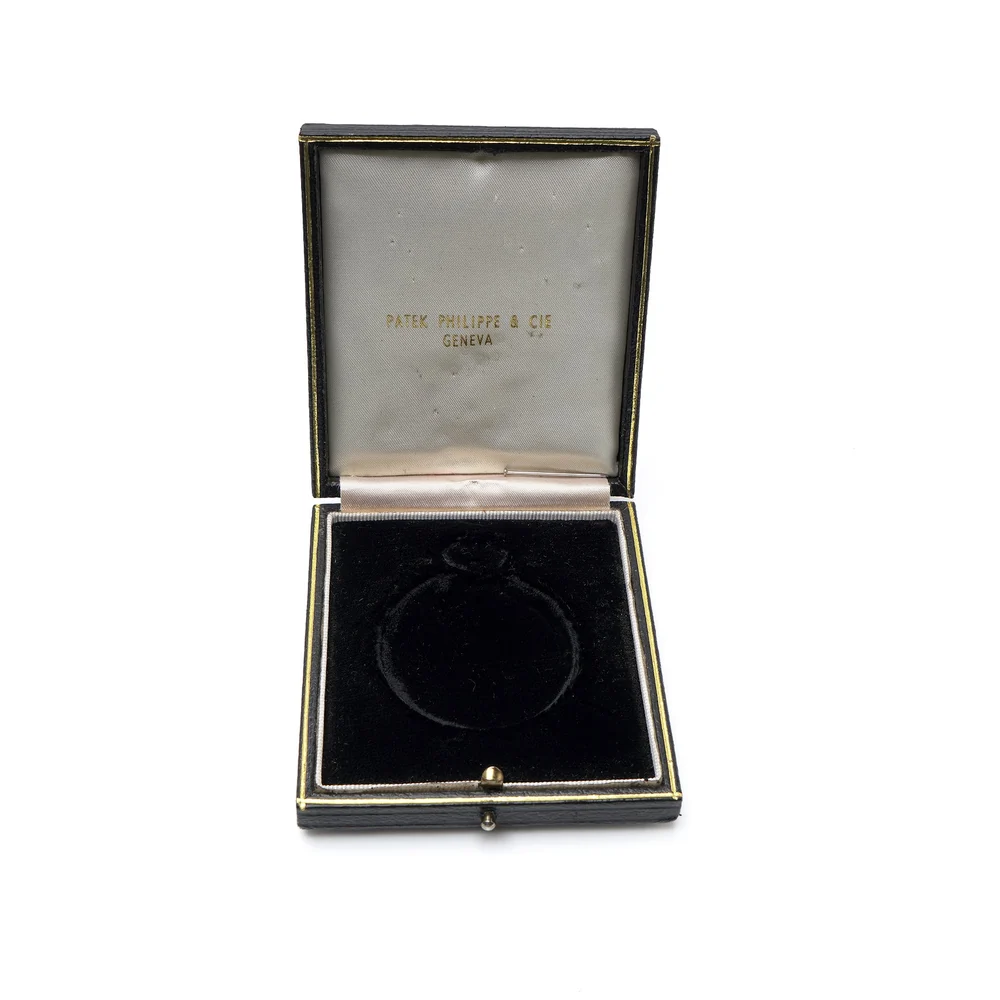
- Keep it: in a dry drawer, in its box or a soft pouch, away from other jewellery that can scratch it.
- Wear it: wind it gently and see how to wear a pocket watch.
- Service it: Patek Philippe advises servicing its hand-wound pocket watches every three to five years. The British Horological Institute, which has trained watchmakers since 1858, lists accredited repairers.
- Insure it: insurers set a limit for any single item. Anything worth more must be listed on the policy, or it may only be covered up to that limit. An up-to-date valuation is evidence if you claim.
- Sell it: we buy pocket watches, working or not: sell your pocket watch.
Sources: Patek Philippe, British Horological Institute, Howden Insurance, on valuables.
Inscriptions and family history
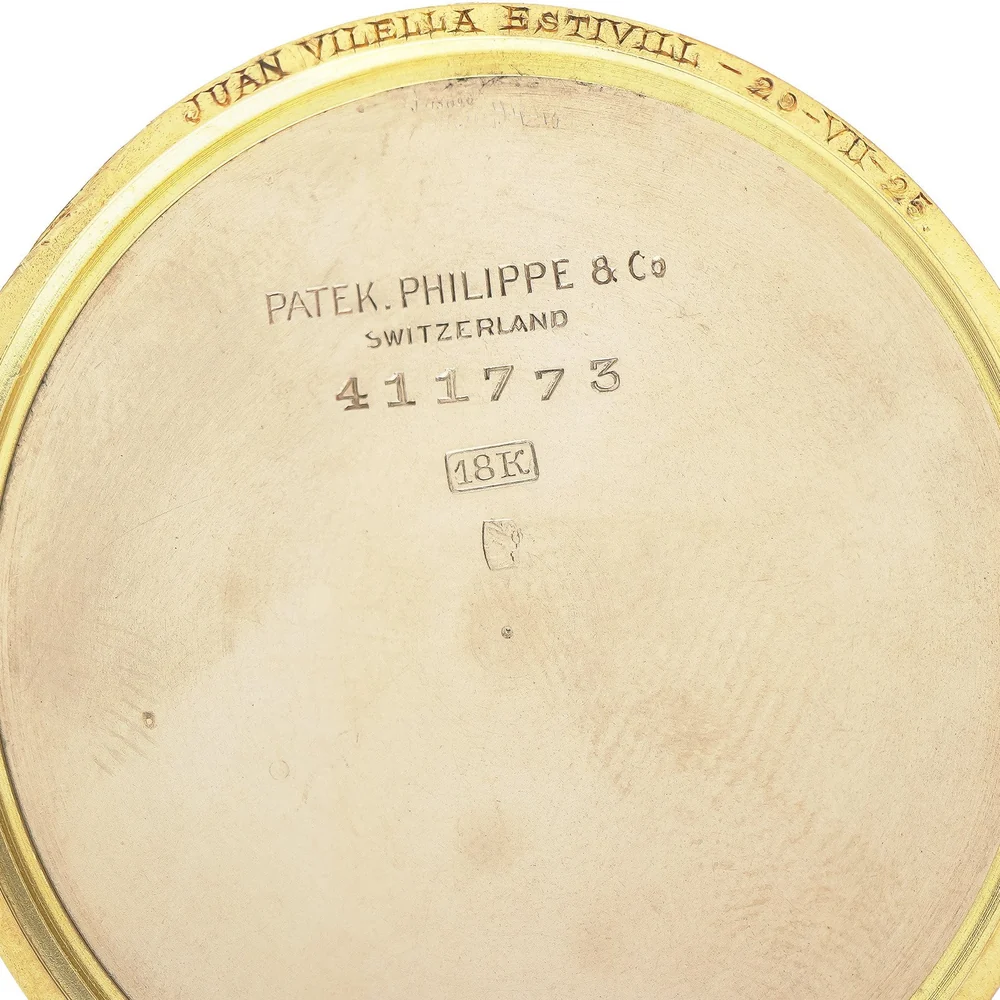
Read every word
Look inside every lid and round the rims. Watches were given for birthdays, weddings, retirements and long service, and the giver often said so.
Auckland Museum holds a gold hunter inscribed inside the back as presented to Surgeon Major Dawson by the men of the 7th New Zealand Contingent in the South African War, dated 26.6.02.
- Write it down exactly, letter for letter, and photograph it in good light.
- Names, dates, a regiment or a company are the threads to follow in family records and old photographs.
- Never have an inscription polished off. It cannot be put back, and it is part of the watch's story.
Sources: Auckland Museum, via Wikimedia Commons.
.jpg)
The chain, the key and the box
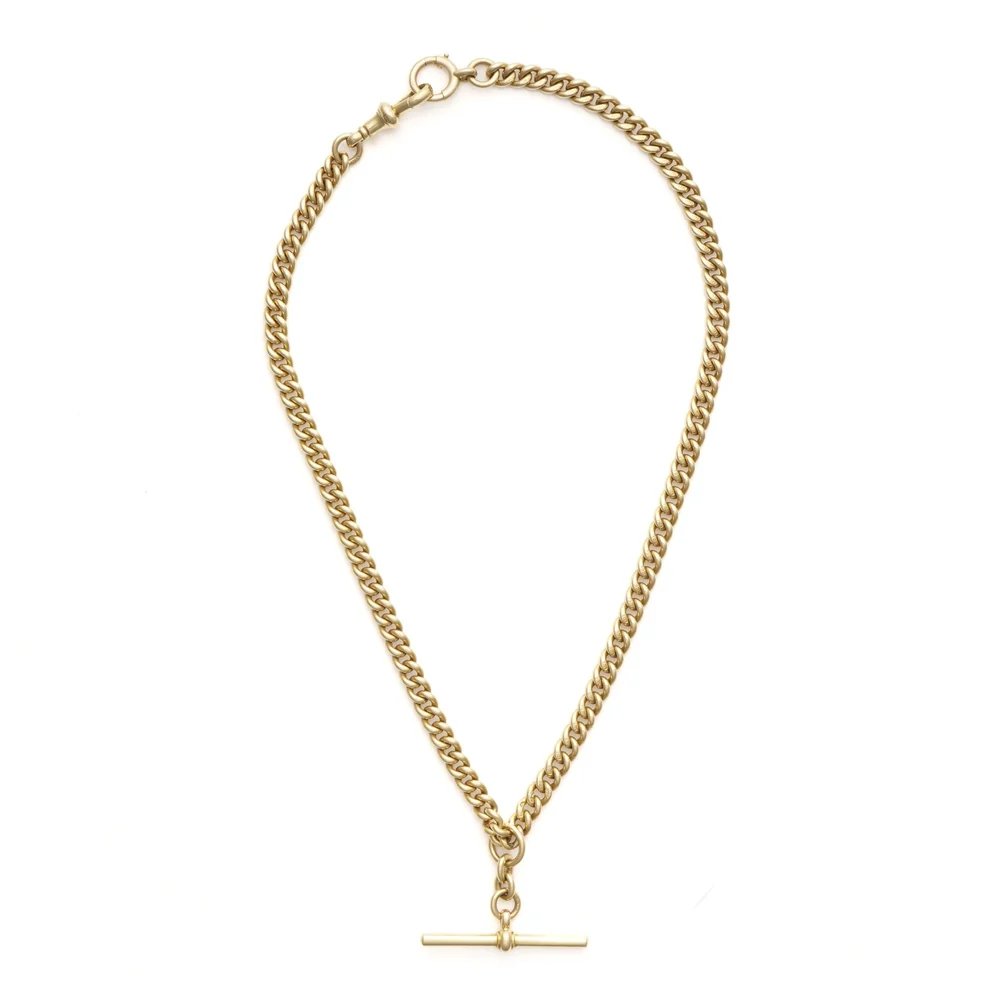
Do not separate the set
A watch found with its chain, key and box is worth more together, and a gold chain can be worth more than the watch.
Albert chains have their own guides: the history of Albert chains, gold Albert chain values and selling an Albert chain.
Original boxes are collected in their own right. See our antique watch boxes.
Every piece is different. Send us a few photos of the watch, chain and box and we will tell you what yours is worth, free and with no obligation. Request a free valuation.
Dividing a watch among the family
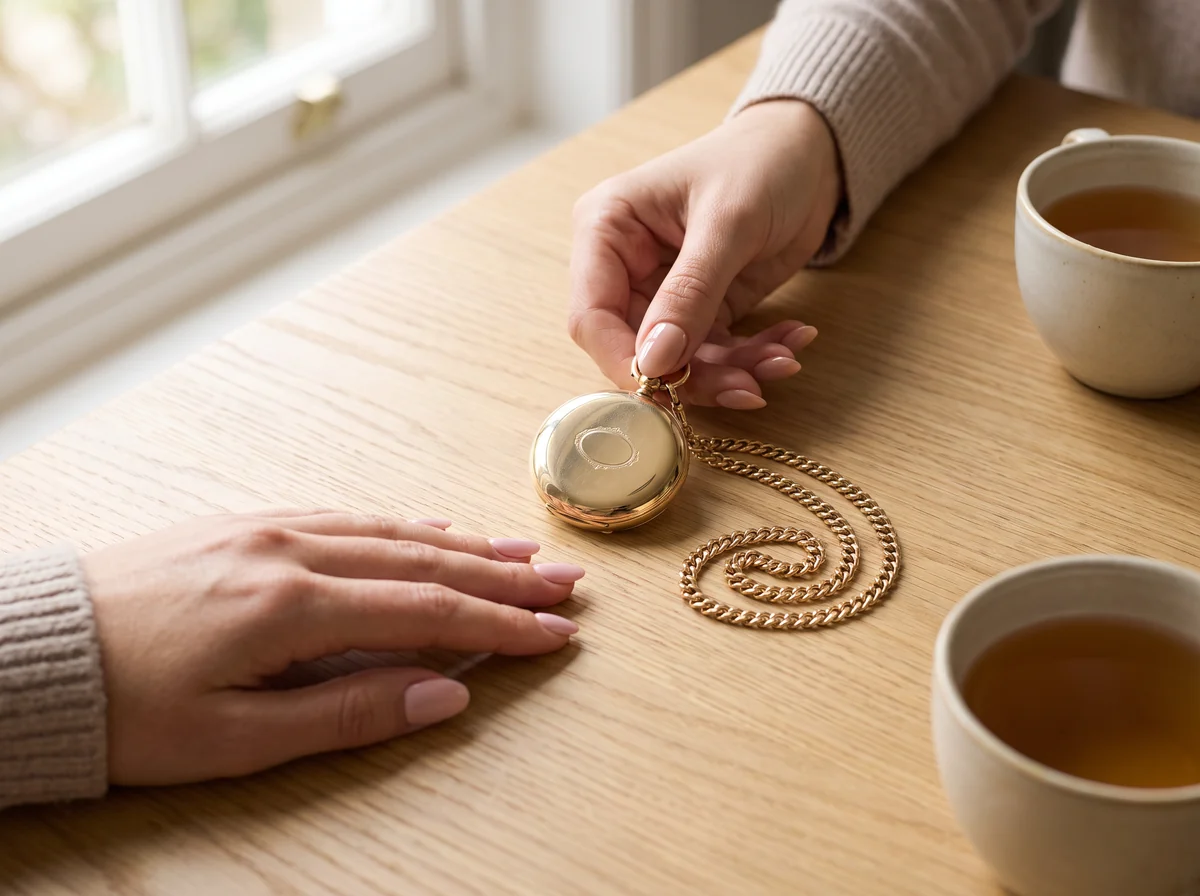
Fair and friendly
One watch and several grandchildren is a common problem. Knowing what the watch is, and what it is worth, takes the heat out of the decision.
Some families keep it in one branch and balance the shares with other things; others sell it and divide the money. Either way, the steps are the same.
- Check the will
It may leave the watch to someone by name. The executor carries out the will, after any debts and tax are paid.
- Agree the value first
A valuation before anyone chooses means everyone knows what the watch is worth, and shares can be balanced with other things from the estate.
- Keep the set together
Splitting the watch from its gold chain or box can lower the value of both.
Sources: GOV.UK, applying for probate.
UK probate basics for a pocket watch
Probate is the legal right to deal with someone's property, money and possessions when they die. These are the basics from GOV.UK and HMRC; a solicitor can help with the rest.
- Value it before applying for probate. The estate is valued before the application, if probate is needed.
- Use the value on the date of death. For jewellery and similar items, HMRC asks what you would have got if you had sold them.
- Inheritance Tax is 40% on the part of an estate above the £325,000 threshold, and none is due if everything above it goes to a spouse or civil partner.
- Form IHT407, for a full account, asks for open market value at the date of death, a copy of any professional valuation, and whether items were listed on the household insurance.
Scotland and Northern Ireland have different probate rules. For gold jewellery in an estate, see selling inherited gold jewellery: a probate guide and inheritance tax on jewellery.
Sources: GOV.UK, valuing an estate, GOV.UK, estimate the estate's value, GOV.UK, Inheritance Tax, HMRC, form IHT407.
A free valuation, an offer, or a watch to buy
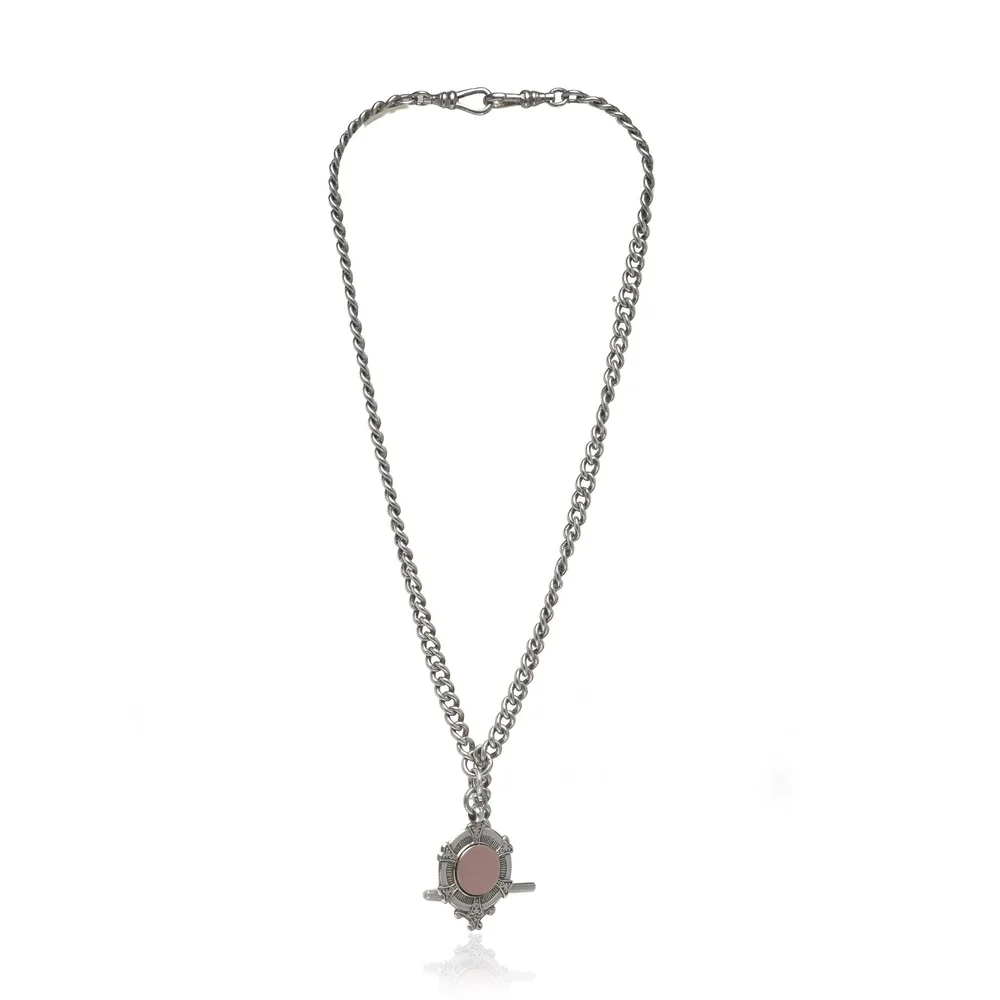
We buy, and we sell
We buy and sell antique pocket watches and chains, by appointment at 47 Maddox Street, Mayfair, and in Braintree, Essex.
If you would rather add to the family collection than sell, a silver Albert chain like this one is a simple place to start.
- Free valuation
Send photos of the front, the back and any marks. We reply with what it is and what it is worth, with no obligation.
- Selling
If you decide to sell, we buy pocket watches and Albert chains outright: how selling works.
- Buying
See the antique pocket watches in stock, including a 1925 Patek Philippe.
- Talk to us
Call 01376 334482, message us on WhatsApp, or use our contact page.
Request a free valuation
- Do not polish, open or force anything. Photograph it and keep the set together.
- The marks inside the case tell you gold, silver or plated, and often the year.
- Most inherited watches are silver or gold-cased everyday watches; a few are by great makers.
- Get a free valuation before deciding to keep, share, insure or sell.
- For probate, use what it would have sold for on the date of death.
Questions we are asked
I inherited a pocket watch. What should I do first?
Leave it as it is: do not polish it, force it open or force the crown. Photograph it, keep the chain, key and box with it, then read the marks or ask for a free valuation.
Should I sell my grandfather's pocket watch?
Only if no one in the family wants to keep or wear it. Get it valued first so you know what it is, then decide. A valuation does not commit you to selling.
What do I do with an old pocket watch that does not work?
Do not keep forcing it. A watchmaker can service it, and it can still be valued and sold as it is.
How do I know if my inherited pocket watch is gold?
Look inside the case back for 9, 375, 14, 585, 18 or 750 and hallmarks. Words such as gold filled, rolled gold or warranted 10 or 20 years mean plated.
Does a pocket watch need a valuation for probate?
Its value at the date of death is part of the estate. HMRC asks what it would have sold for, and a professional valuation can be enclosed with form IHT407.
Should I clean an inherited pocket watch?
No. Polishing wears away hallmarks and engraving and can lower the value. Leave cleaning to a watchmaker.
Is an engraved pocket watch worth less?
An inscription is part of the watch's history and should never be polished off. Its effect on value depends on the watch and the person named.
Is the chain worth anything?
It can be. A gold Albert chain is sometimes worth more than the watch, so keep the two together and have both valued.
Inherited a pocket watch?
Send photos for a free, no-obligation valuation, working or not. If you decide to sell, we buy pocket watches and chains, and you can see our stock in Mayfair or Braintree.
- We buy directly
- Free valuation from photos
- Appointments in Mayfair and Braintree
- Insured postage or collection
New pieces reach our list first: join the Mozeris list.