Ingersoll and Smiths Pocket Watch Value: Everyday British Pocket Watches Explained
The everyday pocket watches British families inherit: what they are, how to date them, what decides their value, and the few that are worth more.
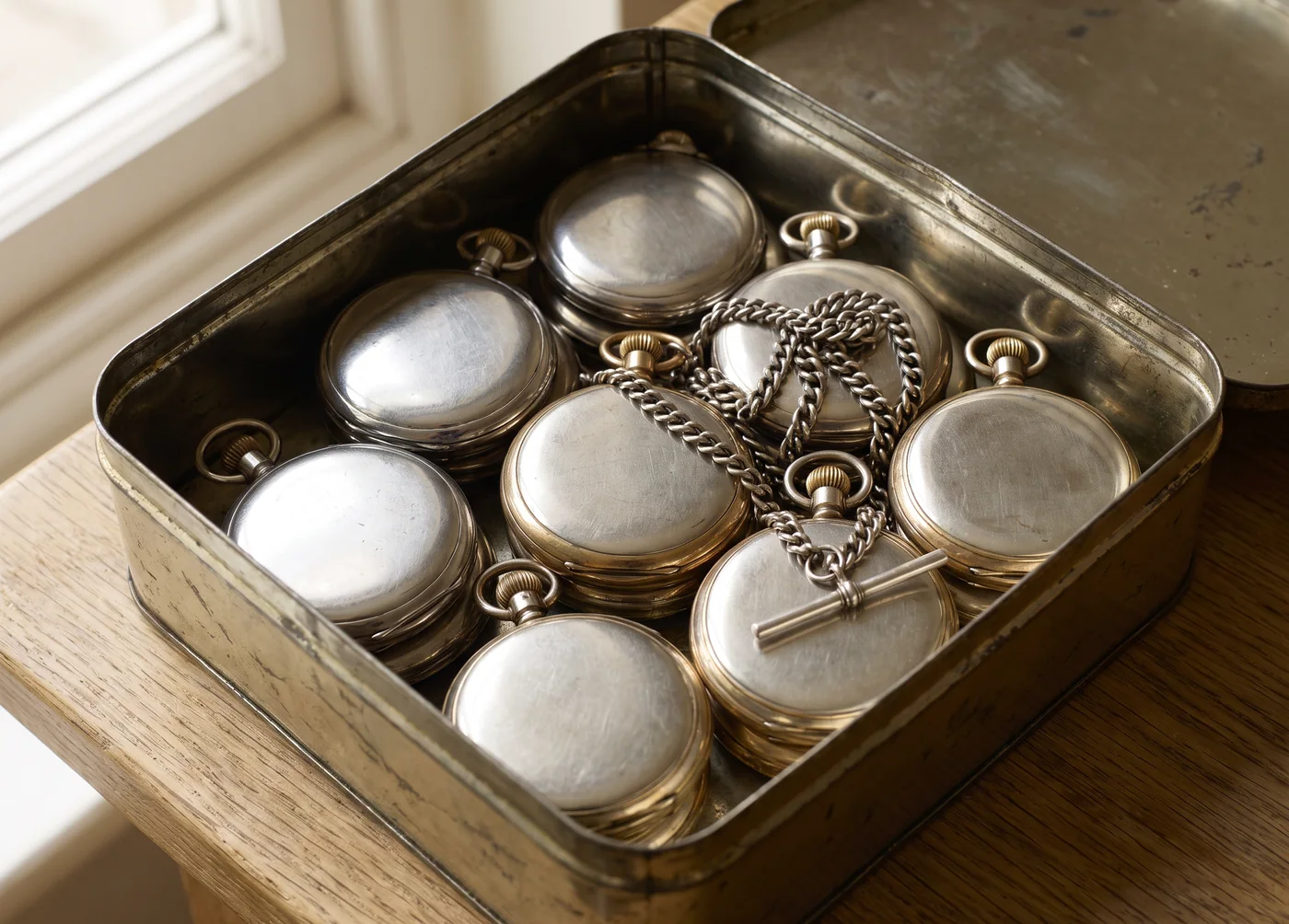
Ingersoll, Smiths Empire and similar everyday pocket watches are mass-produced, and most are worth a modest sum:
- What they are: cheap, mass-produced watches, usually pin-lever, in base metal or chrome cases, made from the 1890s to the 1970s.
- What sets the value: working order, box and papers, a character dial, and above all the case metal.
- Worth more: Mickey Mouse and Dan Dare dials, and any watch in a hallmarked silver or gold case.
- Check the chain: a silver or gold Albert chain can be worth more than the watch.
In this article
What an everyday pocket watch is
Ingersoll, Smiths Empire, Westclox and their rivals were made to be cheap, not to last a century. They were made for working people who could not pay for a jewelled watch, and sold in their millions from the 1890s to the 1970s.
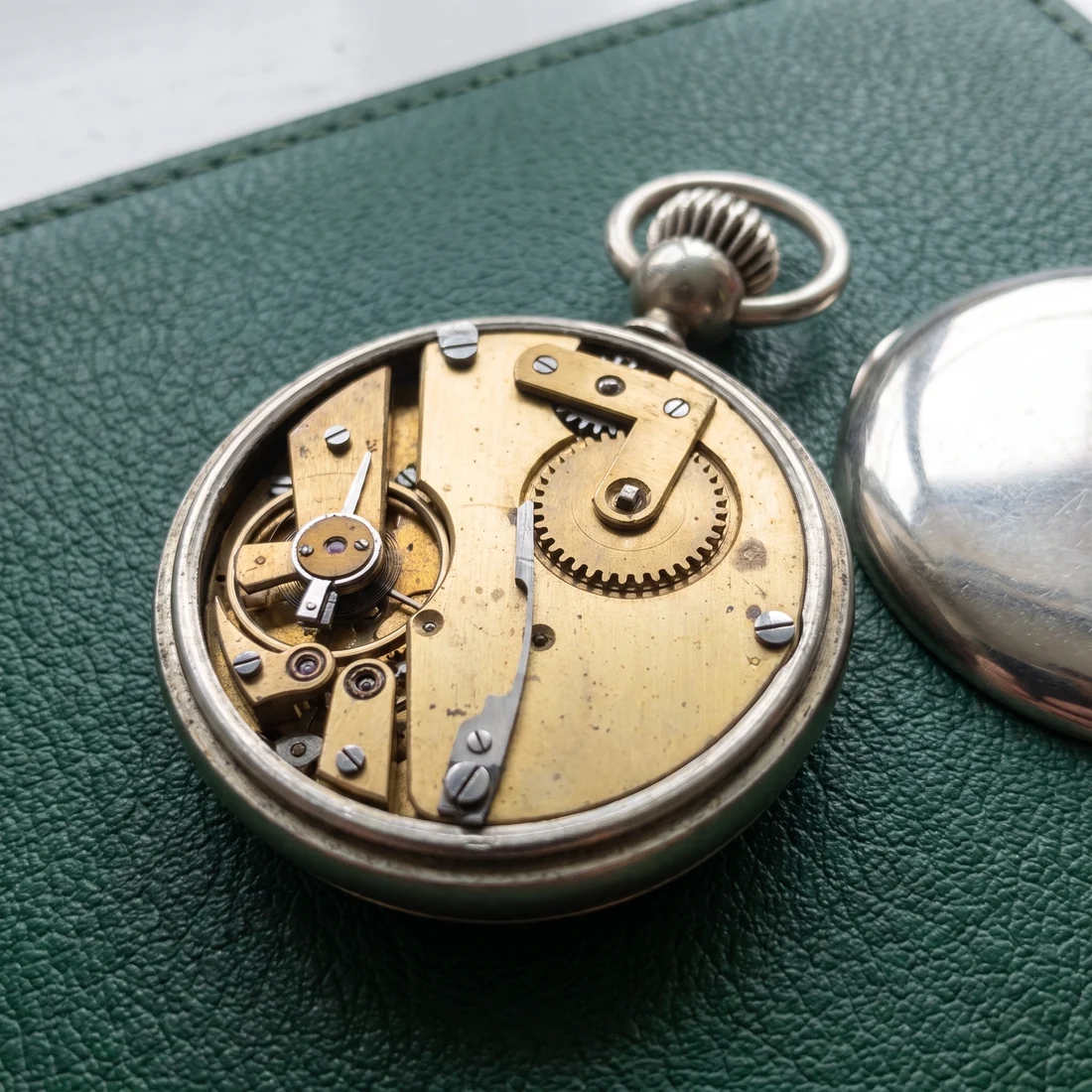
A pin-lever movement
Inside most watches of this kind is a pin-lever (also called pin-pallet or Roskopf) escapement. Steel pins do the work that jewels do in a fine watch, so no costly adjusting is needed.
Georges Frederic Roskopf made it popular with his "proletarian watch" of 1867. It ran the dollar watch and cheap watches until the 1970s; by 1980 quartz had taken that market.
- The case is base metal: nickel, chrome plate, or thin gold or silver plating over brass. Wear shows brass at the edges.
- Few or no jewels. Most pin-lever watches had none at all.
- Snap-on backs are usual. If you want to look inside safely, see how to open a pocket watch.
The brands, one by one
These are the names we see most often in British drawers and biscuit tins. Each had a different story, but their watches sell in much the same price band.
Ingersoll: the dollar watch, Crown and Triumph
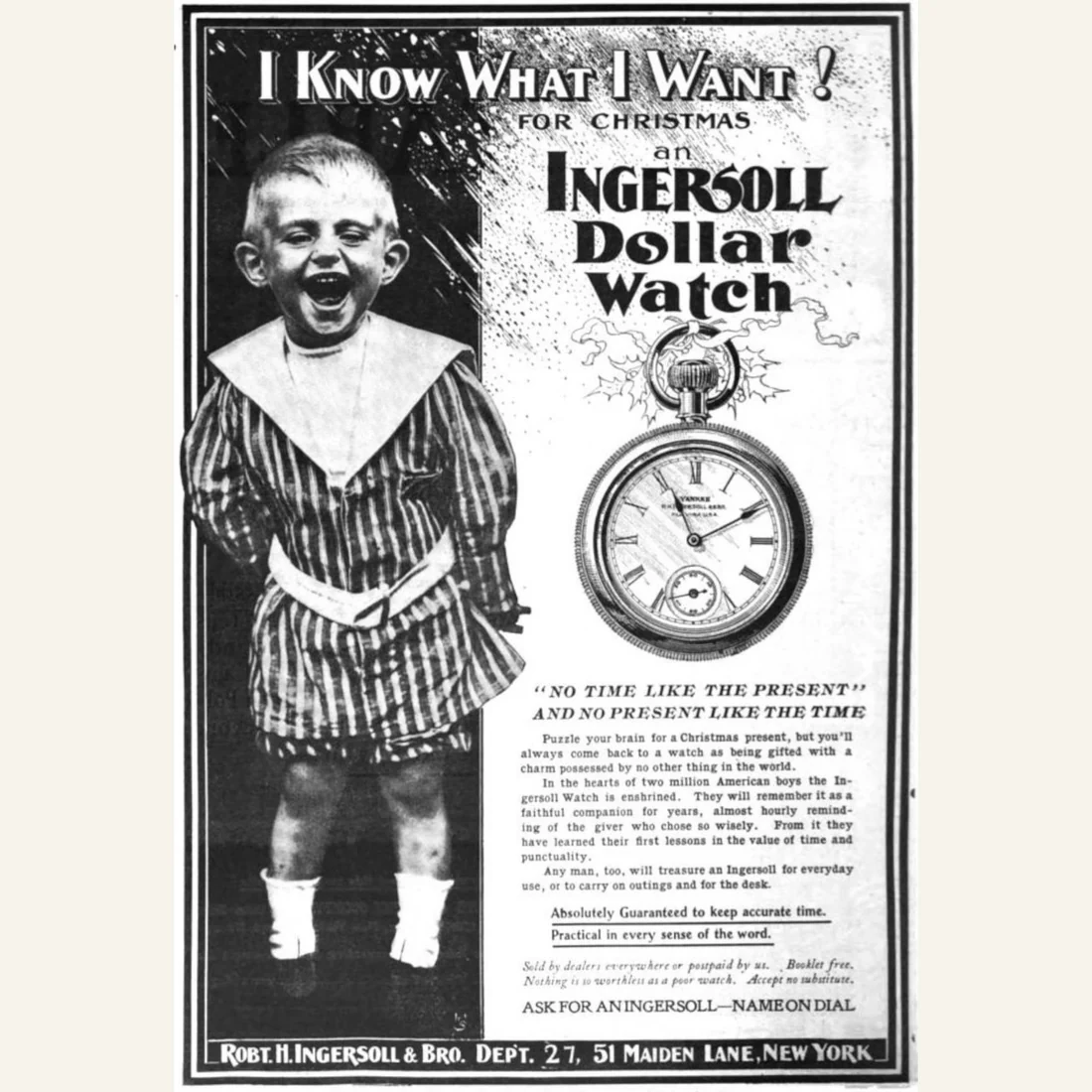
The brothers Robert and Charles Ingersoll began as a New York mail order firm in 1882 and sold their first watch, made by the Waterbury Clock Company, in 1892. The Yankee of 1896 cost one dollar: the first watch at that price, sold as "the watch that made the dollar famous". Nearly 40 million were sold in 20 years.
Ingersoll opened in London in 1904 and launched the Crown at five shillings in 1905, made by its British company, Ingersoll Ltd. The American firm went bankrupt in 1921; the British arm became wholly British owned in 1930. After the war its Triumph was made in Wales (see Smiths, below).
Smiths Empire: made in Wales
S. Smith and Sons began as Samuel Smith's jewellery shop at 12 Newington Causeway, London, in 1851. Its fine watches served the Admiralty, and a Smiths De Luxe was the only watch worn to the summit of Everest in 1953.
The everyday Smiths Empire came from somewhere else: the Anglo-Celtic Watch Co. at Ystradgynlais in South Wales. Smiths, Ingersoll and Vickers-Armstrongs set it up together and it opened on 15 March 1947, the largest watch factory in Britain. Ingersoll Triumph and Smiths Empire watches were made there. Ingersoll left in 1969 and the factory closed in 1980, after more than 30 million watches.
Westclox: Pocket Ben and the Scotty
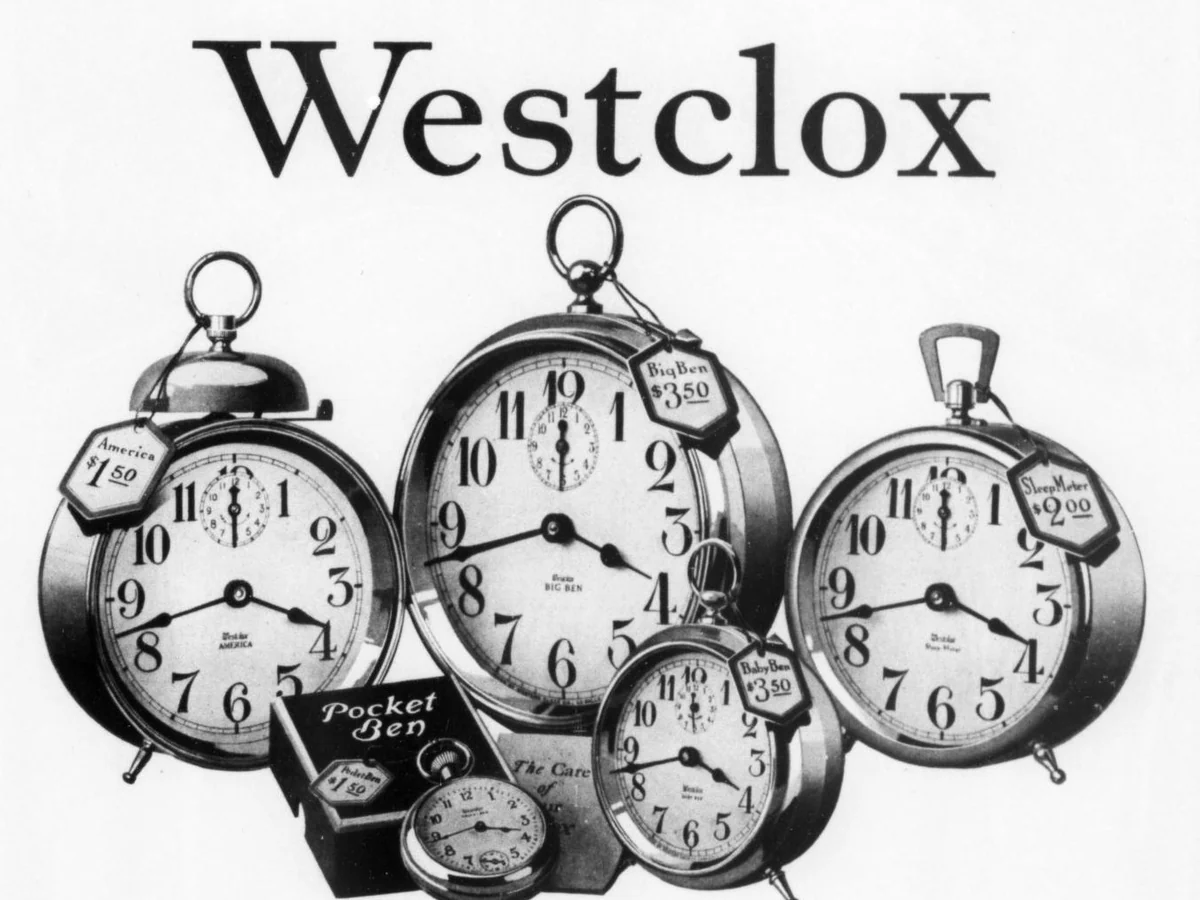
Westclox, the Western Clock Company of Illinois, made an inexpensive back-winding pocket watch from 1899 and kept making dollar watches into the 1990s. In 1922 its nickel-plated Pocket Ben cost $1.50, beside the Big Ben alarm clocks.
The Westclox Scotty arrived about 1945 in a nickel-plated case, at $2.80 in a 1953 catalogue; later versions ran to about 1990. Westclox also ran a large factory at Dumbarton in Scotland from 1948, which added watches in the mid 1950s.
Services: a Leicester name
Services Watch Co. was a Leicester firm, recorded among the town's clock and watch businesses with an advertisement of 1939. Its pocket watches are the same plain, base metal everyday type as Ingersoll and Smiths Empire, and we judge them the same way: by case, condition and whether they go.
Limit: Swiss movements, British cases
Alfred Hirst founded Hirst Brothers in Oldham in 1884 and put the Limit trademark on its watches in 1912, with offices in London, Birmingham, Manchester and Glasgow. The movements were made in Switzerland and cased in Britain, some in Dennison cases. Time Products bought the company in 1963.
Because Limit used British cases, look inside the back for hallmarks before you assume base metal.
Vertex: a London importer, sometimes in gold
Claude Lyons set up Vertex Watches Ltd in London and the Swiss watch town of La Chaux-de-Fonds in 1916. Its Hatton Garden showrooms were destroyed in the Blitz in 1940, it was one of twelve wartime suppliers of service wristwatches, and it closed in 1972. His great-grandson revived the name in 2016.
Vertex pocket watches can be jewelled and gold cased: a 9ct gold Vertex half hunter of 1927 had a 17-jewel movement. For service-issue watches of any make, see military pocket watches.
How to date an Ingersoll, Smiths or Westclox
There are no published serial number tables for these makers. Date them from what is written on the dial, the movement and the case:
| You see | It tells you |
|---|---|
| Robt. H. Ingersoll & Bro., New York | The American company, which began selling watches in 1892 and was sold to Waterbury Clock in 1922 |
| Ingersoll Ltd, London | The British company: the Crown of 1905 onwards, British owned from 1930 |
| Radiolite on the dial | 1916 or later, and a radium dial (see the safety note below) |
| Made in Gt. Britain on an Ingersoll Triumph or Smiths Empire | The Anglo-Celtic factory in Wales: opened 1947, closed 1980 |
| Mickey Mouse dial | The 1930s onwards; one sold in 2022 still had its 1934 guarantee |
| Dan Dare and the Eagle badge | Early 1950s; the Science Museum's example is dated 1953 |
| Festival of Britain emblem | Points to the 1951 Festival of Britain |
| Westclox Scotty | Introduced about 1945; later styles run to about 1990 |
If the case has hallmarks, they date it to the year: see pocket watch hallmarks. Numbers and initials inside the back are explained in pocket watch case makers' marks.
What decides the value of an Ingersoll or Smiths
These watches were made by the million to be cheap, so most are worth a modest sum and are often sold several at a time. A few things lift one above the rest:
- Working order. A watch that winds and goes is worth more than one sold "for repair".
- Box and papers. The original box, guarantee or stand helps, and few survive.
- A character dial. Mickey Mouse and Dan Dare dials have their own collectors: see the next section.
- The case metal. Silver or gold changes everything; base metal adds nothing.
Every piece is different. Send us a few photos and we will tell you what yours is worth, free and with no obligation. Ask for a free valuation.
For older and finer watches, use our pocket watch value guide; for American watches, see Waltham and Elgin values.
Not sure what you have? Get a free quote
The sought-after ones
A few everyday watches sell for more because collectors of something else want them.
Character watches: Mickey Mouse and Dan Dare
Ingersoll-Waterbury made the first Mickey Mouse watches in the 1930s, and over five million sold in 15 years. In Britain, Ingersoll Ltd made a Dan Dare pocket watch for fans of the Eagle comic: the Science Museum holds one of 1953, chromium plated, with the Eagle badge on the back. The arm on the dial moves.
Collectors of Disney and of the Eagle comic compete with watch collectors for these, so a complete, working example with its box is worth more than any plain Ingersoll. Missing hands, a damaged dial and repairs all count against it.
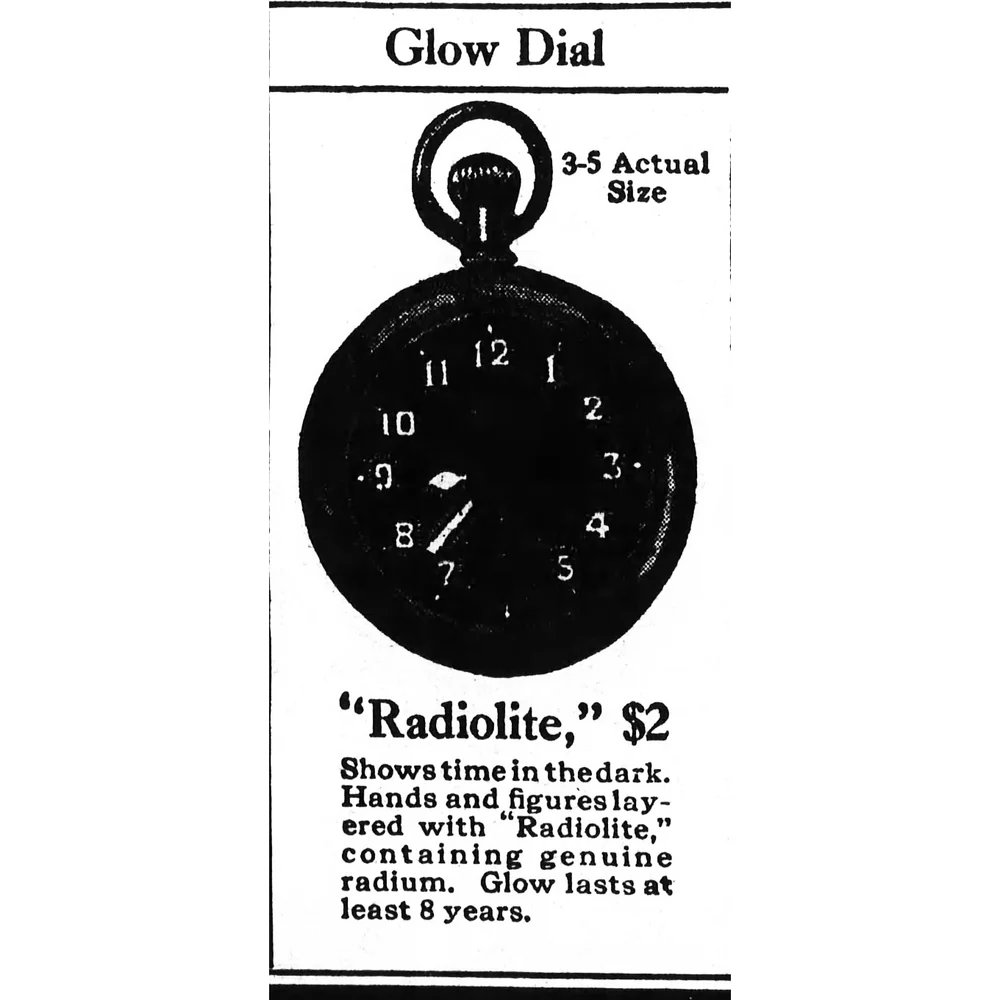
Radiolite and other glowing dials
Ingersoll's Radiolite of 1916 glowed in the dark because its hands and figures were painted with radium.
Treat any old luminous dial with care. A 2012 study of 33 radium-dial watches found raised radon levels when they were kept together in a small, closed room. Do not open or scrape the dial; keep it with the glass on, in a ventilated place.
Condition and working order
With a cheap watch, condition decides most of the price. Check these before you sell or buy:
- Does it go?
Wind it gently a few turns and listen. If you are unsure how, see how to wind and set a pocket watch.
- The glass
Many lots are described as "no glass" or "lacking glass". A missing or cracked crystal lets dust in.
- The plating
Worn chrome or plating showing brass is normal, but it lowers the price.
- The dial and hands
Missing or loose hands are common on these watches.
- Original parts
A box, guarantee or stand that came with it adds a little.
These watches were made to be cheap to buy, not to be serviced. Before you pay for a repair, ask us what the watch is worth: the valuation is free.
Why a free check is still worth it
Most everyday pocket watches are worth a modest sum. A quick check costs nothing and sometimes finds something better.
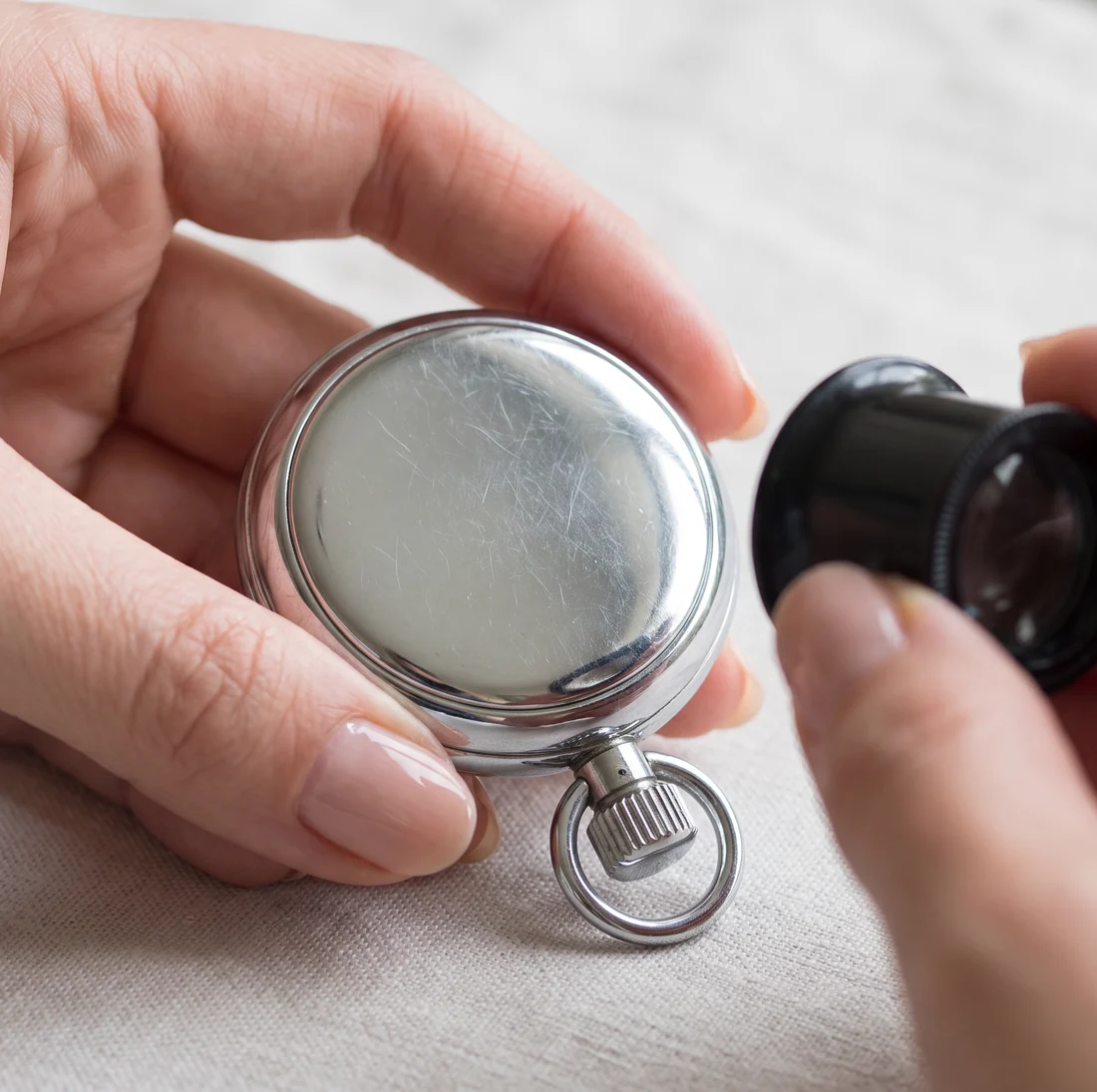
Is the case silver or gold?
A watch can look like plated base metal and still be silver or gold. Limit and other British-cased watches can carry hallmarks inside the back.
Look for a hallmark, not just a number. See how to read silver hallmarks and how to tell if a vintage watch is solid gold.
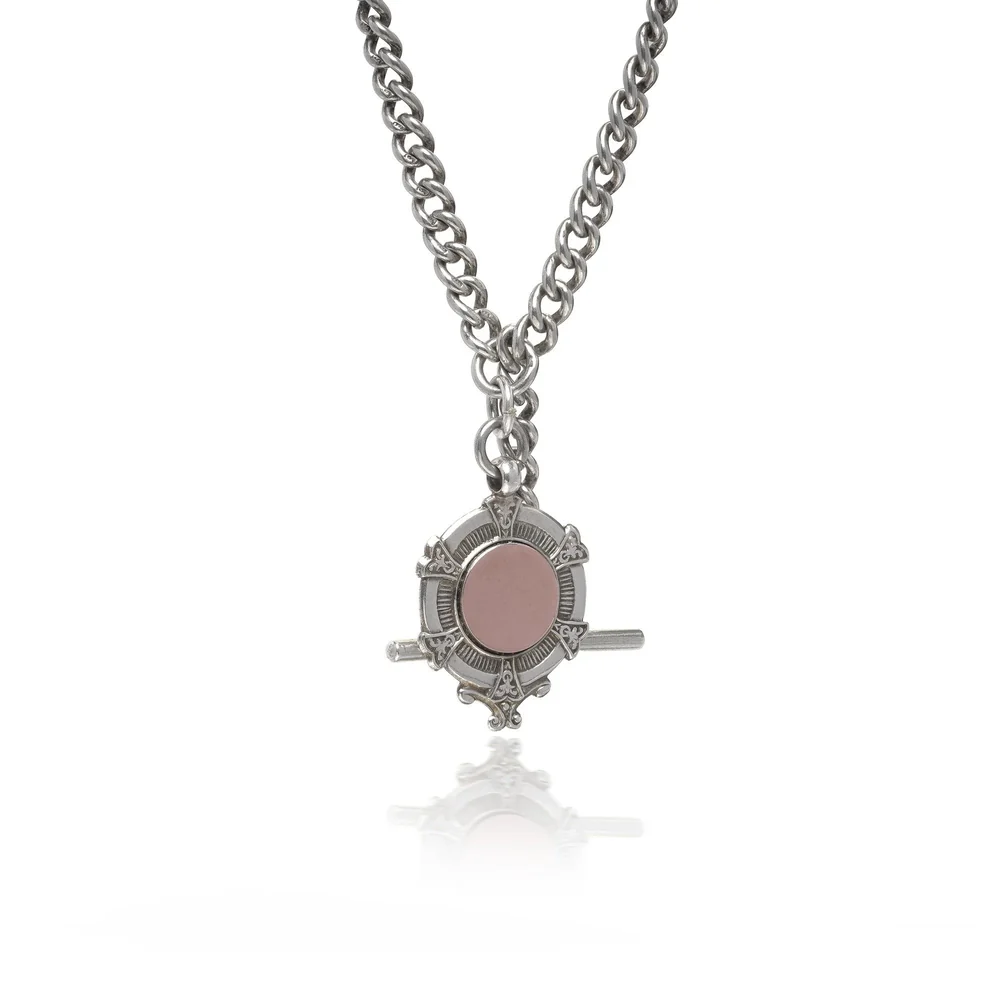
The chain may be worth more than the watch
An everyday watch often comes on a chain, and the chain can be the real find: a hallmarked silver or gold Albert is often worth more than the base metal watch on it.
See our gold Albert chain value guide and chain styles and attachments, or sell your Albert chain.
Free valuation, selling and buying
- Photograph
The dial, the back of the case, the inside of the back if it opens, and any chain, box or papers.
- Send
Use the form below, call 01376 334482 or WhatsApp us. See also selling your pocket watch.
- Visit
Bring it to 47 Maddox Street, Mayfair (by appointment) or to Braintree, Essex. Contact us to book.
Looking to buy? See the antique pocket watches in our collection now, or all our watches.
Request a free valuation
- Ingersoll, Smiths Empire, Westclox and Services sold inexpensive, mass-produced pocket watches.
- Date them from the dial wording, the factory mark and any hallmark in the case.
- Most are worth a modest sum; character dials and gold or silver cases are worth more.
- A free check from photos can find a silver case or a valuable chain.
Questions we are asked
How much is an Ingersoll pocket watch worth?
Most are worth a modest sum, because they were made by the million to be cheap. A working watch with its box is worth more than one sold for repair, and character dials such as Dan Dare and Mickey Mouse are worth more again. Send us photos and we will tell you what yours is worth, free.
How much is a Smiths Empire pocket watch worth?
A modest sum in most cases. Working order, the original box, guarantee and stand, and a clean dial all help. Sometimes the real find is a hallmarked case or the chain, so send us photos for a free valuation.
Where were Smiths Empire pocket watches made?
At the Anglo-Celtic Watch Co. factory in Ystradgynlais, South Wales, set up by Smiths, Ingersoll and Vickers-Armstrongs. It opened in 1947 and closed in 1980.
How old is my Ingersoll pocket watch?
A New York name points to the American company (1892 to 1922); Ingersoll Ltd, London to the British company from 1905; Radiolite to 1916 or later; Made in Gt. Britain to the Welsh factory, 1947 to 1980.
What is a dollar watch?
A cheap mass-produced pocket watch. Ingersoll's Yankee of 1896 was the first priced at one dollar.
What is a pin-lever movement?
A cheap form of the lever escapement that uses steel pins instead of jewels. It ran most dollar watches and budget watches until the 1970s.
Are old luminous dials dangerous?
Early luminous dials such as the Ingersoll Radiolite used radium. Do not open or scrape them, and do not keep many together in a small closed room.
Is it worth getting an everyday pocket watch valued?
Yes, if you are unsure of the case or the chain. A free check can show a hallmarked silver or gold case, or a silver or gold Albert chain worth more than the watch.
Value or sell your pocket watch
Send photos of the dial, case back and any chain for a free valuation, or visit us in Mayfair or Braintree.
- We buy directly
- Free valuation from photos
- Appointments in Mayfair and Braintree
- Insured postage or collection
New pieces reach our list first: join the Mozeris list.