How to Open a Pocket Watch Safely, Case by Case
How to open a pocket watch without a scratch: read the edge, then open the snap back, screw back, hunter lid, inner dome, bezel or swing-out movement the right way, and know what you are looking at inside.
How to open a pocket watch, in brief:
- Snap back: fingernail or case knife in the small lip opposite the hinge.
- Screw back (no hinge, no lip): a rubber ball, turned anticlockwise. Never prise it.
- Hunter: press the crown to release the front lid; press it again before closing.
- Inner dome: a fingernail only, because the movement is just beneath.
- If anything resists, stop. A screwdriver scar stays with the watch for good.
In this article
First, read the edge of the case
Every pocket watch case opens in one of a handful of ways, and the edge tells you which. Turn the watch slowly under a good light and look for three things: hinges, seams and lips (a small nick or tab where a fingernail or blade goes in).
| What you see on the edge | Case type | How it opens |
|---|---|---|
| A hinge on one side, a small lip or nick on the other | Hinged back (or hinged bezel) | Fingernail or case knife in the lip |
| A lip but no hinge, usually near the pendant | Snap-on (friction) back | Case knife in the lip, lift off |
| A fine seam all round, no hinge, no lip, often a milled edge | Screw back | Rubber ball, anticlockwise |
| Two seams, one each side of the band | Screw back and screw bezel | Unscrew the back, or the bezel |
| A lid over the dial, crown at 3 o'clock | Hunter or half hunter | Press the crown |
| One seam on the dial side only | Swing-out (swing-ring) case | Unscrew bezel, crown out, swing |
Most antique watches have two or three openings: the front over the dial, the back, and often an inner dome under the back. Open one at a time, and close each before moving on.
Source: Antique-Pocket-Watch.com, The Pocket Watch Case; Pocket Watch Database case guide; Pieces of Time, How to open a Pocket Watch to View Movement.
How to open each part, step by step
Lay a soft cloth on a table and work low over it, so nothing can drop far. Six parts, in the order you will usually meet them:
The snap back: fingernail first, case knife second
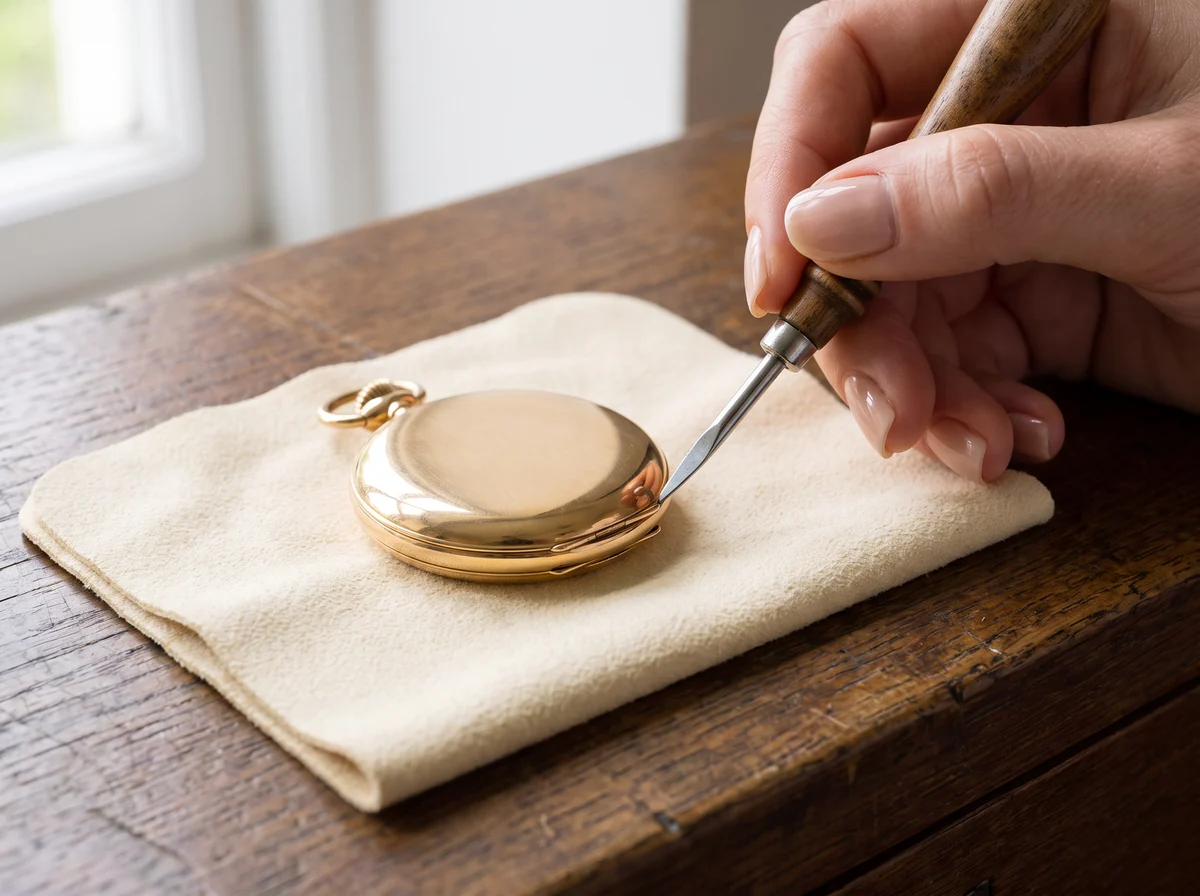
Hold the watch dial down in your palm. Find the lip, a tiny raised tab or nick on the edge of the back. On a hinged back it sits opposite the hinge.
Try your thumbnail in the lip first and lift. A well fitted gold back often opens this way.
If it is tight, slide the tip of a case knife into the lip, no deeper than a millimetre, and twist the blade slightly so it lifts the back rather than digging in. The movement sits just beneath.
To close, line it up and press with your thumb over a cloth until it clicks. A snap-on back with no hinge has a notch that lines up with the stem; a very tight one needs a watchmaker's case press.
The screw back: anticlockwise, with a rubber ball
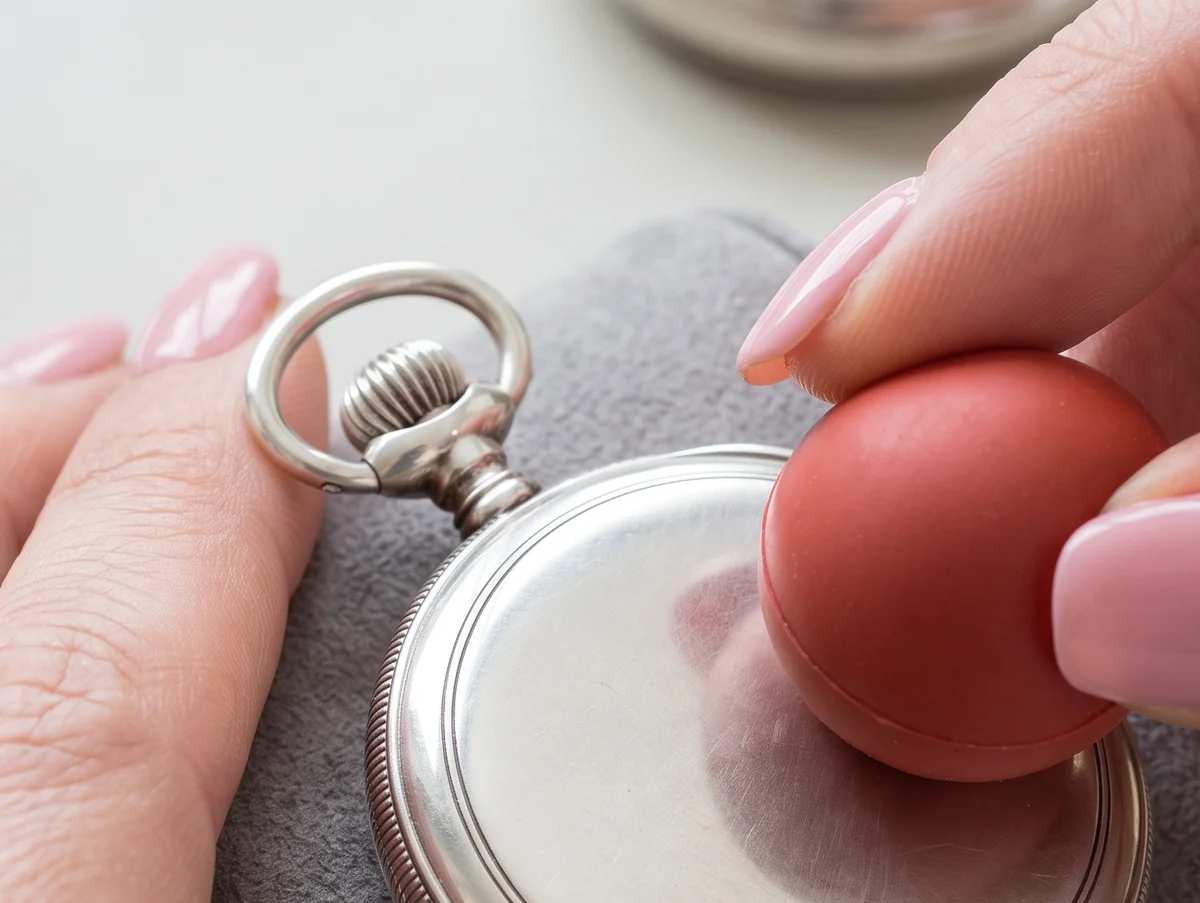
How to tell: no hinge, no lip, just a fine seam around the edge, often with milled grooves on the rim of the back. Screw backs are common on American watches, many of which also have a screw bezel at the front.
Which way: anticlockwise, looking at the back.
How: press a rubber case ball firmly onto the middle of the back and twist. Dry, clean hands help. Once it moves, finish with your fingers.
If it will not move after a firm try, stop: the threads may be corroded or cross threaded. To refit, turn it backwards until you feel the thread drop, then screw it home gently.
The hunter front lid: press the crown
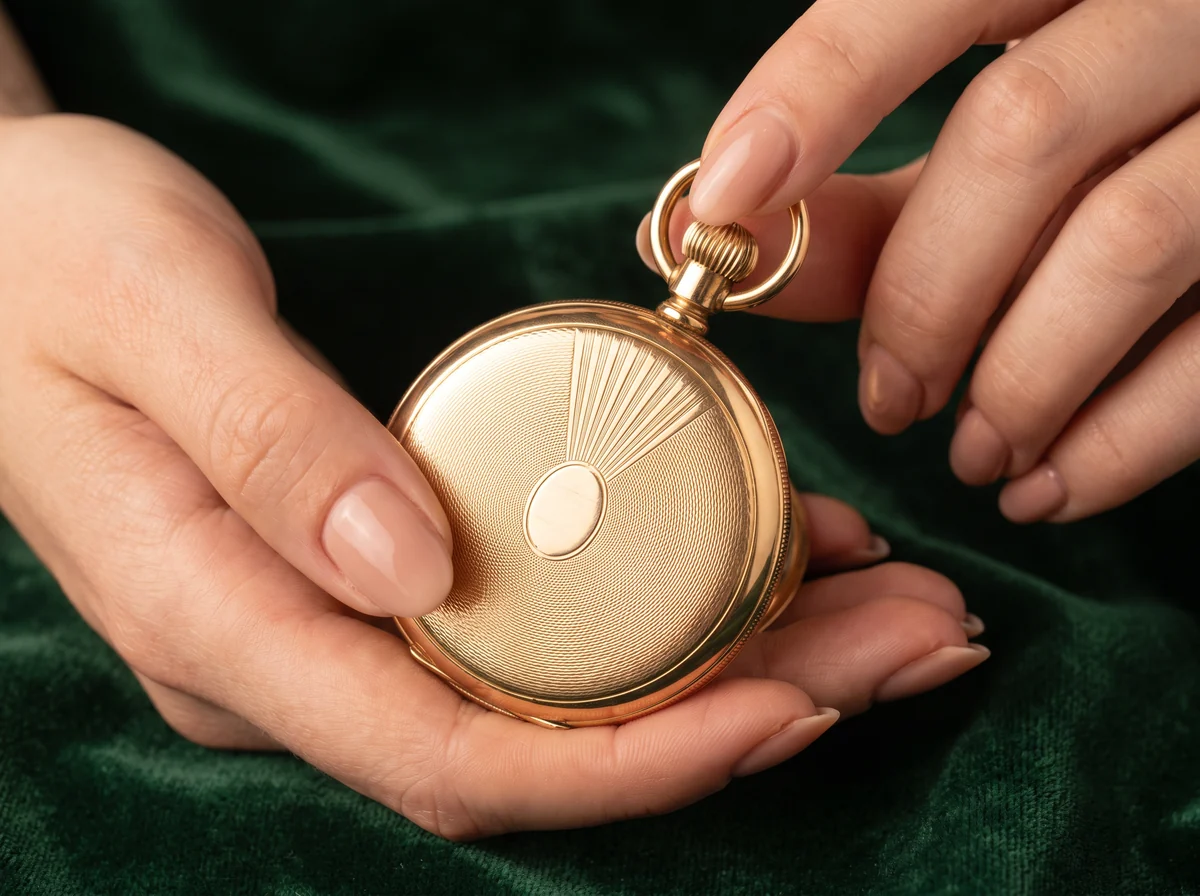
A full hunter has a solid lid over the dial, with the crown at 3 o'clock. Press the crown straight down and a sprung catch releases the lid.
Keep your thumb over the lid as you press, so it rises gently rather than flying open.
To close: press the crown in, lower the lid, then let the crown go. Snapping the lid shut wears the catch, and a worn catch lets the lid spring open in a pocket.
Half hunter: the same lid with a glazed window to read the time, and it opens the same way. On older key-wound hunters with no crown, the push is in the pendant itself.
For the difference between the case styles, see full hunter, half hunter and open face cases.
The inner dome (cuvette): gently, with a nail
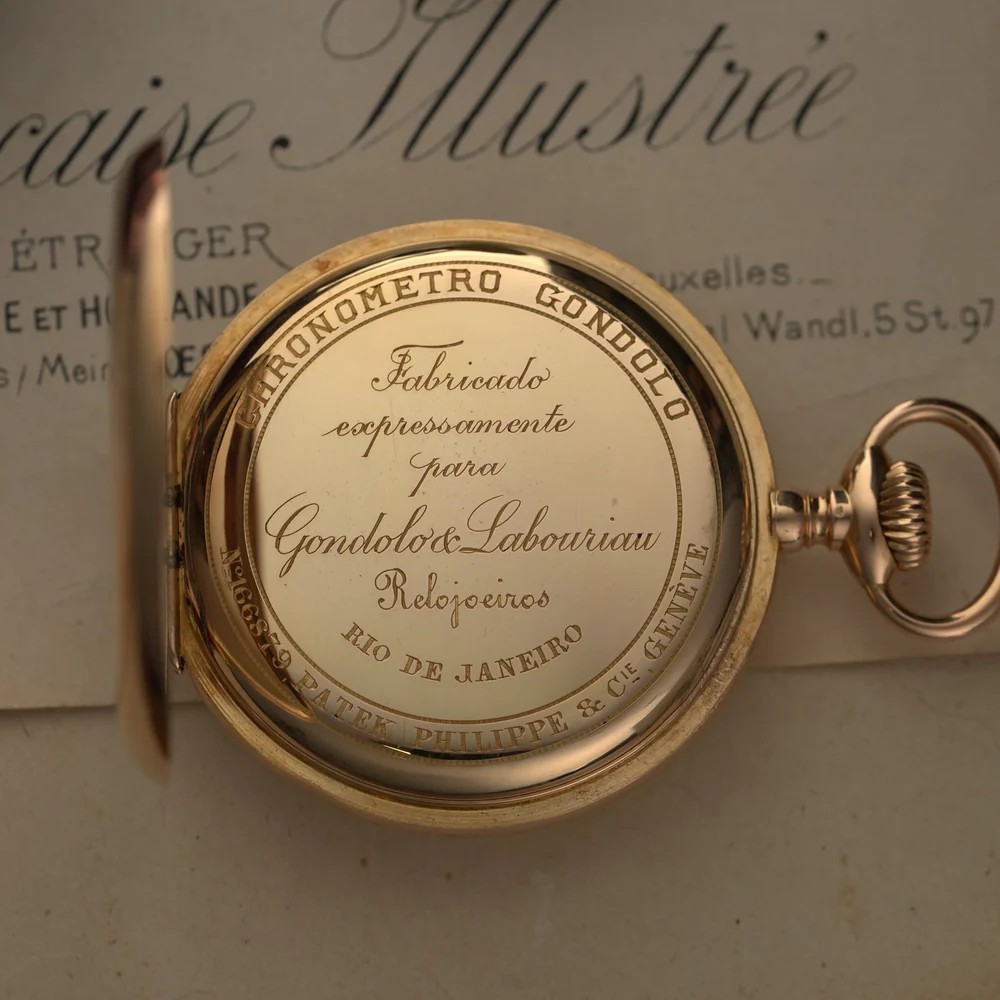
Many watches have a second, hinged cover under the back: the inner dome, also called the cuvette or dust cover. It keeps dust off the movement and is often signed. The one above is engraved for Gondolo & Labouriau, the Rio de Janeiro retailer.
Open it with a fingernail in its own small lip. Never use a blade here: the balance wheel is millimetres below.
Scratched marks inside? Those tiny numbers and initials are repairers' marks, each one a past service recorded by the watchmaker, and readable only by whoever scratched it.
The front bezel and crystal
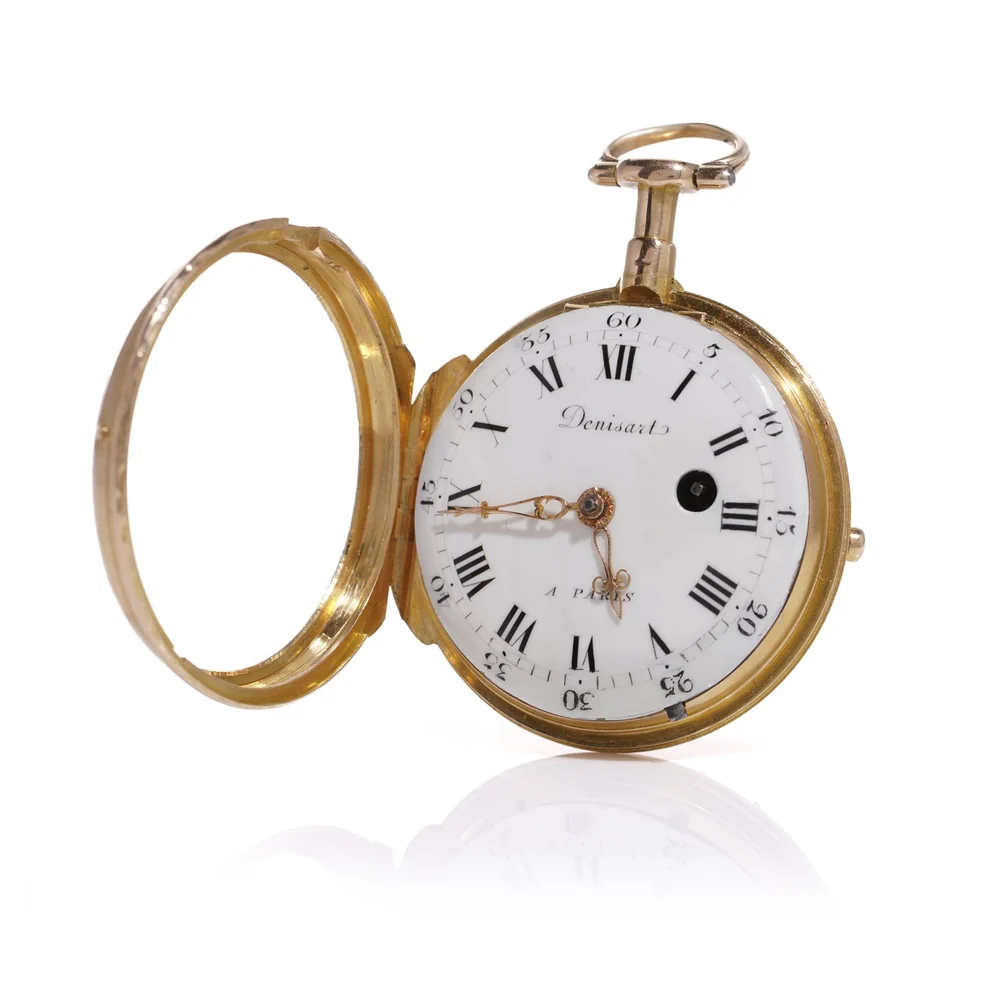
On an open face watch the glass sits in a ring, the bezel. Most antique bezels are hinged: put a nail in the lip opposite the hinge and the bezel swings back to free the dial and hands.
American bezels often screw on instead: unscrew anticlockwise, as for a screw back.
Hold the bezel by its rim, never by the glass. An old crystal can crack under thumb pressure.
You open the front to set the hands on many older watches; how to do that safely is on our winding and setting guide.
Swing-out movements and verge watches
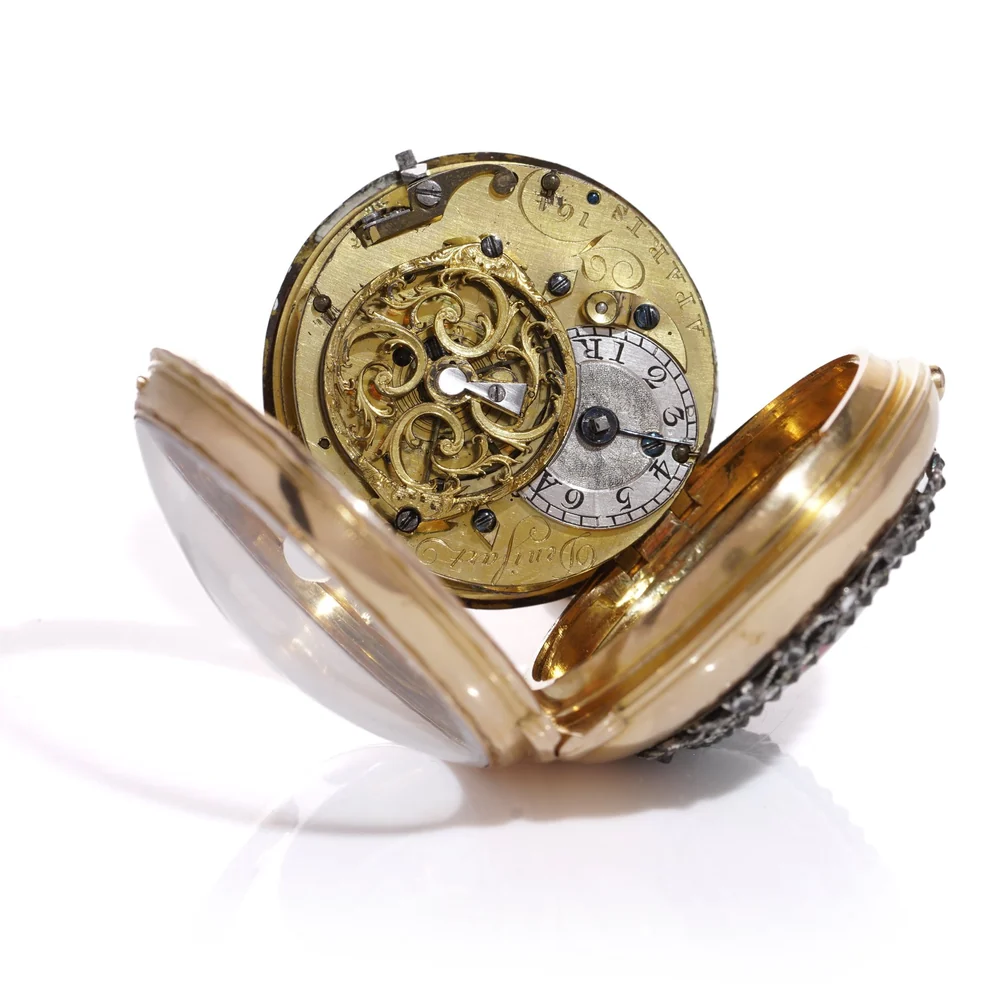
Some watches have no opening back at all: the whole movement swings out through the front.
18th and early 19th century verge watches: open the bezel, press the small lever at 6 o'clock with your nail, and the movement swings out on its hinge. In a pair case, first press the thumbpiece, open the outer case and lift the watch out.
American swing-out cases: unscrew the front bezel, pull the crown out to the setting position, lift at 6 o'clock and the movement swings out. Keep the crown pulled out while you close it, or the stem can bend.
Source: Pieces of Time; dealer descriptions of American swing-out cases.
What not to do
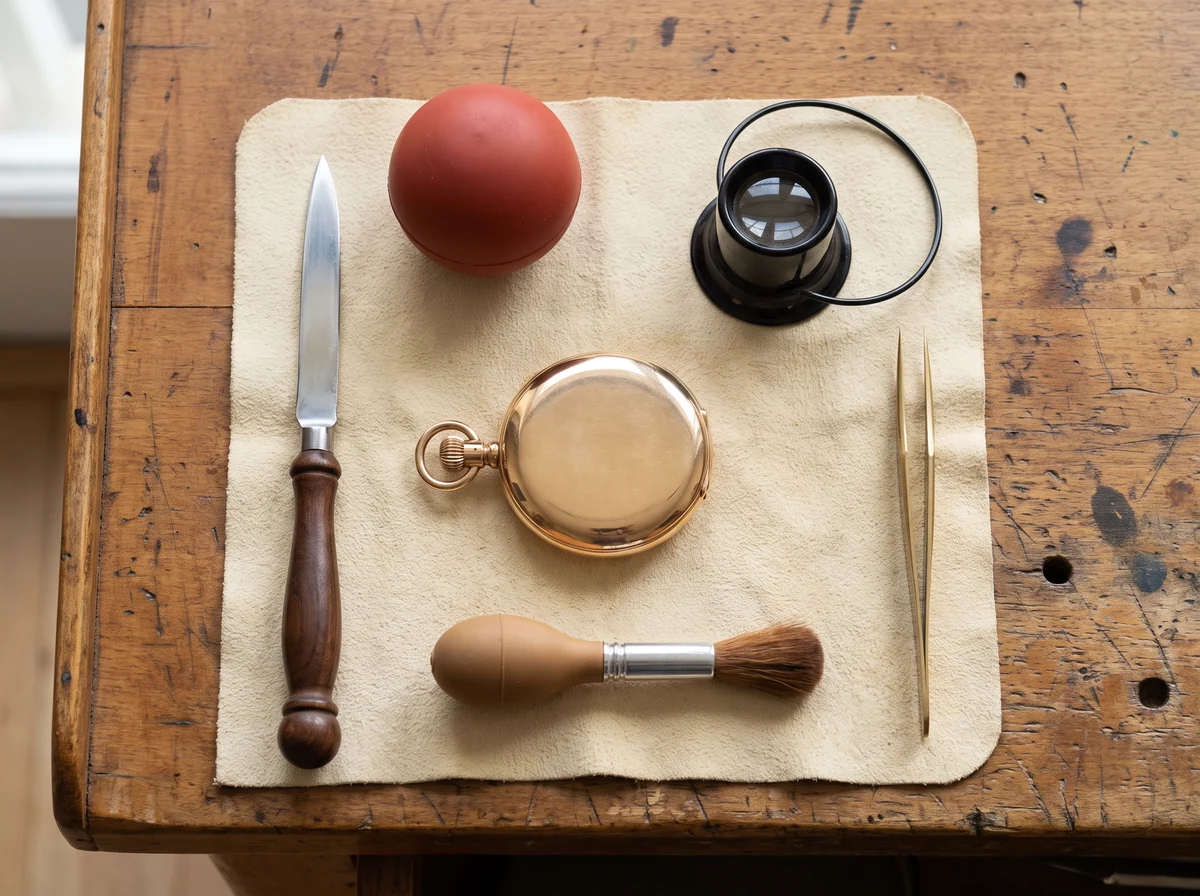
The right tools are cheap; the wrong ones are not
A case knife, a rubber ball, a loupe and a soft cloth cover almost every antique case. Watchmakers' suppliers sell all four.
The damage we see most often comes from a screwdriver or kitchen knife: a gouged seam or a dented lip that stays with the watch for good.
- Never prise a screw back. A blade cannot open it; it only scars the seam and bends the rim.
- Never use a screwdriver. Its square tip digs into soft gold and silver.
- Do not lever on the hinge side. The lip is opposite the hinge; forcing the hinge breaks its pin.
- Do not push a blade in deep. The balance and hairspring sit just below the dome.
- Do not touch the movement. Skin oils mark gilt plates. Look, do not prod.
- Do not force anything that resists. A stuck back usually means corroded threads or a careless refit, and a watchmaker can free it without damage.
- Do not snap a hunter lid shut. Press the crown first.
What you will see inside, and why it matters for value
Opening the case is how a valuer reads a watch. The outside shows the style; the inside shows the maker, the date, the metal and the history.
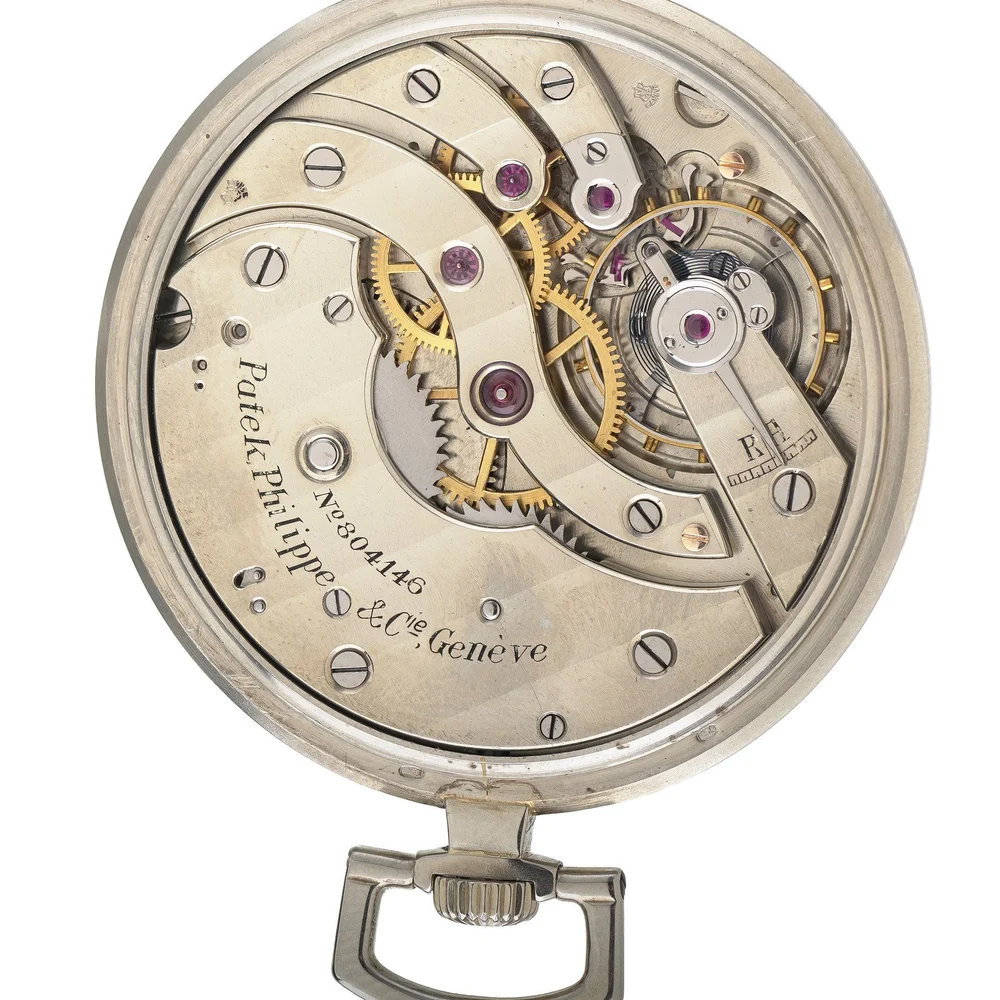
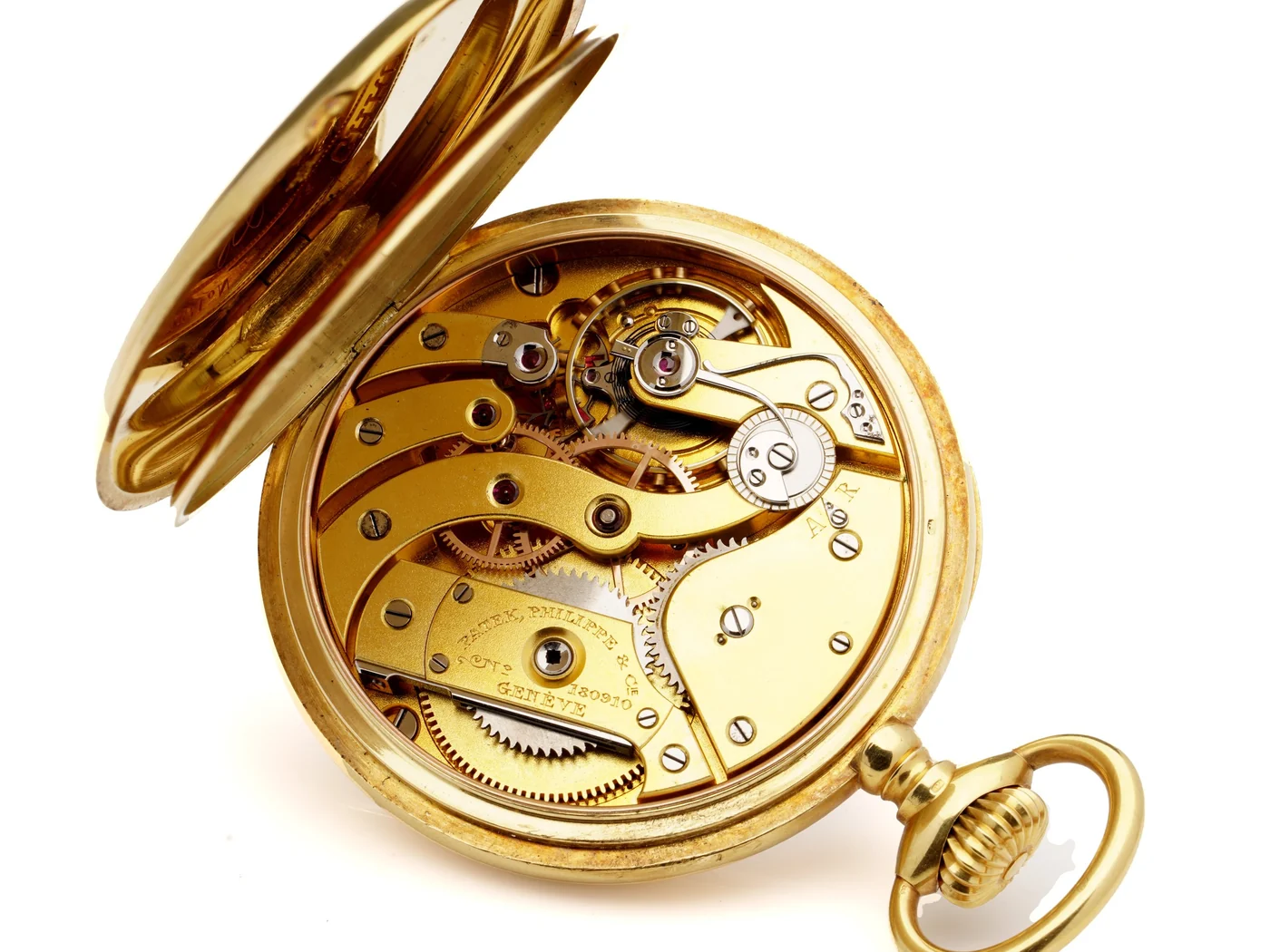
The movement: maker and serial number
Most good movements are signed with the maker's name and a serial number. The serial dates the movement from the maker's records and, on American watches, gives the grade.
Look also for a jewel count and words such as "adjusted" on better movements.
This is the movement of our Patek Philippe 18ct gold open face watch, 1925.
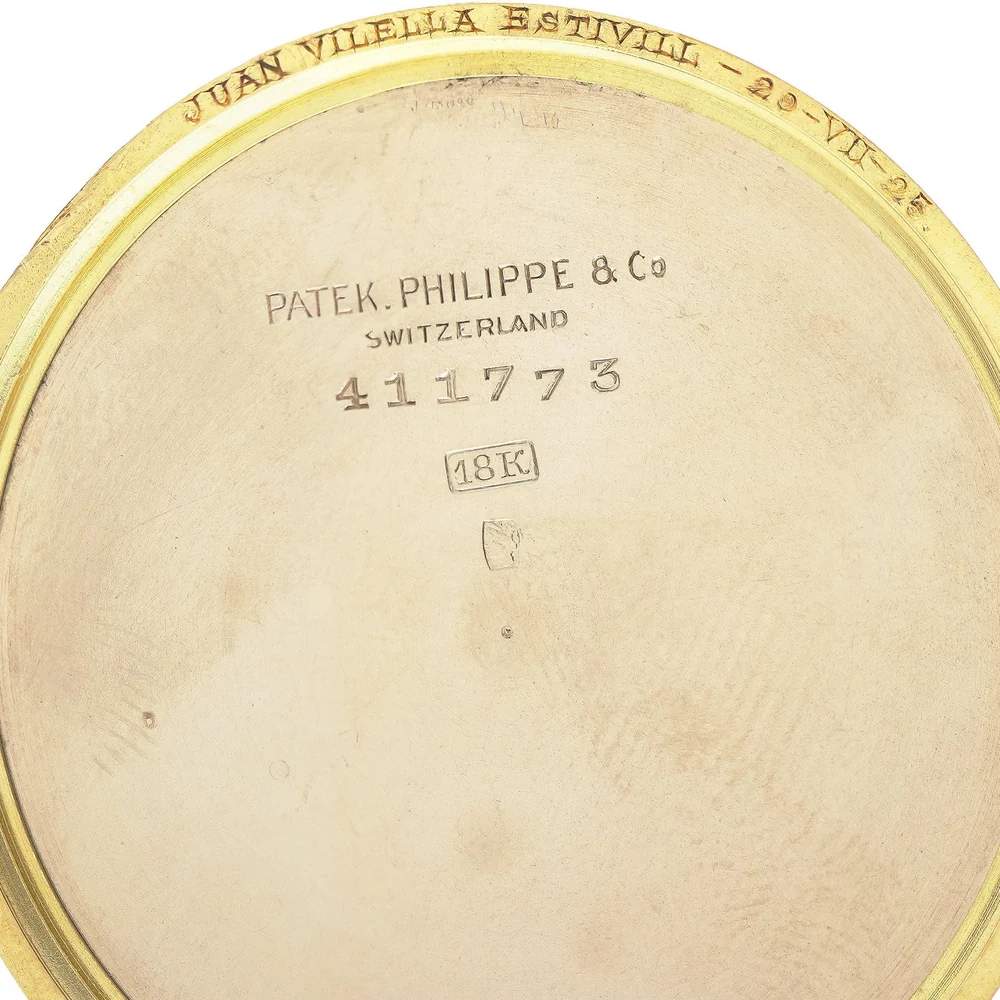
The case: marks, numbers and gold content
The inside of the back carries the case marks: the gold or silver standard, often hallmarks, the case maker's mark and a case number.
The case number is not the movement number. On this watch the case reads 411773 and the movement 804146, because case and movement were made separately.
Read the marks with our pocket watch hallmarks and case makers' marks guides.
What each detail tells a valuer
| Inside the case | What it tells us |
|---|---|
| Maker's name on the movement | Who made it, and so the starting point for value |
| Movement serial number | The date of manufacture and, for American makers, the grade |
| Hallmarks or 18K / 14K / 0.750 / 0.585 stamps | Solid gold or silver, the standard and often the year |
| "Gold filled" or "warranted" years | Not solid gold: a gold layer over base metal |
| Signed inner dome | The maker or retailer; signed to match the movement, it points to an original case |
| Inscriptions | Presentation history; a dated inscription can help with provenance |
| Repairers' marks | How often, and roughly how long ago, it was serviced |
For a gold watch, the gold content sets the lowest value it can have; see how to tell if a vintage watch is solid gold and how to date a vintage gold watch. Rust on the plates, a broken hairspring or mismatched screws are condition points a buyer will ask about.
Opened it and found a name or a number? Send photos for a free valuation
Stuck, or would you rather we opened it?
If a case will not open with a nail, a ball or a light touch of the knife, bring it to us. We will open it for you as part of a free valuation, with no obligation to sell.
- Send photos
Photograph the dial, the back and the edge, and send them through the form below, by WhatsApp or by calling 01376 334482.
- Visit us
Book an appointment at 47 Maddox Street, Mayfair, or in Braintree, Essex, via our contact page. We open the case in front of you and read the marks.
- Sell or keep
If you decide to sell, we make you an offer; see how we buy pocket watches. Payment is by bank transfer.
- Or buy one
Browse our antique pocket watches, and our chain styles guide for how to wear one.
Request a free valuation
- Read the edge first: a hinge and lip mean a snap back, a plain seam means a screw back.
- Fingernail, case knife or rubber ball; never a screwdriver, never a blade on a screw back.
- Press the crown to open a hunter, and again before closing it.
- Inside, the maker's name, serial number and case marks are what decide the value.
Questions we are asked
Which way do you unscrew a pocket watch back?
Anticlockwise, looking at the back of the watch. Press a rubber case ball firmly onto the middle of the back and twist. If it will not move after a firm try, stop and take it to a watchmaker.
How do I open a pocket watch without a tool?
Most hinged backs and inner domes open with a fingernail in the lip opposite the hinge, and a hunter lid opens by pressing the crown. A tight snap back needs a case knife; a screw back needs a rubber ball.
How can I tell if my pocket watch back is snap-on or screw-on?
A snap back has a small lip or nick on the edge, and usually a hinge. A screw back has no hinge and no lip, just a fine seam around the edge, often with a milled rim.
How do you open a hunter case pocket watch?
Press the crown at 3 o'clock with your thumb over the lid and the sprung catch releases it. To close, press the crown, lower the lid and release, rather than snapping it shut.
What is the inner cover inside a pocket watch called?
The inner dome, also called the cuvette or dust cover. It is hinged, opens with a fingernail, and is often signed by the maker or retailer.
What are the scratched numbers inside my pocket watch?
Usually repairers' marks: watchmakers scratched a code, date or job number inside the back each time they serviced a watch. They are meaningful only to the person who made them.
Will opening my pocket watch reduce its value?
Not if it is done gently with the right tools. Scratches and gouges from screwdrivers or knives do lower the value, so if a case resists, let a watchmaker or valuer open it.
Where is the serial number on a pocket watch?
On the movement, usually on a plate or bridge beside the maker's name. The number stamped inside the case back is the case number, which is different.
Have a pocket watch to value or sell?
Send photos of the dial, back and movement for a free valuation, or visit us in Mayfair or Braintree and we will open it with you.
- We buy directly
- Free valuation from photos
- Appointments in Mayfair and Braintree
- Insured postage or collection
New pieces reach our list first: join the Mozeris list.