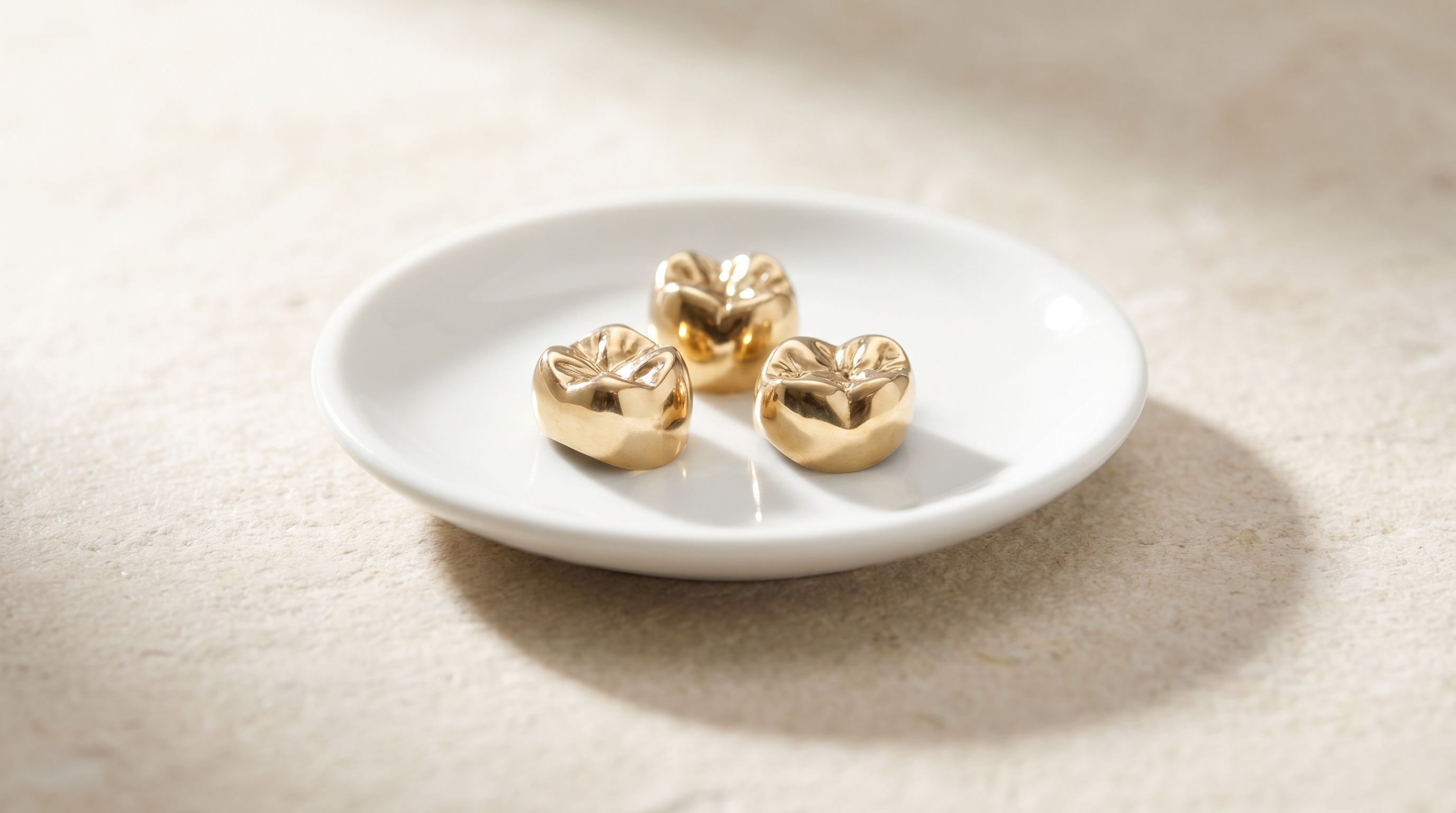
Sell Dental Gold: What Gold Teeth and Crowns Are Worth
Ready to sell? Sell dental gold: free valuation from photographs, insured Royal Mail Special Delivery or free FedEx collection, and payment by bank transfer the same day after inspection.
Dental gold carries no hallmark, so a crown is never stamped with a carat mark and its value is settled by assay rather than by reading the metal. Crowns, caps, inlays and bridgework are cast in hard-wearing alloys running from roughly 10KT to 22KT equivalent, most often 14KT to 18KT, with palladium, platinum or silver making up the balance. A full cast crown weighs about 3 to 4 grams; a porcelain fused to metal crown holds far less metal. We test the alloy, weigh the metal and buy dental gold outright in Mayfair, in Braintree or by insured post.
Are gold teeth real gold?
Yes. Gold crowns, inlays and bridges are made from dental gold alloys that contain real gold, usually mixed with platinum, palladium, silver and copper for strength. Their gold content varies by alloy and is rarely marked, so dental gold is tested before it is valued. Some gold-coloured crowns contain no gold at all.
Got Gold Crowns or Teeth to Value?
Send a photo, no need to clean it, and we'll tell you roughly what your dental gold is worth, free and with no obligation. We reply within one working day.
Old gold crowns, caps and fillings turn up more often than you'd think: kept after dental work, or found among a relative's things. They look like odd little lumps of metal, easy to dismiss. But dental gold is genuine precious metal, and with gold prices high it's well worth selling rather than leaving in a drawer.
What dental gold actually is
Dental gold isn't pure gold: it's a hard-wearing alloy, typically equivalent to somewhere between 10 and 22 carat, most commonly around 14–18 carat (roughly 58–75% gold). The rest is often other precious metalspalladium, platinum or silver, chosen for strength in the mouth. That mix means even a small crown can hold meaningful value, sometimes more than its gold content alone suggests.
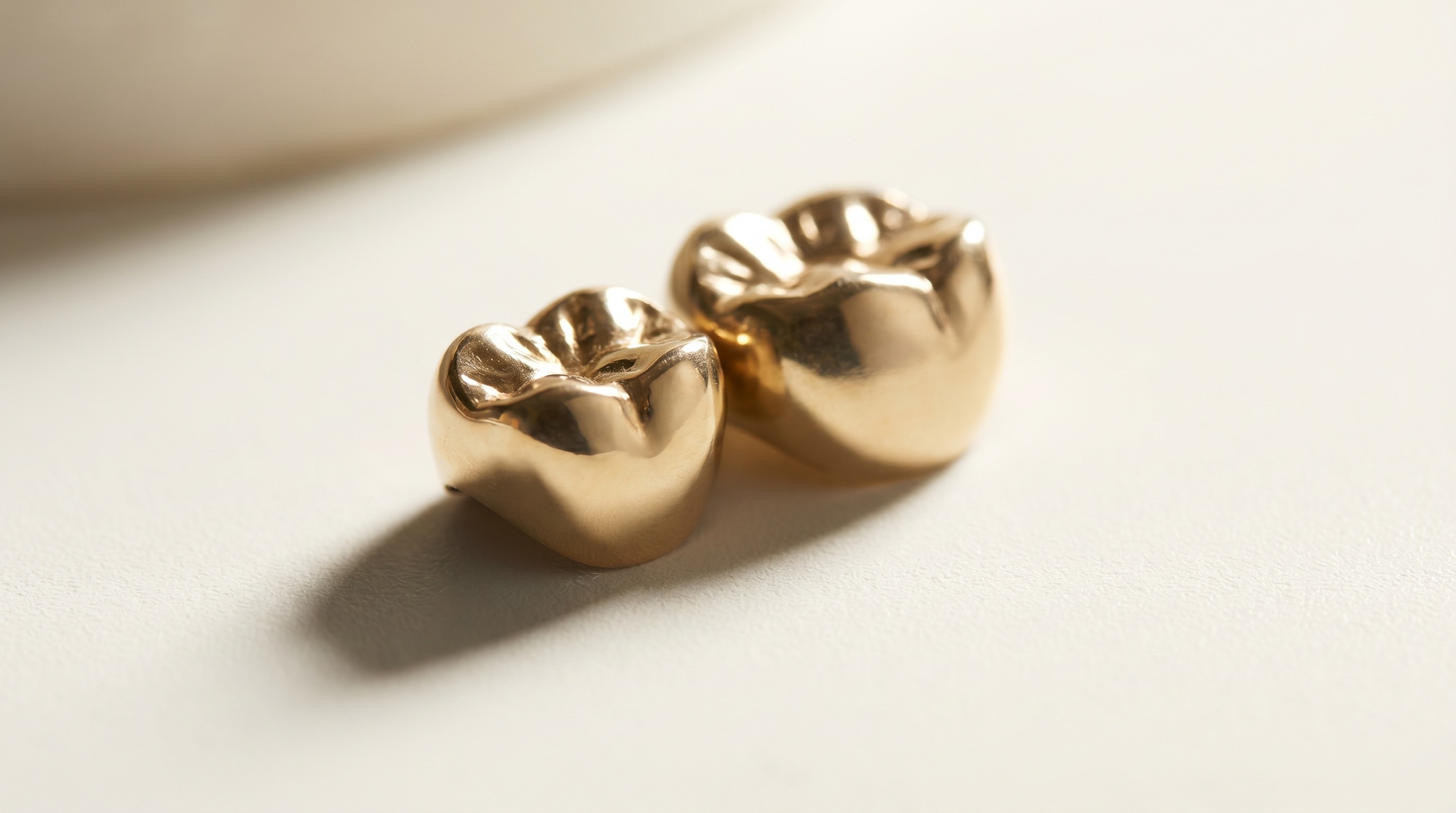
How much is a gold tooth worth?
It comes down to weight and composition. An average gold crown weighs around 3–4 grams, though not all of that is gold, some is the underlying tooth or porcelain. The value is the precious-metal content within, assessed against the live market. A single crown is modest but real; several pieces together add up to a worthwhile sum.
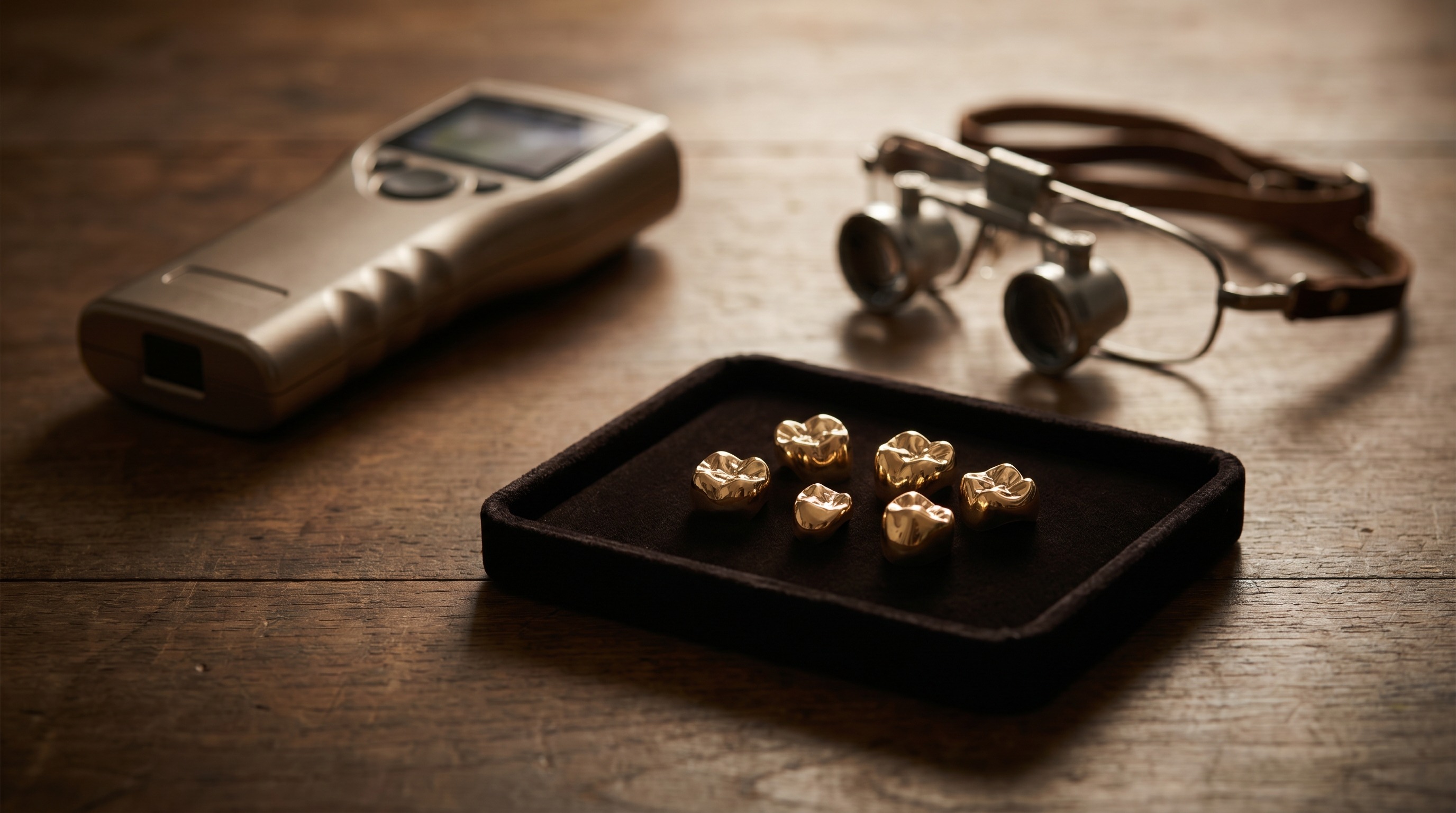
How We Value Dental Gold
Because the alloy varies, dental gold is tested, not guessed:
- Precious-metal testing: We test the alloy to establish the gold, palladium and platinum content.
- Weighed precisely: Only the metal counts; any tooth or porcelain is disregarded.
- Live market price: Valued against current gold and platinum-group prices.
- No cleaning needed: Bring it as it is; refiners process it with tooth material attached.
- Several pieces add up: A small lot is worth more combined than a single tooth.
Honest, tested valuation: no guesswork, no lowball for "unusual" metal.
Selling your gold teeth
Dental gold sells the same way as any scrap precious metal, by tested content and weight against the live market. There's no need to clean it or remove any tooth material first. A single crown may be modest, but combined with other scrap gold, or alongside a few pieces, it's genuinely worth selling rather than discarding. We handle it discreetly and value it properly.
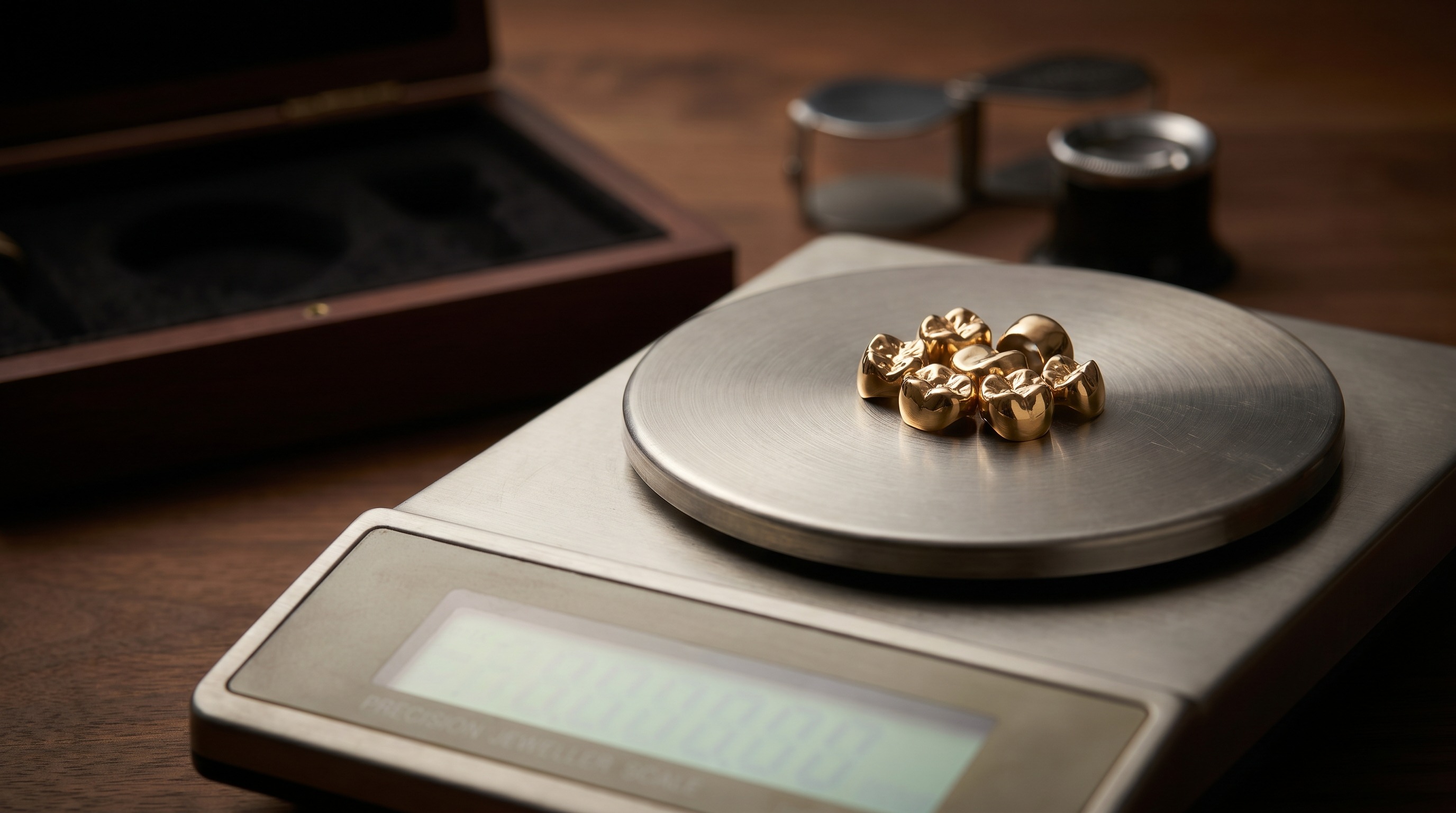
It pairs naturally with other scrap: see our broken & scrap gold page, today's live gold price, and the gold scrap price. When ready, sell via sell your gold.
Value Your Dental Gold
Send a photo of your crowns, caps or fillings and we'll give you an honest, no-obligation valuation against today's market.
⚠️ Strictly by appointment only, no walk-ins at either office.
Frequently Asked Questions
Selling gold teeth and dental gold, common questions.
Is a gold tooth or crown worth anything?
Yes. Dental gold is a precious-metal alloy (typically 14–18 carat equivalent, often with palladium or platinum) so it has real scrap value. A single crown is modest; several pieces, or dental gold alongside other scrap, add up to a worthwhile sum.
How much gold is in a dental crown?
An average crown weighs about 3–4 grams, of which the precious-metal alloy is usually equivalent to 14–18 carat (around 58–75% gold), with the balance often palladium or platinum. Only the metal is valued, not any tooth or porcelain.
Do I need to clean it or remove the tooth first?
No. There's no need to clean dental gold or separate it from any tooth material: refiners process it as it is, and we value the metal content accordingly.
How is dental gold valued?
It's tested to establish the precious-metal content (gold, palladium, platinum), weighed precisely, and valued against the live market. Because the alloy varies, testing, not guesswork, is essential.
Can I sell just one gold tooth?
Yes, though a single small crown is modest in value. It's often best combined with other scrap gold. We're happy to value whatever you have, with no obligation.
How pure is dental gold?
Dental gold varies. Under the American Dental Association's classes, a high noble alloy contains at least 60% noble metals, gold, platinum and palladium, with at least 40% gold; a noble alloy contains at least 25% noble metals. Many traditional yellow gold crowns are richer in gold than that. Testing gives the exact content.
What is NPG dental gold?
NPG stands for non-precious gold-coloured alloy: a dental metal, usually copper and aluminium, that looks like gold but contains no gold or other precious metal. It was used for cheaper crowns. NPG has no gold value, which is one reason dental gold is always tested before it is bought.
Why are gold crowns used on teeth?
Gold crowns are strong, wear at a similar rate to natural tooth enamel, can be made thin so less tooth is removed, and do not corrode in the mouth. Dentists often use them on back teeth, where chewing forces are greatest. They can last for decades, which is why many people still have them.
How did gold teeth originate?
Gold has been used in dentistry for thousands of years: the Etruscans in Italy made gold band bridges to hold replacement teeth around 2,600 years ago. Gold fillings and crowns became common in the 19th and 20th centuries, before ceramic and composite materials took over most dental work.
Can gold teeth go in an MRI scanner?
Gold is not magnetic, so gold crowns are generally considered safe in MRI scanners, though they can distort images of the area near them. Some dental alloys contain other metals. Always tell the radiographer about any dental work before a scan; they will advise.
Can gold teeth get cavities or fall out?
The gold crown itself cannot decay, but the natural tooth underneath can, especially at the edge where crown meets tooth, so brushing and check-ups matter. A crown can loosen or fall out if the cement fails or the tooth beneath decays. Keep any crown that comes out: it can be refitted or sold for its gold.
Do gold teeth tarnish?
High gold dental alloys do not tarnish or corrode in the mouth, which is one of their advantages. Lower gold alloys and non-precious gold-coloured metals can discolour over time. A gold crown that has darkened may contain less gold than it appears, which testing will show.
How are gold teeth made?
A dentist takes an impression of the prepared tooth, and a dental laboratory makes a wax model of the crown, which is cast in dental gold alloy by the lost wax method, then fitted and polished. The finished crown is cemented onto the tooth. Removable gold covers, sometimes called grills, are a fashion item instead.
How do I sell dental gold?
Collect old crowns, bridges and inlays, with or without the teeth attached, and send photographs for a free valuation. We test dental gold for its true gold content, pay the same day by bank transfer after inspection, and offer insured postage or free collection. Unmarked dental gold is always tested first.
Is dental gold the same as regular gold?
Not quite. Dental gold is a gold alloy made for strength in the mouth, mixed with platinum, palladium, silver and copper in proportions that vary between alloys, and it is rarely hallmarked. Jewellery gold is made to set carat standards. Both contain real gold, and dental gold is tested before it is valued.
Do gold teeth last forever?
Gold crowns are among the longest lasting dental restorations and often last for decades, but not forever. The tooth underneath can decay at the margin, or the cement can fail, so a crown may need replacing. Old crowns that come out still carry gold value.
Send Us Your Dental Gold Photographs
Attach a photo of your crowns or teeth, as they are. We'll respond within one working day.