English Pocket Watch Makers: Prescot, Coventry, London and Who Really Made Your Watch
How English watches were really made, the makers that mattered, the retailers whose names fill the dials, why the industry declined, and what makes one valuable today.
English pocket watch makers worked as a chain of specialists, not as single firms:
- The trade: rough movements from Prescot, finished in Coventry, Clerkenwell or Liverpool, cased by separate case makers, signed by the retailer.
- Real makers: Rotherham & Sons and the Lancashire Watch Co. made watches by machine; Dent and Frodsham were fine London makers.
- Retailers: Benson, Fattorini, H. Samuel and Kendal & Dent sold watches made by others.
- Value: the real maker, the case metal and complications decide it; Dent and Frodsham chronographs lead the market.
In this article
How the English watch trade worked
Almost no English pocket watch was made by one person, or even in one town. A London movement passed through the hands of twenty or more specialist trades before a shop had its own name engraved on it. Rees's Cyclopaedia, written between 1807 and 1818, listed thirty four separate crafts.
Small workshops, not factories
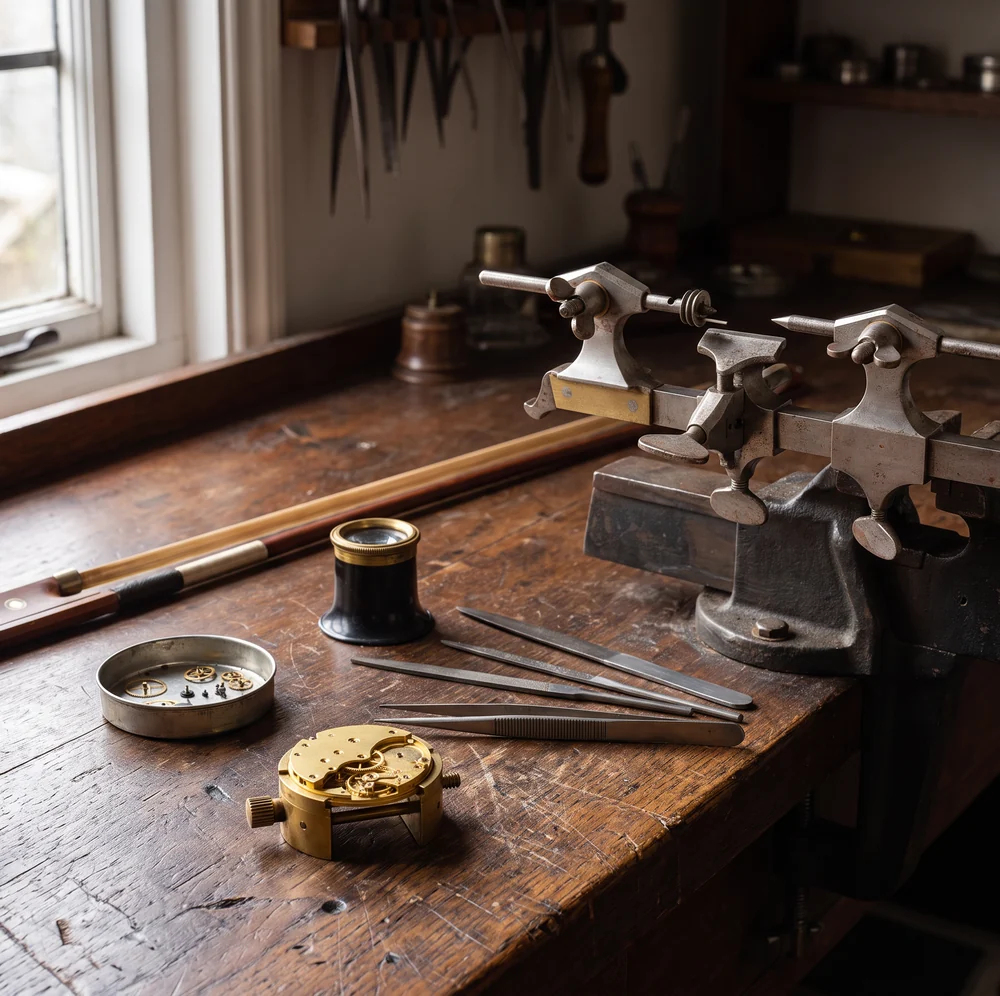
Most of the work was done in small workshops, often in or behind the worker's house. Part-made movements went from one workshop to the next, and each craftsman worked for several finishers at once.
London's Clerkenwell made almost 200,000 watches a year at the end of the 18th century. In 1860 Coventry had 90 watch manufacturers employing 1,250 men, 667 apprentices and 30 women.
- Prescot: the rough movement
Movement makers around Prescot, eight miles east of Liverpool, made the frame of the watch: the plates, pillars, fusee, barrel and train wheels, with no escapement, balance or jewels. Writers of the time said the district made "almost all the watch-movements used in England".
- Clerkenwell, Coventry, Liverpool: the finishers
Finishers fitted the escapement, balance and jewels, then had the plates engraved and gilded and the dial and hands made. At Coventry's peak, about 1850 to 1890, a busy year saw 100,000 watches, about twice Clerkenwell's output.
- The case maker and the assay office
Gold and silver cases came from separate case makers, in London, Coventry, Birmingham and Liverpool, and went to an assay office to be hallmarked. Their marks are explained in our guides to case makers' marks and pocket watch hallmarks.
- The retailer: the name you see
The finished watch went to a jeweller or watchmaker's shop, which usually had its own name and town engraved on the movement or painted on the dial. More on that below.

Liverpool: finishing for export
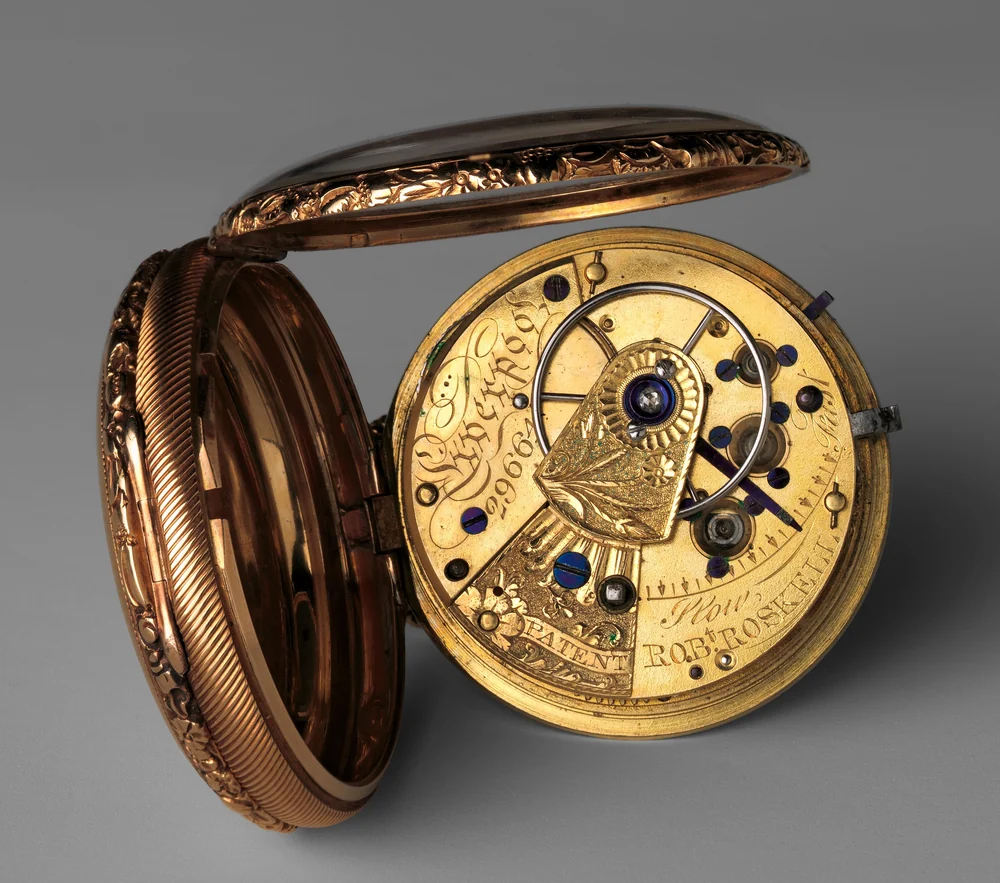
Liverpool was the third great finishing town, close to the Prescot movement makers, with a large export trade to the Americas.
Robert Roskell, whose watch is shown here, was active in the city from 1790 to 1847. Like London and Coventry finishers, Liverpool firms engraved the name and town of whoever sold the watch on the movement.
The English lever: the watch England was known for
Between about 1814 and 1826 English makers brought the lever escapement to its standard form, and the "English lever" stayed in production for over eighty years. Three things mark the classic type:
- A right-angled lever escapement. The balance, lever and escape wheel are laid out at right angles, and the escape wheel has fine, pointed teeth.
- A fusee and chain. A cone and a fine chain even out the pull of the mainspring, long after Swiss and American makers had given it up. Our verge fusee guide shows how it works.
- Key winding through a fixed inner dome. Open the back and wind through a hole in the dome; see how to wind and set a pocket watch.
Full plate, then three-quarter plate
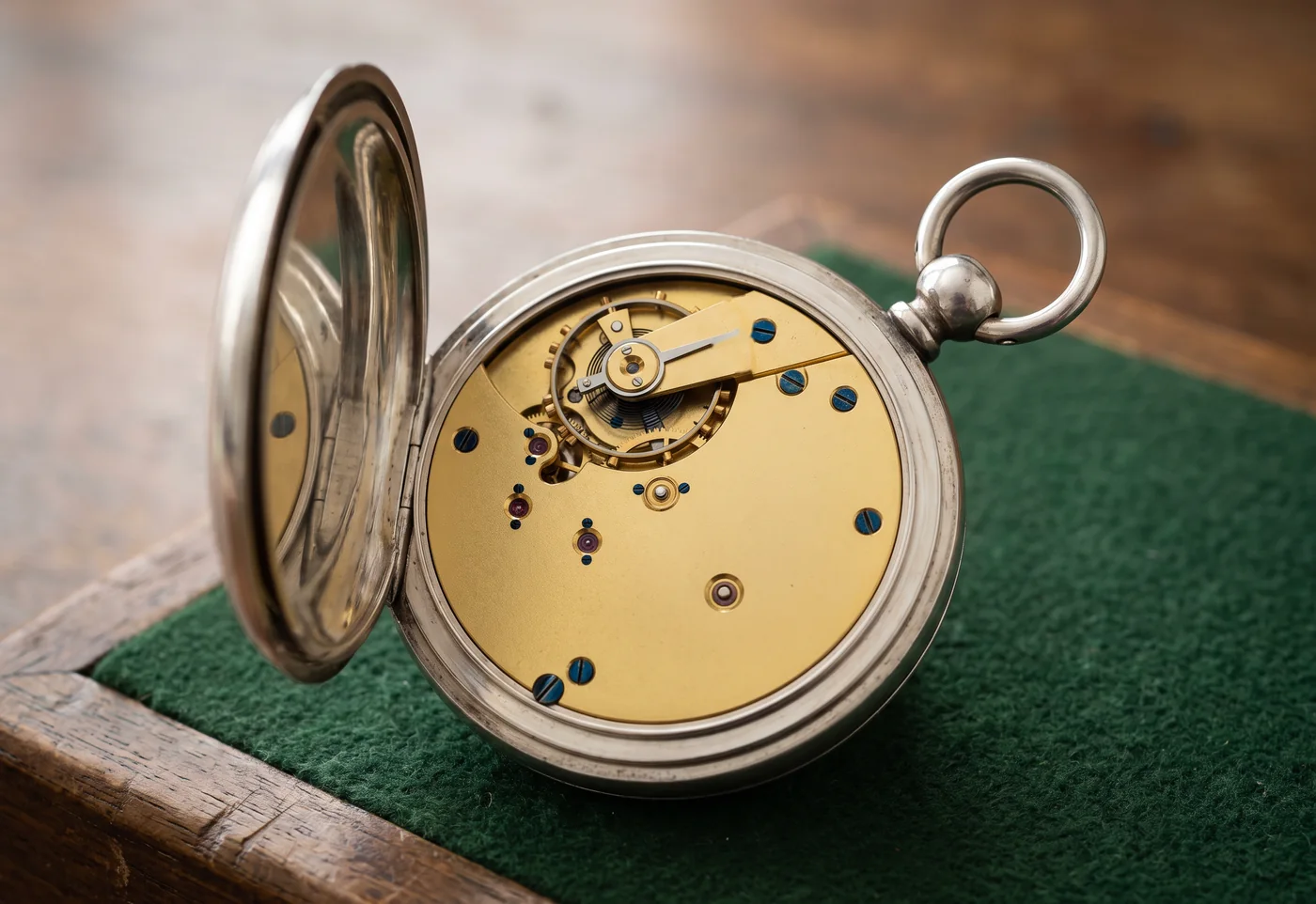
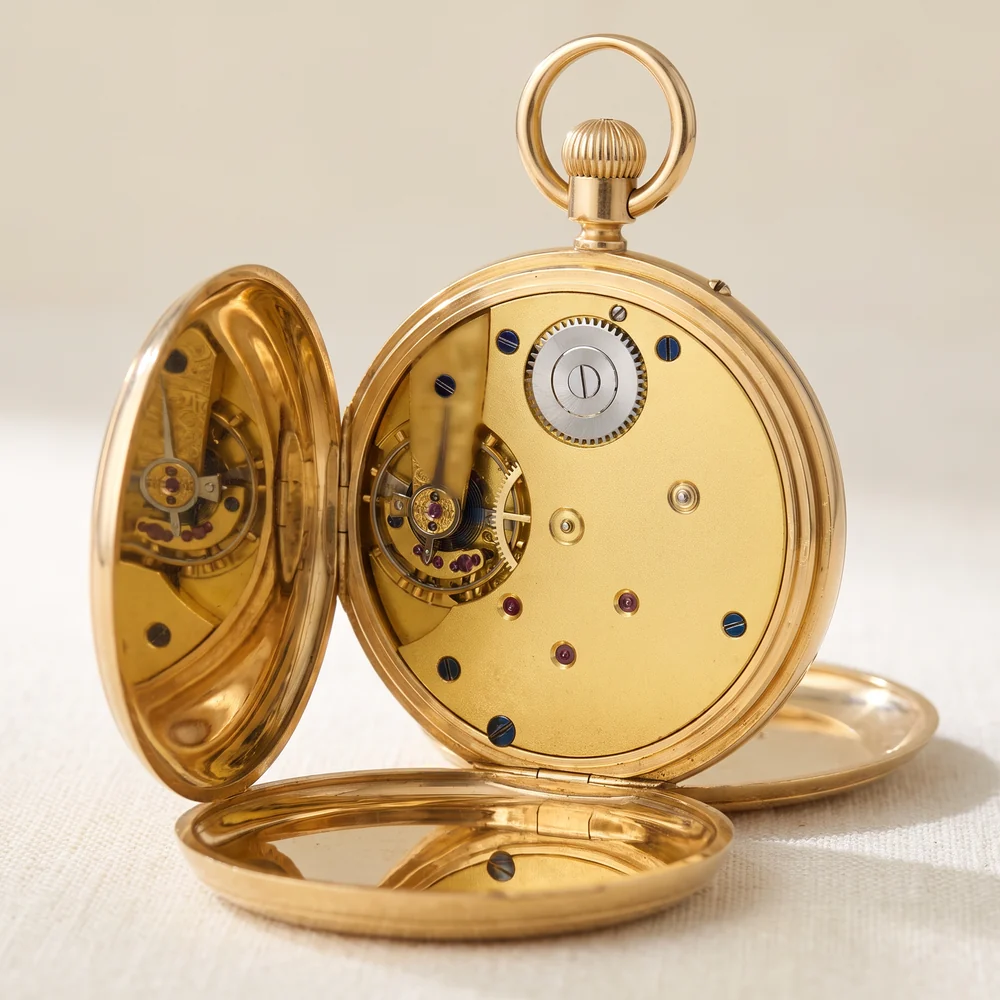
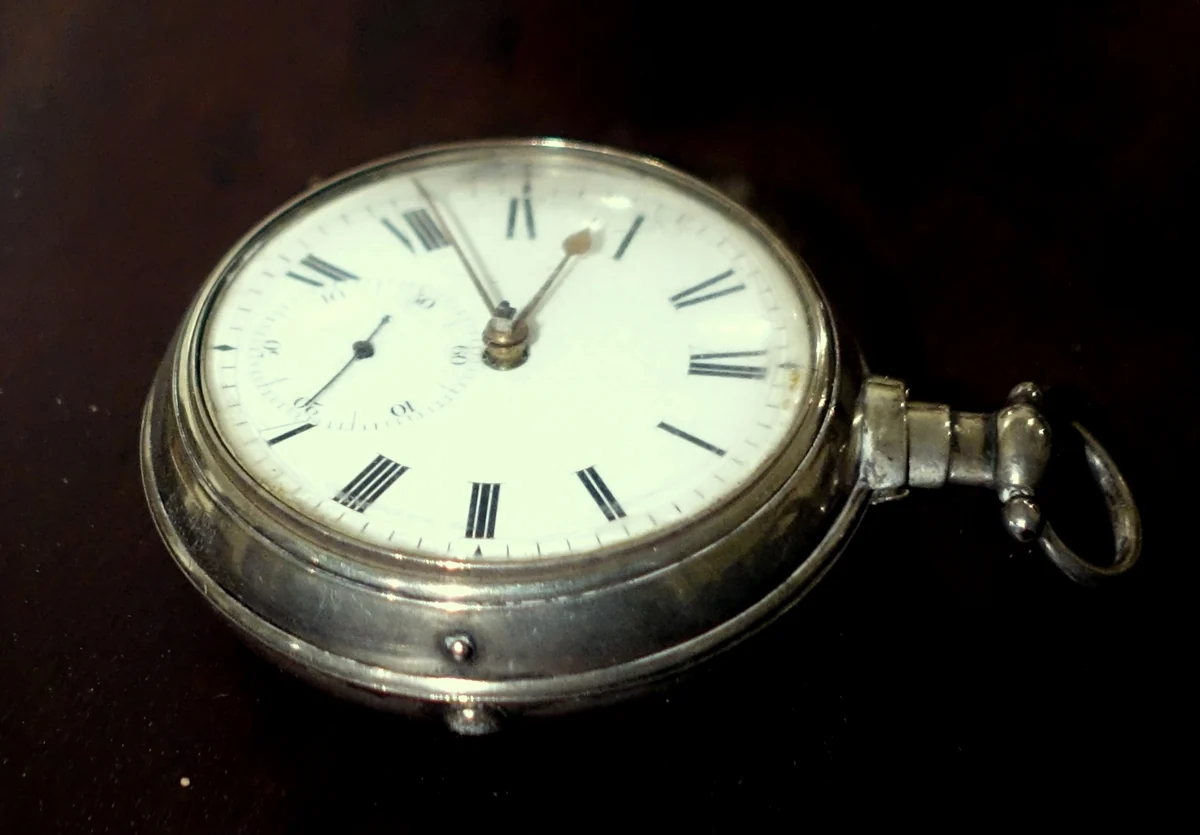
The early English lever is a full plate movement: one large plate covers the works, as in the photograph at the top of this page.
Many later watches use a three-quarter plate instead, with the balance set lower in a cut-away quarter, and many are keyless. Auction catalogues describe Dent, Frodsham, Rotherham and Lancashire Watch Co. watches of 1872 to 1914 as "gilt 3/4 plate English lever".
How do you tell an English watch from a Swiss one? Look at the movement, the case and the hallmarks: our English vs Swiss antique gold watches guide walks through it.
The main English pocket watch makers
Only a handful of English firms made watches on a large scale, and only a few of the famous names on dials made what they sold. This is who did what:
| Name | Where | What they did |
|---|---|---|
| Rotherham & Sons | Spon Street, Coventry | Made watches, by machine from the 1880s |
| Lancashire Watch Co. | Prescot | Made complete watches by machine, 1888 to 1910 |
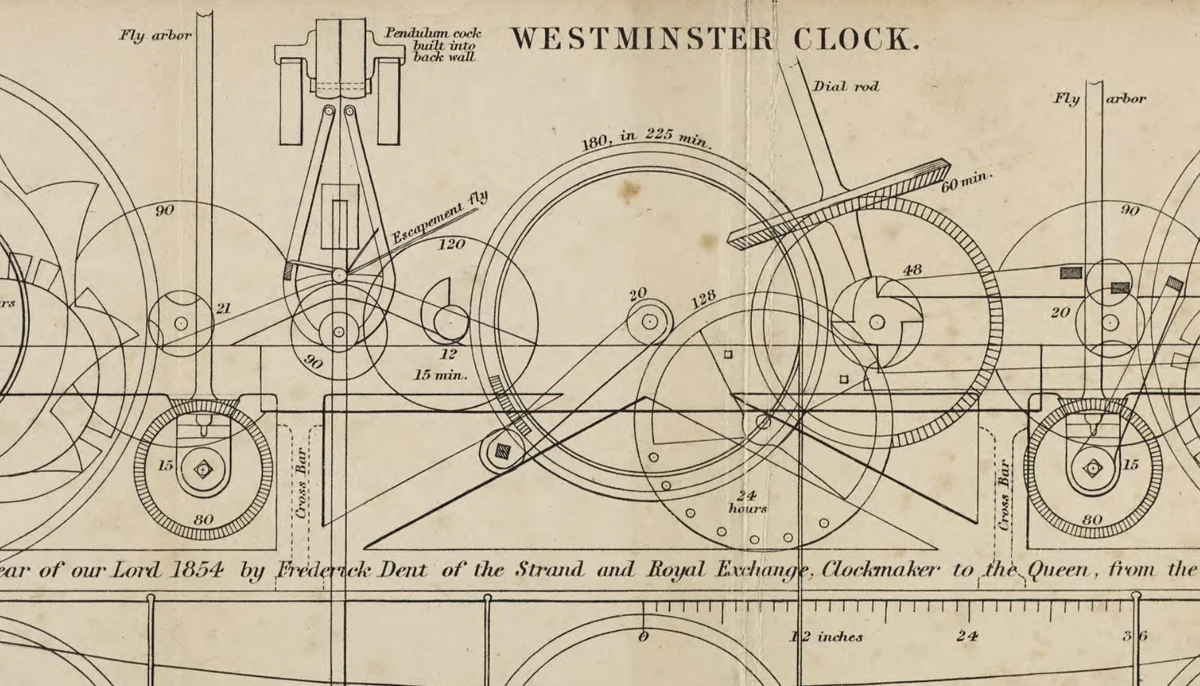
| Dent | Strand and Cockspur Street, London | Chronometer and watchmakers; built the Westminster clock |
| Charles Frodsham | 84 Strand, London | Chronometer and watchmakers; still trading |
| J. W. Benson | Ludgate Hill, London | Retailer; bought movements in from makers |
| Thomas Russell & Son | Church Street, Liverpool | Chronometer makers; later imported Swiss movements |
| S. Smith & Son | London | Retailer; made watches only after the Second World War |
Rotherham & Sons, Coventry
Coventry's biggest maker traced its roots to Samuel Vale, watchmaking in the city from 1747, and stayed on Spon Street throughout. The report on the Great Exhibition of 1851 called its works the only one in England using steam-powered machinery for many processes, then turning out about 180 watches a week.
By 1887 Rotherhams employed 400 to 500 people plus about 200 out-workers, and had a London office at 1 Holborn Circus, which is why some watches say "Rotherhams, London". About 400,000 movements were made between 1880 and 1920. During the First World War the firm made no watches for five years, building clockwork shell fuses instead, and it stopped making watches in Coventry before the Second World War.
The Lancashire Watch Company, Prescot
Founded by Thomas P. Hewitt in Prescot in 1888 to 1889, it set out to make complete watches by machine and compete with the American and Swiss factories. Its designs had more in common with American watches than with the traditional fusee. It made about 900,000 watches, but never turned a profit, and went bankrupt in 1910, which ended watchmaking in Prescot.
_%E2%80%93_mechanism_plan,_c.1854_(design_by_Edmund_Beckett_Denison;_made_by_E_J_Dent).png)
Dent, London
Edward John Dent (1790 to 1853) made his name with marine chronometers: his No. 114 won the top award at the 1829 trials. He was in partnership with John Roger Arnold from 1830 to 1840, then traded on the Strand and at 33 Cockspur Street.
In 1852 Dent won the commission for the Great Clock of Westminster, Big Ben. He died the next year, and his stepson Frederick Dent completed it.
Charles Frodsham, 84 Strand
Charles Frodsham (1810 to 1871) moved to 84 Strand in 1843 after taking over John Roger Arnold's business. From 1850 the firm marked its best work with the code letters "AD Fmsz", which turns up on movements today. Frodsham supplied chronometers to the Admiralty, and the firm still trades.
Thomas Russell & Son, Liverpool
Liverpool watch and chronometer makers, appointed by royal warrant in 1858, with works on Slater Street and later Cathedral Works, Church Street. In later years the firm also imported Swiss keyless movements and cased them in Britain: a Russell half hunter sold at Bonhams in 2024 has a Swiss lever movement.
S. Smith & Son
Founded in London in 1851, Smiths sold watches for decades, supplying the Admiralty, but bought them in from makers such as P. & A. Guye and Nicole Nielsen. It began making watches itself, at Cheltenham, only towards the end of the Second World War, at the government's urging.
The name on the dial is not the maker
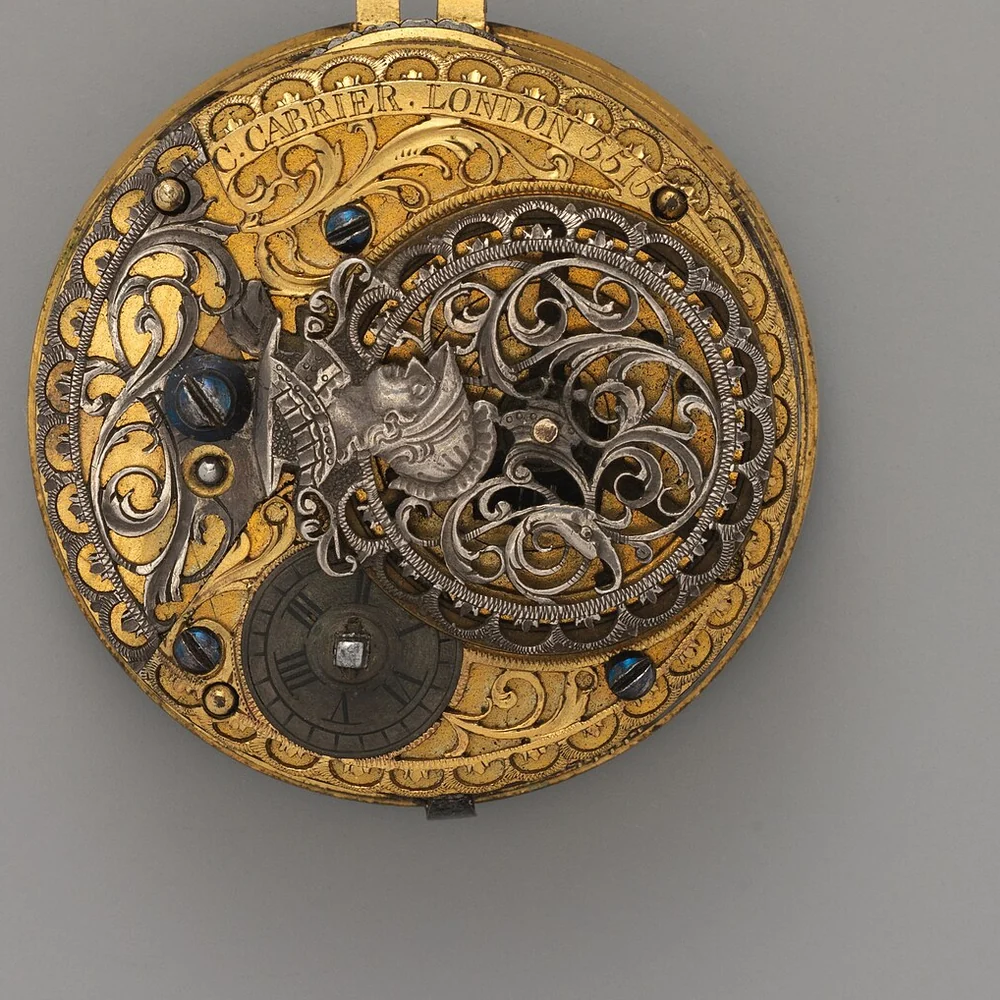
This is the most common surprise for anyone with an inherited English watch: the name you can read is usually the seller's, not the maker's.

Why the shop's name is on the watch
An Act of 1697-8 required a watch to carry the name of the person who made it "or who caused them to be made". That let the shop put its own name on, and in Britain it stayed the practice until the mid-1920s.
In 1887 Joseph Usher of the London firm Usher & Cole told a Select Committee that it was "very seldom that our names appear on the watches that we make". Retailers wanted their own name, and they had the stronger hand.
J. W. Benson: a name on thousands of dials
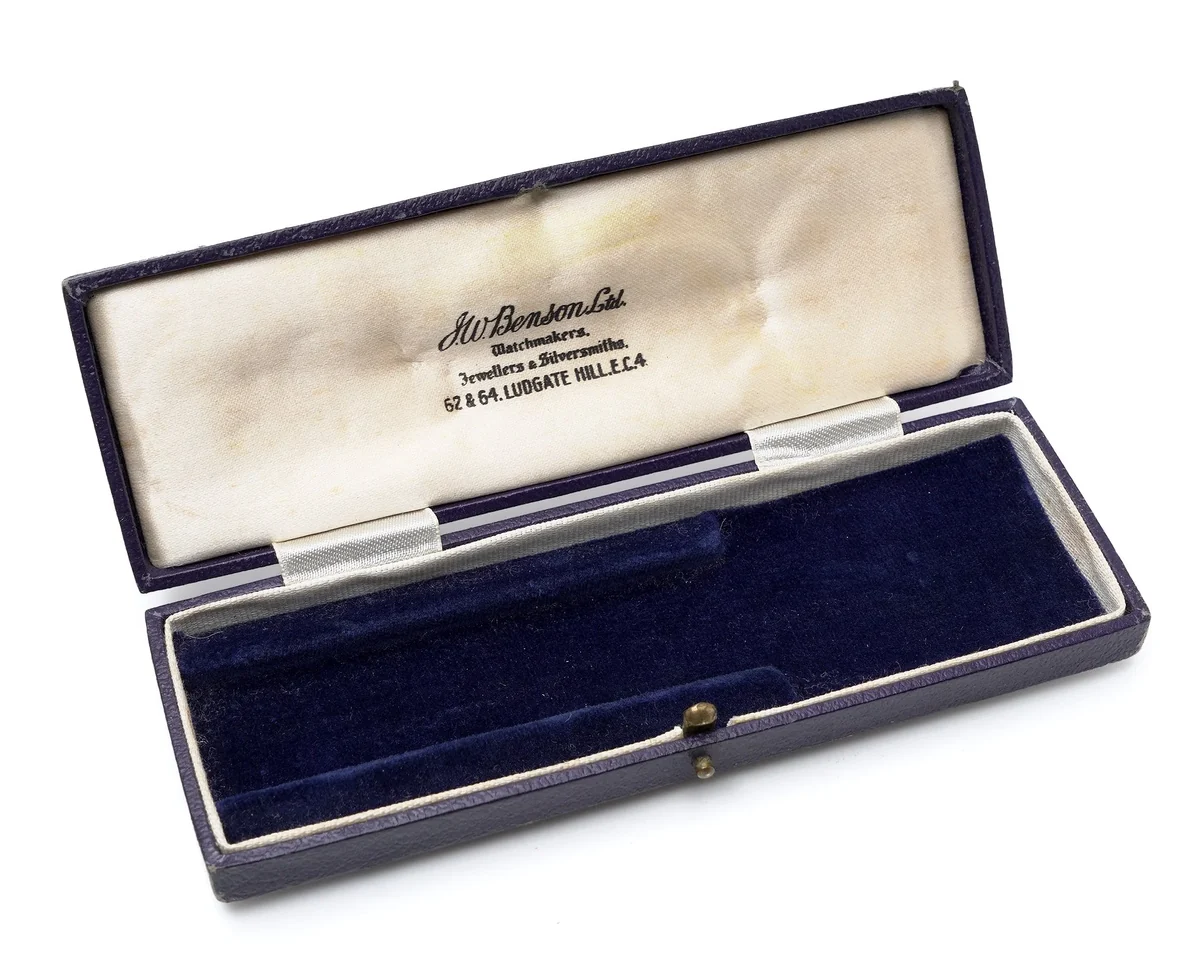
Benson of Ludgate Hill described itself as watchmakers, jewellers and silversmiths, and sold ranges called The Bank, The Ludgate and The Field, engraved "Best London Make".
David Boettcher found no evidence that Benson made watches: it bought movements from specialists such as Nicole Nielsen, P. & A. Guye and Kullberg. Its works at Belle Sauvage Yard were bombed in 1941 with 12,000 watches and the records inside, and it never made watches again.
Other retailers' names you will meet
- Fattorini, Yorkshire. Antonio Fattorini, from Bellagio on Lake Como, began trading in Yorkshire in 1827, with shops in Skipton, Bradford (Fattorini & Sons, 1829) and Harrogate. The Skipton firm ran its first watch club in 1869, selling watches by weekly instalments, which put the Fattorini name on many Yorkshire watches. Fattorini & Sons also made the FA Cup of 1911.
- H. Samuel, Manchester. Harriet Samuel moved the family business to Market Street, Manchester, and built a mail order trade; the firm registered its Acme and Climax watch names by 1884. A dial reading "Acme Lever, H. Samuel, Manchester" names the shop, not the factory.
- Kendal & Dent, Cheapside. London retailers from 1871, selling mostly inexpensive Swiss and English watches. One silver chronograph sold at Bonhams is engraved "Kendal & Dent, London, Makers to the Admiralty, Swiss made"; the firm did not make watches.

Your local jeweller
Small-town jewellers all over Britain did the same, so a provincial name on the dial tells you where the watch was sold, not where it was made.
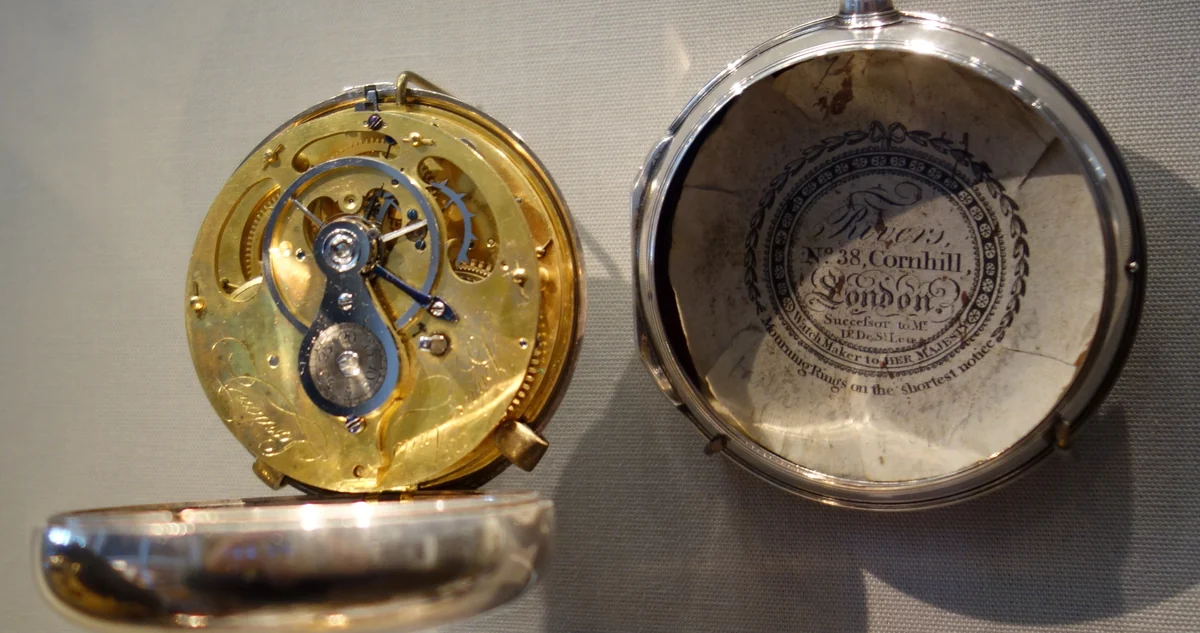
Look inside the outer case too. Sellers and repairers slipped printed watch papers into cases, and a well used watch can hold several: a record of who sold and serviced it.
How to find who really made it
- Look under the dial
Initials stamped on the pillar plate, under the dial, can name the movement maker: JW is John Wycherley of Prescot. Swiss movements often carry the trademark of the factory that made them. A watchmaker can photograph this at the next service.
- Read the case marks
The sponsor's mark inside the case names the case maker or importer, and the hallmark dates it. See case makers' marks and hallmarks. To get the back open safely, see how to open a pocket watch.
- Ask us
Send photos of the dial, the movement and the marks inside the case, and we will tell you what they show at no charge.
Why the English watch industry declined
In the 18th century Prescot's watches and tools were "universally allowed to be the best in the world". By 1900 the trade was losing to machines, and the wristwatch finished it. The main reasons, in order:

Undercut from abroad
- Cheaper Swiss labour. Swiss competition grew after 1815. Early in the 19th century London wages were more than double those in Zurich, and in Prescot the number of families in watchmaking and other handicrafts fell from 869 in 1821 to 540 in 1831.
- Open imports. Import duty on watches was 25% until 1840. It was cut to 10% in 1842, when the declared value of imported watches rose more than tenfold, from £5,085 to £52,622, and Gladstone removed it altogether in 1860.
- Resistance to machines. Pierre Frédéric Ingold's attempt to set up machine watchmaking in England in 1842-43 was defeated by the established trade. A Williamson man later recalled "serious disturbances in Clerkenwell" against firms installing machinery.
- Standing still. English makers kept the fusee long after their rivals had dropped it; a Swiss expert called English watchmaking "completely stationary" in 1878.
- Scale. When English factories did mechanise, they were small beside the Americans (see the chart). By 1891 skilled finishers were working for prices "a bicycle repairer would have a good laugh at", and young people went into bicycles and motor cars instead.
- The wristwatch. The First World War made the wristwatch fashionable for men. Most English makers had no capital to retool; Coventry's hundred or so makers had fallen to thirty by 1914, and many firms turned to speedometers and petrol gauges.
American Watch Co., Waltham 1852 to 1900
Lancashire Watch Co., Prescot 1888 to 1910
William Ehrhardt 1856 to 1923
H. Williamson Ltd 1897 to 1931
Rotherham & Sons, Coventry 1856 to 1930
English Watch Co. 1871 to 1897
What makes an English pocket watch valuable
Value comes from the maker and movement, the metal and weight of the case, complications and condition. At auction, watches by true makers such as Dent and Frodsham sell for more than retailer-signed watches with bought-in Swiss movements.
The top of the market
Fine English chronographs lead. In February 2025 Bonhams sold an 18ct open face chronograph by Charles Frodsham, hallmarked London 1874, for £7,040, and a heavy 18ct full hunter chronograph by Dent, hallmarked London 1872, for £4,480. Both have three-quarter plate English lever movements by firms that made what they signed.
What moves the price
- The real maker. Dent, Frodsham and the best Coventry and Liverpool finishers stand above a shop name on a bought-in movement.
- Gold or silver. An 18ct case adds intrinsic value; check it with how to tell if a watch is solid gold.
- Complications. Chronographs and repeaters lift the price, as the Dent and Frodsham chronographs above show.
- Case style and condition. Full hunters, half hunters and open faces each have their buyers; see hunter and open face cases. A cracked enamel dial or a broken fusee chain costs money to put right.
Every piece is different. Send us a few photos and we will tell you what yours is worth, free and with no obligation. Ask for a free valuation.
For every kind of pocket watch, see our pocket watch value guide.
Have an English pocket watch? Get a free quote
Free valuation, selling and buying
We value and buy English pocket watches, from silver English levers by provincial jewellers to gold watches by Dent and Frodsham. Photographs are enough to start:
- Photograph
The dial, the case back, the movement with the back open, and any marks inside the case and on the dome.
- Send
Use the form below, call 01376 334482 or WhatsApp us. See also selling your pocket watch.
- Visit
Bring it to 47 Maddox Street, Mayfair (by appointment) or to Braintree, Essex. Contact us to book.
Buying? See the antique pocket watches in our collection now, all our watches, or antique watch boxes from retailers such as Benson. To wear one with a chain, start with the history of Albert chains.
Request a free valuation
- English watches were made by a chain of specialists: Prescot movements, Coventry, Clerkenwell and Liverpool finishers, separate case makers.
- The name on the dial is usually the retailer's; look under the dial and inside the case for the makers.
- Rotherhams and the Lancashire Watch Co. made watches by machine; Dent and Frodsham were the fine London names.
- Every watch is different: we give free valuations from photos, with no obligation.
Questions we are asked
Who made my English pocket watch?
Usually not the name on the dial. English watches were built by specialists: a rough movement from Prescot, finished in Coventry, Clerkenwell or Liverpool, cased by a case maker and signed by the retailer. Initials under the dial and the sponsor's mark in the case point to the real makers.
What is an English lever pocket watch?
A watch with the English form of the lever escapement, laid out at right angles with a pointed-tooth escape wheel, usually with a fusee and chain and wound with a key through a fixed inner dome. It was made from about the 1820s for over eighty years.
Was J. W. Benson a watchmaker?
Benson of Ludgate Hill called itself watchmakers and sold watches signed "Best London Make", but research by David Boettcher found no evidence it made them. It bought movements from specialist makers and finished and sold them.
Are Rotherham pocket watches English made?
Yes. Rotherham & Sons of Spon Street, Coventry, made watches there, by machine from the 1880s, about 400,000 movements between 1880 and 1920, and stopped watchmaking before the Second World War.
What was the Lancashire Watch Company?
A factory founded in Prescot in 1888 to 1889 by Thomas P. Hewitt to make complete watches by machine. It made about 900,000 watches but could not make a profit and went bankrupt in 1910.
Why do Fattorini and H. Samuel appear on so many old watches?
Both were big retailers with mail order or club selling: Fattorini ran watch clubs in Yorkshire from 1869, and H. Samuel sold by mail order from Manchester. Their names show who sold the watch, not who made it.
Why did the English watch industry die out?
Cheaper Swiss labour, the end of import duty in 1860, resistance to machine production, small factories beside the American giants, and the switch to wristwatches after the First World War.
How much is an English pocket watch worth?
It depends on the real maker, the metal of the case, any complications and the condition. Watches by true makers such as Dent and Frodsham are worth more than retailer-signed watches with bought-in movements. Every watch is different, so send us a few photos for a free, no-obligation valuation.
Value or sell your English pocket watch
Send photos of the dial, case and movement for a free valuation, or visit us in Mayfair or Braintree.
- We buy directly
- Free valuation from photos
- Appointments in Mayfair and Braintree
- Insured postage or collection
New pieces reach our list first: join the Mozeris list.