Designer Jewellery · Cartier · Paris
Jeanne Toussaint: The Woman Behind the Cartier Panther
Known as "La Panthère," Jeanne Toussaint led Cartier's high jewellery for decades and gave the house its most enduring emblem. From 1948 the three-dimensional Panther prowled across Cartier's greatest jewels — beginning with a commission for the Duchess of Windsor.
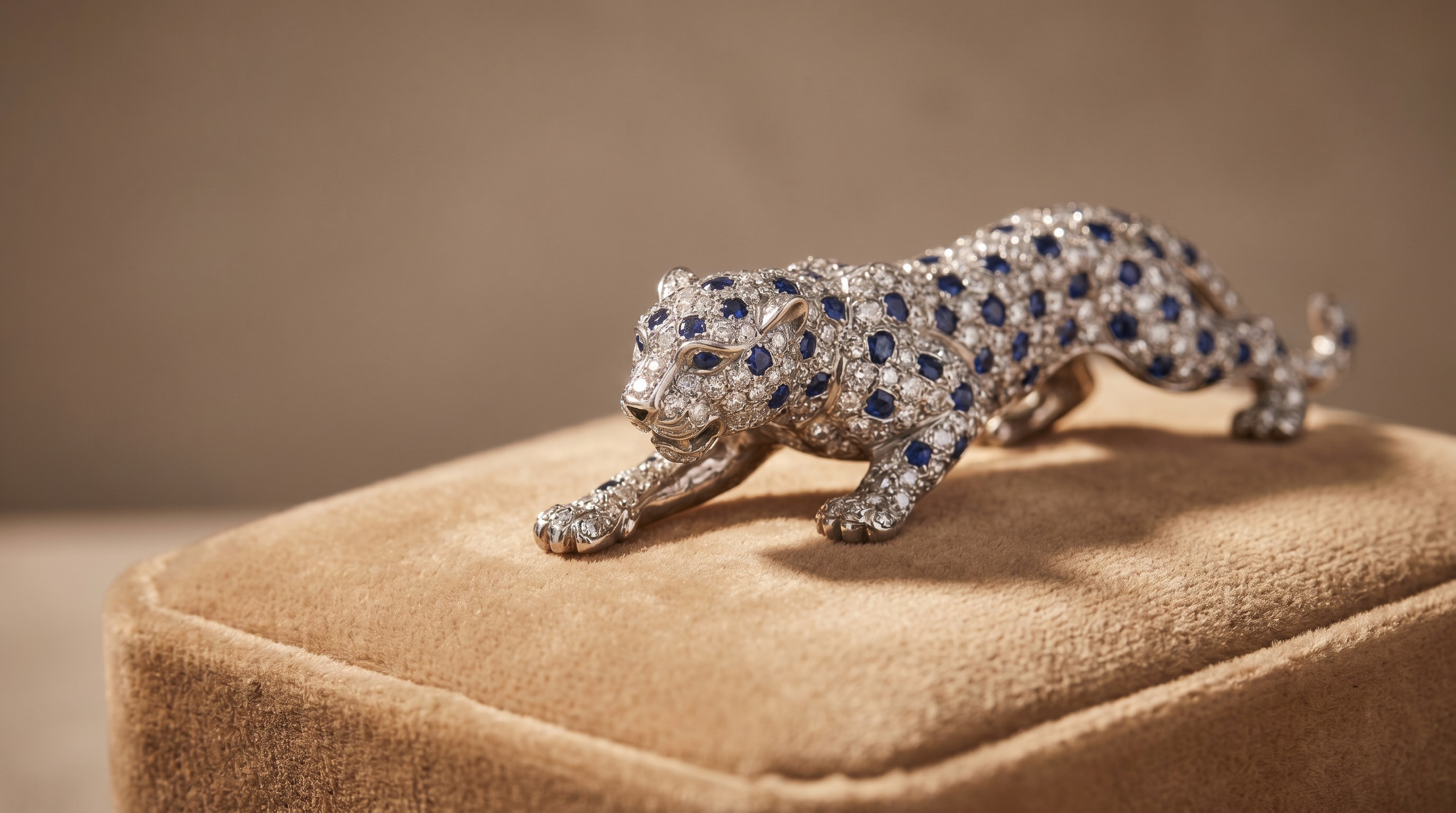 The Cartier Panther, three-dimensional from 1948
Selling a Cartier Panthère Piece?
We buy genuine Cartier Panthère jewellery — brooches, rings, bracelets and watches — outright, at fair prices with no commission and no auction wait. Get a free valuation from our specialists today.
The Cartier Panther was brought to life by Jeanne Toussaint, the legendary Director of Cartier's high jewellery, who created the first fully three-dimensional Panthère jewel in 1948 for the Duchess of Windsor. Though Cartier had used the panther motif since the early 1910s, it was Toussaint — nicknamed "La Panthère" herself — who turned it into the sculptural, prowling emblem the house is known for today. This guide covers Toussaint's life and career, her years leading Cartier's jewellery, the great Panthère pieces, how to identify genuine Cartier, and what these pieces are worth on the UK market.
Who was Jeanne Toussaint?
Jeanne Toussaint (1887–1976) was a French designer and creative director who became one of the most powerful figures in twentieth-century jewellery. Born in Belgium and raised in modest circumstances, she rose through Paris society on taste, intelligence and force of personality rather than formal training. A close friend — and for a time companion — of Louis Cartier, she joined the house in 1913.
Toussaint had an extraordinary eye. She could not draw in the technical sense, but she directed Cartier's designers with absolute clarity of vision, shaping the look of the house's most important jewels for decades. Her own personal style — bold, modern and fearless — earned her the nickname "La Panthère," and it was she who fixed the panther as Cartier's signature animal.
In 1933 she was appointed Director of Cartier's Haute Joaillerie (high jewellery), a position of immense influence that she held until her retirement in 1970. Few individuals have shaped a great jewellery house so completely.
Jeanne Toussaint's years leading Cartier high jewellery
As Director of high jewellery from 1933, Toussaint oversaw the creation of Cartier's most ambitious pieces through the middle of the century. The panther motif had appeared at Cartier as a pattern — the spotted "panther skin" of pavé diamonds and onyx — as early as 1914, but under Toussaint it became a creature: modelled in the round, poised, alert and unmistakably alive.
The breakthrough came in 1948, when she created the first fully three-dimensional Panther jewel: a brooch made for the Duchess of Windsor, in which a gold panther sat atop a great cabochon emerald. The following year, in 1949, she produced a second celebrated Panther for the Duchess — this time a diamond and sapphire panther crouched over an enormous 152.35-carat cabochon sapphire. These two commissions established the sculptural Panthère as the emblem of Cartier.
The Duchess of Windsor's Panther jewels remain among the most famous pieces Cartier ever made, and when her collection was sold they achieved record prices. Toussaint's Panther lives on today across Cartier's jewellery, watches and accessories.
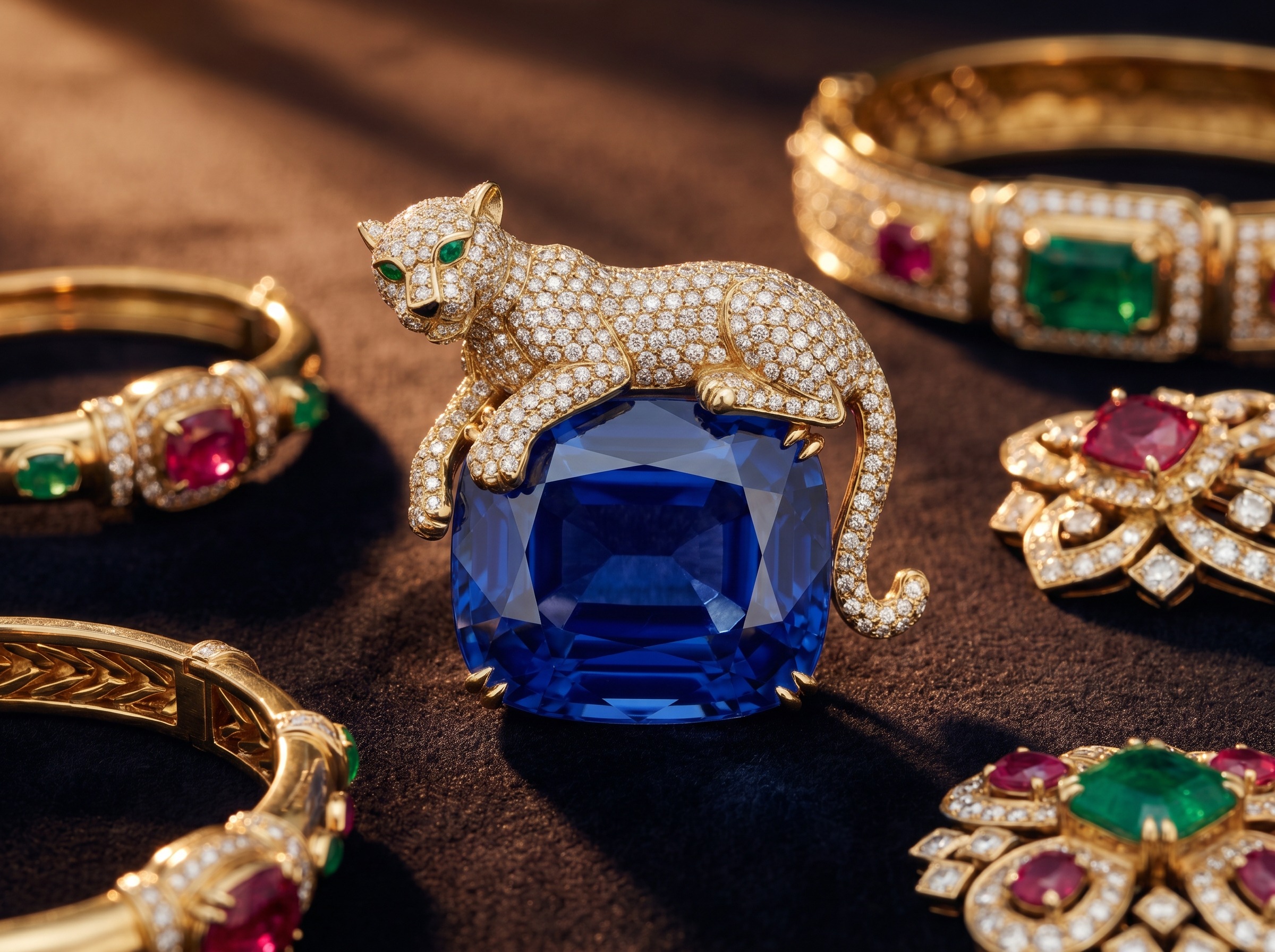
The panther draped over a great cabochon — the 1949 archetype
Iconic pieces: the Panthère across Cartier
Toussaint's Panther became a family of designs that Cartier still produces:
- The 1948 and 1949 Windsor Panthers: The founding three-dimensional jewels — a gold panther on an emerald, then a diamond-and-sapphire panther on the 152.35-carat sapphire — created for the Duchess of Windsor and now part of jewellery history.
- Panthère brooches and clips: Sculptural panthers in diamonds, onyx, sapphires and emeralds, often draped over or seated upon a large gemstone.
- Panthère de Cartier rings, bracelets and earrings: The motif rendered as panther heads with emerald eyes and onyx spots, a core Cartier collection to this day.
- Panthère watches and the panther-skin pavé: The original spotted pattern of pavé diamonds and onyx, and the Panthère watch line, both trace back to Toussaint's vision.
"Toussaint did not simply use the panther as decoration. She gave it a body, a posture and a presence — and in doing so gave Cartier its soul."
How to identify a genuine Cartier Panthère piece
Cartier is among the most counterfeited names in jewellery, so authentication is essential before buying or selling. Key checks include:
- Signature and marks. Genuine pieces are signed "Cartier," carry the appropriate metal standard, a serial number and usually an assay or maker's mark. The engraving should be crisp and precisely placed.
- Serial number. Authentic Cartier pieces have a unique serial number that the house can verify against its records. Reputable dealers cross-check this; be wary of missing or duplicated serials.
- Quality of modelling. Genuine Panthère pieces are finely modelled and set — the spots even, the gem-setting precise, the gold smoothly finished. Crude or uneven work indicates a copy.
- Gemstones. Cartier uses fine stones — diamonds, onyx, emeralds (often for the eyes), sapphires. The materials should match the standard expected of the house.
- Box, papers and provenance. Original Cartier packaging, certificates and any documented history support authenticity and add to value.
For Cartier's other great twentieth-century design story, see our guide to Aldo Cipullo and the Love bracelet.
Current market value and resale
Cartier Panthère pieces are among the strongest performers in the jewellery market, holding and often increasing in value. Prices depend on the design, gemstones, period and provenance, but as a general guide:
- Modern Panthère de Cartier rings and bracelets: strong resale, retaining a high proportion of retail value
- Diamond and gemstone Panthère brooches and clips: command significant prices, driven by the quality of the stones and modelling
- Vintage and Toussaint-era high jewellery: rare and highly collectible, well beyond their material value
- Pieces with documented provenance: attract a substantial premium — the Windsor Panthers achieved record auction prices
For how well Cartier holds up as an asset, see does Cartier hold its value? Authenticated pieces with box, papers and provenance always achieve the strongest results.
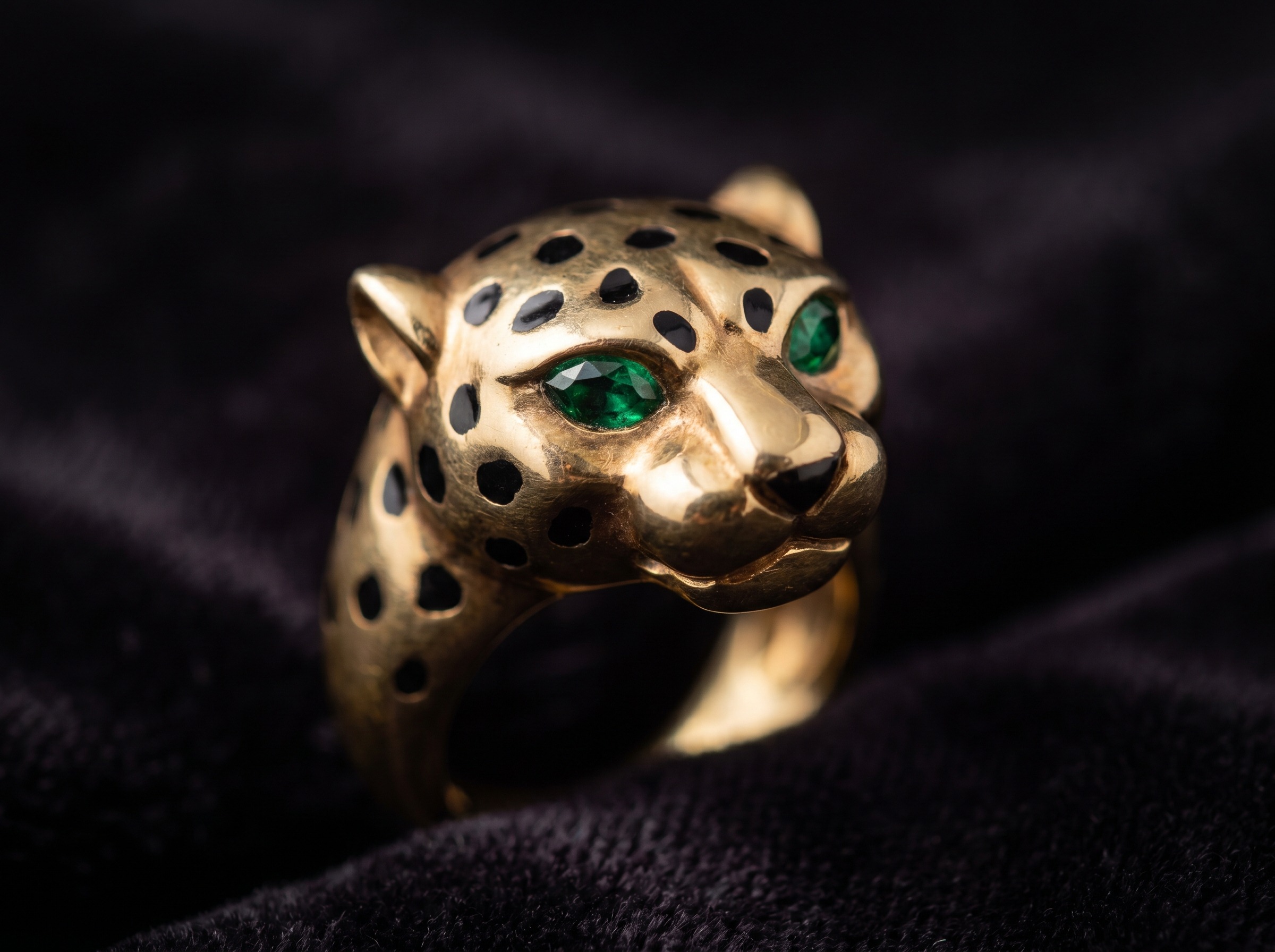
A Panthère ring — emerald eyes and onyx spots, Toussaint's legacy in production
How to sell a Cartier Panthère piece in the UK
If you own a Cartier Panthère piece and are considering selling, you have two main routes: auction or a specialist dealer. Auction can suit rare high-jewellery or documented pieces, but involves commission, delay and uncertainty. A specialist dealer offers an immediate, firm price.
At Mozeris Fine Antiques we buy Cartier Panthère, and other Cartier and designer pieces, outright. We authenticate, value against the live secondary market, and pay promptly — with no commission deducted. For more on choosing between routes, read selling designer jewellery: dealer vs auction. To begin, visit our sell your Cartier jewellery page or our designer jewellery hub.
For the wider Cartier story, see our Cartier Panthère guide and our guide to Aldo Cipullo and the Love bracelet. You may also be interested in vintage jewellery.
Frequently asked questions
Who created the Cartier Panther?
The three-dimensional Cartier Panther was created by Jeanne Toussaint, Director of Cartier's high jewellery, who designed the first sculptural Panther jewel in 1948 for the Duchess of Windsor. The panther motif had existed at Cartier since the 1910s, but Toussaint turned it into the prowling, modelled creature the house is known for.
Why was Jeanne Toussaint called "La Panthère"?
Toussaint was nicknamed "La Panthère" for her bold, modern and fearless personal style. The name reflected both her character and her role in making the panther Cartier's signature animal.
When did Jeanne Toussaint lead Cartier?
Toussaint joined Cartier in 1913 and was appointed Director of Haute Joaillerie (high jewellery) in 1933, a position she held until her retirement in 1970. For nearly four decades she shaped the look of Cartier's most important jewels.
What was the Duchess of Windsor's Cartier Panther?
The Duchess of Windsor owned two of the most famous Panther jewels: a 1948 brooch with a gold panther on a cabochon emerald, and a 1949 piece with a diamond and sapphire panther crouched over a 152.35-carat cabochon sapphire. Both were created under Toussaint and achieved record prices when her collection was later sold.
How can I tell if my Cartier Panthère piece is genuine?
Check for the crisp "Cartier" signature, the correct metal standard, a unique serial number, fine modelling and gem-setting, and quality gemstones. Original Cartier box, papers and any provenance support authenticity. Because Cartier is heavily counterfeited, professional authentication is strongly recommended before buying or selling.
Do Cartier Panthère pieces hold their value?
Yes — Panthère pieces are among the strongest performers in the jewellery market, often retaining or increasing in value. Vintage and high-jewellery examples are highly collectible, and pieces with documented provenance command a substantial premium.
How to Sell Your Cartier Panthère Piece
- Free valuation Send photos — the piece, the signature and serial number. We respond same day with an indicative range.
- Authentication We verify signature, serial number and modelling against the genuine article.
- Firm offer A real price based on the live secondary market — not an auction estimate.
- Insured collection Fully insured courier from your address, or visit our Mayfair or Essex offices by appointment.
- Same-day payment BACS transfer the day we receive and verify your piece.
Related Reading
Visit Us or Send Your Jewellery by Insured Post
01376 334 482
01376 334 482
Response within 2 hours
Our Mayfair showroom is by appointment. Please call ahead before visiting.