Part of: Sell your Buccellati jewellery
Buccellati Tulle Technique: A Guide
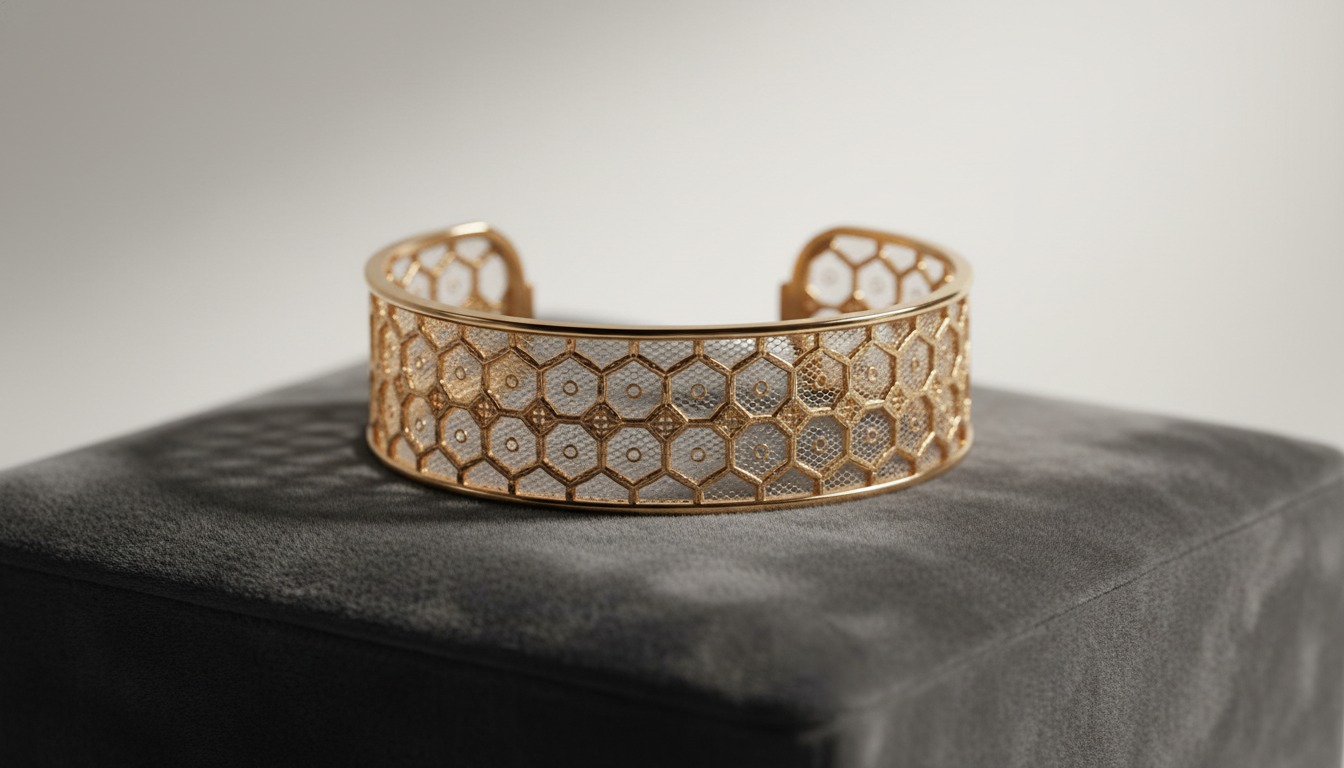
Tulle is Buccellati’s best-known goldsmithing technique: gold pierced into a fine, even honeycomb so that it looks like lace or netting. The Milan house, founded in 1919, uses it alongside other hand-engraving techniques of Renaissance origin. This guide explains how tulle is made, how to recognise it, and what decides the value of a tulle piece.
Thinking of selling Buccellati?
Free, no obligation, returned at our cost if you decline.
- Read our Google reviews (opens Google)
- Free, no obligation
- A reply within one working day
- Paid the same day after inspection
Gold made to look like lace
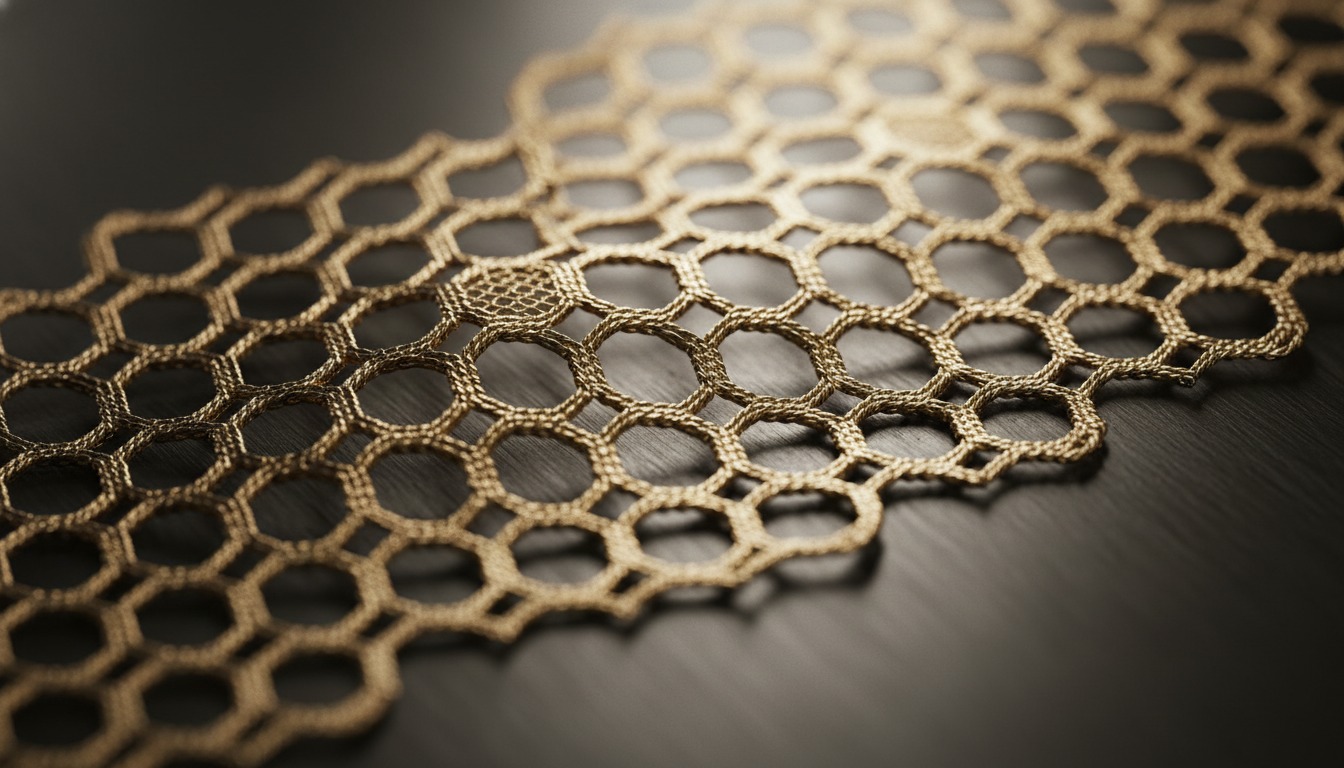
Mario Buccellati opened his Milan workshop in 1919, reviving Renaissance techniques of hand-engraving gold. Tulle, named after the fine netting fabric, is one of them: the gold is pierced into a dense web of small cells, then each cell is finished by hand so the surface shimmers like woven cloth.
- 1Solid
- 2Pierced into a honeycomb
- 3Then hand-finished cell by cell
Tulle and its sister techniques
- Tulle. Pierced honeycomb or lattice, like lace.
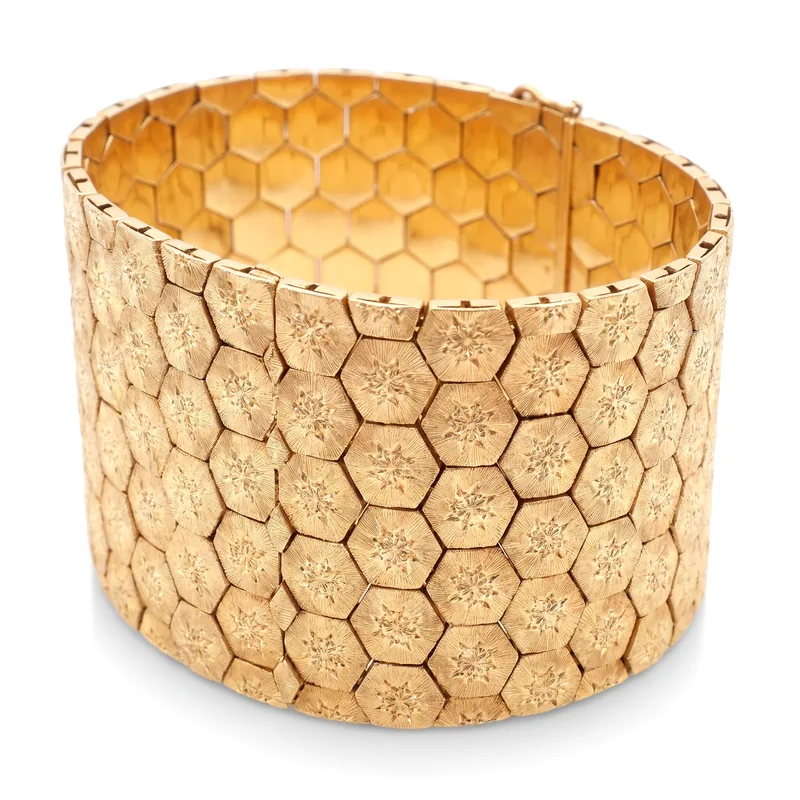
- Rigato. Fine parallel lines engraved close together.
- Telato. A crosshatch that looks like linen.
- Segrinato. Lines crossing in many directions for a soft sheen.
- Ornato. Carved, relief-style ornament.
Many pieces combine two or more.
Where you will see tulle
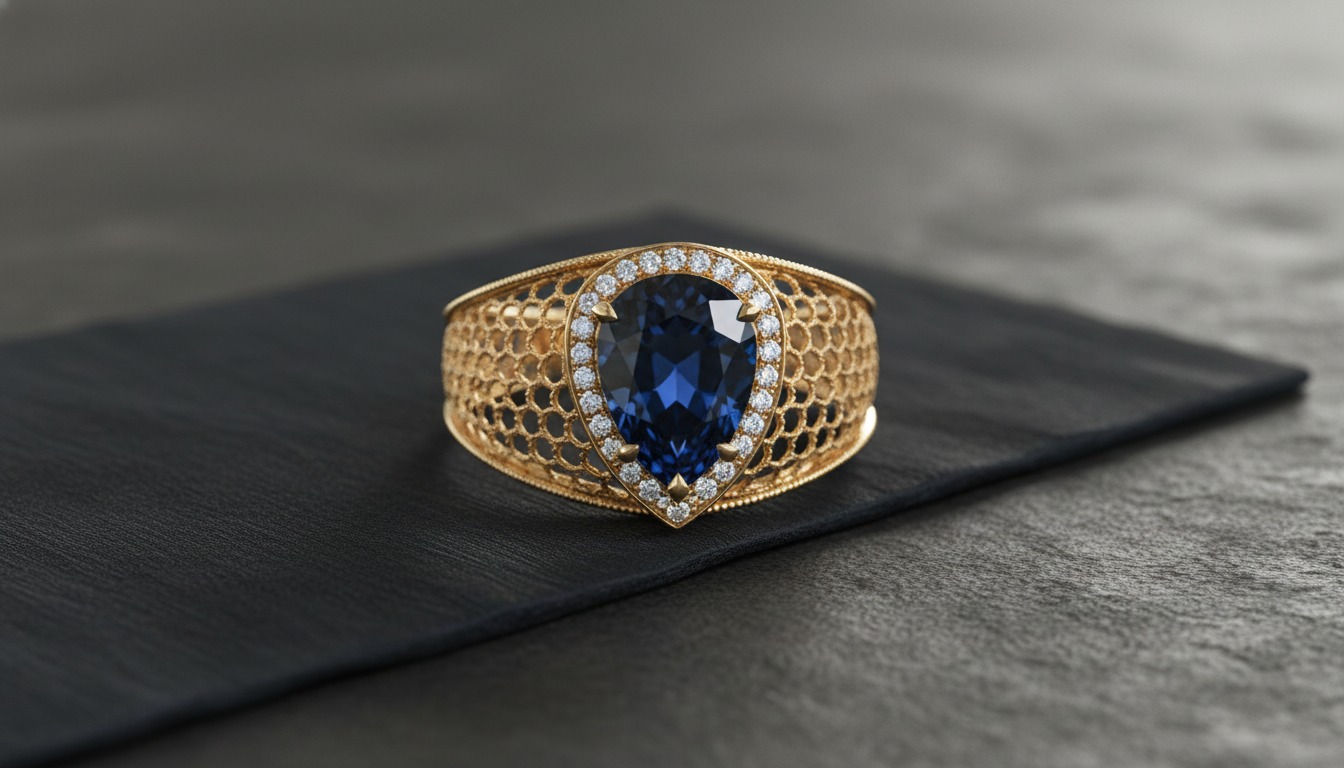
Tulle appears on Buccellati cuffs, rings, earrings and necklaces, and on its own collection, Opera Tulle. Older pieces often pair tulle with gemstones or with other engraving. Our Opera and Macri guides cover those lines in detail.
- Tulle cuff
Check yours: look closely
For every house we buy, see how we check designer jewellery.
- 1Pierced and hand-finished
- 2Cast or printed
0 of 4 checked
1The signature
The signature "Buccellati", or "M. Buccellati" on older pieces.
2The marks
The marks 750 for gold, 925 or 800 for silver, and the Italian maker’s star mark.
3The cells
Crisp, even and pierced right through, not cast or printed.
4The finish
Each cell neatly finished, front and back.
Looked closely? Send a close photograph of the tulle and the signature for a free, honest check.
Free, no obligation, returned at our cost if you decline.
Red flags
- Cells that are shallow, blurred or uneven in size.
- A pattern that is printed or cast rather than pierced.
- No signature or no Italian marks.
- Rough edges inside the cells.
- A design that matches no known Buccellati work.
Genuine
- Crisp even cells
Copy
- Blurred uneven cells
What is my tulle Buccellati piece worth?
Whether a tulle piece holds its value comes down to the design and the line, the gold (and any silver), the gemstones, the size and complexity of the work, its condition (bent or damaged cells, worn engraving), and whether you have the box and certificate. No box or certificate? We still buy it. Two pieces that look alike can differ a great deal. We never publish figures.
Free, no obligation, and returned at our cost if you decline.
Read our Google reviews (opens Google)
- Design
- Metal
- Stones
- Complexity
- Condition
- Papers
How selling works
- 1
Send photographs
of the front, a close-up of the tulle, the signature and marks, and any box or certificate.
- 2
Free value inspection
We reply within one working day with an estimate, subject to inspection. If our offer differs, you can decline and we return it at our cost.
- 3
Paid the same day after inspection
by bank transfer or in cash, in Mayfair, at our Braintree office, by post or by free collection.
Insured up to £10,000 per parcel when you send to us.
Questions people ask
What is Buccellati tulle?
Tulle is a Buccellati goldsmithing technique in which gold is pierced into a fine, even honeycomb, then finished cell by cell by hand, so the metal looks like lace or netting. It is one of several Renaissance-inspired techniques the Milan house uses, alongside rigato, telato, segrinato and ornato engraving.
How can I tell if my tulle piece is genuine?
Look for the "Buccellati" or "M. Buccellati" signature, the 750 or silver mark and the Italian maker’s star mark. Under a loupe, genuine tulle cells are crisp, even and pierced right through, with neat finishing front and back. Send a close photograph of the tulle and the marks, and we will look, free.
Can I sell a Buccellati piece without the box?
Yes. Many genuine Buccellati pieces have lost their box or certificate, and we buy them all the same. We check the piece itself: the signature, the marks, the quality of the tulle and any stones. A certificate supports the value, but its absence never stops a sale.
How much is a tulle Buccellati piece worth?
It depends on the design and line, the gold or silver, any gemstones, the size and complexity of the work, the condition of the cells and engraving, and whether you have the box and certificate. We do not publish prices. Send photographs of the piece and its marks for a free value inspection.
Where can I sell Buccellati?
To a buyer who checks the signature, marks and engraving in person before paying. We buy Buccellati directly: a free value inspection from photographs, then an appointment in Mayfair or at our Braintree office, Special Delivery post or free collection. You are paid the same day after inspection, by bank transfer or in cash.
Which Buccellati pieces use tulle?
Tulle appears on cuffs, rings, earrings and necklaces, and on the Opera Tulle collection. Older pieces often combine tulle with other engraving or with gemstones. If you are not sure whether your piece is tulle, send a close photograph and we will tell you which technique it shows.
Related guides
Selling Buccellati?
Send a close photograph of the engraving and the signature for a free value inspection, with no obligation.
Free, no obligation, returned at our cost if you decline.