Part of: Buy and sell signet rings
People wear signet rings to show who they are and where they come from. A signet is a ring with a flat face engraved with a family crest, coat of arms, initials or a symbol. It began as a working seal, pressed into hot wax to sign and secure letters, and became a mark of family, heritage and identity. In Britain it is traditionally worn on the little finger of the left hand, and it is often given at a coming of age or passed down through a family.
Shop the pieces: antique rings in our collection.
Have a signet ring with a crest or initials?
Free, no obligation, returned at our cost if you decline.

- Read our Google reviews (opens Google)
- Free, no obligation
- A reply within one working day
- Paid the same day after inspection
What is a signet ring?
A signet ring has a flat or slightly domed face, called the bezel, that carries an engraved design. On a true seal ring the design is cut in reverse, so that it reads the right way round when pressed into wax. The face can be the metal itself or an engraved stone such as carnelian, bloodstone, onyx or sardonyx.
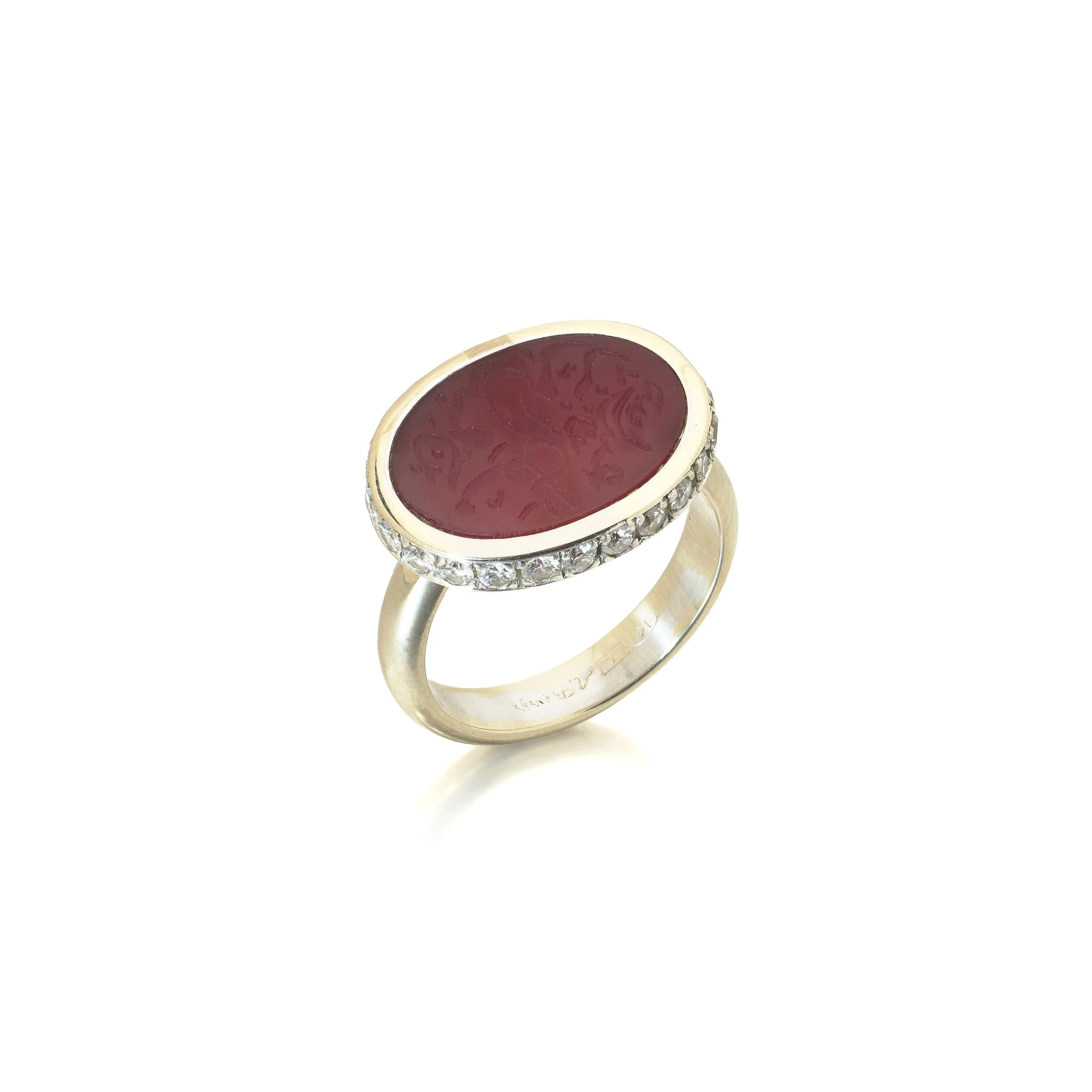
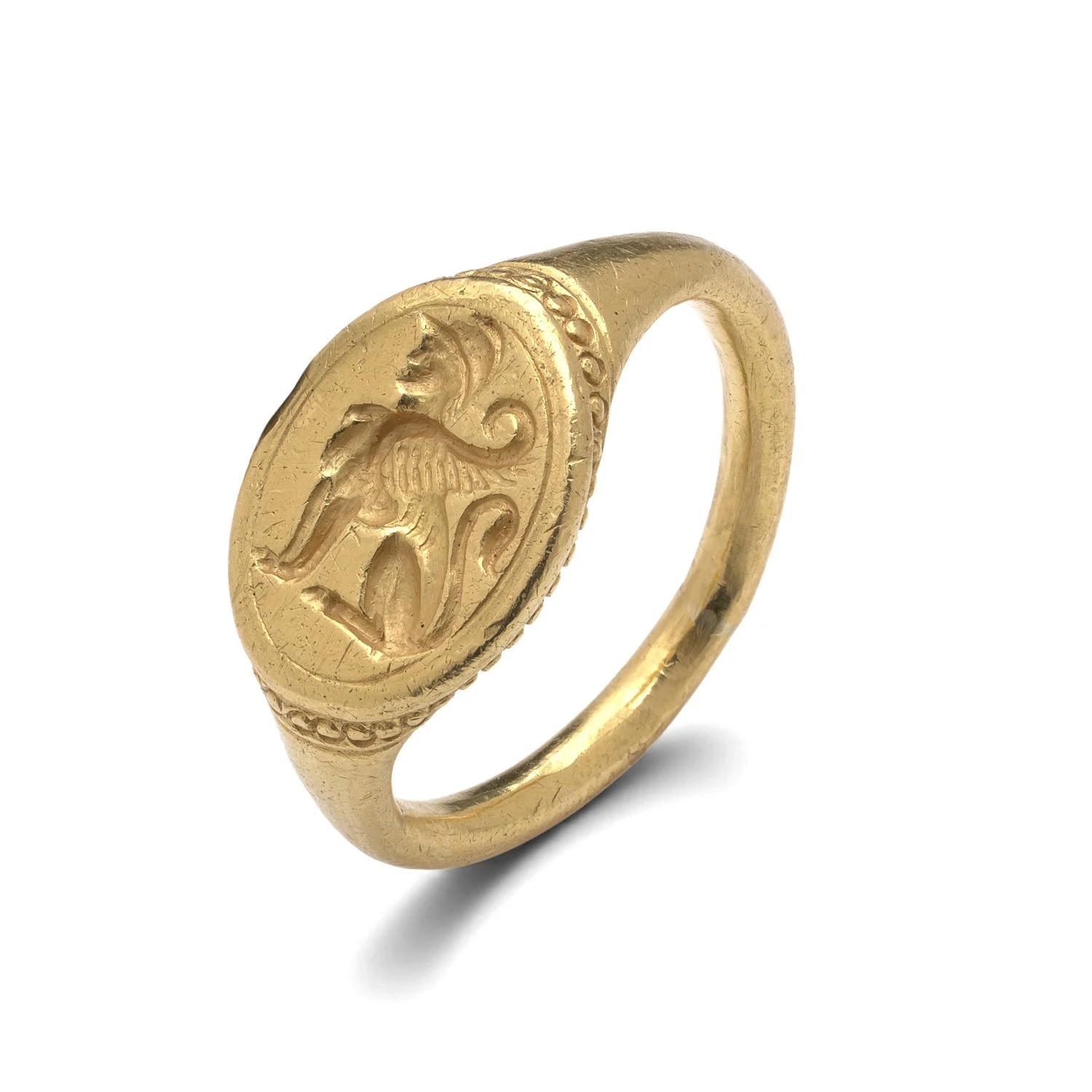
A short history of the signet ring
- The ancient world. Seals were used to sign and secure documents in Mesopotamia and Egypt; Egyptian rings often carried scarab seals, and Roman citizens wore engraved seal rings.
- The Middle Ages. Kings, nobles, merchants and churchmen sealed charters and letters with their rings, so a seal ring carried real authority.
- Heraldry. As coats of arms spread, families engraved their arms or crest on their signets.
- Later centuries. As signatures replaced wax seals, the signet became a ring of identity and family rather than a working tool.
Why people wear signet rings today
- Family and heritage. A crest or coat of arms links the wearer to a family line, and many signets pass from parent to child.
- A coming-of-age gift. Signets are traditional gifts for an 18th or 21st birthday, a graduation or a wedding.
- Personal identity. Initials, a monogram or a chosen symbol make a signet personal even without a family crest.
- Style. A plain or engraved signet is a classic piece of jewellery for men and women alike.
Why wear a signet ring on the little finger?
In Britain the signet is traditionally worn on the little finger of the left hand, a custom long kept by the aristocracy and the royal family. King Charles has worn his on the little finger for decades. Many people today wear a signet on whichever finger suits them.
Are signet rings posh?
Signet rings have long been linked with the British upper classes, because engraved family arms were a sign of an old landed family. Today they are worn far more widely: many signets carry initials or a personal symbol rather than inherited arms, and they are bought and given by people from every background.
What can be engraved on a signet ring?
- Coat of arms
- What it shows
- The full heraldic arms of a family
- Crest
- What it shows
- The device above the shield, often an animal such as a lion, griffin or greyhound
- Initials or monogram
- What it shows
- The wearer’s initials, often entwined
- Symbol or motto
- What it shows
- A personal emblem or a family motto
Have a signet ring with a crest or initials? Send clear photographs of the face, the sides and the hallmarks inside the band for a free, honest check.
Free, no obligation, returned at our cost if you decline.
What makes a signet ring valuable?
The metal and its hallmarks, the age, the quality and interest of the engraving (named families and fine armorials are sought after), any stone intaglio, the condition and the provenance. We never publish figures; every piece is different.
Free, no obligation, and returned at our cost if you decline.
Read our Google reviews (opens Google)
- Metal and marks
- Age
- Engraving
- Intaglio
- Condition
- Provenance
How selling works
- 1
Send photographs
of the face, the sides and the hallmarks.
- 2
Free value inspection
We reply within one working day with an estimate, subject to inspection. If our offer differs, you can decline and we return it at our cost.
- 3
Paid the same day after inspection
by bank transfer or in cash, in Mayfair, at our Braintree office, by post or by free collection.
Questions people ask
Why do people wear signet rings?
To show family, heritage or personal identity. A signet carries a crest, coat of arms, initials or a symbol, and is often given at a coming of age or handed down.
What does a signet ring symbolise?
Family, heritage and identity. Historically it also stood for authority, because its seal signed and secured documents.
Which finger do you wear a signet ring on?
Traditionally the little finger of the left hand in Britain, though many people now choose whichever finger suits them.
Do women wear signet rings?
Yes. Signet rings are worn by women and men, often engraved with initials or a family crest.
Are signet rings posh?
They have long been linked with the British upper classes, but today they are worn widely, often with initials rather than inherited arms.
Why is the engraving on a signet ring reversed?
So that it reads correctly when the ring is pressed into wax as a seal.
Related guides
Have a signet ring to sell?
Send a few photographs and we will tell you what it is and what it is worth, free.
Free, no obligation, returned at our cost if you decline.
