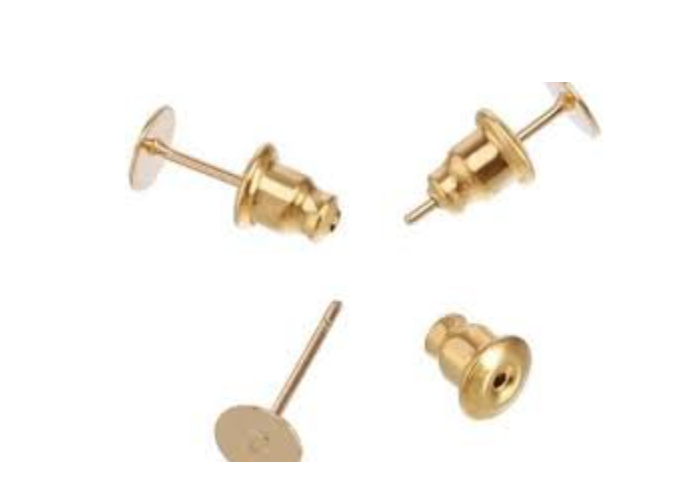
Unlocking the Past: How to Date Earrings by Their Fastenings
Unlocking The Past: How To Date Earrings By Their Fastenings

Faustas Svencionis
Managing Director · Mozeris Fine Antiques
Specialist in antique jewellery identification, authentication and valuation across Georgian, Victorian, Edwardian and Art Deco periods.
Contact for a free valuation →
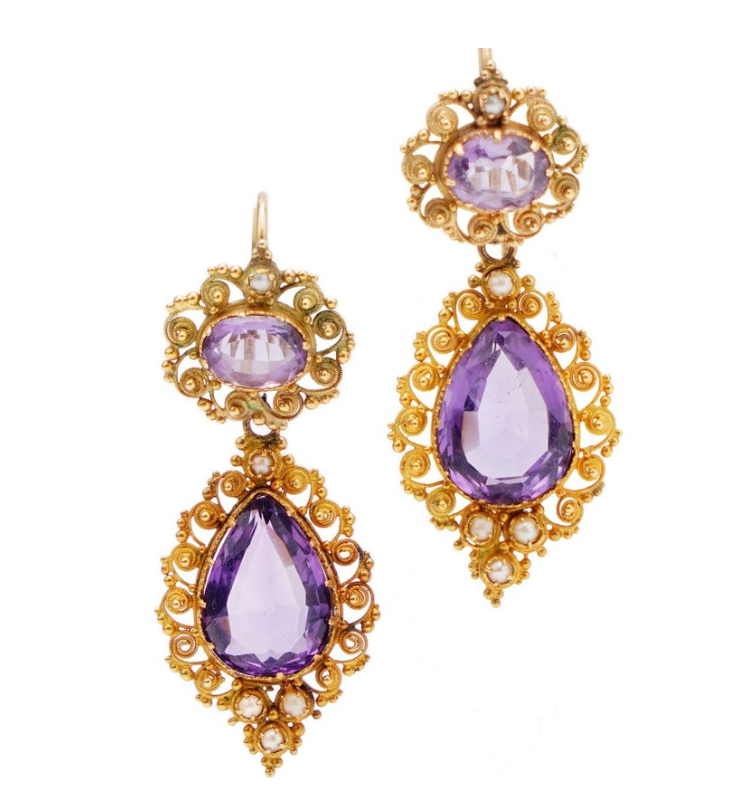
Earrings represent one of the oldest forms of personal adornment, with fastening styles evolving dramatically over centuries. For collectors and enthusiasts, understanding how to date earrings by their fastenings provides invaluable insights into age, authenticity, and historical context. Each fastening type tells a story of its era — from the hand-formed hooks of Georgian goldsmithing to the precision mechanisms of Edwardian platinumwork.
If you have inherited or acquired antique earrings and want to know what period they are from, start with the fastening. It is the single most reliable dating indicator on any earring that has not been repaired or altered.
Hook Earrings
Hook earrings represent the earliest and most enduring form of earring fastening, dating back thousands of years. A curved wire passes through the ear piercing and hooks behind the earlobe. In antique jewellery, hook fastenings are particularly common in Georgian (1714–1837) and early Victorian pieces. Georgian hooks are always handmade — they show slight irregularities, file marks, and the gold has a warm orange tone that reflects the higher-carat alloys of the period (typically 18ct to 22ct).
Victorian hook earrings often feature decorative elements integrated into the hook itself — a foliate curl, a small seed pearl set into the wire, or a stamped pattern on the hook body. From around 1870 onward, machine-made hooks become more uniform. Modern hooks are machine-perfect and lack the hand-tool character of period examples.
Key Identification Features:
- Handmade Georgian hooks: slight asymmetry, file marks, warm gold colour
- Victorian hooks: often with decorative curls, engraving or small set stones
- Post-1870: more uniform as machine production increases
- Modern: perfectly consistent gauge — no hand-tool marks
- Hallmark usually on the hook wire itself or on a tag at the connection
Thinking of Selling Georgian or Victorian Earrings?
Hook earrings from the Georgian and early Victorian periods are actively bought by Mozeris Fine Antiques. Free valuation — no obligation.
Get Free Valuation Sell Victorian JewelleryHinged Back Earrings
Hinged back earrings (also called “kidney wire” or “continental backs”) feature a hinged mechanism that allows the back portion to open and close, providing a more secure fit than simple hooks. They became popular during the Victorian era for heavier earrings, as the hinged mechanism distributed weight more evenly. The quality of the hinge is often an indicator of the overall quality of the piece — a finely engineered hinge with minimal play indicates a good maker.
Dating Characteristics:
- Early 1800s: crude, handmade hinges with visible tool marks
- Mid-Victorian: improved manufacturing, smoother action
- Edwardian: often delicate and precise, in platinum or white gold
- Post-1920s: less common as other fastenings gained popularity
Screw-Back Earrings
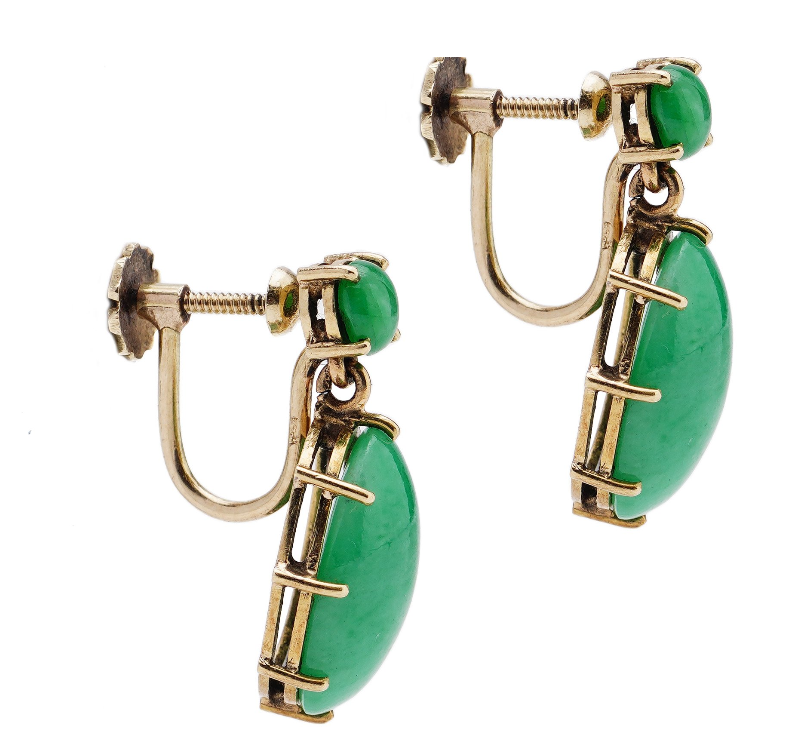
Screw-back earrings emerged in the 1890s as a solution for non-pierced ears. A threaded post screws into a backing, allowing adjustment for comfort and security. Their popularity coincided with changing social attitudes toward ear piercing: during the early 1900s, pierced ears were sometimes considered inappropriate, making screw-backs the preferred choice for fashionable women.
Art Deco screw-back earrings (1920s–1930s) are highly sought after by collectors. Platinum screw-backs with geometric design and pavé diamond or enamel decoration are among the most valuable earrings from the period that regularly come to market.
Period Indicators:
- 1890s–1910s: heavy, substantial mechanisms with coarse threads
- 1920s–1930s: refined designs, finer threading, geometric Art Deco styling
- 1940s–1950s: lightweight versions, often with comfort pads
- Post-1960s: largely replaced by clip-ons and pierced ear styles
Expert Tip
Screw-back earrings from the Art Deco period (1920s–1930s) often feature geometric designs and are highly sought after by collectors. The quality of the threading mechanism can help determine both age and value. Look for platinum settings, which are almost exclusively an indicator of the 1900s–1940 period.
Clip-On Earrings
Clip-on earrings revolutionised jewellery wearing when introduced in the 1930s. Using spring-loaded mechanisms, they provided a more comfortable alternative to screw-backs while maintaining security for non-pierced ears. The 1940s and 1950s marked the golden age of clip-ons, with designers creating increasingly sophisticated mechanisms and bold, sculptural designs.
Signed clip-on earrings from the 1940s–1960s by houses such as Miriam Haskell, Trifari, Schiaparelli, and Christian Dior are actively collected. Mozeris Fine Antiques buys signed vintage costume and designer jewellery as well as fine gold and platinum pieces.
Evolution Timeline:
- 1930s: Early clips with simple spring mechanisms, often heavy
- 1940s: Improved comfort with padded clips; large, statement designs
- 1950s: Peak popularity — wide variety of clip styles and finishes
- 1960s onward: Continued alongside pierced ear revival
Have Vintage Clip-On Earrings to Sell?
We buy signed vintage and fine gold or platinum clip-ons. Free valuation, same-day payment.
Get Free Valuation Sell Art Deco JewelleryFrench Wire Earrings
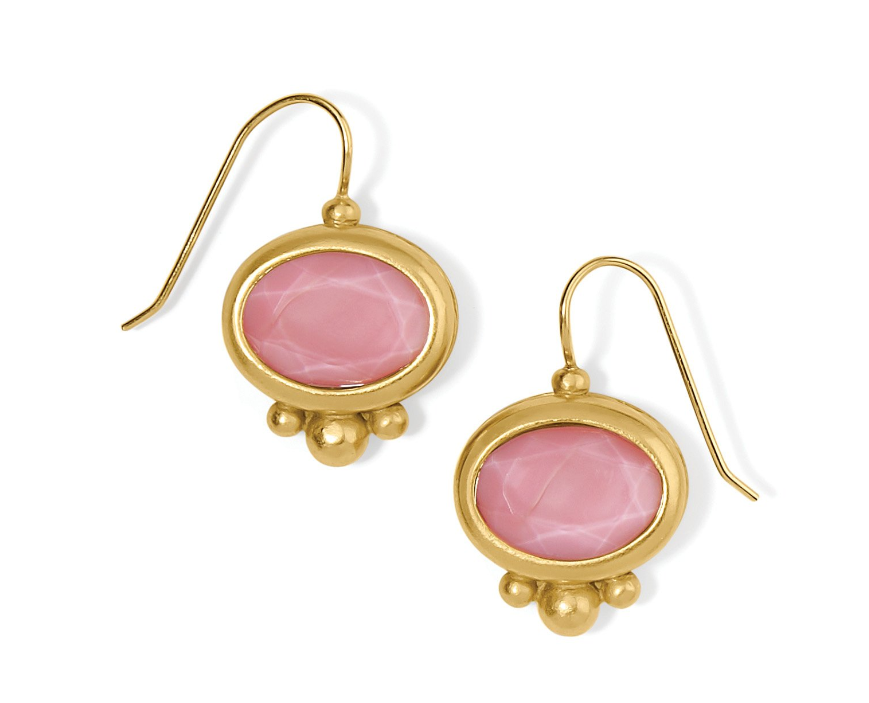
French wire earrings (also called “fish hook” earrings) feature a curved wire that passes through the ear piercing with no additional backing. This elegant, minimalist design has remained popular for over two centuries. The simplicity makes them challenging to date precisely, but subtle differences in wire gauge, curve shape, and finishing techniques provide clues about age and origin.
Dating Clues:
- 19th century: heavier gauge wire, handmade irregularities, file marks
- Early 20th century: more uniform manufacturing, lighter gauge
- Modern: perfectly consistent gauge, machine-perfect curves
- Contemporary: often includes safety features or decorative elements
Lever-Back Earrings
Lever-back earrings feature a hinged lever that snaps closed to secure the earring, providing excellent security while maintaining ease of use. Early versions (1850s–1880s) are quite simple and often crude. Edwardian and Art Nouveau lever-backs are frequently encountered in platinum or yellow gold with fine decorative work — the lever mechanism itself may be shaped, engraved or set with a small stone.
Period Characteristics:
- 1850s–1880s: simple, often crude lever mechanisms, gold or silver
- 1890s–1920s: improved engineering, smoother operation
- 1930s onward: refined mechanisms with precise tolerances
- Modern: often includes additional safety features
Push-Back Earrings
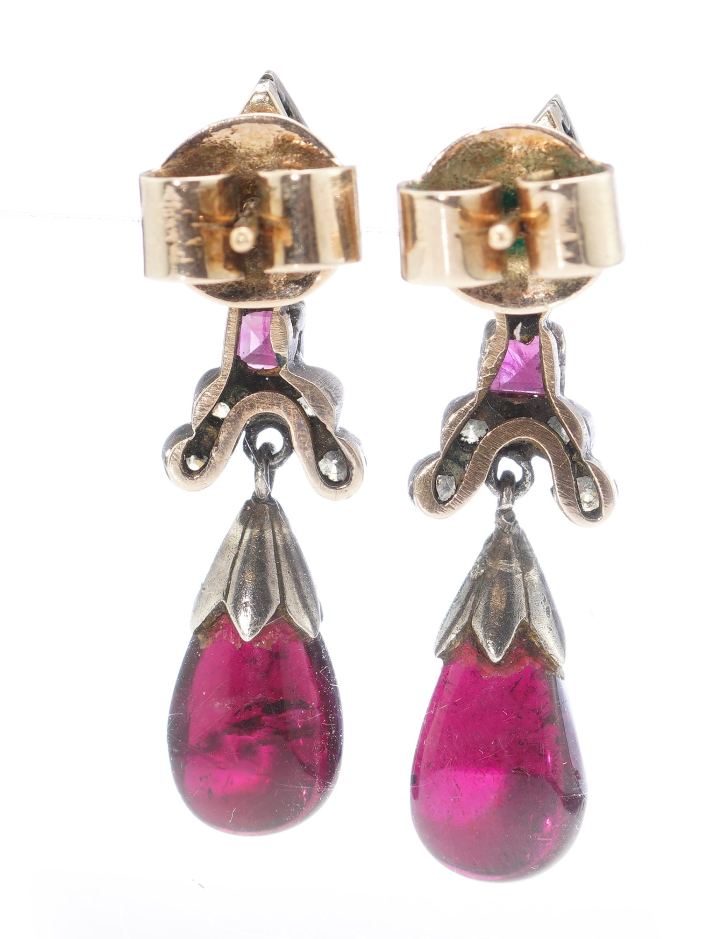
Push-back (or butterfly back) earrings feature a post that passes through the ear with a removable backing. They became popular from the 1920s and contributed to the revival of ear piercing. The style and material of push-back mechanisms evolved significantly — 1920s–1950s backs tend to be heavier and more substantial than modern mass-produced examples.
Evolution Markers:
- 1920s–1930s: heavy, substantial backings in gold or platinum
- 1940s–1950s: lighter materials, improved comfort, spring tension
- 1960s onward: mass production, standardised sizes
- Modern: various materials including titanium and medical-grade steel
Butterfly Back Earrings
Butterfly backs (friction backs) use a split backing that grips the earring post through friction. They became increasingly popular throughout the 20th century due to simplicity and effectiveness. Early 1900s butterfly backs are often more substantial and better-made than modern mass-produced versions — the material and construction quality helps date the earring.
Dating Indicators:
- Early 1900s: heavy, well-made, often stamped with metal purity
- Mid-century: standardisation of sizes and materials
- 1970s onward: lightweight, often mass-produced in base metal
- Contemporary: various materials including plastic, titanium and silicone
Expert Authentication
Unsure whether your earrings are period or reproduction? Our specialists authenticate and date antique earrings free of charge.
Free AuthenticationLa Pousette Back Earrings
La Pousette backs, a French innovation, feature a sliding mechanism that locks the earring post in place. This sophisticated system was popular in high-end jewellery during the early to mid-20th century. The presence of la pousette backs often indicates quality jewellery from an established maker, as the mechanism required precision manufacturing and was typically reserved for fine pieces.
Identification Features:
- Sliding lock mechanism with spring action — push to release, slide to close
- Often marked with maker’s stamps on the backing
- Typically found on higher-quality pieces, frequently with diamonds or platinum
- More common in French and European jewellery than British pieces
Safety Back Earrings
Safety backs incorporate additional security features to prevent earring loss. They became popular for valuable earrings and have evolved to include various locking and safety mechanisms. The complexity and type of safety mechanism can provide clues about the earring’s age, value, and intended use — more sophisticated systems typically indicate higher-quality pieces designed for significant gemstones.
Safety Features by Era:
- 1920s–1940s: simple additional clasps or safety chains
- 1950s–1970s: improved locking mechanisms with positive click
- 1980s onward: sophisticated multi-stage safety systems
- Modern: electronic or magnetic safety features on high-value pieces
Expert Tips for Dating Earrings
Successfully dating earrings by their fastenings requires careful observation and knowledge of historical context. No single indicator is definitive — always combine fastening type, design style, materials, construction techniques, and hallmarks for accurate authentication.
Professional Dating Techniques:
- Examine Manufacturing Quality: Handmade vs. machine-made characteristics — use a loupe
- Check Materials: Platinum indicates post-1900; 22ct gold usually pre-1850
- Look for Hallmarks: UK gold and silver hallmarks carry a date letter, assay office, and maker’s mark
- Consider Design Context: How does the fastening relate to the overall style of the piece?
- Assess Wear Patterns: Age-appropriate wear and natural patina — artificially aged pieces feel different
- Research the Style: Georgian, Victorian, Edwardian and Art Deco each have distinct design vocabularies
Remember
Fastening types provide valuable dating clues, but always combine them with design style, materials, construction techniques, and provenance for accurate authentication. When in doubt, consult a specialist — it costs nothing at Mozeris Fine Antiques.
Expert Earring Authentication & Valuation
Whether you’ve inherited antique earrings, are building a collection, or want to sell — our specialists provide comprehensive authentication, dating and valuation. Free and no-obligation.
Mayfair, London · Braintree, Essex · Insured post UK-wide · Same-day bank transfer
Frequently Asked Questions
Free Antique Earring Valuation
Submit photos of your earrings — our team responds with a free, no-obligation valuation. Mayfair · Braintree · Insured post UK-wide.
Hook Earrings
Hook earrings represent one of the most enduring designs in antique earrings, with roots tracing back to ancient civilizations. These elegant pieces feature a simple yet effective mechanism: a curved wire that passes through the earlobe and suspends decorative elements below. Particularly prevalent in Victorian jewellery, hook earrings often showcased the period's most sophisticated craftsmanship.
The versatility of hook earrings has ensured their continued popularity through various eras, from Georgian to vintage periods. Their enduring appeal peaked again during the 1960s and 1970s, when statement pieces featuring substantial drops and elaborate designs became fashionable.
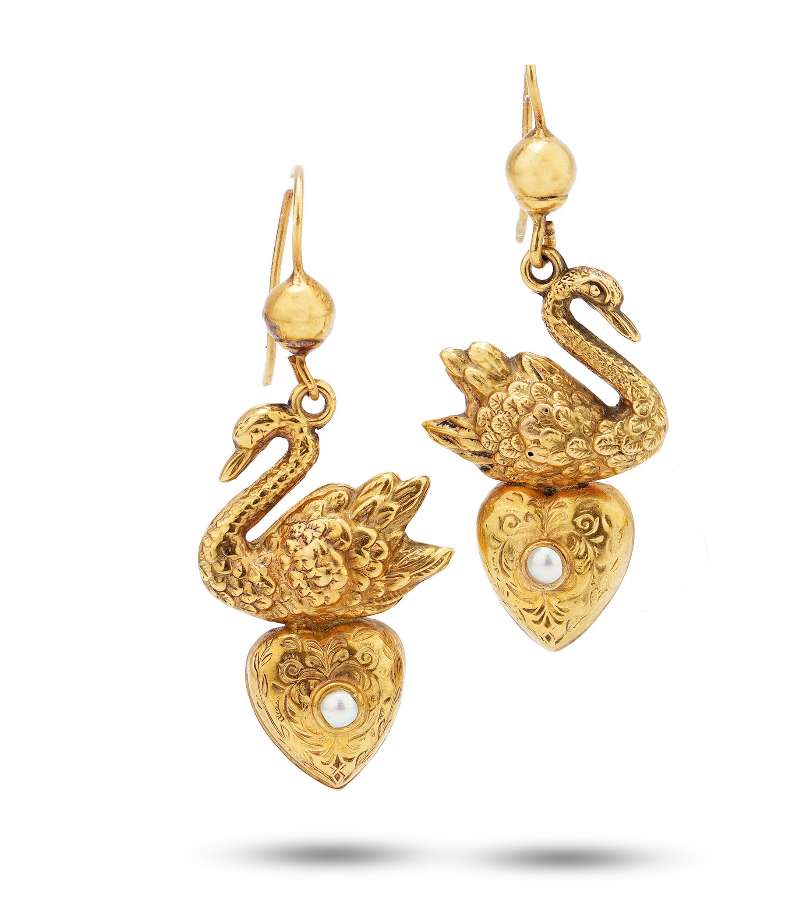
Hinged Back Earrings
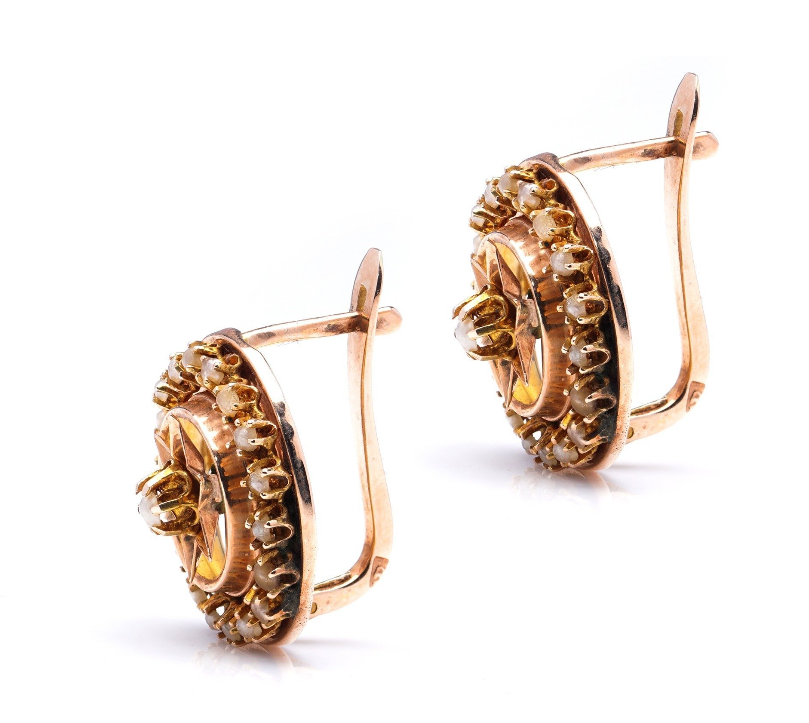
Developed in the late 1800s, hinged back earrings marked a significant advancement in jewelry design, offering enhanced security over traditional hook fastenings. These sophisticated mechanisms, featuring a hinged back piece and threaded post, became particularly prominent in Art Deco jewellery of the 1920s and 1930s.
The precision engineering of hinged backs made them ideal for securing precious stones and elaborate designs, especially in designer jewellery pieces. Their popularity during the Art Deco period is evidenced by the geometric patterns and diamond-set examples that survive today.
Screw-Back Earrings
Screw-back earrings emerged in the early twentieth century, gaining significant popularity during the glamorous era of the 1940s and 1950s. This innovative fastening mechanism provided unprecedented security for precious antique earrings, making them particularly suitable for valuable gemstone pieces.
The meticulous engineering of screw-back mechanisms reflects the sophisticated craftsmanship of the vintage era. These fastenings were especially popular in high-end pieces from the mid-twentieth century, often featured in important designer jewellery collections.
Clip-On Earrings
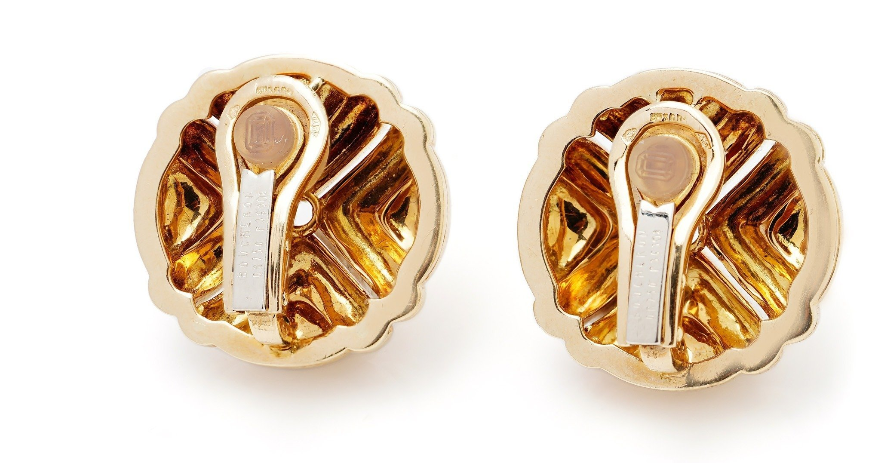
Clip-on earrings revolutionized jewelry accessibility when they emerged in the 1920s. Their popularity soared during World War II, as women entering the workforce sought practical yet elegant adornments. These versatile pieces became a cornerstone of vintage jewellery design.
The innovation of clip-on mechanisms allowed for larger, more dramatic designs, particularly evident in Art Deco and mid-century pieces. Today, they remain sought-after for their comfort and adaptability, found in everything from simple studs to elaborate statement pieces.
French Wire Earrings
French wire earrings, also known as shepherd's hooks, represent one of the most elegant solutions in antique earrings. While their origins trace back to ancient times, the refined version we know today emerged during the Georgian era of the 1800s.
These sophisticated findings feature a delicate curved wire that creates a seamless connection between the ear and the decorative elements. Particularly popular in Victorian and Edwardian jewellery, French wires continue to be prized for their elegant simplicity and secure wear.
Lever-Back Earrings
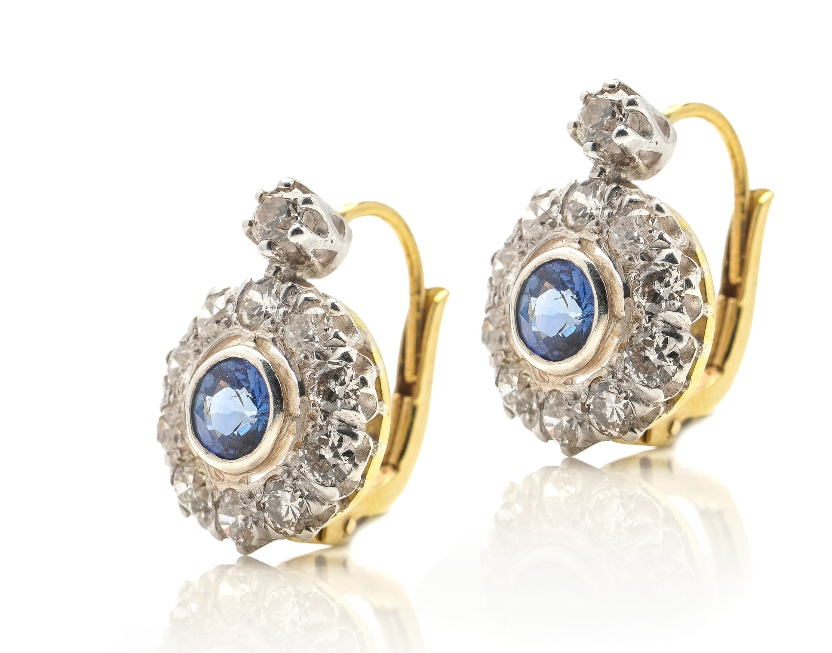
Lever-back earrings represent a significant evolution in antique earring design, offering enhanced security through an ingenious hinged mechanism. This sophisticated fastening system, featuring a curved lever that securely clicks into place, became particularly popular in fine Victorian jewellery.
The mechanism's reliability made it especially suitable for precious designer pieces, particularly those featuring significant gemstones or elaborate designs. This style continues to be favored in high-end jewelry, combining security with elegant aesthetics.
Push-Back Earrings
Push-back earrings, also known as friction backs, emerged in the early twentieth century as an elegant solution for securing fine earrings. This innovative design gained prominence during the Art Deco period, offering a perfect balance of security and ease of use.
The mechanism's simplicity and effectiveness made it particularly popular for vintage and designer pieces, where it continues to be widely used today. Its versatility allows for both delicate studs and more substantial drop designs.
Butterfly Back Earrings
Butterfly back earrings, introduced in the early 1900s, revolutionized earring design with their distinctive wing-shaped clutch mechanism. This innovative fastening system gained particular prominence in the 1950s, coinciding with the rise of vintage jewellery.
The design's practicality and secure fit made it especially popular for designer pieces, particularly stud earrings. The butterfly back's enduring appeal lies in its combination of security and comfort, making it a preferred choice for both everyday wear and special occasions.
La Pousette Back Earrings
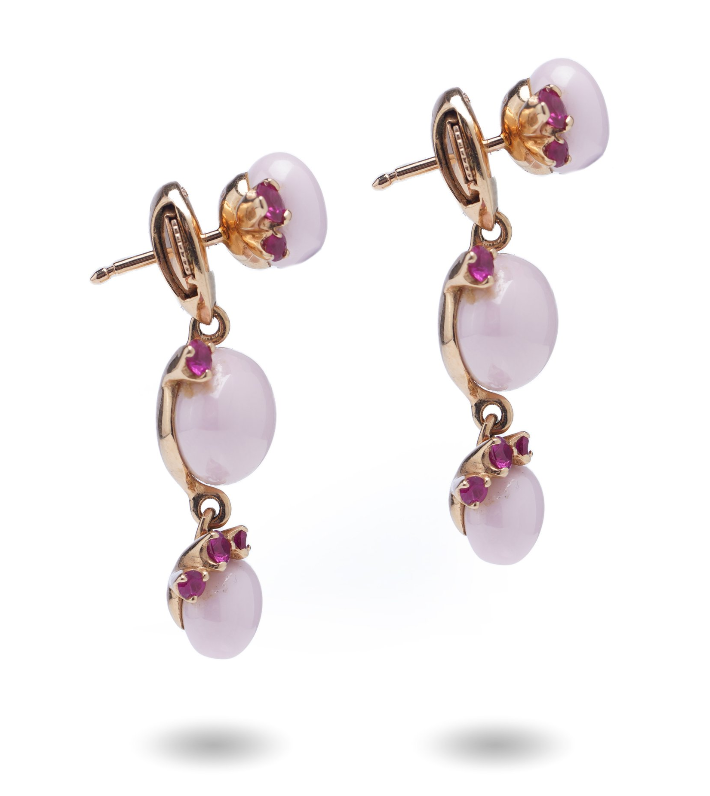
La Pousette backs emerged in the mid-twentieth century as an innovative solution to secure valuable earrings. This sophisticated mechanism, featuring a hinged lever that locks firmly in place, became particularly popular in fine vintage jewellery of the 1950s and 1960s.
The design's exceptional security made it a preferred choice for designer pieces, especially those featuring precious stones or elaborate constructions. While less common today, La Pousette backs remain highly sought after by collectors for their superior engineering and historical significance.
Safety Back Earrings
Safety back earrings represent the pinnacle of secure earring design, featuring an innovative locking mechanism that provides exceptional protection for valuable pieces. This modern innovation has become particularly important for securing precious designer jewellery.
The sophisticated engineering of safety backs makes them ideal for substantial pieces and important vintage jewels. Their development reflects the ongoing evolution of jewelry fastening systems, combining security with ease of use.