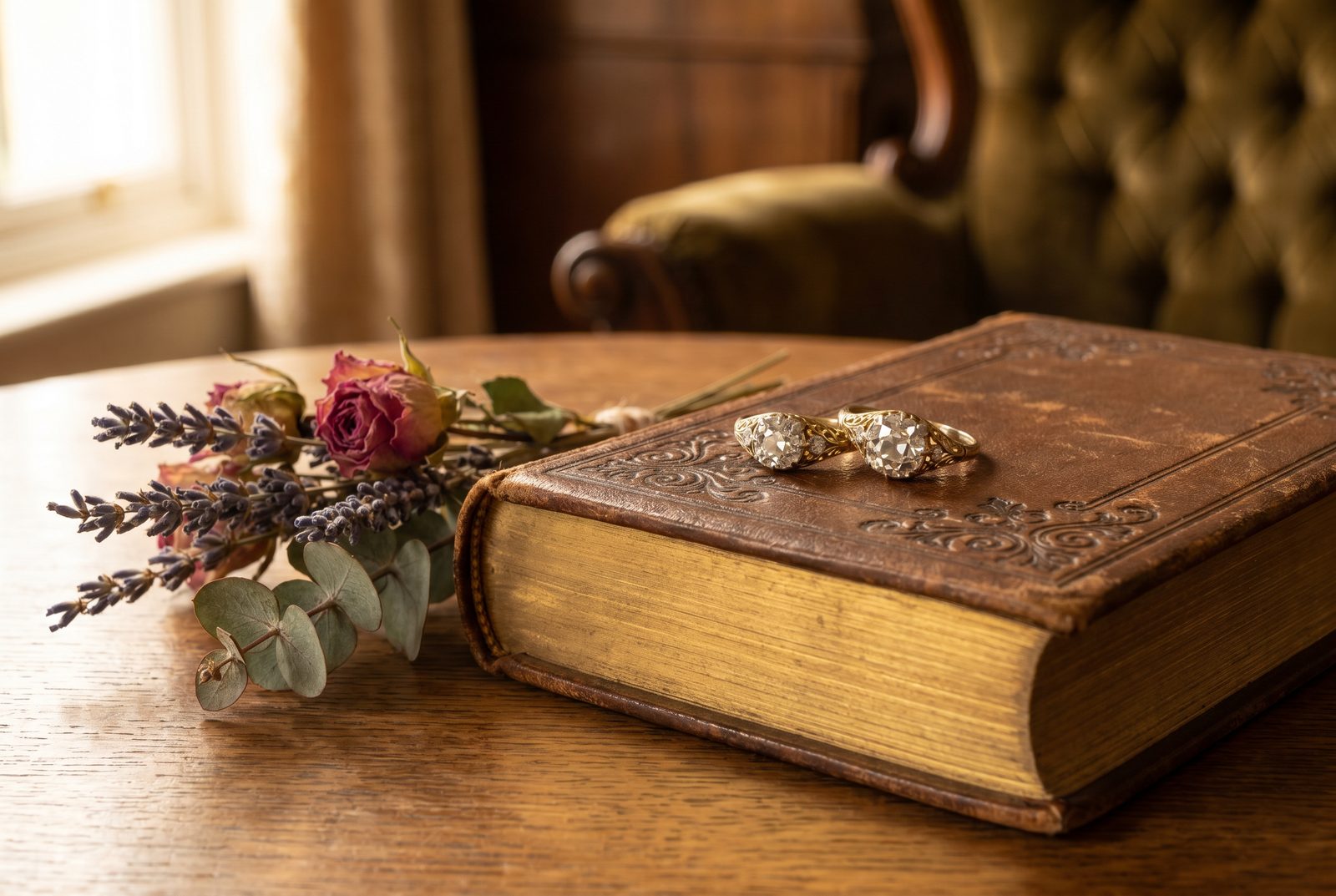
One of a Kind: Why Antique Beats New (An Honest Comparison)
A new ring loses a third of its value at the till. An antique ring already lost it — a hundred years ago, for someone else. Five myths, honestly busted.
Buying antique instead of new comes with a set of worries — that it'll be fragile, old-fashioned, or hard to buy safely. Most of them are myths, and as antique dealers we'd rather bust them honestly than pretend antique is perfect. Here are the five we hear most, each with a real piece to prove the point.
Quick answer: is antique jewellery better than new?
For value, individuality and craftsmanship, usually yes. An antique piece has already taken its depreciation, is one of a kind, and often shows hand-work no factory matches. New jewellery wins only on being brand-new and made to order.
The honest caveat: buy antique from a specialist who authenticates and offers returns — which is exactly how we work.
Myth 1: "Antique means fragile"
The opposite is usually true. A piece that has survived a hundred-plus years of being worn, stored and handed down has already proven its durability — poorly-made things don't last that long. Fine antique settings were built by hand to hold their stones for generations. Our c.1870s tremblant brooch still works, springs and all, 150 years on.
Myth 2: "New is better made"
Much new jewellery is cast in moulds at scale. The finest antique pieces were hand-fabricated, hand-engraved and hand-set by craftsmen working to a standard the mass market rarely reaches — millegrain, hand-cut galleries, calibré stones fitted one by one. The signed Adler diamond double-clip shows the ceiling of that workmanship.
Myth 3: "Antique is old-fashioned"
Tell that to the trend data: Pinterest reports searches for the “brooch aesthetic” up 110% and “heirloom jewellery” up 45% this year, with antique-style pearls and Deco geometry all over current styling. Antique jewellery is, right now, the most current thing you can wear — and unlike a trend-led new piece, it has genuine history behind it. See why brooches are back.
Myth 4: "New jewellery holds its value"
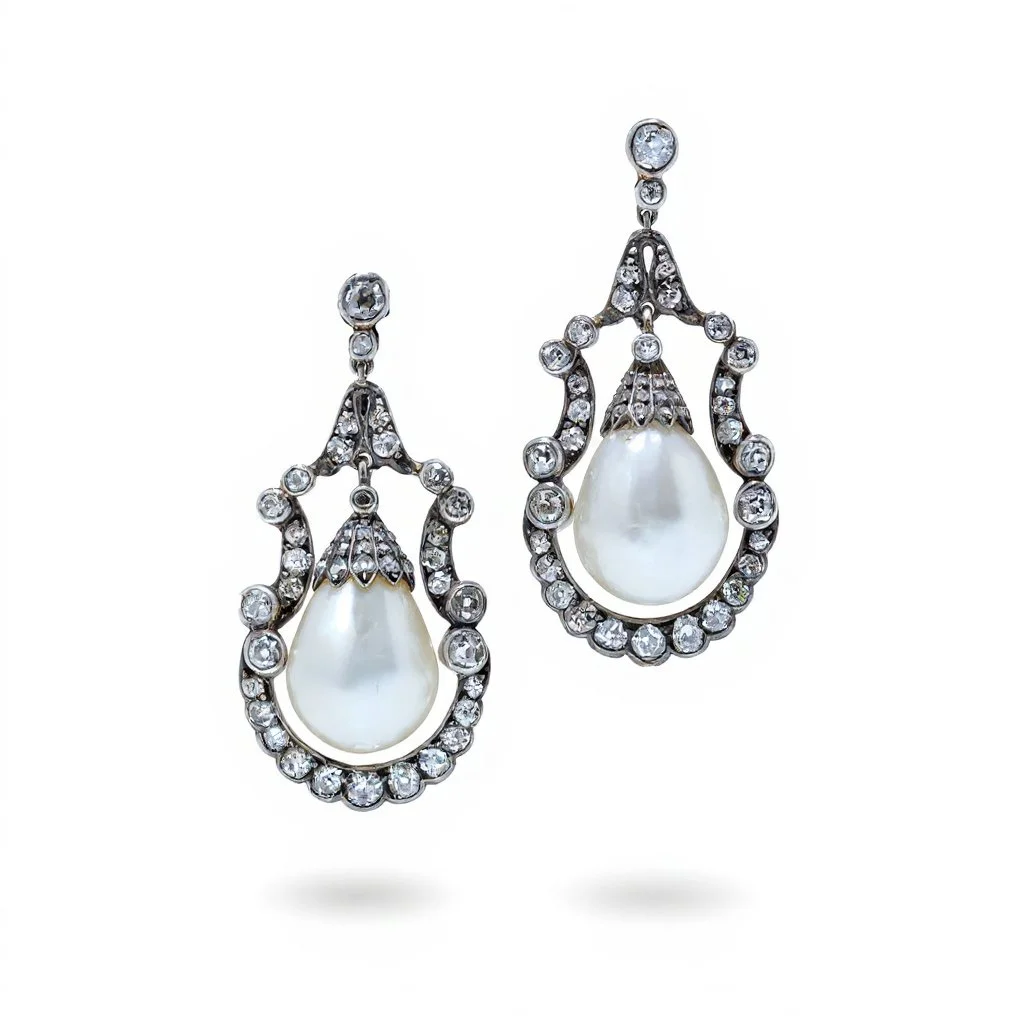
This is the expensive one. A new piece is priced at retail — VAT, margin, marketing — and loses much of that the moment you leave the shop. An antique piece already took that hit generations ago; what's left is intrinsic — and at the premium tier it has historically held value well (see our investment-grade guide). The Victorian natural pearl drops have gained value for over a century.
Myth 5: "Antique is hard to buy safely"
Only if you buy from the wrong place. We authenticate every piece in-house — hallmarks, XRF metal testing, stone and pearl assessment, signature verification — and back it with clear condition reporting, 14-day returns and worldwide insured delivery. Buying antique from a specialist is as safe as buying new, and a great deal more interesting.
Where new genuinely wins — the honest column
An honest comparison concedes real points, so here they are. Exact sizing and customisation: a new ring is made to your finger and spec; an antique may have limited resizing room (eternity rings and fully-set bands especially). Daily-wear engineering: a modern platinum solitaire with a certified stone and chunky claws is built for fifty years of daily knocks; a delicate Edwardian cluster deserves gentler duty — buy antique for an engagement ring by all means, but have the setting checked and be realistic about wear. Warranty and servicing networks: new pieces come with boutique after-care; antiques rely on your jeweller. Certification simplicity: a new diamond arrives with a GIA report; antique stones can be certificated, but it's an extra step. Matching and replacement: lose one new earring and it can often be remade; lose one antique earring and it cannot.
None of this overturns the case for antique — uniqueness, craftsmanship and the depreciation already being paid remain decisive for most buyers who look at both. But you should choose knowing the trade-offs, not pretending there are none.


Think you own one? Find out what it’s worth.
Have an antique piece of your own? We buy as well as sell, and value honestly — never as scrap. Send a photo for a free, no-obligation valuation.
✓ Free expert valuation in 24h ✓ Same-day payment ✓ 10,000+ items traded · 5★ rated
First look at new arrivals
Join our list to see new antique and signed jewellery before it reaches the site — one email when something worth your time arrives, nothing more.
Get first look →The deeper reason people choose antique is identity: the person who wears a one-of-a-kind piece isn't following a trend, they're telling a story. Browse the full collection, and for the how-to see our antique engagement ring buying guide.
Explore Further
Frequently Asked Questions
Antique vs new jewellery, answered.
Is antique jewellery fragile?
Generally no — a piece that has survived a century of wear has proven its durability, and fine antique settings were hand-built to last. Delicate pieces simply need sensible care, like any fine jewellery.
Is new jewellery better made than antique?
Often not. Much new jewellery is mass-cast, while the finest antique pieces were hand-fabricated and hand-set to a standard the mass market rarely reaches. Signed and fine antique pieces represent the craftsmanship ceiling.
Does antique jewellery hold its value better than new?
Usually yes. New jewellery loses retail margin and VAT immediately; antique pieces already took that depreciation long ago, and the premium tier often appreciates. Rarity, signature and natural stones drive antique value.
Is it safe to buy antique jewellery?
Yes, from a specialist. We authenticate every piece in-house — hallmarks, XRF testing, stone assessment, signature verification — with condition reports, 14-day returns and insured delivery. That makes buying antique as safe as buying new.