Insect Brooches: From Victorian Curiosities to 2026's Biggest Brooch Trend
Dragonflies, bees, beetles and butterflies are leading the 2026 brooch revival — Pinterest's brooch searches are up 110%. The Victorians got there 150 years first.
Pinterest's 2026 report names brooches one of the year's defining jewellery stories — "brooch aesthetic" searches are up 110% — and it is the insects leading the swarm: dragonflies, butterflies, beetles and bees on lapels, knits and hat brims. Here is the part the trend pieces miss: none of this is new. The Victorians were obsessed with insect jewellery a century and a half ago, and their bugs — hand-made, gem-set, sometimes trembling on springs — are still the best ones you can buy.
Quick answer: are insect brooches in fashion?
Yes — insect brooches are one of the strongest jewellery trends of 2026, riding the wider brooch revival (Pinterest +110%). Antique examples — Victorian naturalism, Art Nouveau dragonflies, Edwardian diamond bees — are the most sought-after, because each is hand-made and one of a kind.
Genuine antique insect brooches run from a few hundred pounds to five figures depending on maker, era, gems and condition.
Why insects, why now
Three currents feed the swarm. The maximalist turn — jewellery with character and story is beating minimal metal, and nothing has more character than a diamond beetle. The runway — brooches were everywhere in the SS26 shows, worn stacked and unexpected. And individuality — an insect brooch is a conversation in a way a plain bar brooch never is. The +110% Pinterest surge is the measurable edge of all three. For the broader story see our brooch trend report.
A short history of the jewelled insect
The Victorians turned natural history into ornament. Darwin-era fascination with the natural world put beetles, bees, flies and butterflies onto brooches — often startlingly lifelike, gem-set, and sometimes mounted en tremblant so they quivered like the real thing (see our tremblant guide). Art Nouveau made the dragonfly its emblem — Lalique's plique-à-jour wings are the era's masterpieces. The Edwardians rendered bees and butterflies in fine platinum and diamonds; the mid-century went bold and playful, from gem-set gold bugs by the great houses to collectable costume pieces.
| Era | Insect brooch signatures |
|---|---|
| Victorian (1837–1901) | Naturalistic bugs, en tremblant mechanisms, old-cut diamonds, gold and silver |
| Art Nouveau (c.1890–1910) | Dragonflies, plique-à-jour enamel, sinuous organic forms |
| Edwardian (1901–1915) | Fine platinum and diamond bees and butterflies, garland style |
| Mid-century (1940s–60s) | Bold gem-set gold bugs from the big houses; collectable costume (Trifari) |
Era characteristics — individual pieces vary; hallmarks and construction confirm the date.
What each insect means
Butterfly
Transformation and the soul — the Victorian favourite for sentimental gifts, and the prettiest of the family.
Bee
Industry and royalty — Napoleon's emblem, later a symbol of diligence. Persistently the most-worn insect.
Dragonfly
Change and lightness — Art Nouveau's icon, wings made for iridescent enamel.
Beetle & scarab
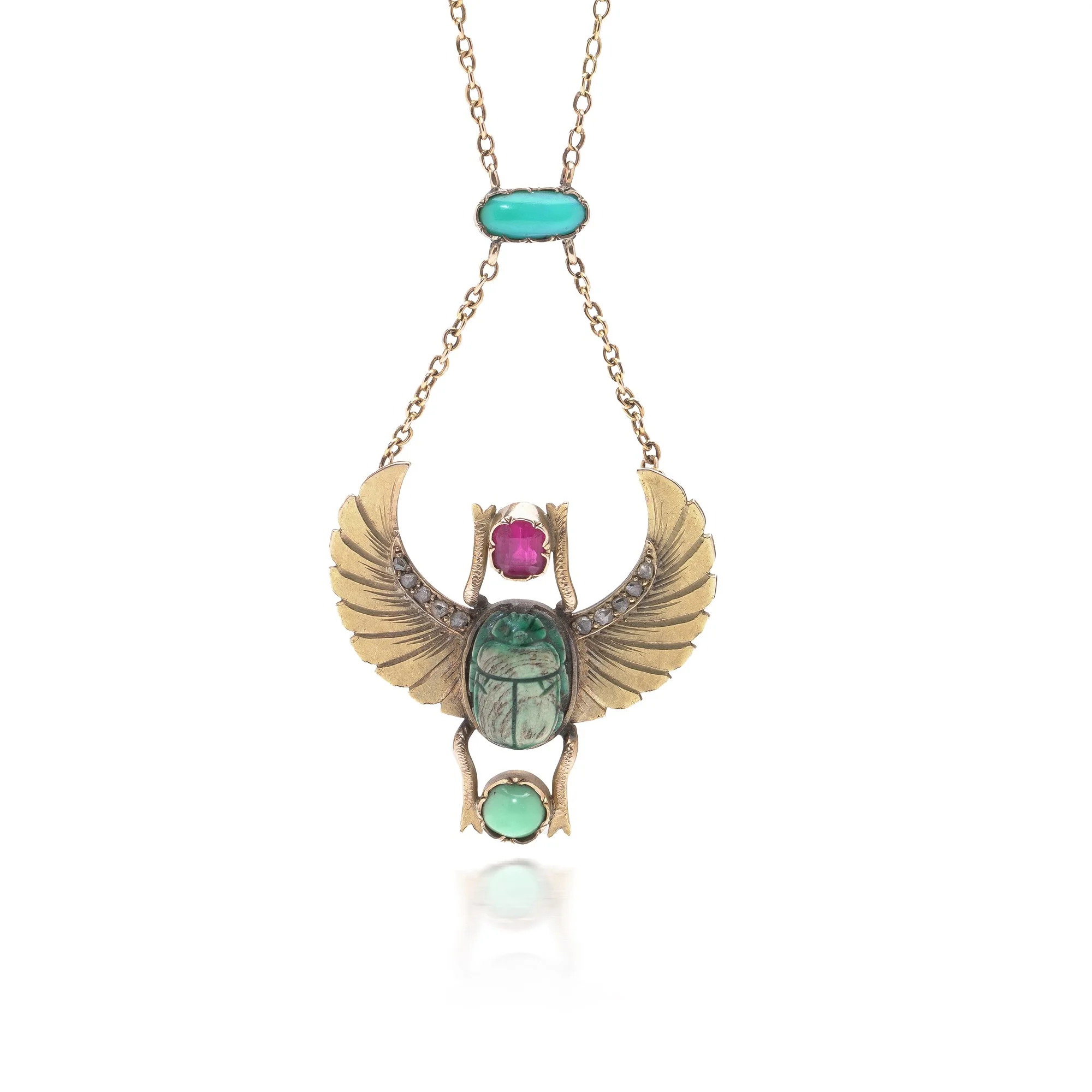
Protection and rebirth — the scarab via the Egyptian Revival; iridescent beetles via Victorian naturalism.
Meaning sells these pieces as much as sparkle — a bee for a graft, a butterfly for a new chapter. (The spider, for completeness, meant luck and patient work — and genuinely antique spider brooches are rare finds.)
In our collection now
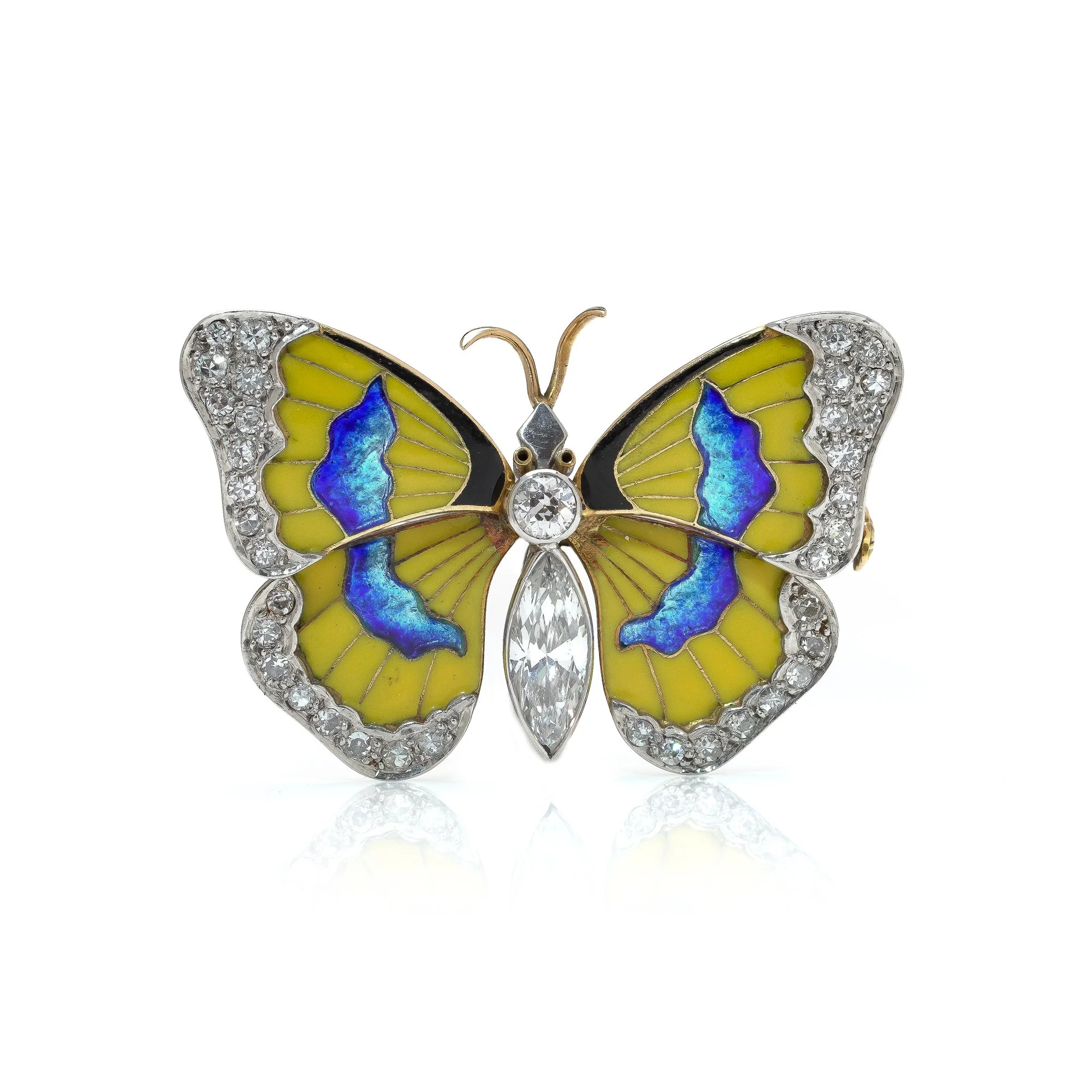
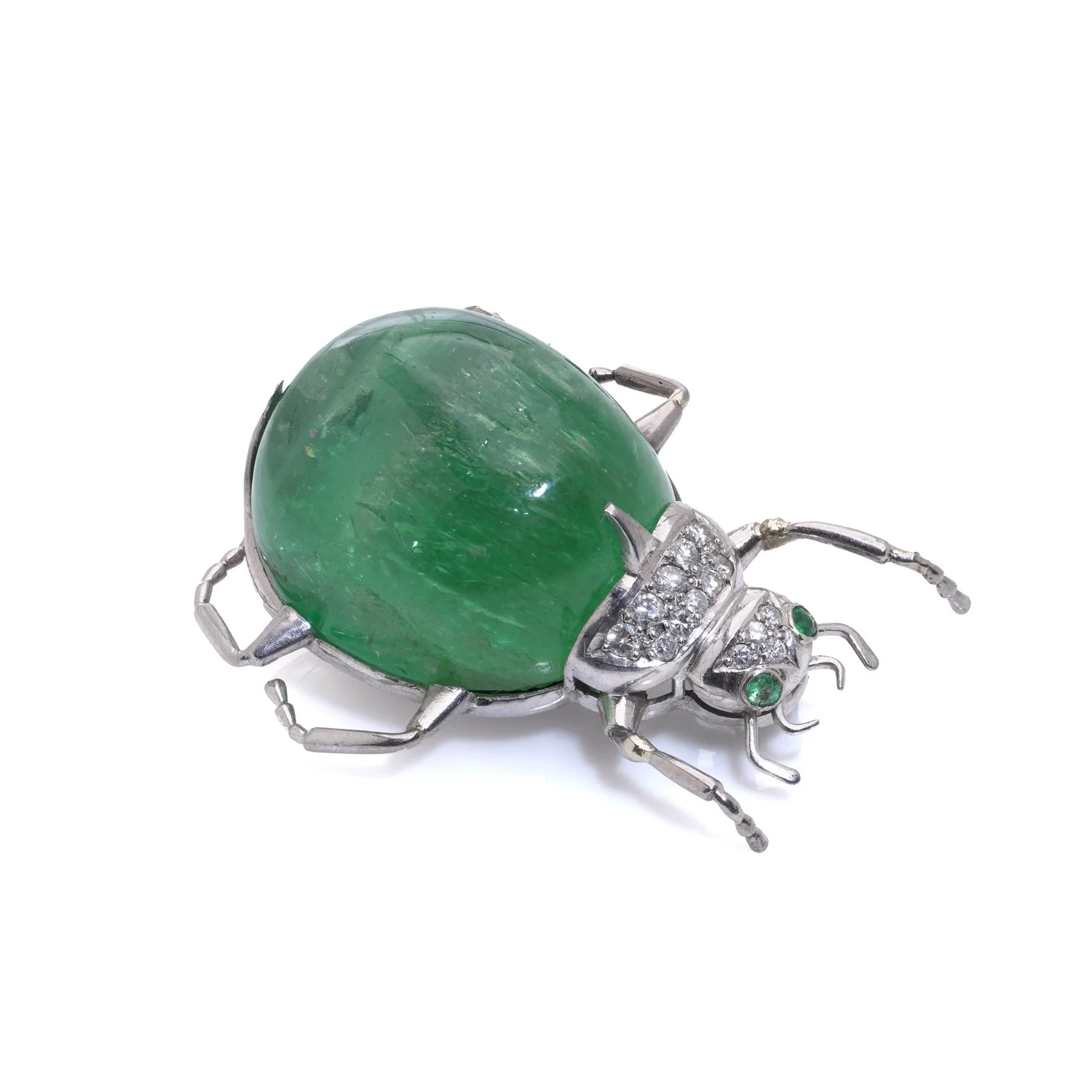
Three genuine insect pieces in stock as this is written — each one of a kind:
What they're worth — and what drives value
Honest ranges: charming unsigned Victorian and vintage insects run from the low hundreds to the low thousands. Fine gem-set examples — our chrysoberyl beetle or diamond-and-enamel butterfly at £9,850 — sit in the mid four figures to five figures. Signed pieces (Lalique, Boucheron, Cartier) and intact en tremblant mechanisms go well beyond. The drivers: maker, era, gem quality, mechanism, and condition — legs and antennae snap first, so complete, unrepaired examples carry the premium.
Think you own one? Find out what it’s worth.
Own an insect brooch — inherited, or bought years ago? The trend has repriced the good ones, and signed or gem-set examples can be worth far more than expected. Send a photo for a free specialist valuation.
✓ Free expert valuation in 24h ✓ Same-day payment ✓ 10,000+ items traded · 5★ rated
How to wear one in 2026
- Blazer lapel — the classic, worn high near the collarbone.
- On a knit or collar — a diamond beetle on chunky wool is peak 2026 contrast.
- Scarf or hat — anchoring a silk scarf, or on a felt brim.
- Swarm them — two or three insects clustered together is the most fashion-forward look of the season. Our styling guide covers ten placements.
Buying and authenticity checks
Check hallmarks and construction for the claimed era; inspect legs, antennae and wing-tips for repairs (solder blobs, mismatched colour); look for replaced stones (modern cuts in an old mount); and be alert to converted pieces — pendants turned brooches and vice versa trade at a discount. Every insect piece we sell is authenticated in-house, dated honestly, and described with any restoration noted — see sell your antique jewellery if you're on the other side of the trade.
Explore Further
Frequently Asked Questions
Insect brooches, explained.
What do insect brooches symbolise?
Butterflies stand for transformation and the soul, bees for industry and royalty (Napoleon's emblem), dragonflies for change, and beetles/scarabs for protection and rebirth. Victorian buyers chose insects for their meanings as much as their sparkle.
Are brooches back in style in 2026?
Emphatically — Pinterest's 2026 report names brooches a top jewellery story with searches up 110%, and insect designs are leading. Antique examples are the most sought-after because each is one of a kind.
How do I wear a brooch on a blazer?
Pin it on the lapel, higher than feels natural — near the collarbone. One statement insect reads polished; two or three clustered reads fashion-forward. See our full styling guide for ten placements.
Are old insect brooches worth anything?
Often, yes. Unsigned Victorian pieces run from the low hundreds to low thousands; fine gem-set examples reach five figures; signed pieces (Lalique, Cartier) and working en tremblant mechanisms go beyond. Condition — especially unbroken legs and antennae — drives the price.
What is Victorian insect jewellery, and why did they love it?
Darwin-era Britain was obsessed with natural history, and jewellers turned it into ornament — lifelike gem-set bugs, sometimes mounted on trembling springs. It was science, sentiment and status on a lapel.