Part of: Sell your Andrew Grima jewellery
Andrew Grima Jewellery: A Collector Guide
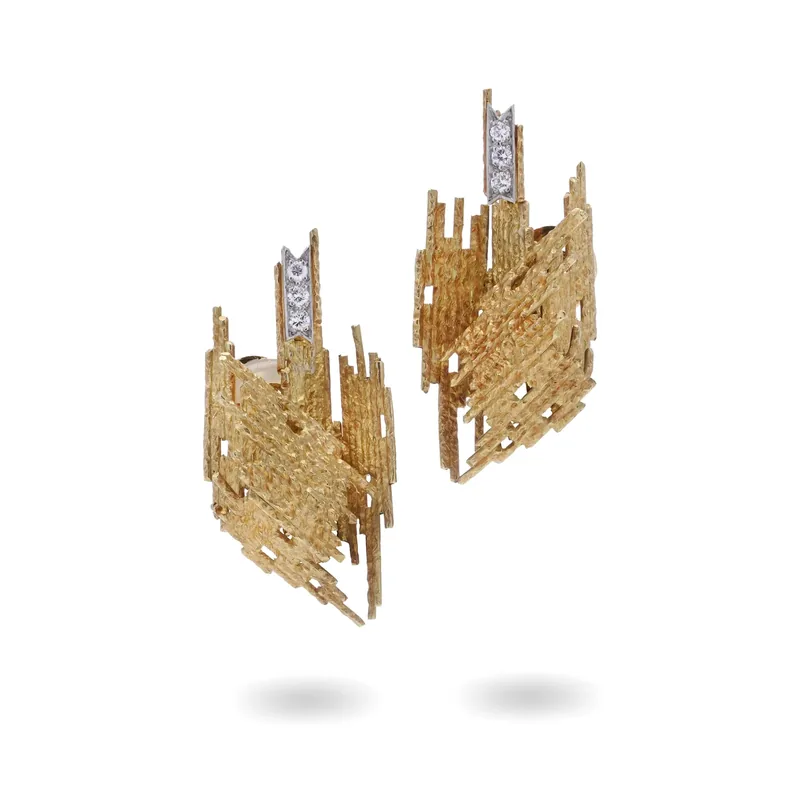
Andrew Grima (1921 to 2007) was the leading British modernist jeweller. From the 1960s he made gold look as if nature had shaped it, textured like bark or molten rock and set with raw crystals and unusual stones. His pieces are signed GRIMA, and most made in Britain carry a hallmark that dates them. This guide explains his style, his marks and what decides value.
Thinking of selling Grima?
Free, no obligation, returned at our cost if you decline.
- Read our Google reviews (opens Google)
- Free, no obligation
- A reply within one working day
- Paid the same day after inspection
From engineer to jeweller
Grima trained as an engineer and came to jewellery after the war, through his father-in-law’s London firm, H.J. Company. In 1966 he won the Duke of Edinburgh’s Prize for Elegant Design, received a royal warrant and opened a striking shop at 80 Jermyn Street, St James’s. He won the De Beers Diamonds International Awards many times in the 1960s.
- 1921Born
- H.J
The Grima look
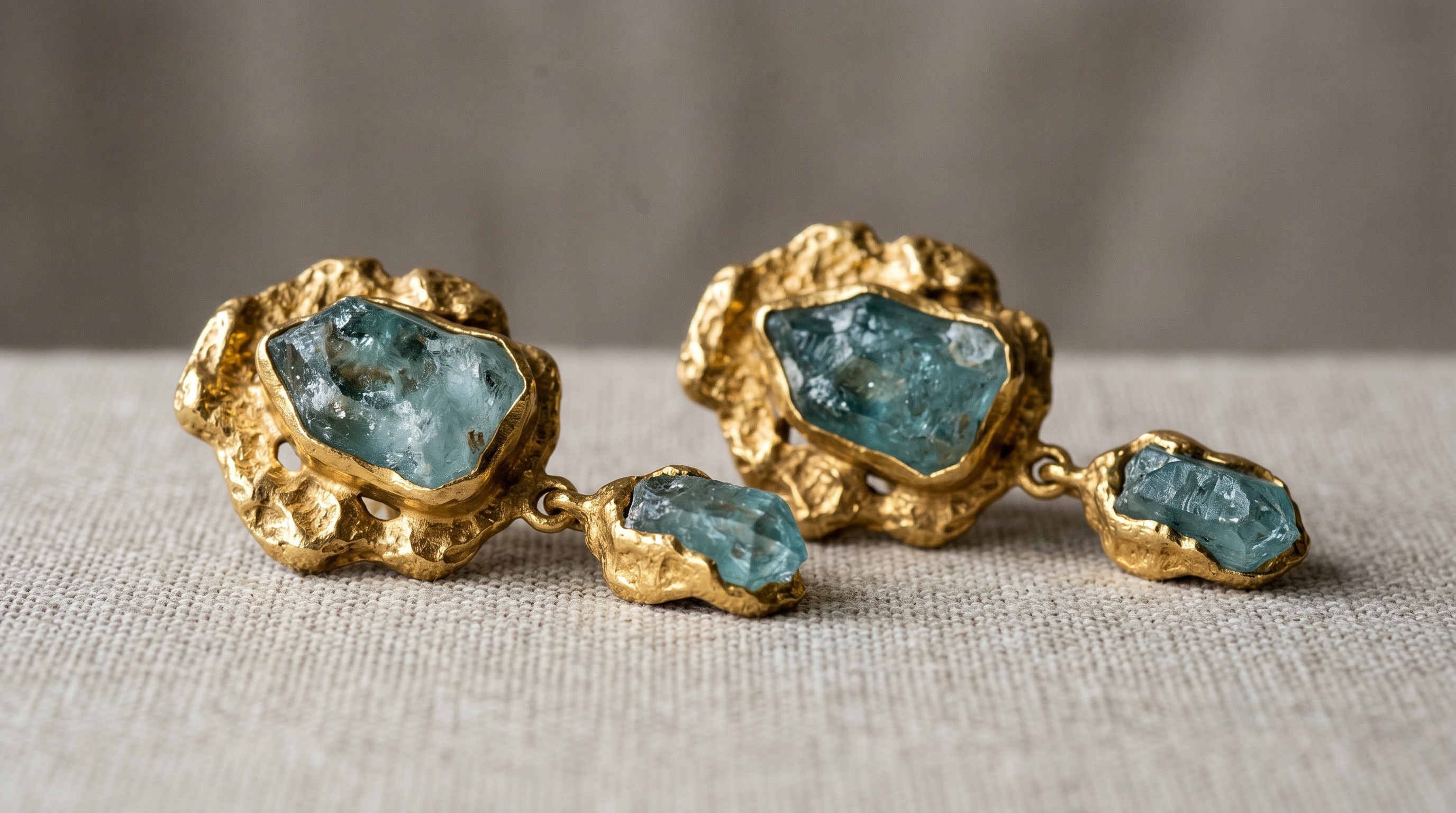
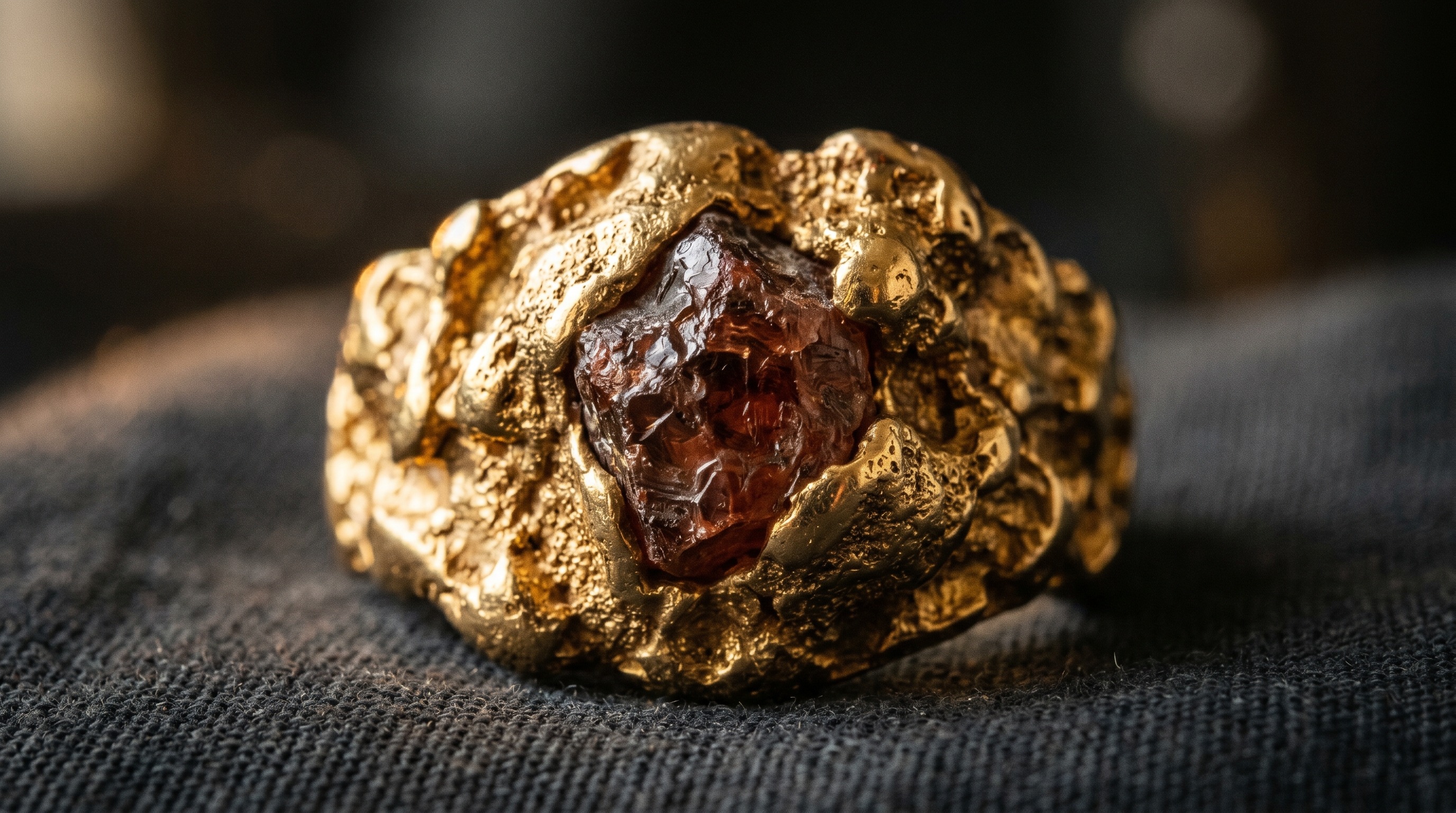
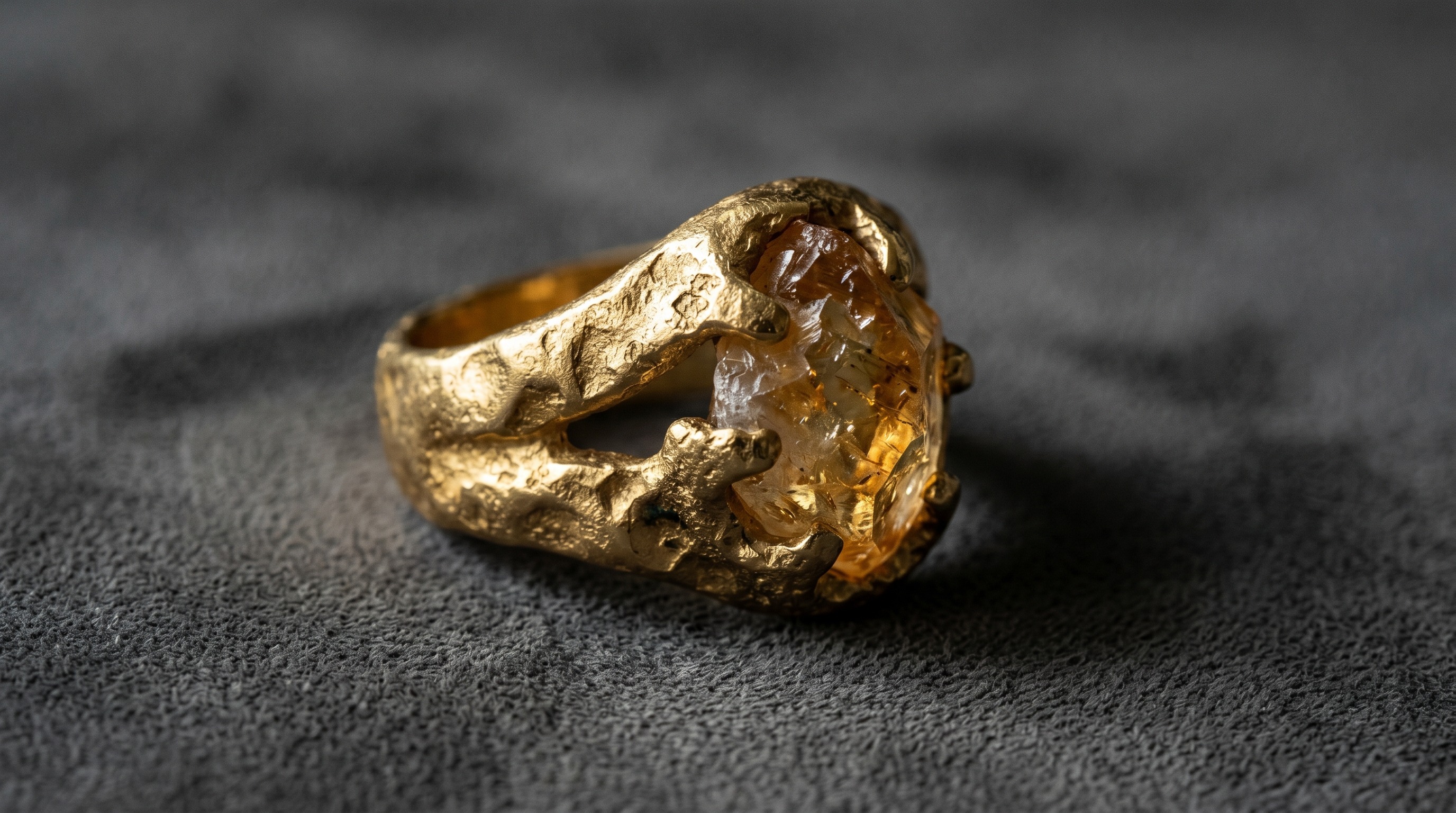
- Textured gold. Cast from twigs and bark, or worked to look molten or crystalline.
- Raw stones. Uncut crystals, slices and mineral specimens, alongside cut stones.
- Abstract forms. Brooches and rings that read as small sculptures.
- Two golds together. Yellow and white gold worked into one surface.
- 1Bark
- 2Molten
- 3Crystalline
About Time
In 1970 Grima designed the About Time watches for Omega: watches in which the dial is hidden or framed by stones and textured gold, so the jewel comes first and the time second. They are signed by both names and are collected as Grima pieces as much as watches.
Reading the marks, in brief
Most British-made Grima is signed GRIMA and carries a full British hallmark, whose date letter gives the year. The sponsor’s mark inside the hallmark points to the period, and pieces made in Switzerland are marked 750 without British hallmarks. Our Grima sell page explains every mark in detail, including one that looks similar but is not his.
For every house we buy, see how we check designer jewellery.
- 1Maker’s mark
- 2Gold standard (18 or 750)
- 3London leopard’s head
- 4Date letter
0 of 4 checked
1Signature
Most British-made Grima is signed GRIMA.
2British hallmark
A full British hallmark, whose date letter gives the year.
3Sponsor’s mark
Inside the hallmark, it points to the period.
4Swiss-made pieces
Marked 750, without British hallmarks.
Red flags
- No GRIMA signature, or one that is soft or crooked.
- A British-made piece with no hallmark.
- Thin, uniform texture that looks pressed rather than worked.
- A back left rough, when the front is detailed.
- A similar-looking mark from a different maker.
Grima texture
Later imitation
What is my Grima piece worth?
A Grima piece is valued on its design and how strongly it shows his style, the stones and crystals, the quality of the goldwork, its period (from the marks), its condition (worn texture, damaged crystals, repairs), any original case, and current demand. Bold abstract brooches and rare stones are the most recognisable. We never publish figures.
Free, no obligation, and returned at our cost if you decline.
Read our Google reviews (opens Google)
- Design
- Stones
- Goldwork
- Period
- Condition
- Case
- Demand
How selling works
- 1
Send photographs
of the front, the back, the GRIMA signature and the hallmark.
- 2
Free value inspection
We reply within one working day with an estimate, subject to inspection. If our offer differs, you can decline and we return it at our cost.
- 3
Paid the same day after inspection
by bank transfer or in cash, in Mayfair, at our Braintree office, by post or by free collection.
Insured up to £10,000 per parcel when you send to us. For important pieces, we can also sell on consignment for you.
Questions people ask
What is Andrew Grima jewellery known for?
Andrew Grima, the leading British modernist jeweller, is known for textured gold that looks shaped by nature, like bark, molten rock or crystal, set with raw crystals and unusual stones. In 1966 he won the Duke of Edinburgh’s Prize for Elegant Design and opened his Jermyn Street shop, and in 1970 he designed the About Time watches for Omega.
How do I identify a genuine Andrew Grima piece?
Look for the GRIMA signature and, on pieces made in Britain, a full British hallmark with a sponsor’s mark that points to the period. Swiss-made pieces are marked 750 without British hallmarks. The texture should be deep and varied, with a well-finished back. Send clear photographs of the marks and we will check them, free.
Where can I sell Andrew Grima jewellery?
To a buyer who reads the signature and hallmark and inspects the piece in person before paying. We buy Grima directly: a free value inspection from photographs, then an appointment in Mayfair or at our Braintree office, Special Delivery post or free collection. You are paid the same day after inspection, or we can sell important pieces on consignment.
How do I date a Grima piece?
On British-made pieces, the hallmark’s date letter gives the year, and the sponsor’s mark points to the period of the business. Pieces made in Switzerland, from the mid-1980s, carry 750 without British hallmarks. Our Grima sell page explains each mark, or send us a close photograph and we will date it for you.
Do you buy Grima About Time watches?
Yes. We buy Grima’s About Time watches for Omega and other Grima watches, working or not. They are valued as Grima pieces and as watches: the design, stones, goldwork and movement all count. Please photograph the front, the back, the signatures and any marks, and send them for a free value inspection.
How much is my Andrew Grima jewellery worth?
It depends on the design, the stones and crystals, the goldwork, the period, the condition, any original case and current demand. Two Grima brooches can differ a great deal. We do not publish prices. Send photographs of the front, back, signature and hallmark for a free value inspection within one working day.
Related guides
Selling Andrew Grima jewellery?
Send a photograph of the piece, its signature and its hallmark for a free value inspection, with no obligation.
Free, no obligation, returned at our cost if you decline.
Grima's contemporaries are covered in our 1950s to 1970s jewellery guide.