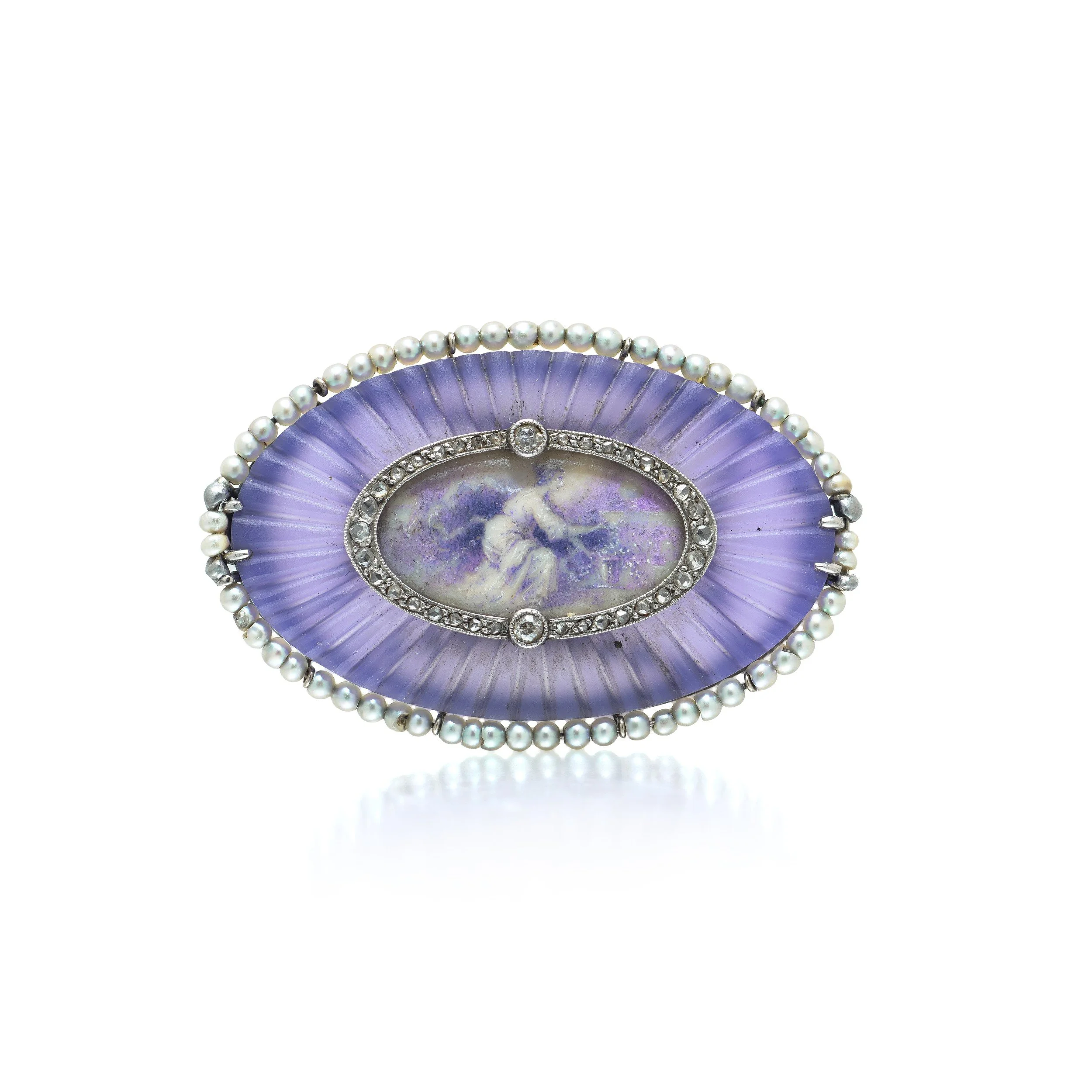
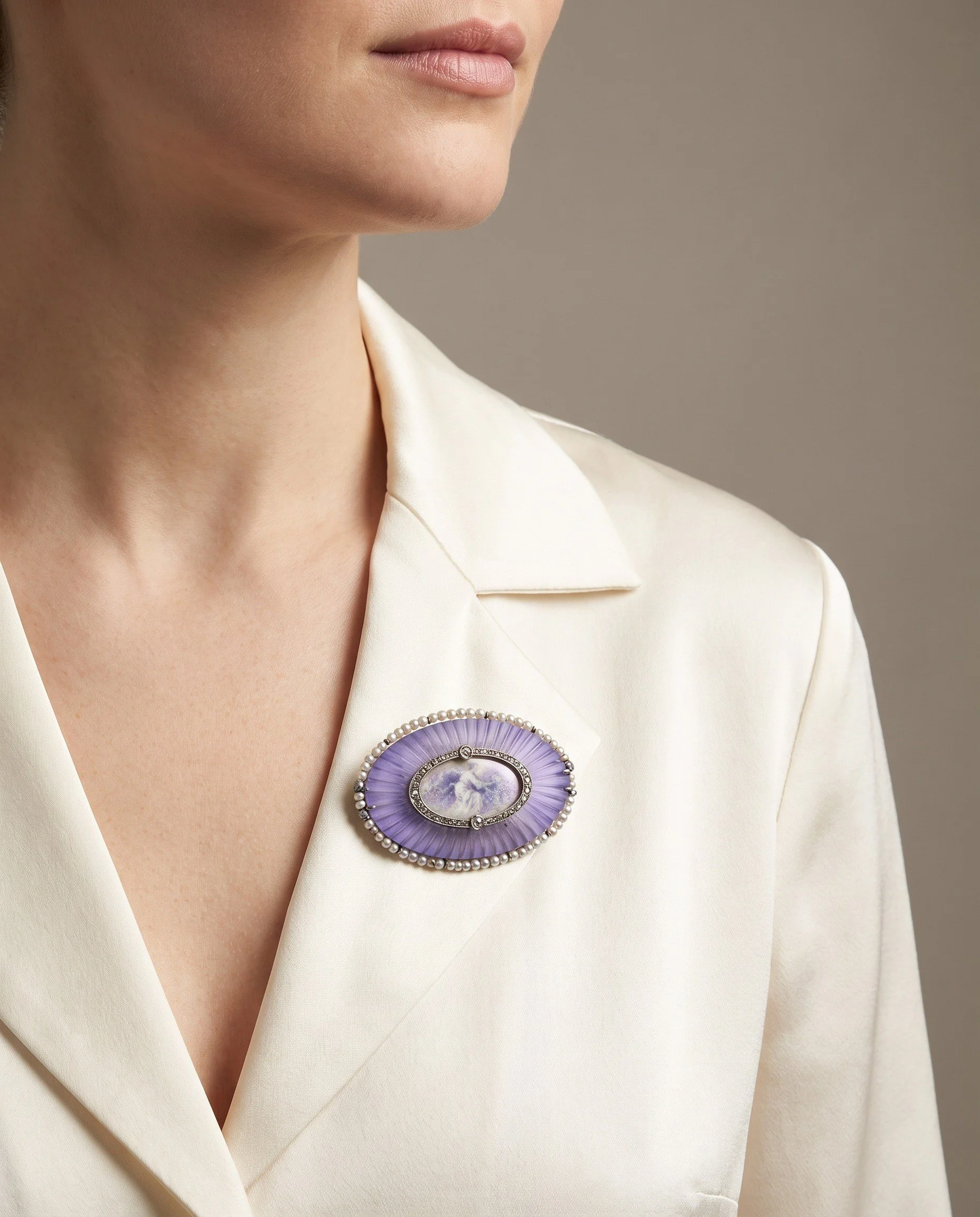
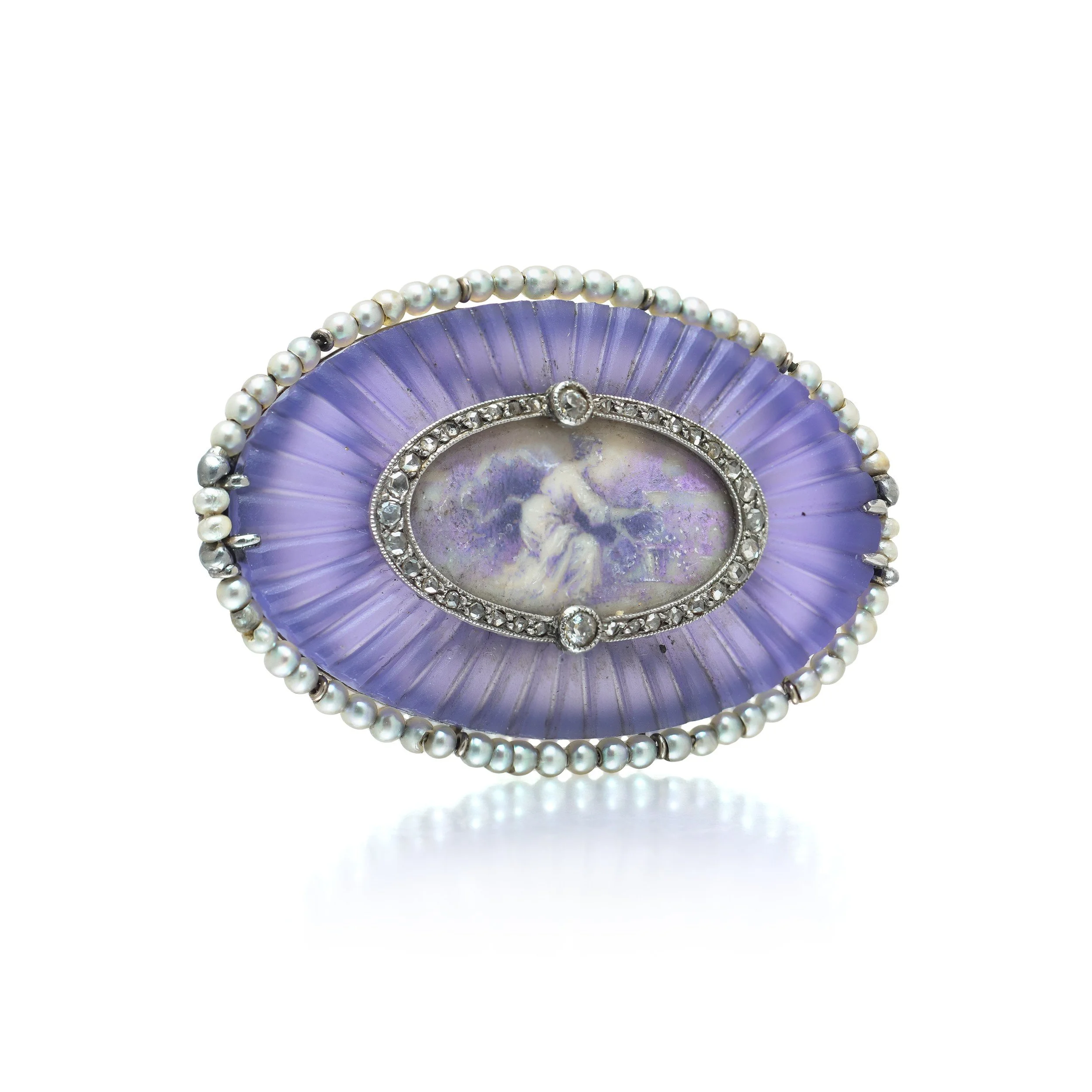
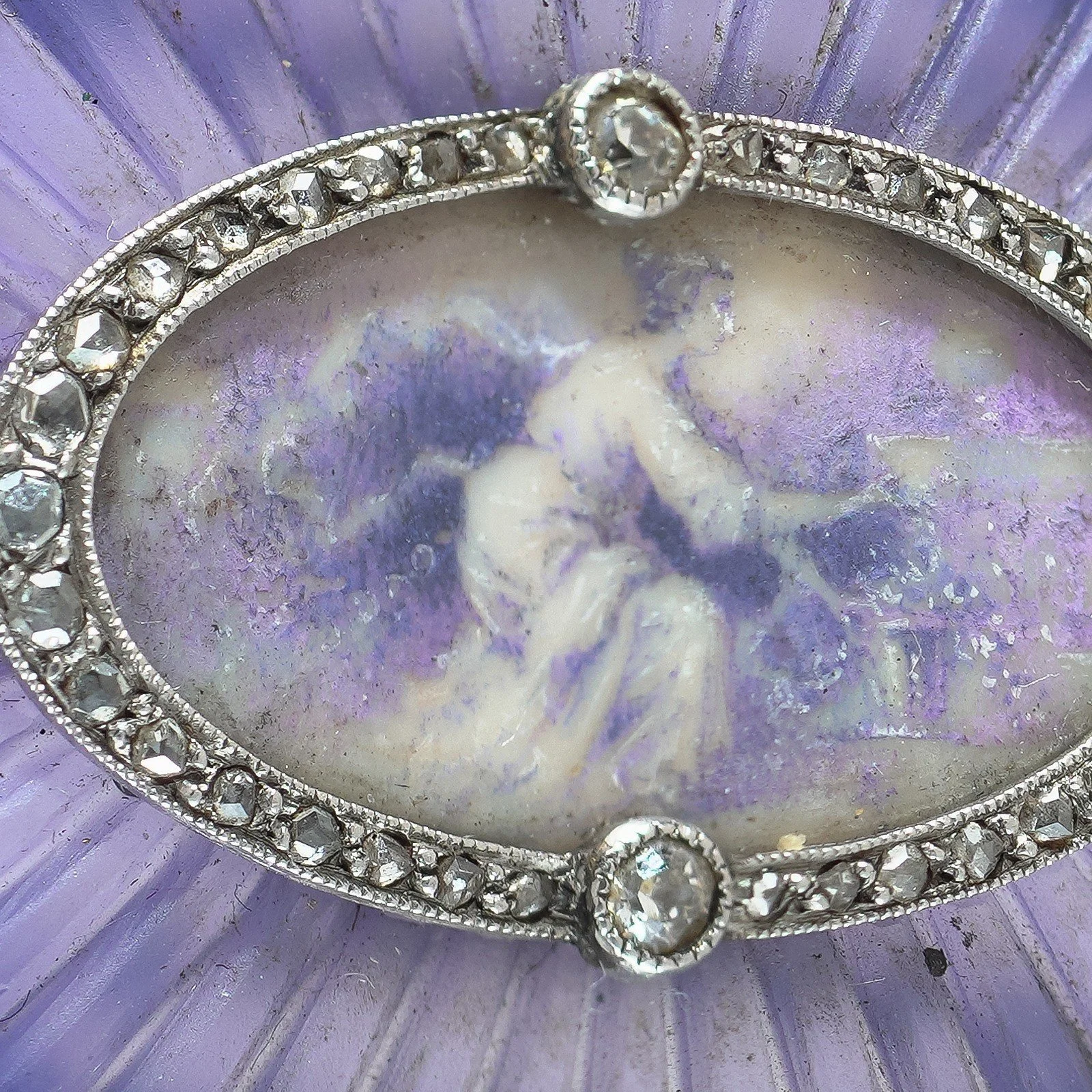
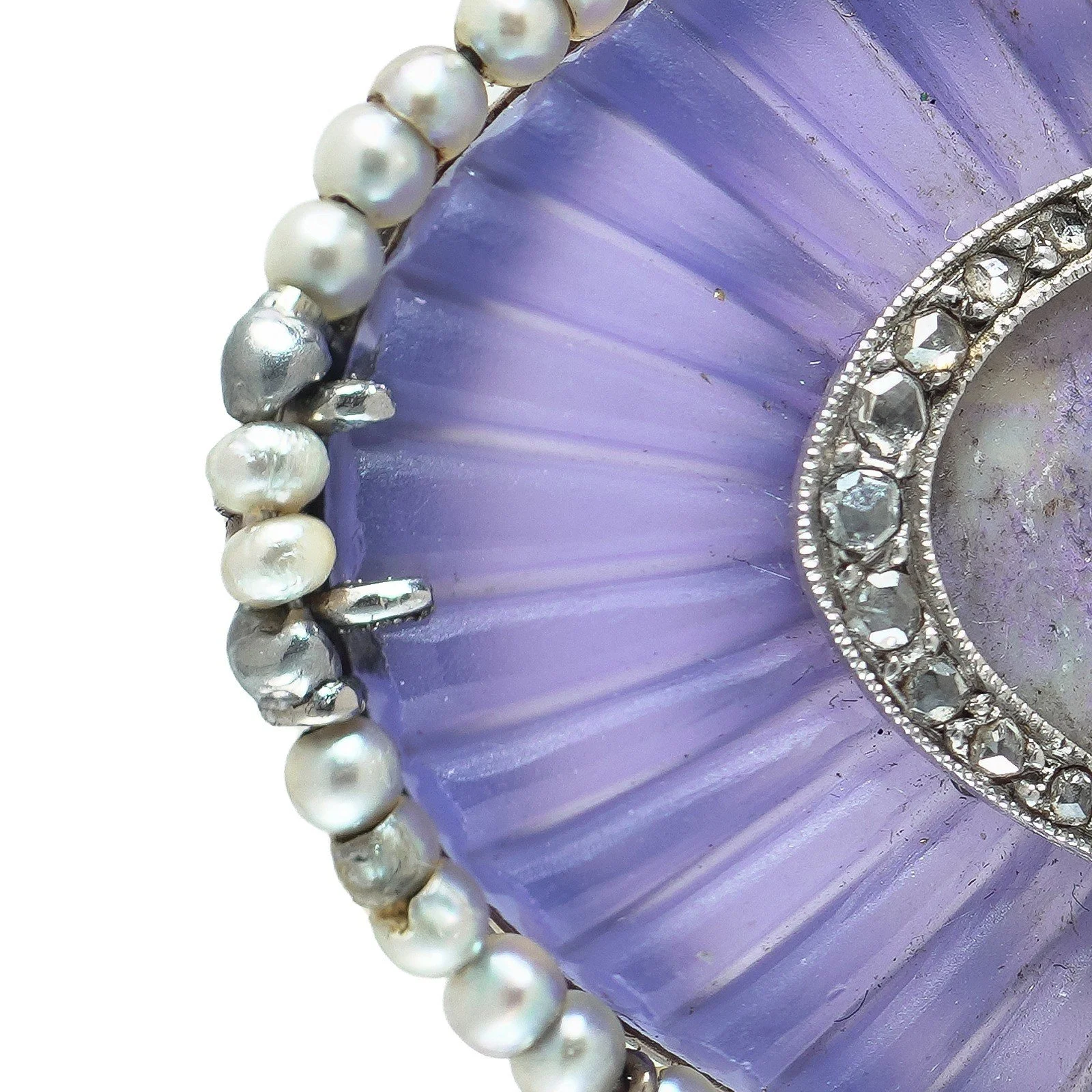
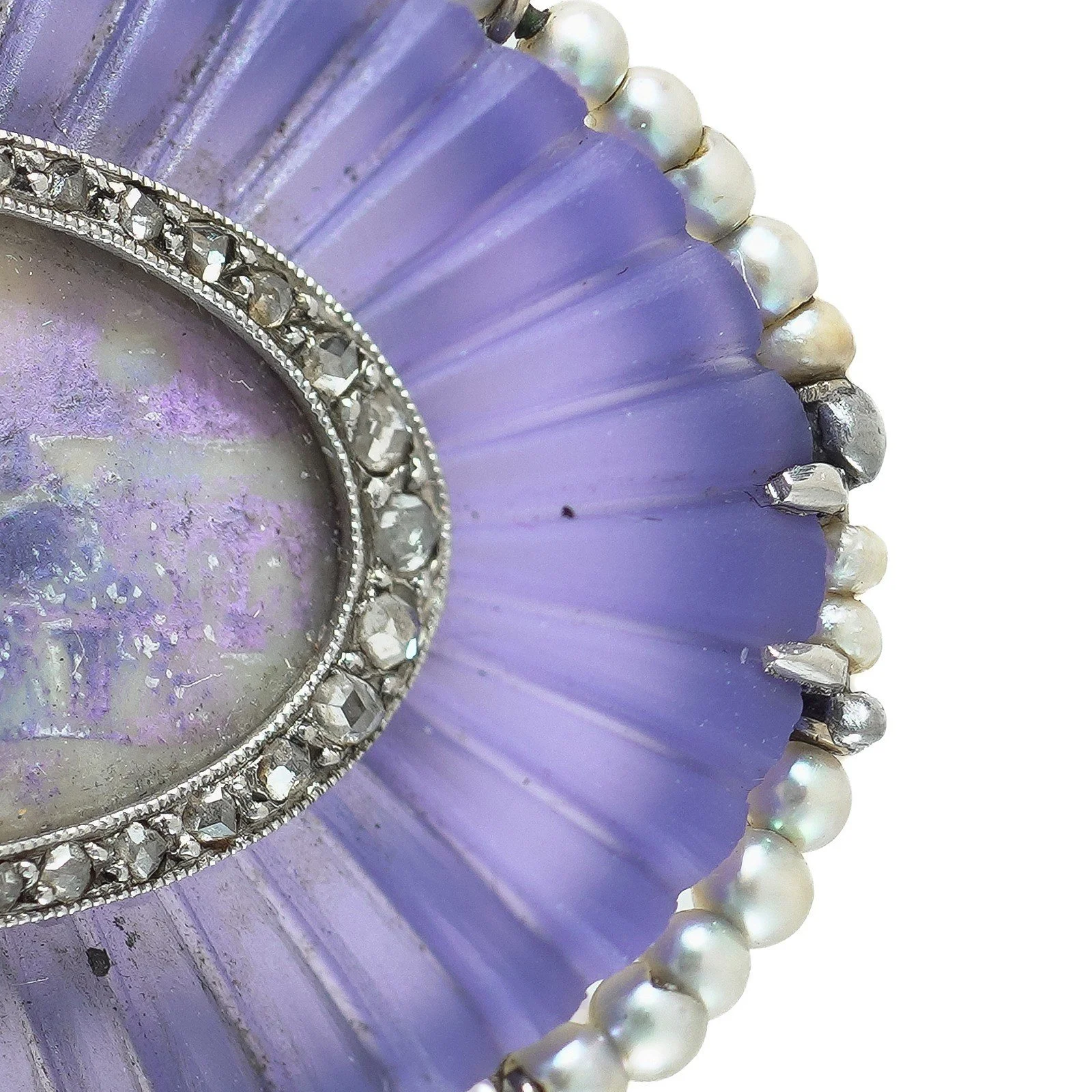
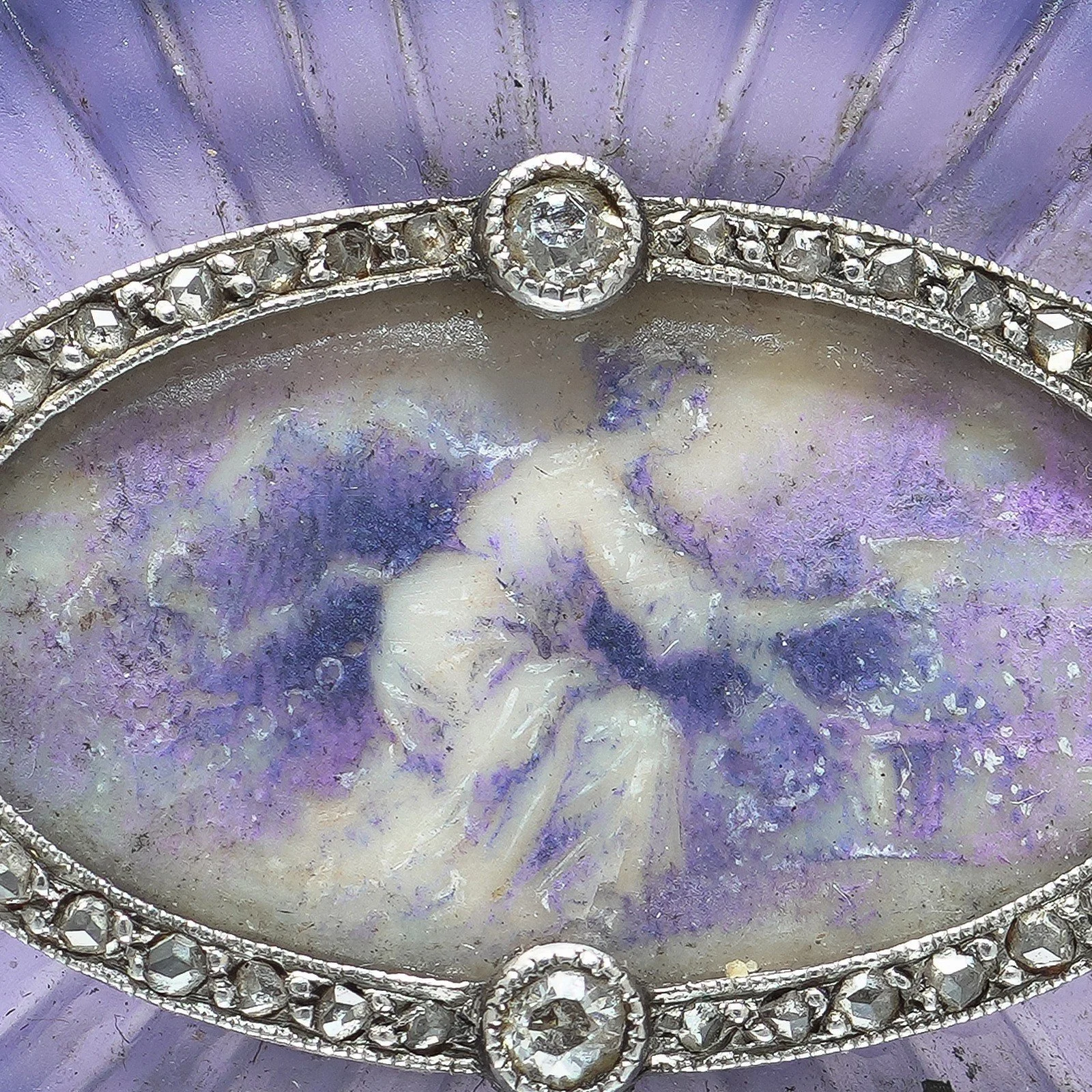
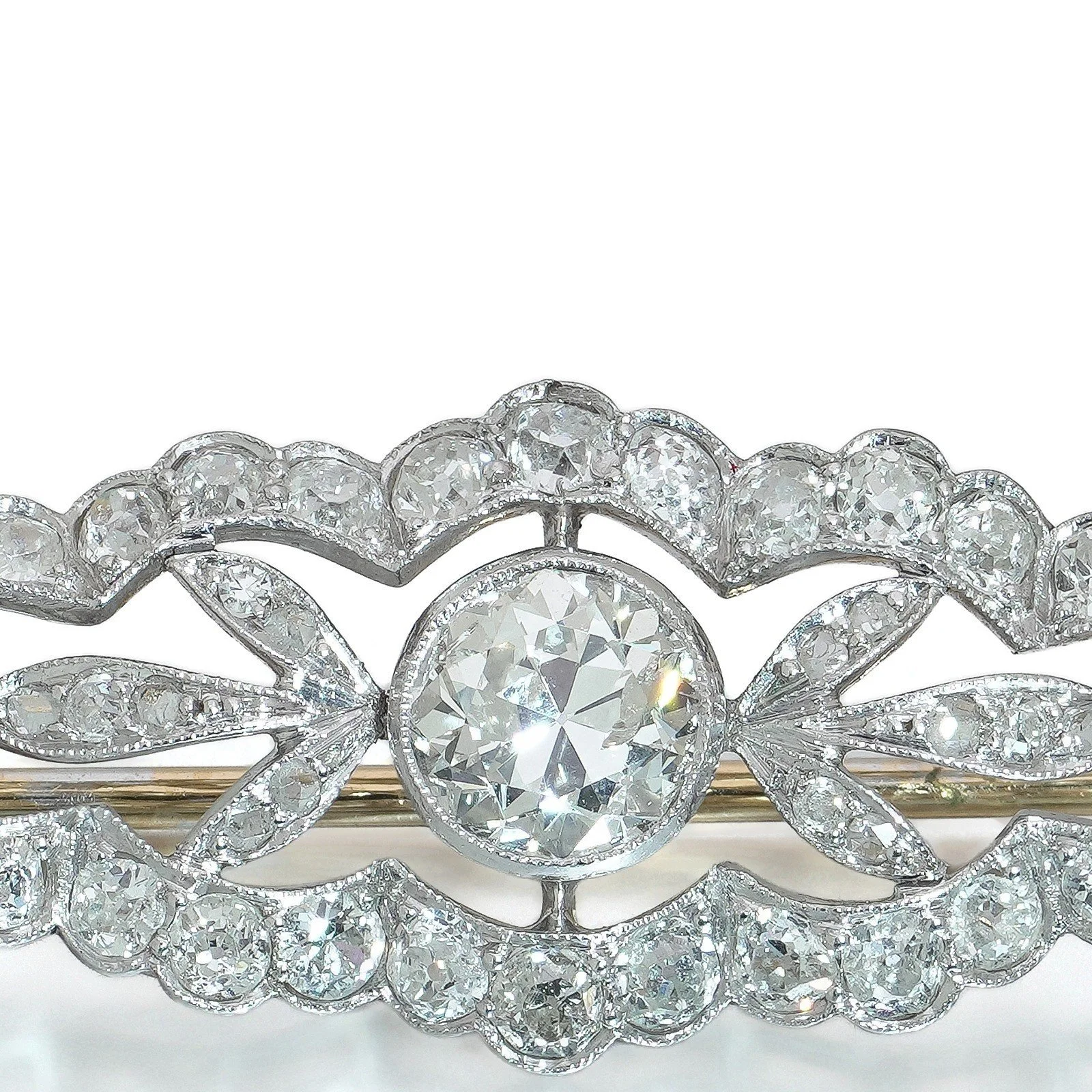
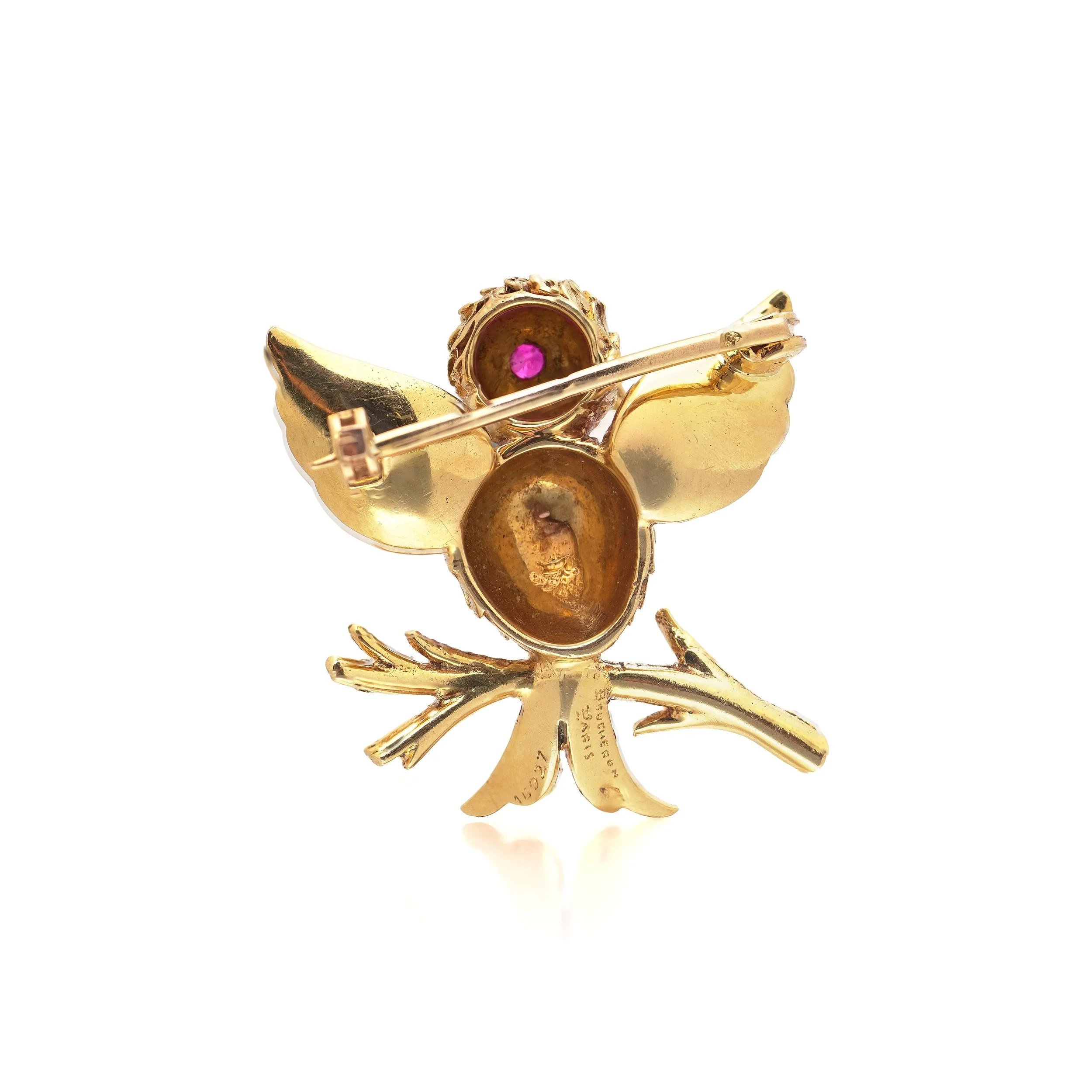
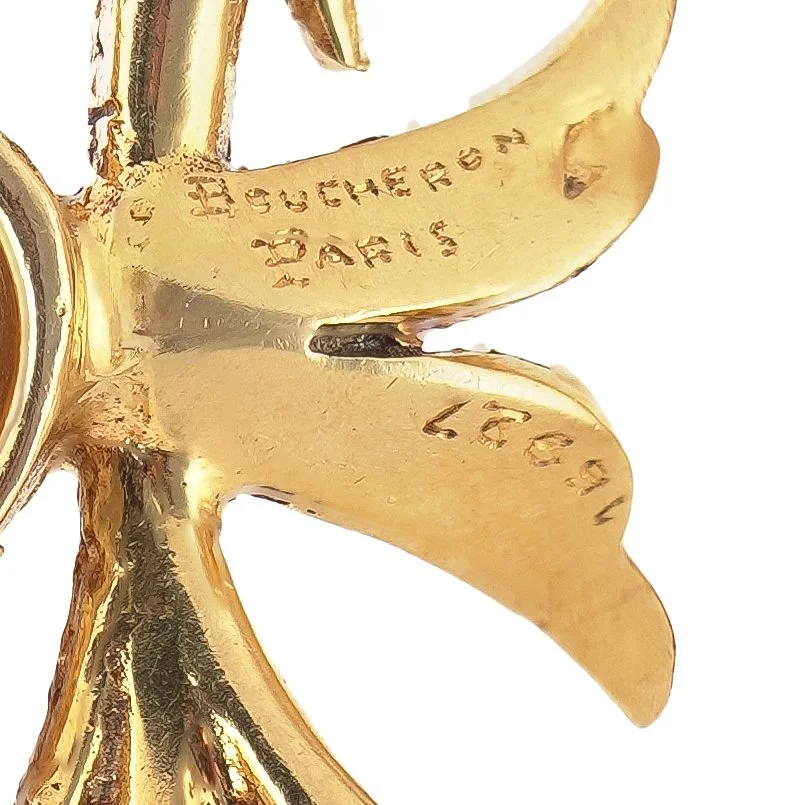
A refined late 19th-century rectangular brooch centred by a finely painted miniature depicting two cherubic figures within a pastoral scene. Protected beneath a glazed panel, the miniature is surrounded by an ornate openwork frame set with old-cut diamonds.
The delicate subject matter and accomplished miniature painting are closely associated with the work of Fernand Paillet (1850 to 1918), the prominent French miniature painter known for society portraits and mythological scenes executed on ivory, porcelain and enamel. Paillet is also recognised for his collaborations with leading Parisian jewellers, including Frédéric Boucheron, whose workshops incorporated miniature paintings into elaborate brooches, pendants and watch cases during the late 19th and early 20th centuries.
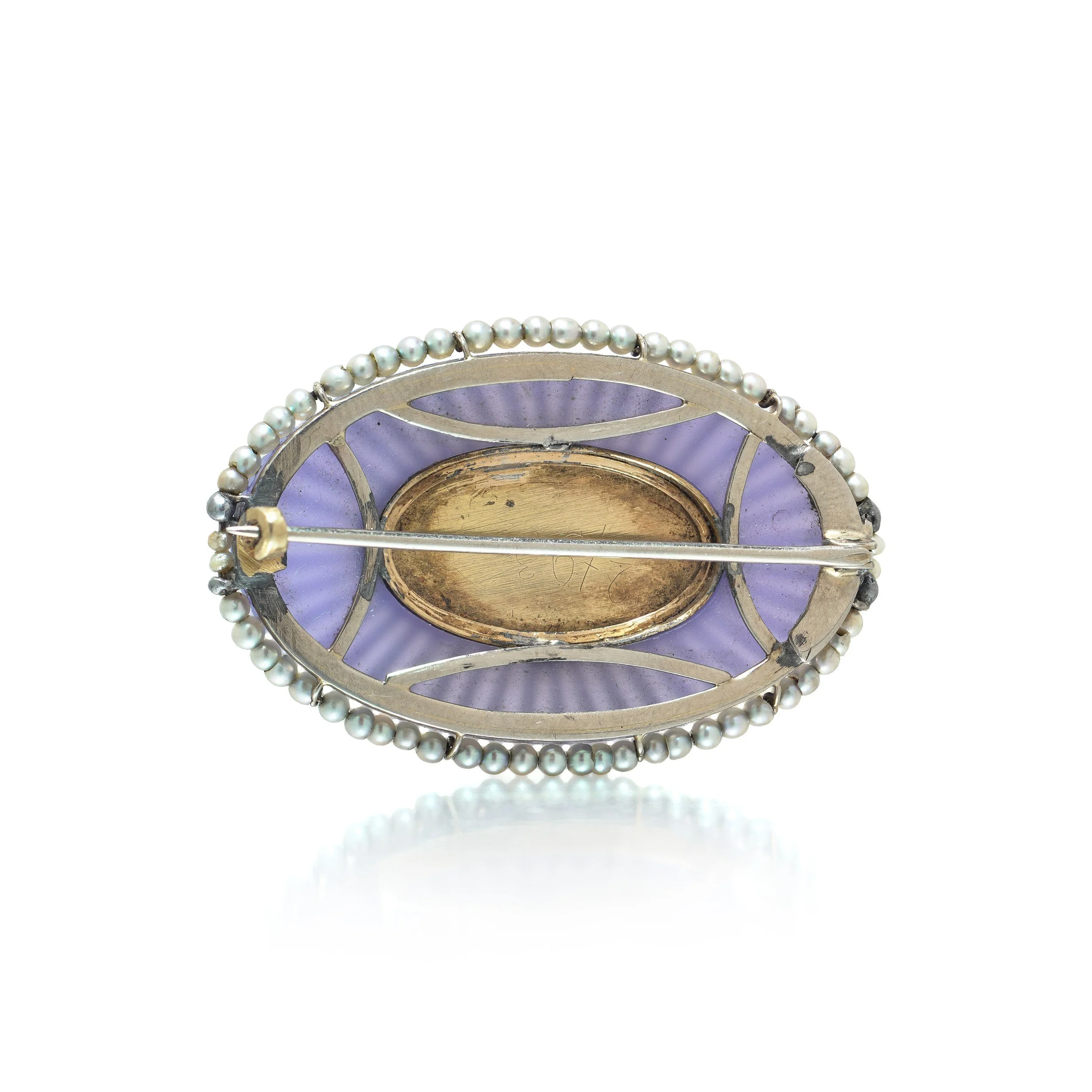
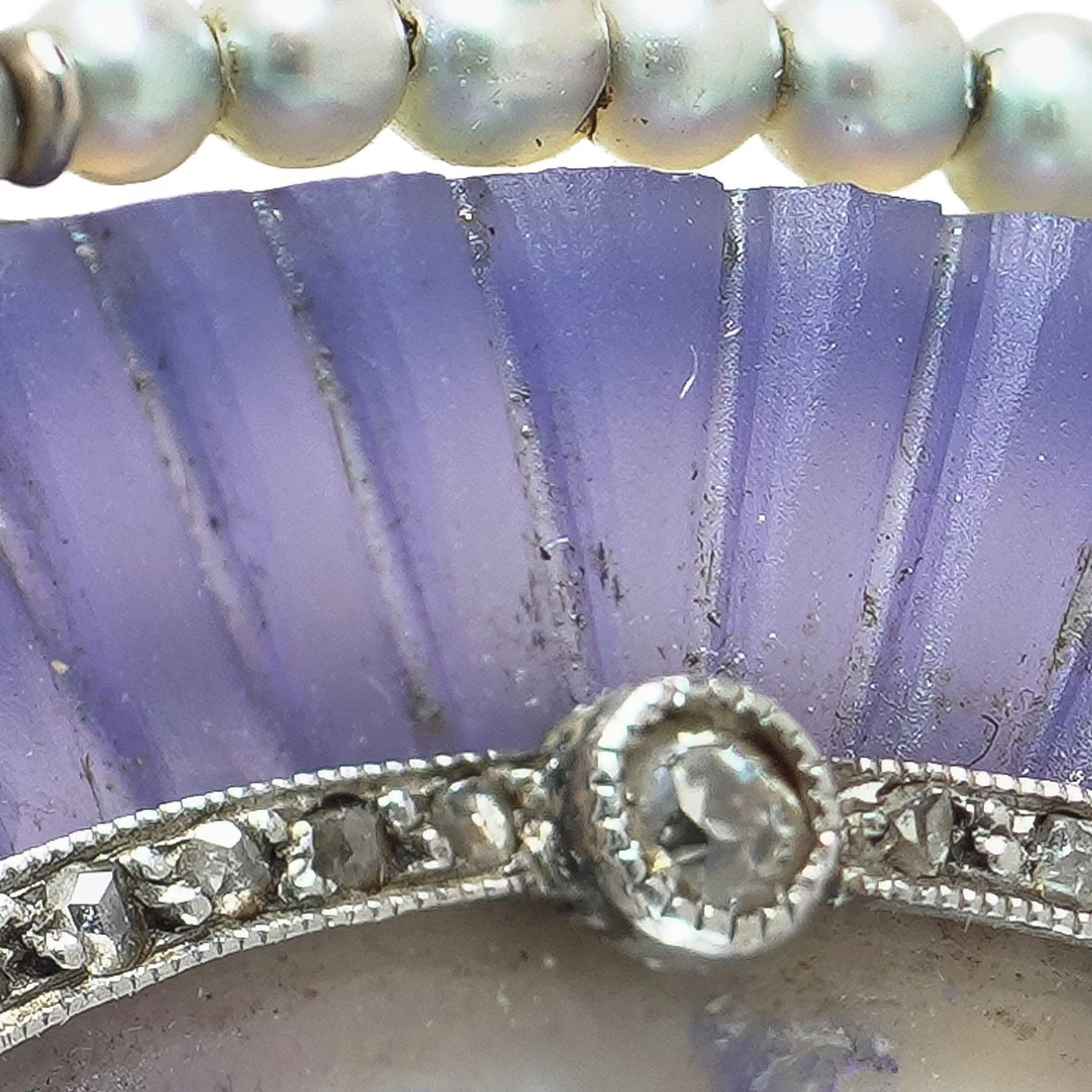
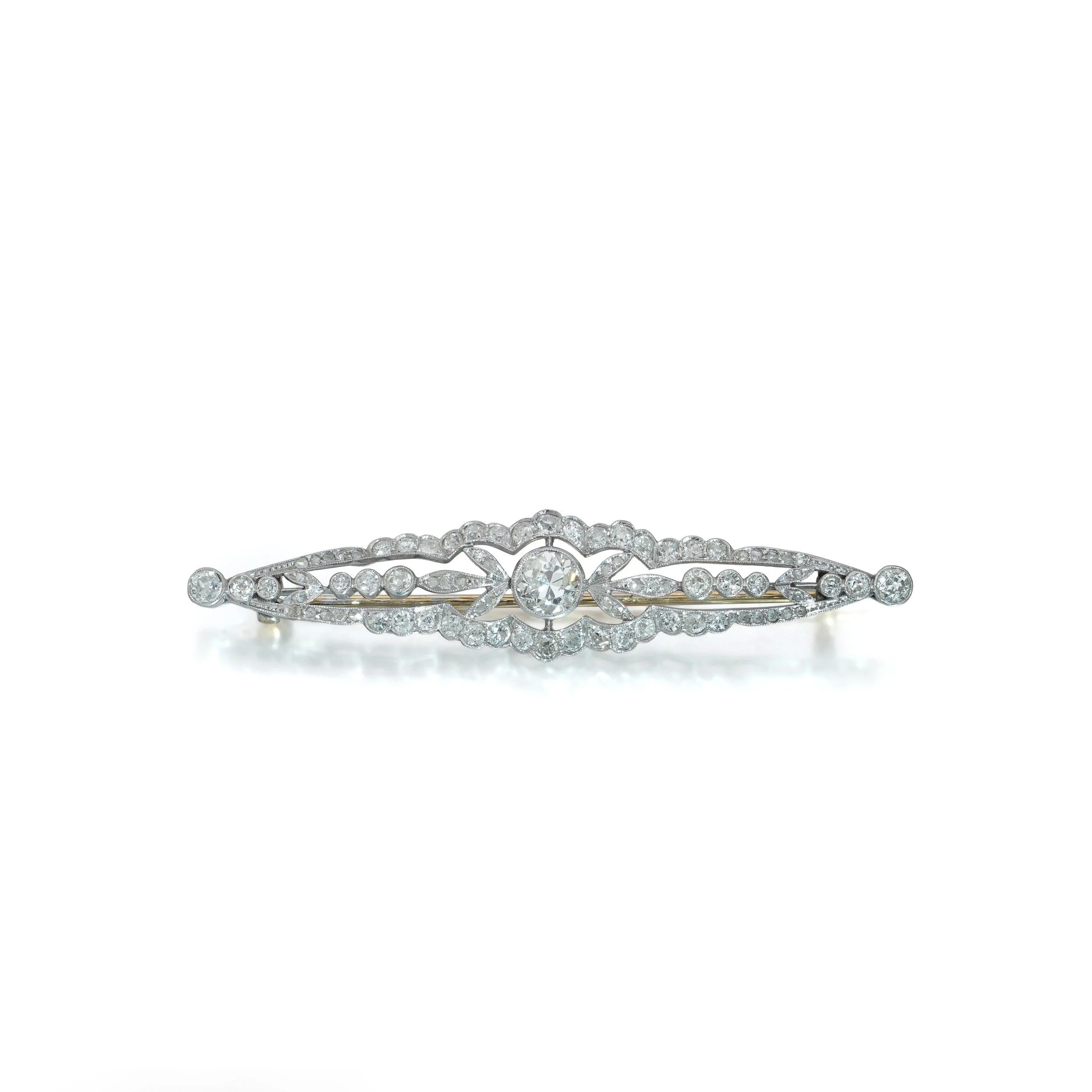
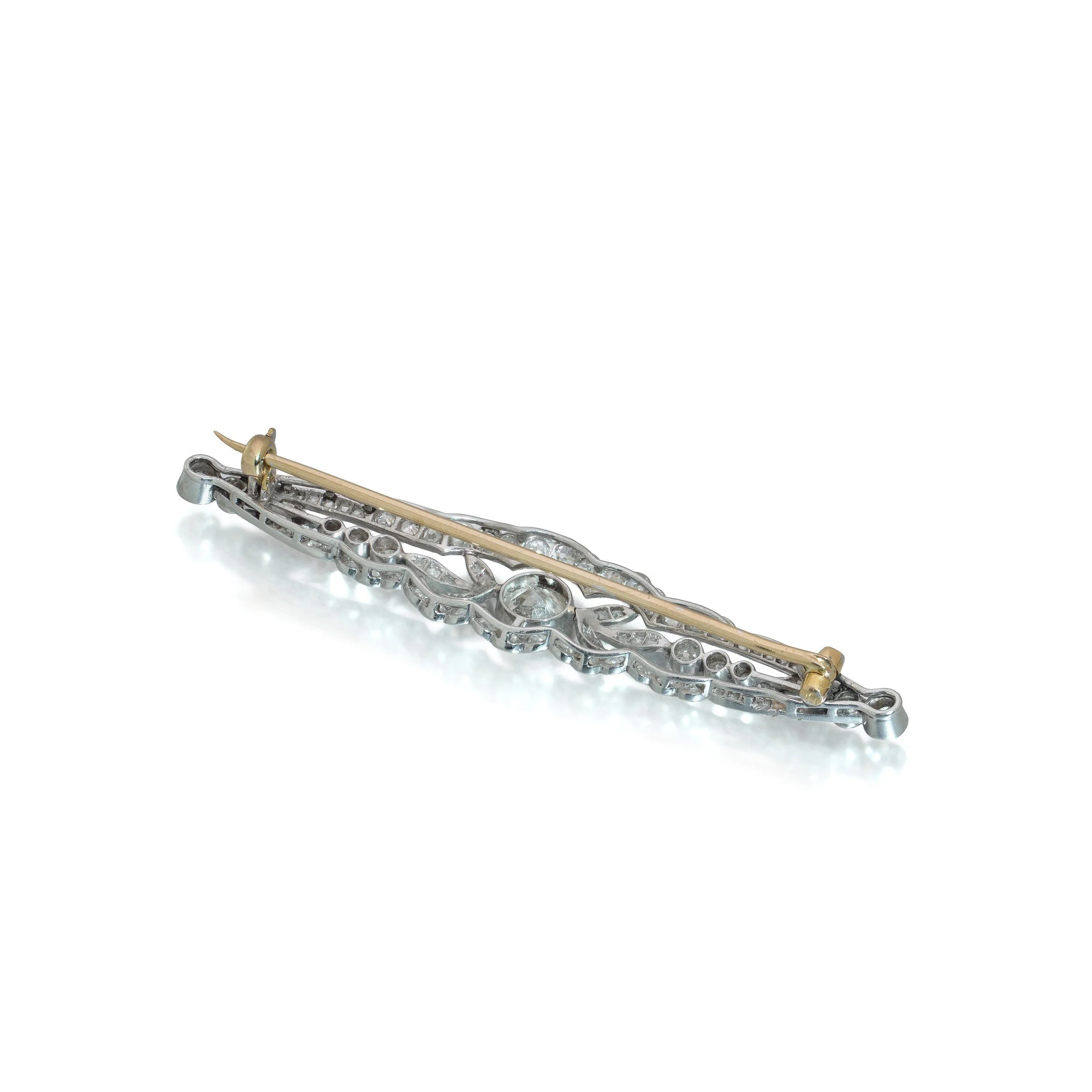
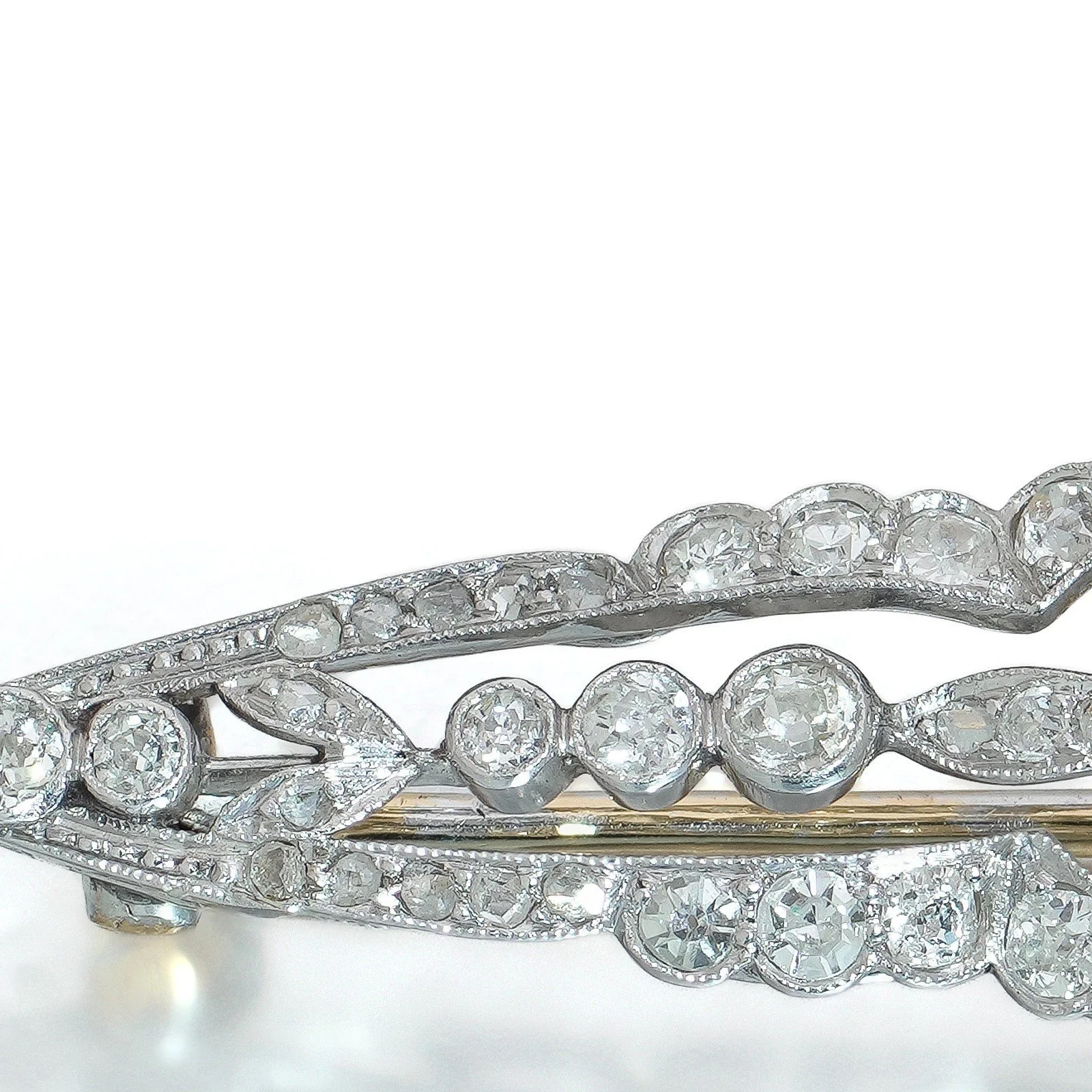
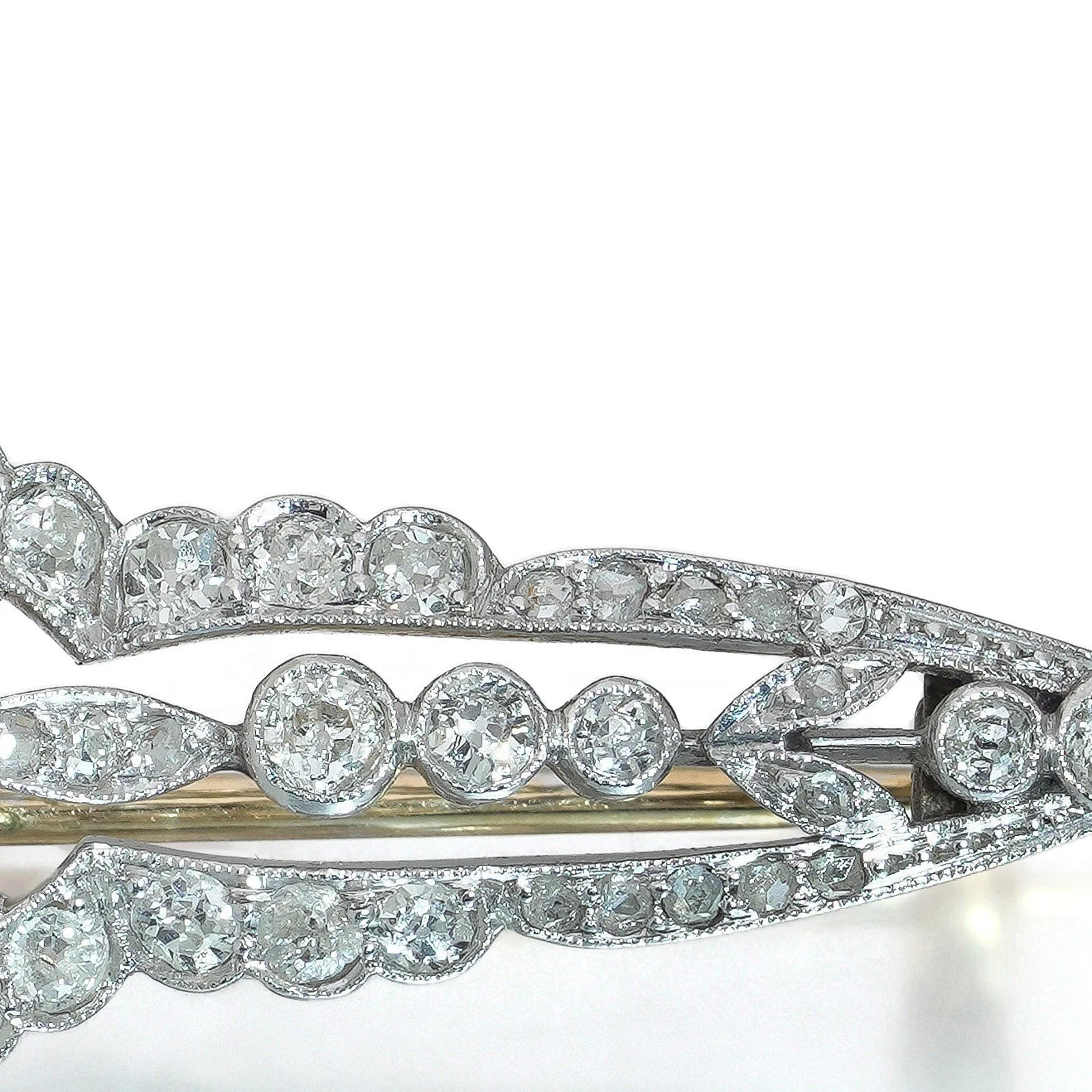
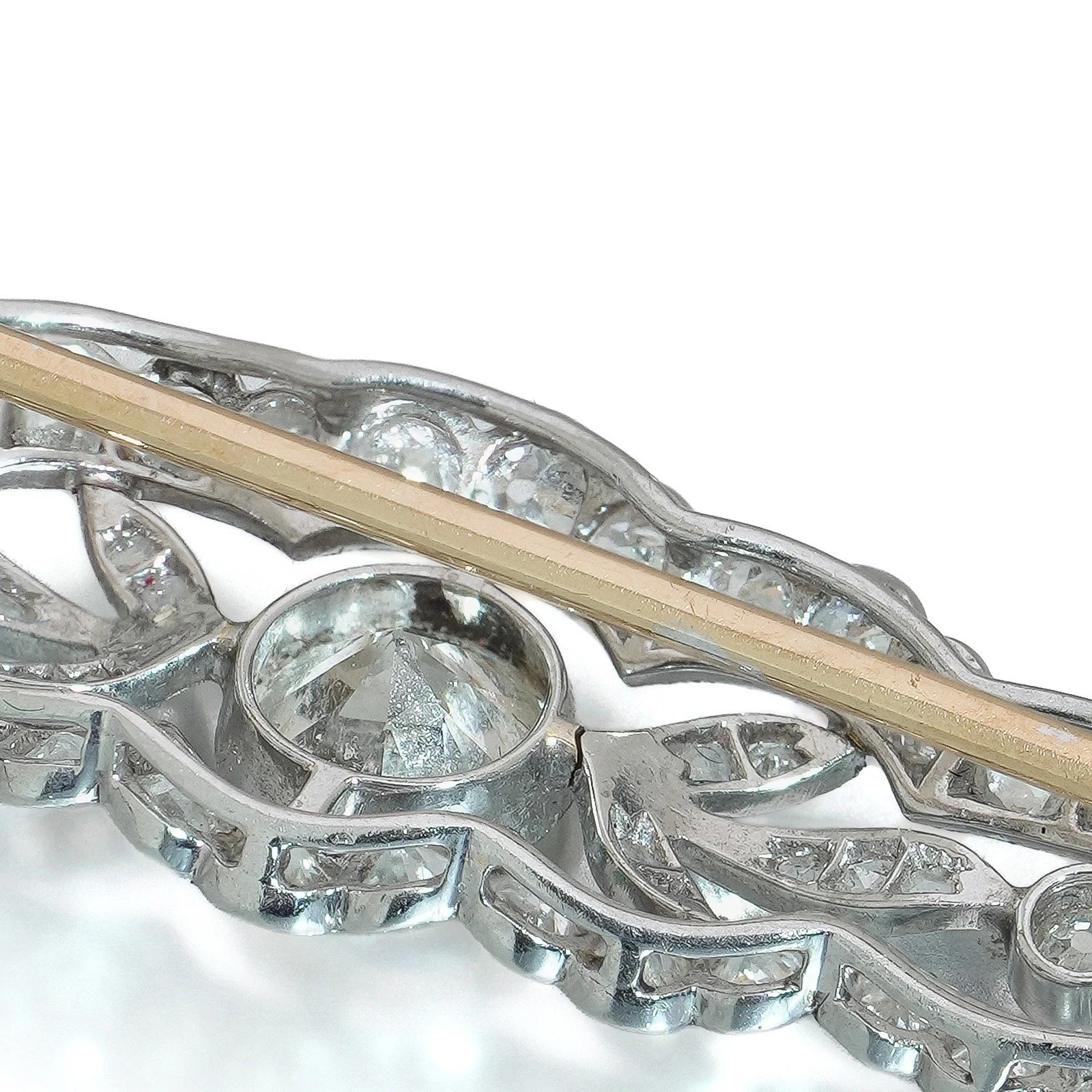
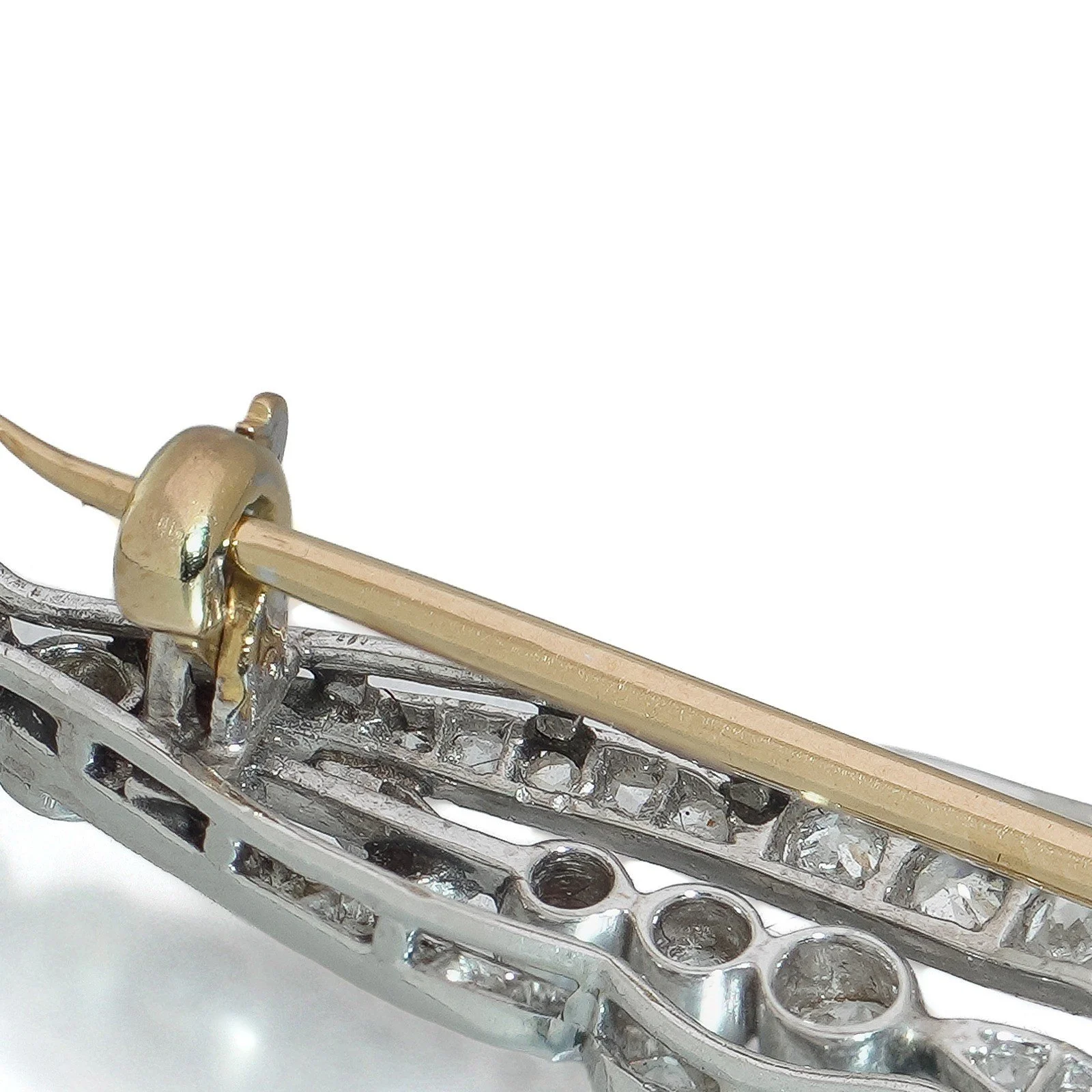
The diamond border is complemented by individually set outer diamonds and four larger corner stones, creating a light and decorative openwork appearance. The reverse is crafted in 18KT gold and fitted with a traditional brooch pin, while the diamond-set front appears to be silver-topped, consistent with fine 19th-century jewellery construction.
The miniature is not visibly signed, and the attribution to Fernand Paillet is based on its style, subject and period rather than documentary provenance.
Dimensions
Length: 4cm
Width: 2.5cm
Weight: 11.50 grams
Specifications
Metal: 18KT gold with silver-topped diamond setting
Type: Brooch
Period: Late Victorian, late 19th century
Centre: Hand-painted miniature beneath glass depicting two cherubic figures
Artist Attribution: Attributed to Fernand Paillet, based on style and period
Fitting: Traditional brooch pin
Stones
Diamonds: 58 old-cut diamonds
Approximate Total Diamond Weight: 3.30ct
Four corner diamonds: Approximately 0.15ct each
Remaining 54 diamonds: Approximately 0.05ct each
Diamond Colour: Approximately G to H
Diamond Clarity: Approximately SI
Condition Report
Good antique condition overall, with light wear consistent with age and use.
A refined late 19th-century rectangular brooch centred by a finely painted miniature depicting two cherubic figures within a pastoral scene. Protected beneath a glazed panel, the miniature is surrounded by an ornate openwork frame set with old-cut diamonds.
The delicate subject matter and accomplished miniature painting are closely associated with the work of Fernand Paillet (1850 to 1918), the prominent French miniature painter known for society portraits and mythological scenes executed on ivory, porcelain and enamel. Paillet is also recognised for his collaborations with leading Parisian jewellers, including Frédéric Boucheron, whose workshops incorporated miniature paintings into elaborate brooches, pendants and watch cases during the late 19th and early 20th centuries.
The diamond border is complemented by individually set outer diamonds and four larger corner stones, creating a light and decorative openwork appearance. The reverse is crafted in 18KT gold and fitted with a traditional brooch pin, while the diamond-set front appears to be silver-topped, consistent with fine 19th-century jewellery construction.
The miniature is not visibly signed, and the attribution to Fernand Paillet is based on its style, subject and period rather than documentary provenance.
Dimensions
Length: 4cm
Width: 2.5cm
Weight: 11.50 grams
Specifications
Metal: 18KT gold with silver-topped diamond setting
Type: Brooch
Period: Late Victorian, late 19th century
Centre: Hand-painted miniature beneath glass depicting two cherubic figures
Artist Attribution: Attributed to Fernand Paillet, based on style and period
Fitting: Traditional brooch pin
Stones
Diamonds: 58 old-cut diamonds
Approximate Total Diamond Weight: 3.30ct
Four corner diamonds: Approximately 0.15ct each
Remaining 54 diamonds: Approximately 0.05ct each
Diamond Colour: Approximately G to H
Diamond Clarity: Approximately SI
Condition Report
Good antique condition overall, with light wear consistent with age and use.
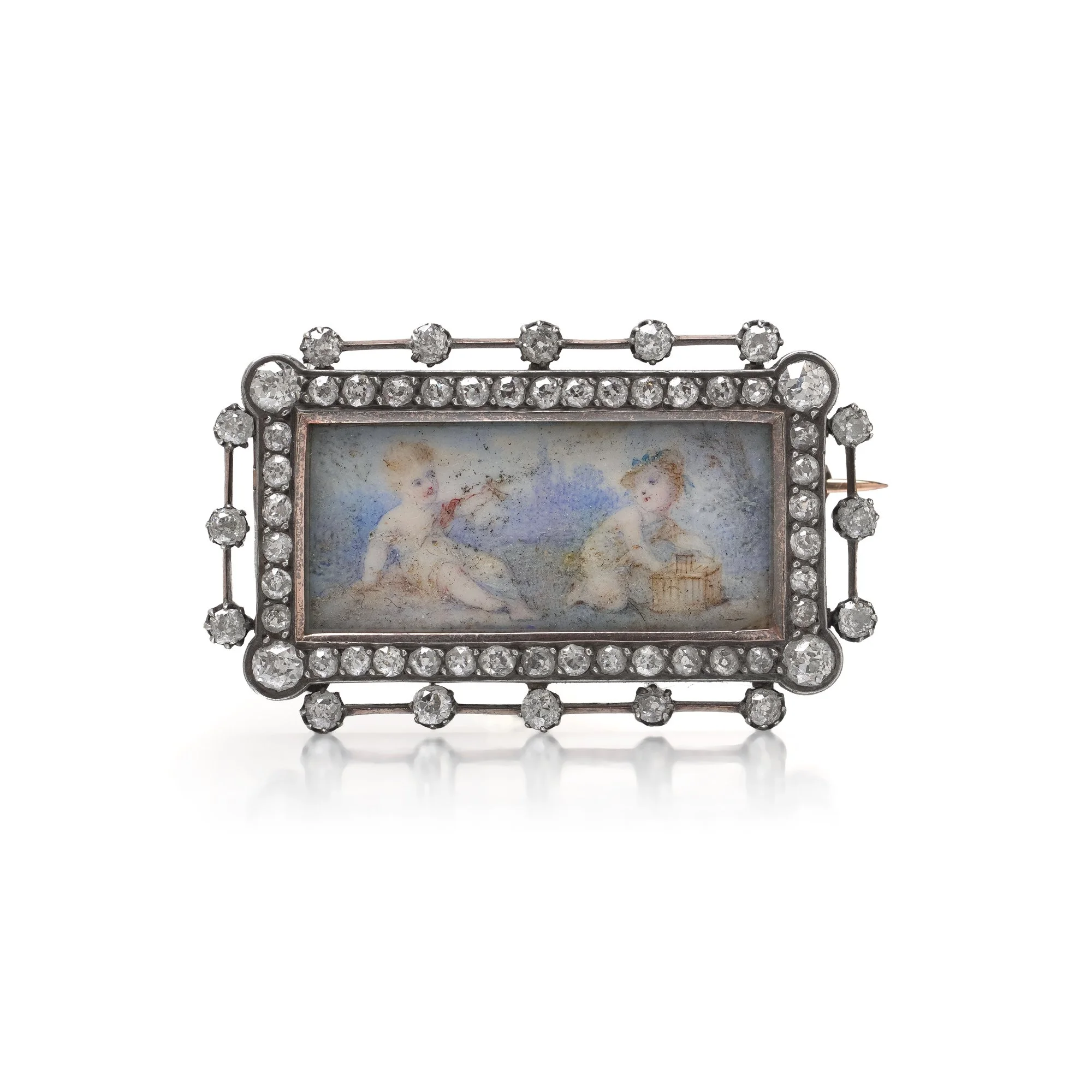 Image 1 of 8
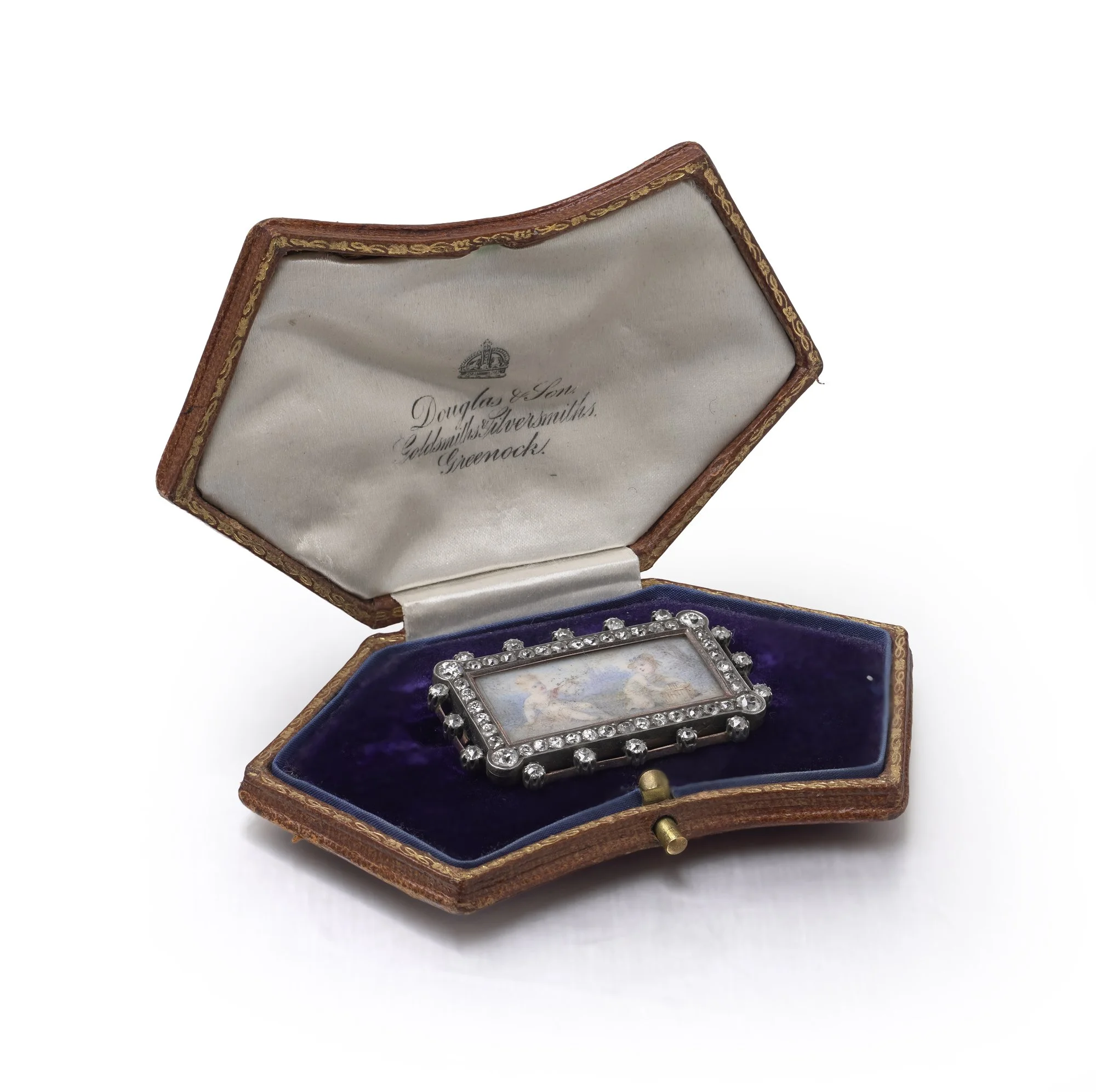 Image 2 of 8
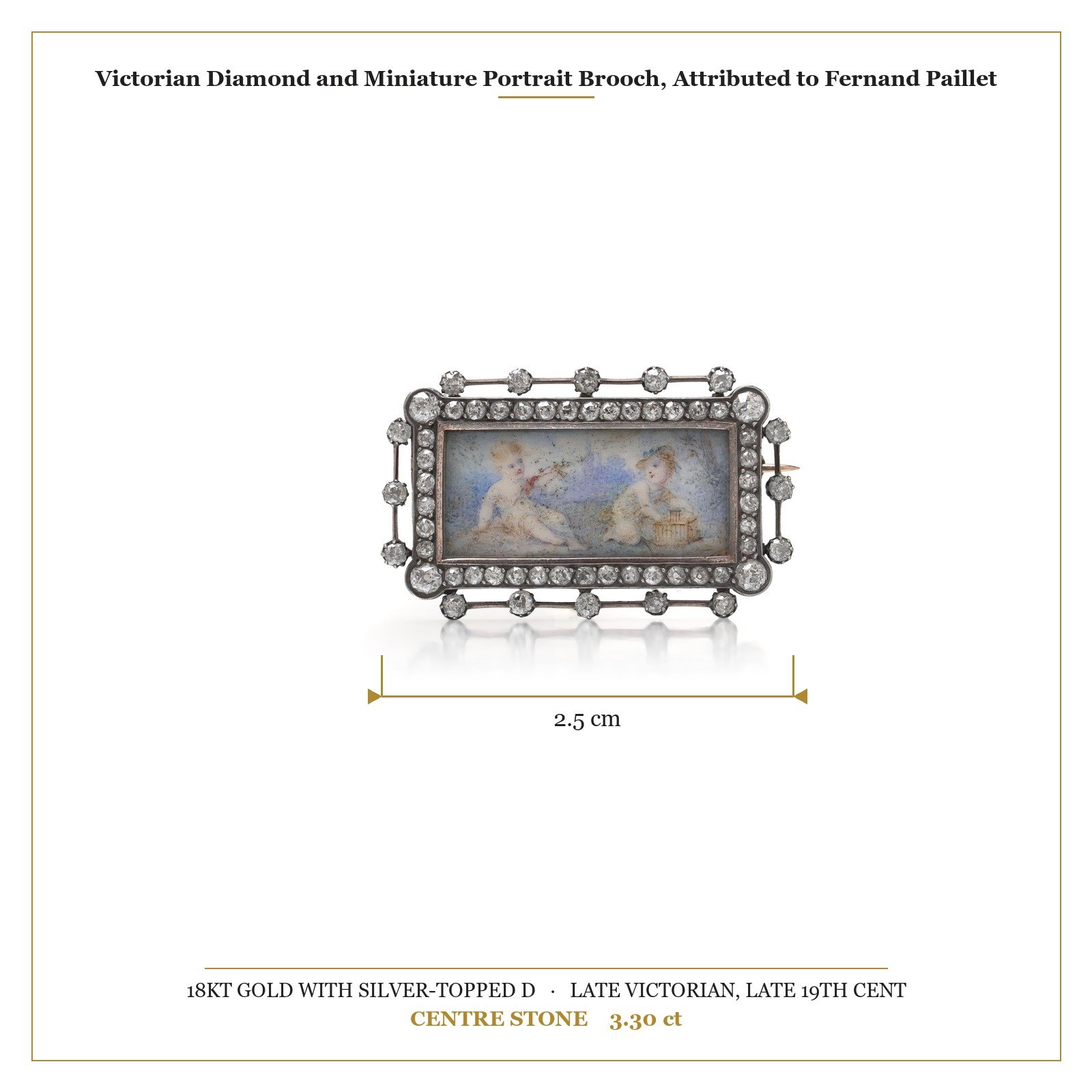 Image 3 of 8
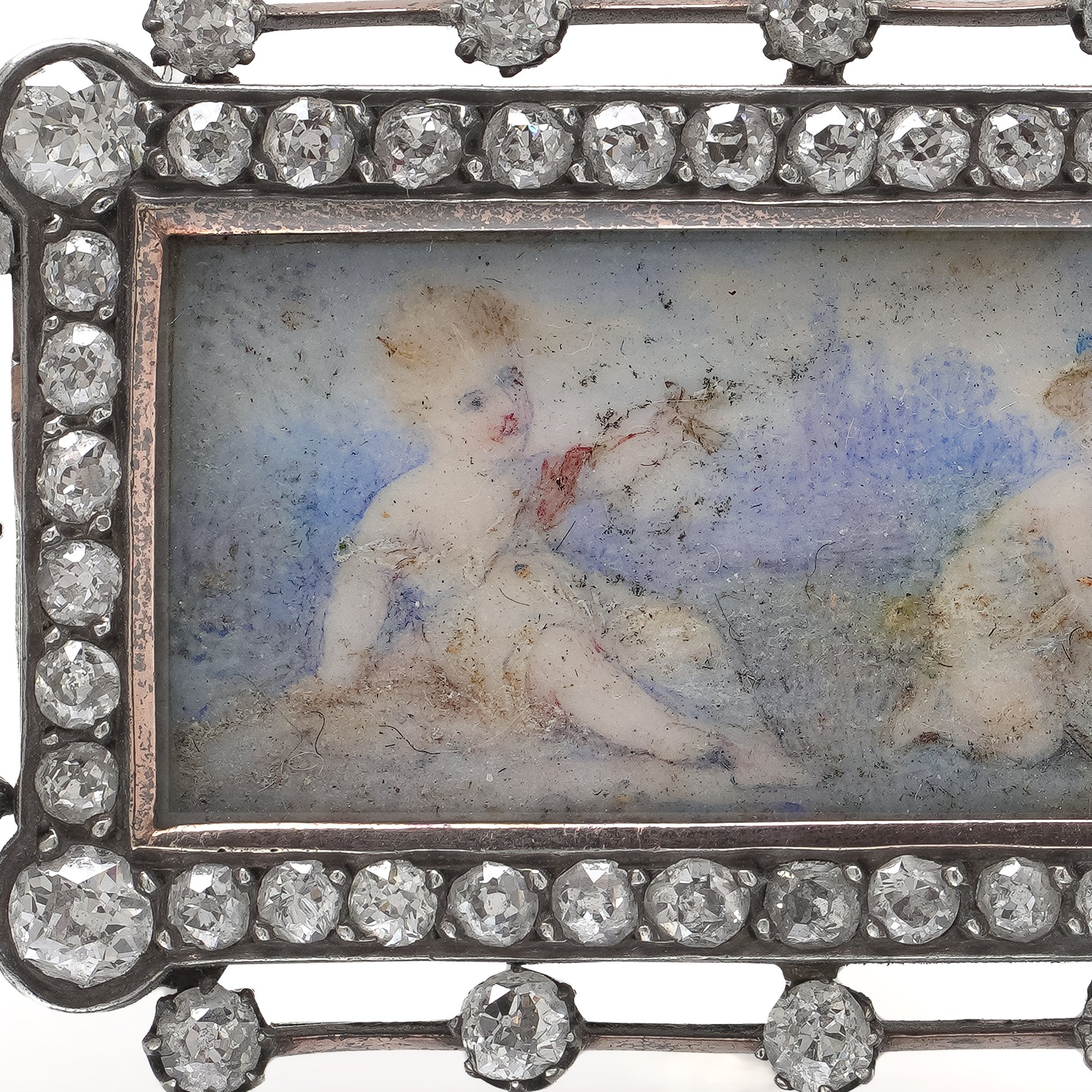 Image 4 of 8
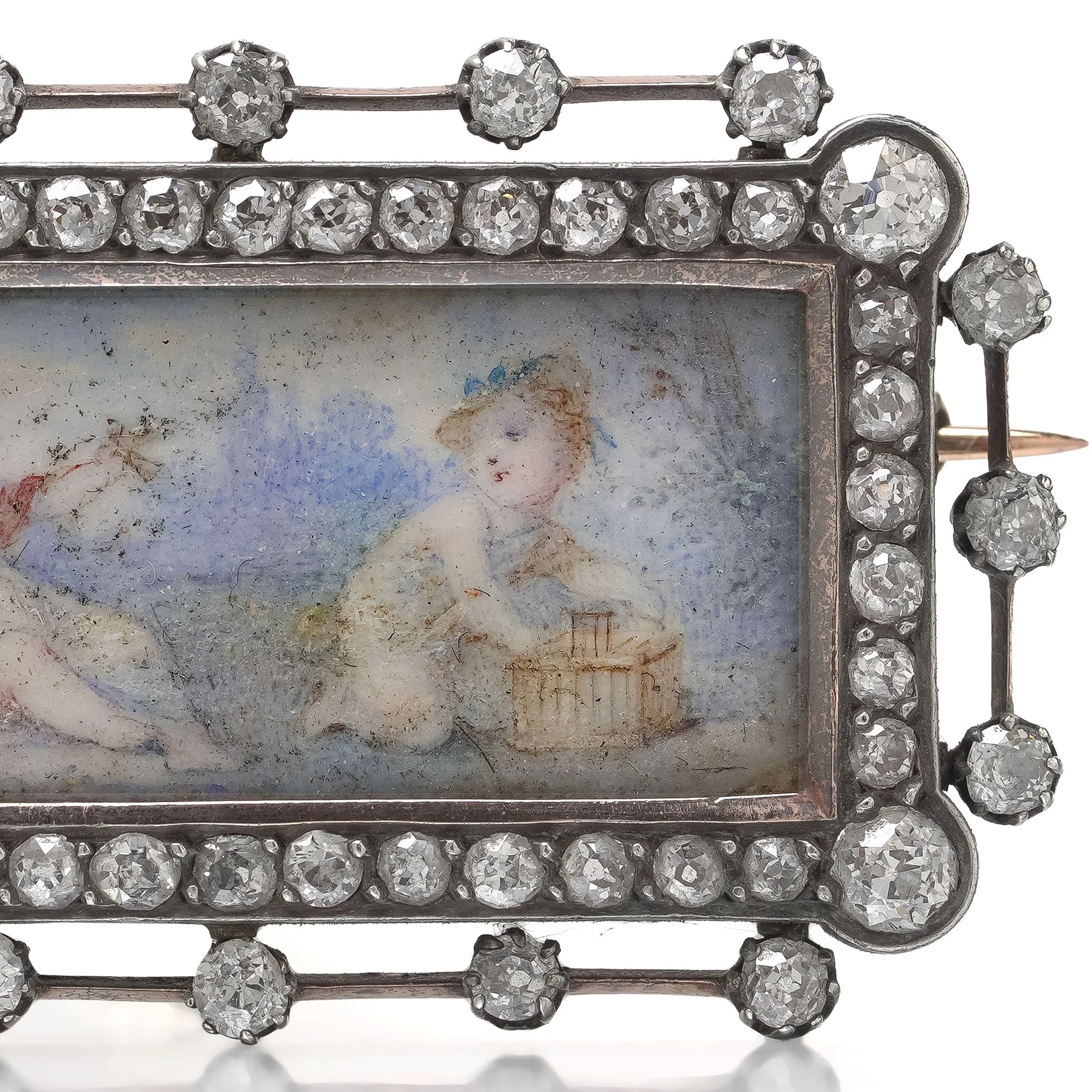 Image 5 of 8
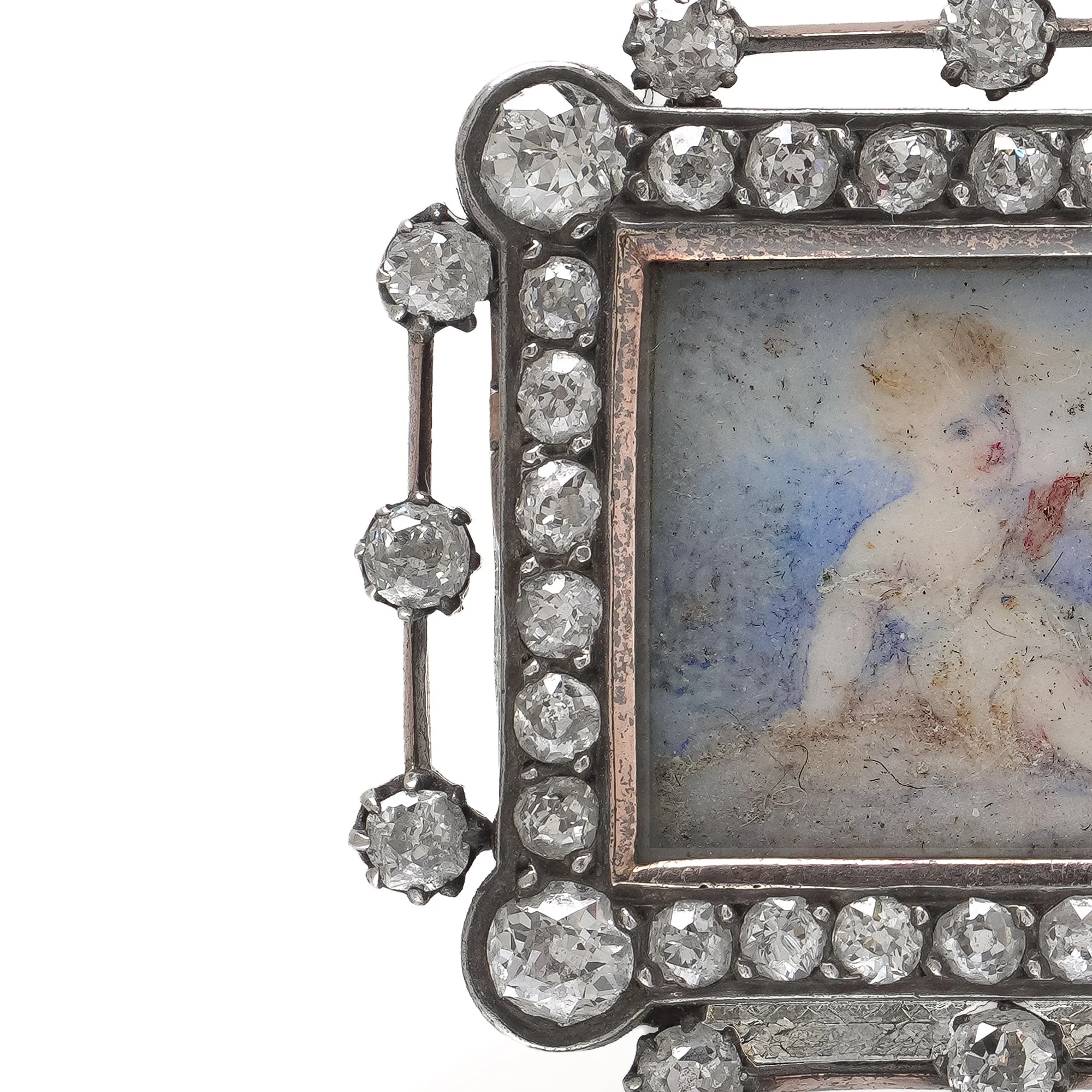 Image 6 of 8
 Image 7 of 8
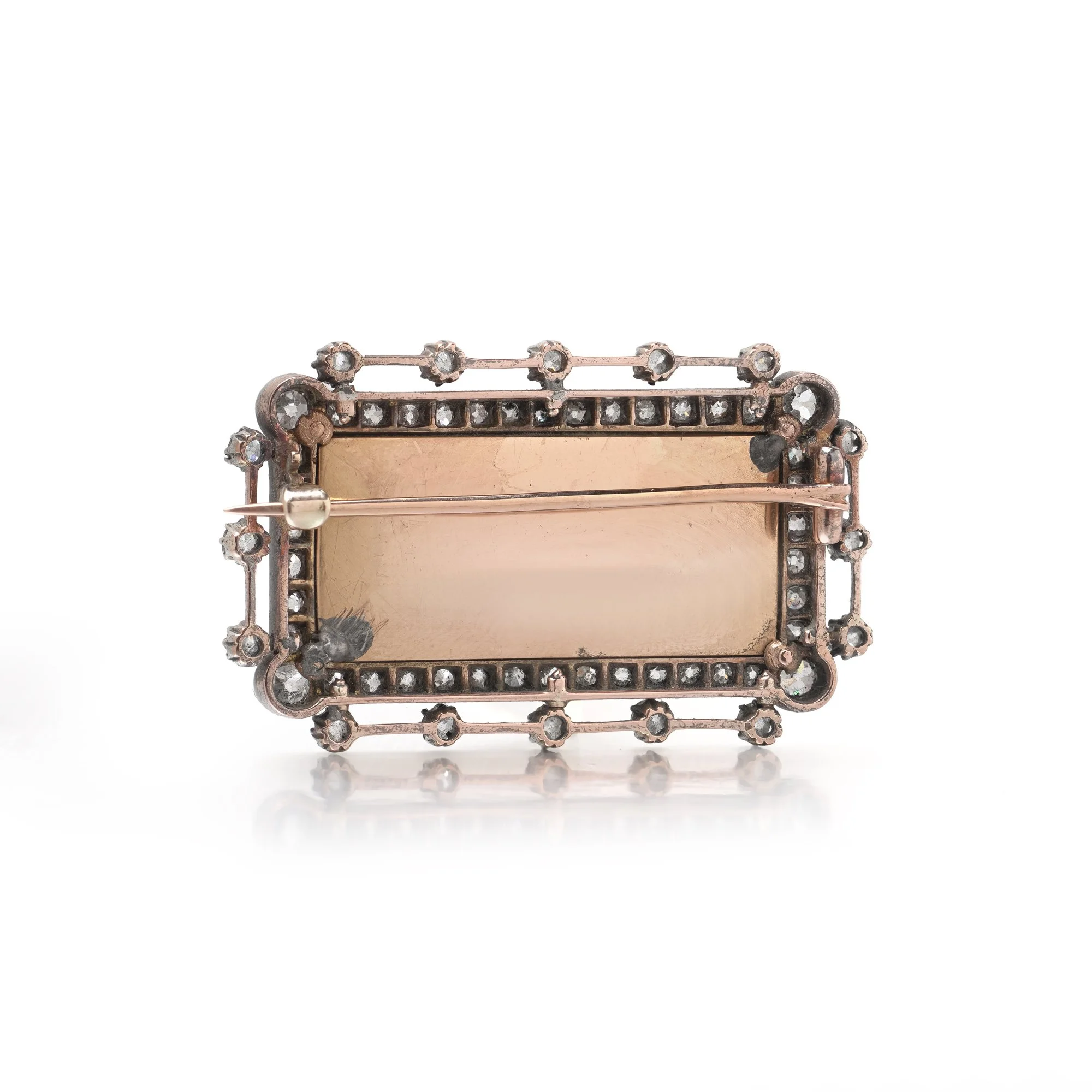 Image 8 of 8