Emerald Engagement Rings: A Buyer's Guide
Rich, green and steeped in history, the emerald is one of the most romantic engagement stones of all. This guide clears up the emerald-stone-vs-emerald-cut confusion and helps you choose well.
An emerald engagement ring says something different — green where the world expects white, history where it expects fashion. But emeralds also need to be bought with a little knowledge. Here is everything from the all-important difference between an emerald stone and an emerald cut, to origin, settings, pairing and care.
Emerald stone vs emerald cut: clearing up the confusion
This trips up almost everyone, because "emerald" means two different things in jewellery. The emerald stone is the green gem itself — a variety of beryl coloured by chromium and vanadium. The emerald cut is a rectangular, step-cut shape with cut-off corners, used for diamonds, sapphires and many other stones, not only emeralds. So you can have an emerald-cut diamond (a clear diamond in that shape), a round emerald (a green stone cut as a round), or — the classic — an emerald-cut emerald. When you search, be clear which you mean; the rings can look entirely different.
The emerald stone
Green beryl, Mohs hardness 7.5–8. Prized for its colour above all. Almost all emeralds have natural inclusions — part of their character.
The emerald cut
A step-cut rectangle with clipped corners. Elegant, architectural and especially flattering for emeralds, diamonds and sapphires alike.
The emerald as an engagement stone
Emerald is the birthstone of May and a traditional symbol of love, rebirth and loyalty — fitting for an engagement. At 7.5–8 on the Mohs scale it is hard enough for a ring worn regularly, though not as tough as a sapphire or diamond, so an emerald ring rewards a slightly more careful owner and a protective setting. Its inclusions — often called the jardin, French for garden — are expected and accepted; a flawless emerald is so rare it should raise questions, not delight.
Colombian vs Zambian emeralds
Origin matters more for emeralds than for almost any other stone. Colombian emeralds are the historic benchmark: a pure, slightly warm, intense green that commands the highest prices. Zambian emeralds tend to be slightly bluer-green and often cleaner, offering superb colour at relatively better value. Neither is "better" in the absolute — it comes down to the colour you love. Several of our antique and vintage rings feature fine Colombian stones, set the way they were generations ago.

What Drives an Emerald's Value
Four factors decide what an emerald is worth — colour leads by a distance:
- Colour — Saturation and tone are everything. A vivid, even green is the single biggest value driver.
- Clarity — Inclusions are normal; what matters is whether they affect beauty and durability.
- Origin — Colombian stones command a premium; fine Zambian emeralds offer value.
- Cut & carat — A good cut maximises colour; size raises price steeply once colour is fine.
Most emeralds are treated with oils or resin to improve clarity — normal and accepted, but we always disclose it.
Antique emerald rings and settings
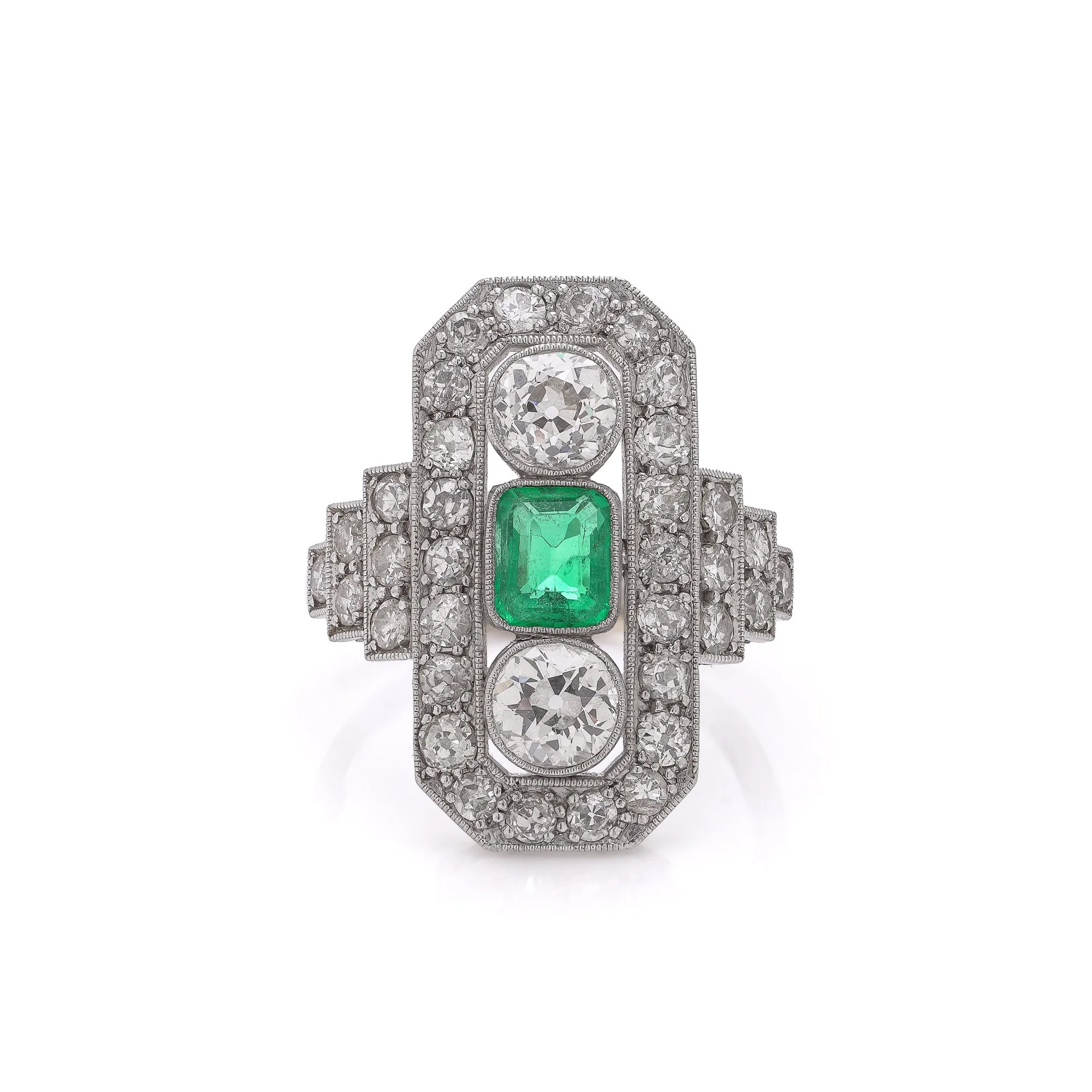
Antique and Art Deco emerald rings are some of the most beautiful jewels ever made. Deco designs in particular pair emeralds with crisp white diamonds and geometric platinum settings, while Victorian and Edwardian rings favour clusters and intricate gold. An antique setting also protects the stone — bezels and tight clusters guard an emerald's edges better than an exposed modern claw. Explore the broader Art Deco and antique ring collections for context.
Pairing emeralds with diamonds
Diamonds are the emerald's natural partner: their white fire makes green look greener, and they add the sparkle emeralds lack. The classic combinations are an emerald centre with a diamond halo or diamond shoulders, or the timeless three-stone (emerald flanked by two diamonds). If you want to understand how different diamond cuts behave alongside a coloured stone, our guide to the artistry behind gemstone cuts is a useful companion.
Emerald engagement rings in stock
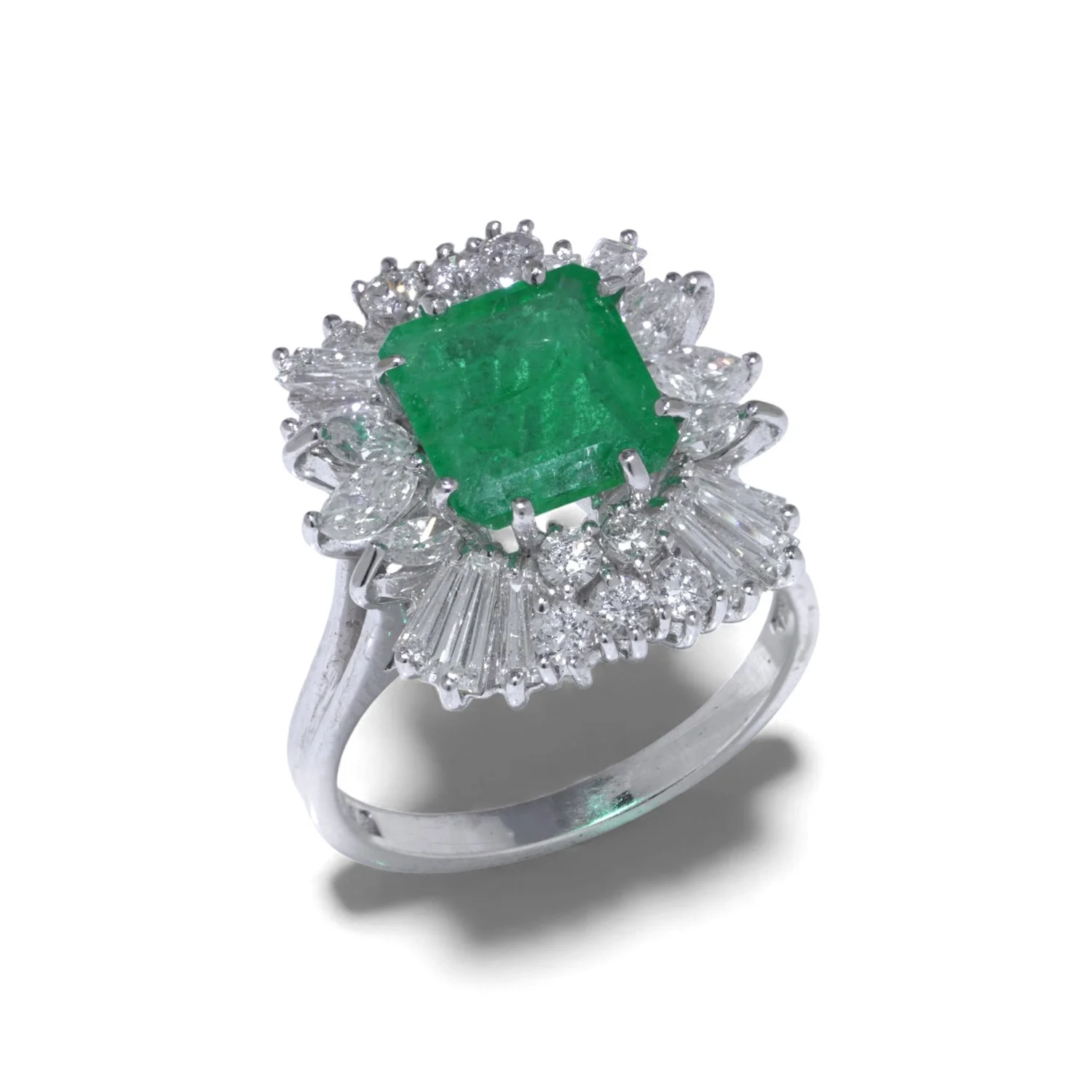
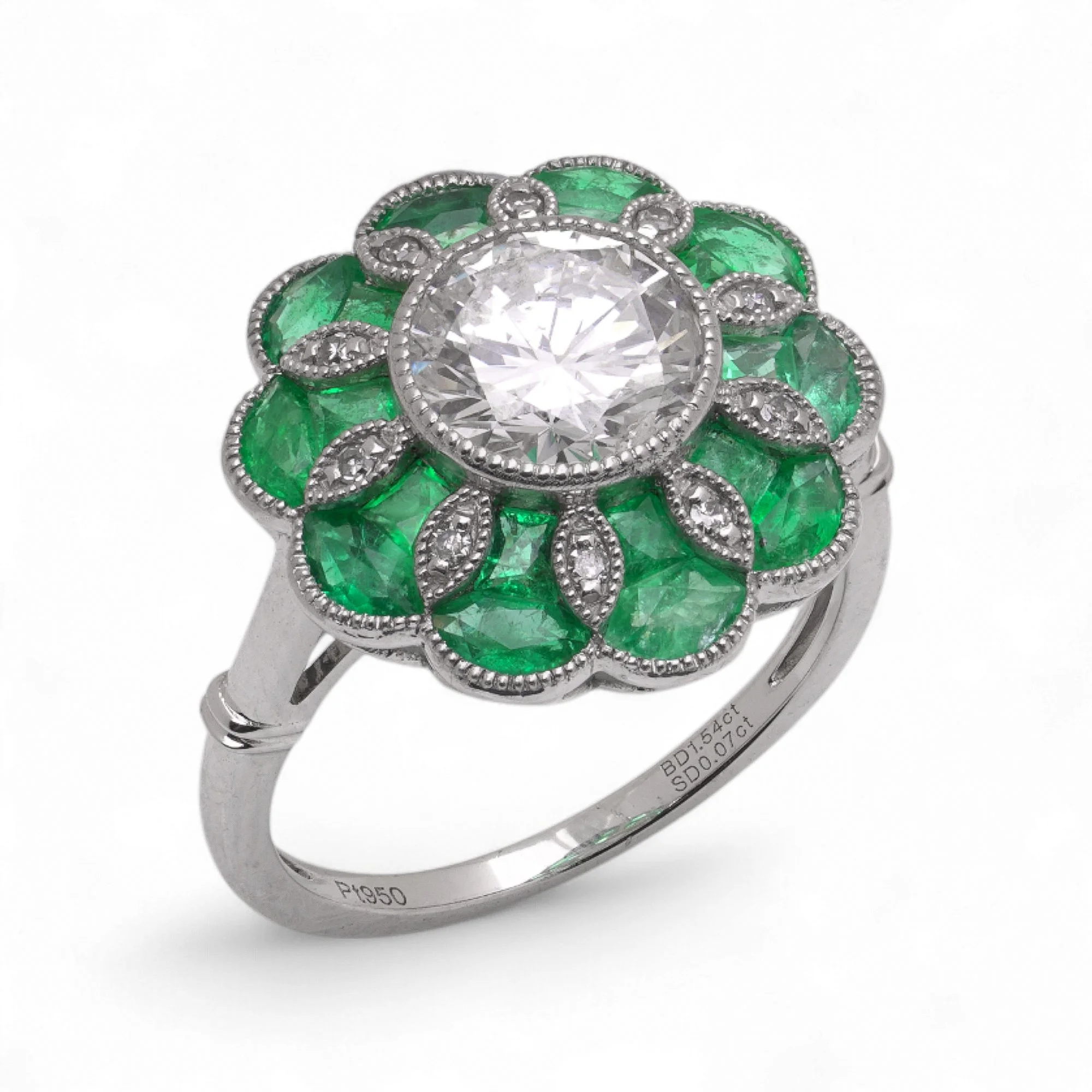
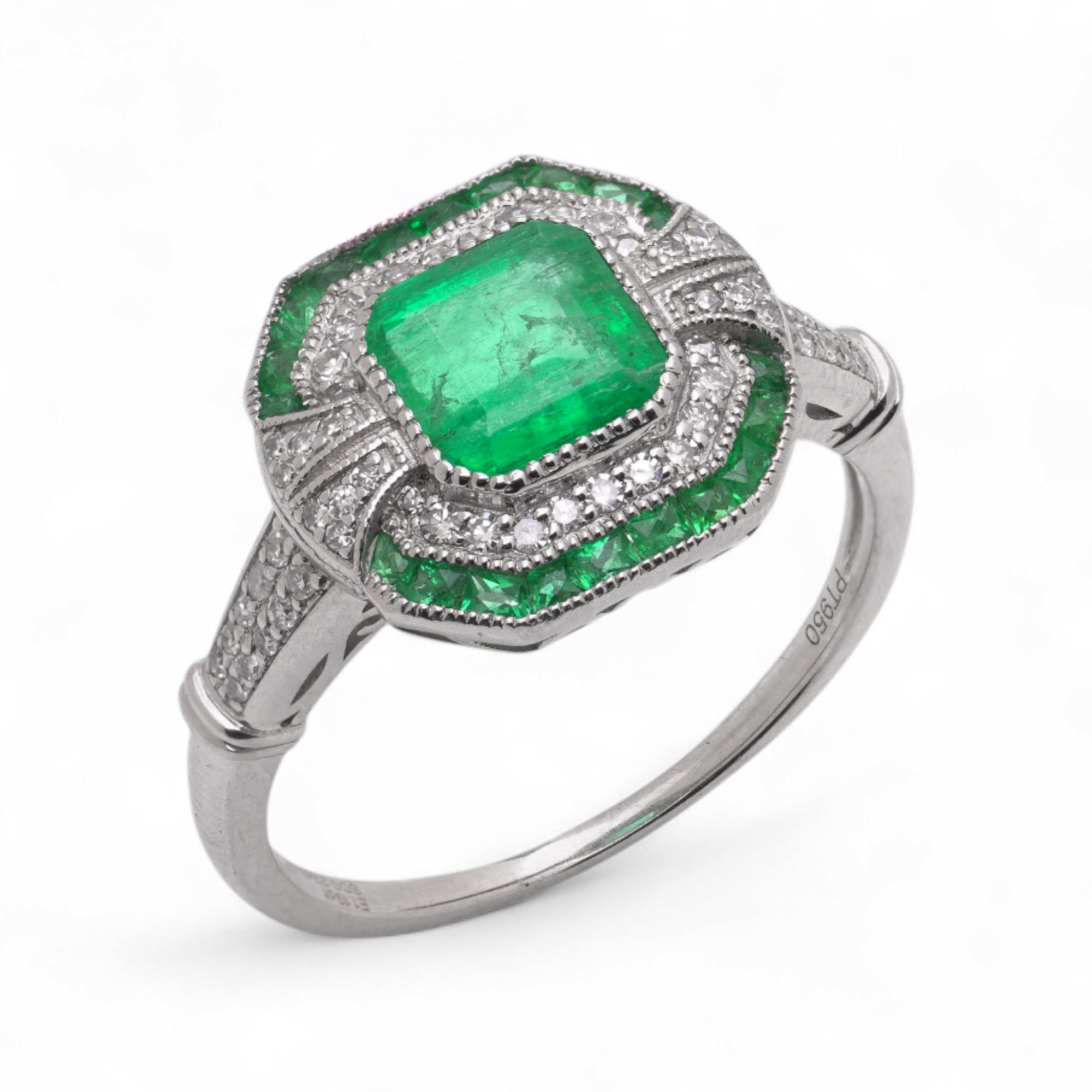
A live selection of our emerald and emerald-cluster rings, antique to vintage:



UK price guide
Emerald ring prices are driven overwhelmingly by the colour and size of the centre stone. Pretty vintage emerald-and-diamond clusters begin in the low four figures; fine Colombian stones in Art Deco platinum settings run well into five figures. Because so much rides on colour and origin, emeralds are a stone to buy with your eyes and an expert beside you — which is exactly how we sell them.
Caring for an emerald ring
- Never use ultrasonic or steam cleaners — they can damage the oil/resin treatment and worsen inclusions.
- Clean gently with lukewarm water, mild soap and a soft brush, then pat dry.
- Avoid knocks and chemicals — remove the ring for sport, cleaning and gardening.
- Have it checked periodically so the setting stays secure and the stone protected.
Explore Further
Frequently Asked Questions
Choosing an emerald engagement ring.
What is the difference between an emerald engagement ring and an emerald-cut ring?
An emerald ring is set with the green emerald gemstone. An emerald cut is a rectangular step-cut shape that can be used for any stone — including diamonds and sapphires. So an emerald-cut diamond ring contains a clear diamond, not a green emerald.
Are emeralds durable enough for an engagement ring?
Yes, with a little care. Emeralds are 7.5–8 on the Mohs scale — hard enough for regular wear but softer and more brittle than diamond or sapphire. A protective setting and gentle handling keep an emerald ring beautiful for life.
Are Colombian or Zambian emeralds better?
Neither is universally better. Colombian emeralds show a pure, slightly warm green and command the highest prices; Zambian emeralds are often slightly bluer and cleaner, offering excellent colour at better value. Choose the colour you love.
Do emeralds always have inclusions?
Almost always. Natural inclusions — the jardin — are expected in emeralds and are part of their character. A completely flawless emerald is extremely rare and should be questioned. Most emeralds are also oil- or resin-treated for clarity, which we always disclose.
How should I clean an emerald engagement ring?
Only with lukewarm water, mild soap and a soft brush. Never use ultrasonic or steam cleaners, which can damage the stone's treatment, and remove the ring for sport, cleaning and gardening.