
The Cartier Trinity Ring: History & Value Guide
Three interlocking bands of rose, white and yellow gold, designed in 1924 — the Trinity is one of Cartier's oldest and most enduring icons. What yours is worth, the models to know, and how to sell it in the UK.
What Is Your Cartier Trinity Worth?
Send a photo — including the engraving and any box or papers — for a free, no-obligation valuation. We reply within one working day.
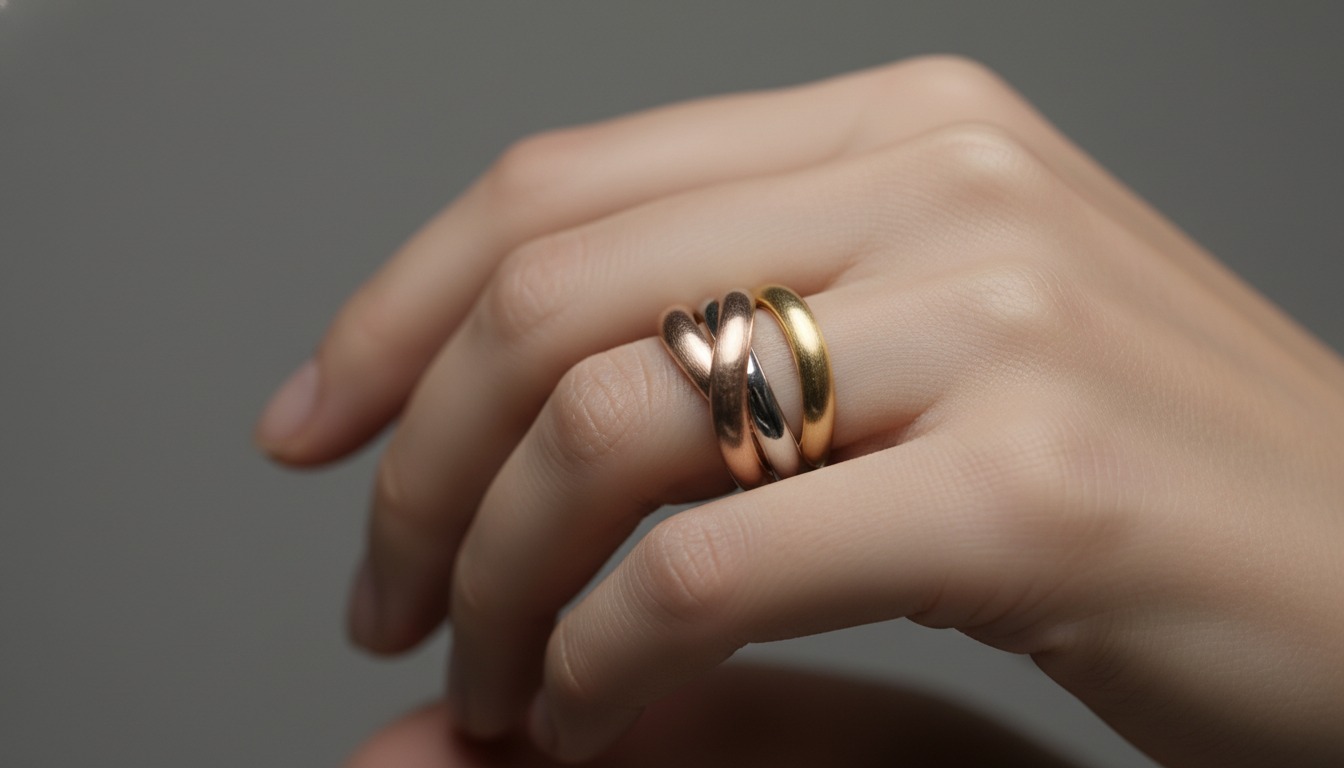
Created in 1924 — reputedly at the suggestion of the writer Jean Cocteau, who wore two on one finger — the Cartier Trinity is three interlocking rolling bands in three colours of gold, each said to symbolise something: rose for love, yellow for fidelity, white for friendship. A century on it remains one of Cartier's most loved and recognisable designs.
What is the Trinity?
The Trinity is built from three interlocking bands — rose, yellow and white 18ct gold — that roll freely yet stay linked. It appears as a ring (classic, small, large and cushion models), and across bracelets, necklaces and earrings. Variants add diamonds, ceramic or larger proportions. Genuine pieces are signed Cartier, marked 750, numbered and hallmarked on the bands.

What drives a Trinity's value
Model & size
Classic, small, large and cushion; wider/larger models and bracelets carry more gold and value.
Diamonds & variants
Diamond-set and special editions sit above plain three-gold pieces.
Box & papers
Original certificate and box add value and reassure the buyer.
Condition
Bands unworn and rolling freely; deep scratches or thinning from polishing reduce value.
What is a Cartier Trinity worth in the UK?
Resale depends on model, size, diamonds and papers — indicative bands:
Indicative only — your piece depends on model, size, diamonds, condition and papers. Send a photo for a free, accurate valuation.
Selling Your Trinity
What we look at when buying a Cartier Trinity:
- Authenticity — Cartier signature, 750, serial, hallmark.
- Model — Classic, small, large, cushion; ring or bracelet.
- Diamonds — Plain three-gold or diamond-set.
- Size — Ring size and band width.
- Completeness — Box and certificate.
We buy Cartier directly — fair prices, immediate payment, no auction fees.
How to sell a Cartier Trinity in the UK
Send clear photos of the piece, the engraving (Cartier signature, 750, serial) and any box or certificate. We confirm authenticity, identify the model and assess any diamonds, then give an honest figure with immediate payment — no auction commission or delay. More on our sell your Cartier jewellery page, the Cartier Love guide, and the Juste un Clou guide.
Cartier in stock
A selection of genuine Cartier currently at Mozeris:
Value Your Cartier Trinity
Send photographs of the piece, the engraving and any papers — we'll give you an honest, no-obligation valuation.
⚠️ Strictly by appointment only — no walk-ins at either showroom.
Frequently Asked Questions
Cartier Trinity — common questions.
Does the Cartier Trinity hold its value?
Yes — it's a century-old Cartier icon still in production, so genuine pieces resell reliably, especially larger models, diamond-set versions and full sets with box and papers.
How much is a Cartier Trinity ring worth?
It depends on the model (classic, small, large, cushion), size, whether it's diamond-set, condition and papers. Send a photo of the ring and engraving for a free, accurate valuation.
What do the three colours mean?
By tradition: rose gold for love, yellow gold for fidelity and white gold for friendship — three interlocking bands rolling as one.
How do I know mine is genuine?
Genuine Trinity pieces are signed Cartier, marked 750, numbered and hallmarked on the bands, which roll freely yet stay linked. Send photos and we'll confirm.
Do I need the box and papers?
No — we buy without them, but the certificate and box increase value and speed the sale.
Can you value it on WhatsApp?
Yes. Message +44 7494 214652 with photos of the piece and engraving and we'll reply, usually within a working day.
Send Us Your Photographs
Attach photos of the piece and the engraving. We'll respond within one working day.