Antique and Vintage Necklace Clasp Identification: A Journey through Time
Antique Necklace Clasp Types: How to Identify & Date Your Jewellery
10 classic clasp mechanisms explained — from Georgian hook-and-eye to Art Deco toggle. Know what you have before you sell or insure it.

Quick Answer
The most reliable way to identify an antique necklace clasp is to look at the mechanism type, construction quality, and any hallmarks stamped on the clasp itself. Box clasps (rectangular, push-release) and barrel clasps (cylindrical, screw-together) are the most common on Victorian and Edwardian pieces. Toggle clasps became fashionable in the Art Nouveau and Arts & Crafts periods. Hallmarks on gold and silver clasps carry a date letter that pinpoints manufacture to within one year — see our silver hallmarks guide and gold hallmarks guide for full decoding.
Barrel Clasp
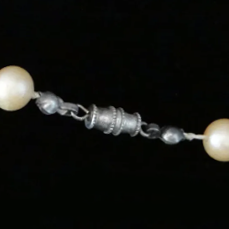
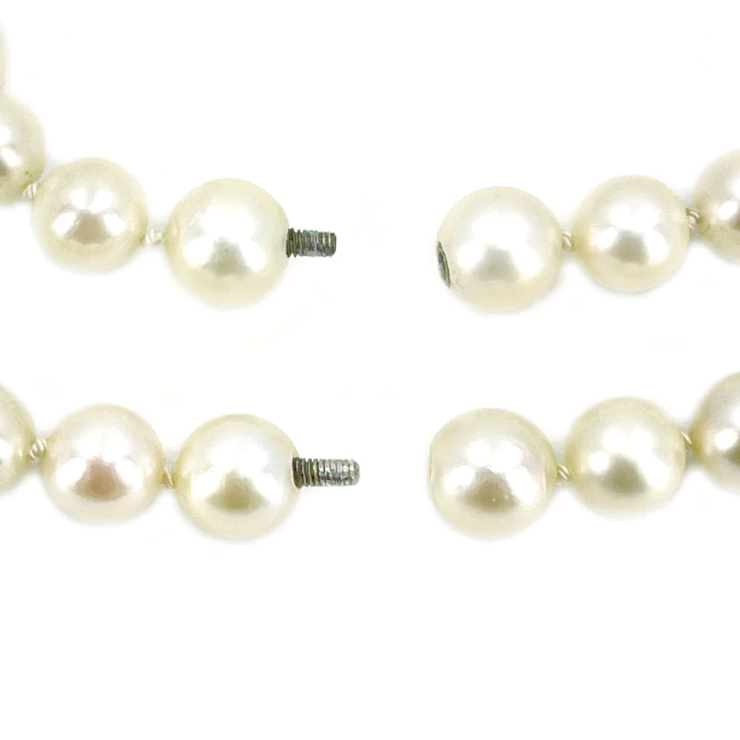
The barrel clasp is one of the most elegant solutions ever devised for fine jewellery closures, particularly favoured on pearl necklaces, coral strands and precious stone pieces. The mechanism is a machined cylinder that screws together at the midpoint — one end is threaded, the other carries the corresponding thread. When unscrewed, the two halves pull apart cleanly; when joined, they lock firm.
On Victorian pieces, barrel clasps are often engraved with foliate patterns, milgrain edging, or small set stones. Edwardian examples tend toward cleaner forms in platinum or white gold. The clasp sits at the back of the neck and its quality is a strong indicator of the overall value of the strand. A missing or damaged barrel clasp on a fine pearl necklace can significantly reduce value — always have it checked before selling.
Key Identification Features
- Cylindrical body that separates into two equal halves
- Fine internal threading — examine under a loupe for period tool marks
- Frequently engraved or set with small stones on fine pieces
- Hallmark usually stamped on one barrel half — check both
- Gold, silver or platinum — platinum barrel clasps typically post-1900
Box Clasp
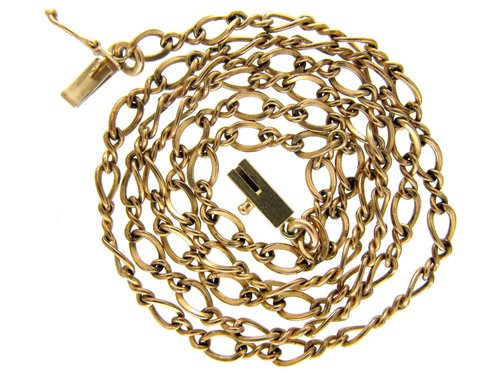
Box clasps are the most structurally varied antique clasp type and often the most decorative. A tongue-shaped fitting slots into a rectangular or square "box" housing and snaps closed with an audible click. Many incorporate a secondary safety catch — an additional bar or wire that prevents accidental opening if the tongue is knocked sideways.
Victorian box clasps frequently feature gemstone inlay, enamel work, or complex filigree. The clasp itself can be a piece of jewellery in its own right — some elaborate examples are set with diamonds or natural pearls and designed to be worn at the front of the neck rather than hidden at the back. This is especially true of multi-strand necklaces from the 1880s–1910s where a decorative box clasp functioned as a centrepiece.
Distinctive Characteristics
- Rectangular or square construction with press-release tongue
- Often features gemstone embellishments — diamonds, pearls, turquoise
- Intricate filigree common on Victorian and Edwardian pieces
- Multi-strand versions have multiple rings on one side — tells you the strand count
- Safety catch presence usually indicates post-1890 manufacture
Toggle Clasp
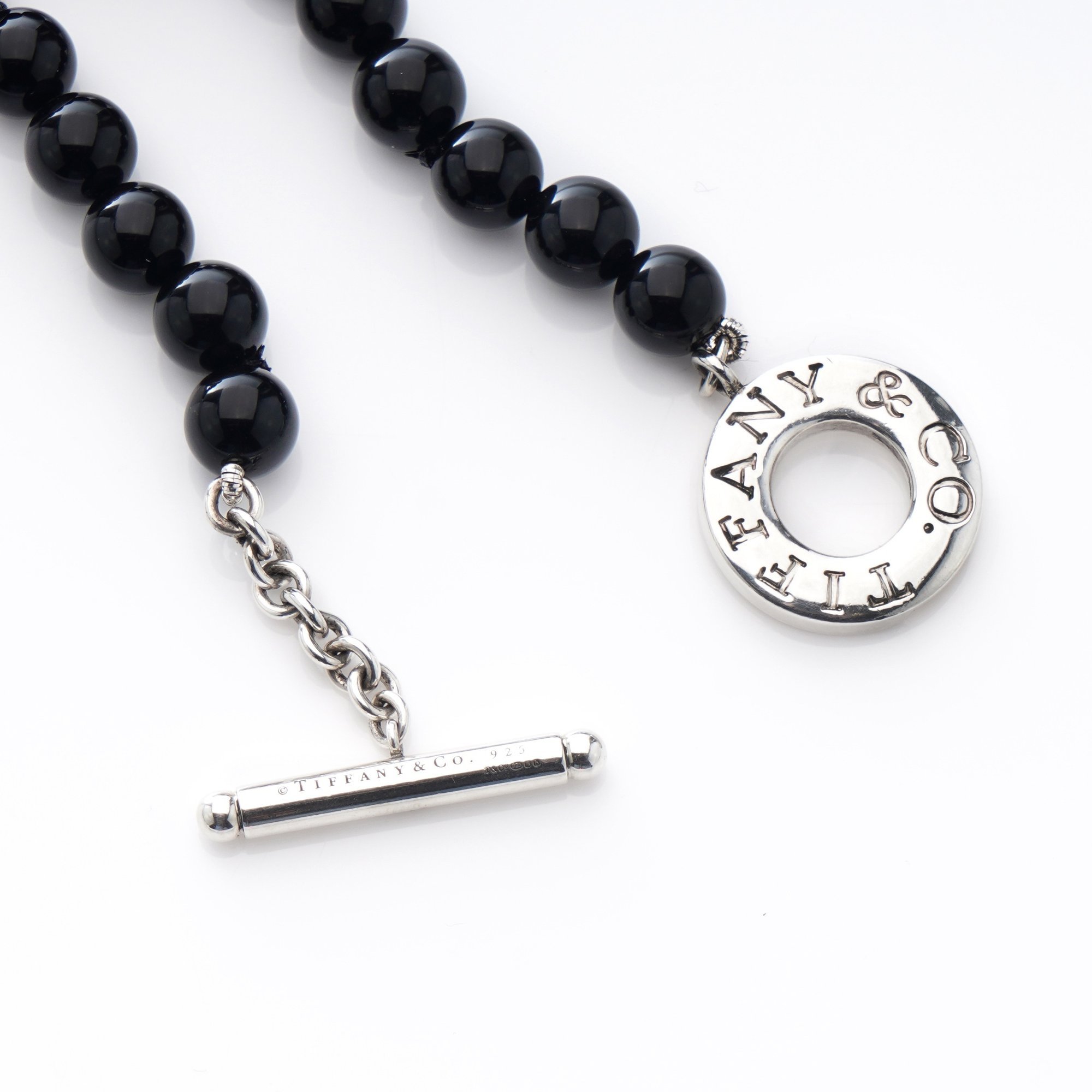
Toggle clasps — a T-bar that passes through a ring — became popular during the Arts & Crafts and Art Nouveau movements, when designers deliberately made functional elements decorative. The T-bar may be a plain cylinder, a sculpted animal form, a floral motif or a gemstone-set bar. The ring at the opposite end can be plain, twisted, or set with stones.
Toggle clasps from the 1890s–1920s are frequently signed by their makers. Tiffany & Co., Liberty & Co., and a number of Arts & Crafts guild jewellers used toggle forms prominently. A hallmark on the T-bar or ring of a toggle clasp from this period can make the difference between a piece worth £200 and one worth £2,000.
Notable Features
- T-bar slides through a circle or oval ring and lies flat to lock
- Often bears designer hallmarks or maker's stamps on the T-bar
- Art Nouveau examples may feature organic, foliate or figural T-bars
- Sized to the strand — a loop too large may indicate a later replacement
- Popular again from the 1980s onward in fashion jewellery — date by style
Have a Necklace You'd Like Valued?
Whether it's a Victorian pearl strand, an Art Nouveau lavalier or an Edwardian platinum necklace — our specialists value antique necklaces daily. Free, no obligation.
Magnetic Clasp
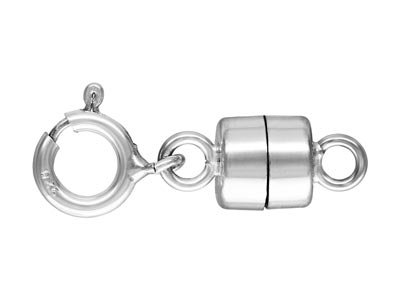
Magnetic clasps are a modern development using rare-earth (neodymium) magnets housed in precious metal shells. They offer genuine one-handed ease of use and are frequently retrofitted onto older pieces for wearers with arthritis or dexterity limitations. The near-invisible seam when closed is their great visual appeal.
If you find a magnetic clasp on an otherwise antique piece, the most likely explanation is a later replacement — which matters for value. An original period clasp in working order is always preferable from a collector's standpoint. Check the hallmarks on the clasp against those on the chain: if the clasp has no hallmark, or a very different date letter to the chain, it is almost certainly not original.
Modern Features
- Strong neodymium magnets — keep away from pacemakers and electronic devices
- One-handed operation — no threading or pushing required
- Often includes a secondary safety catch on quality examples
- Pre-1980 on an otherwise period piece = later replacement, affects value
- Seamless appearance when closed
Fish Hook Clasp
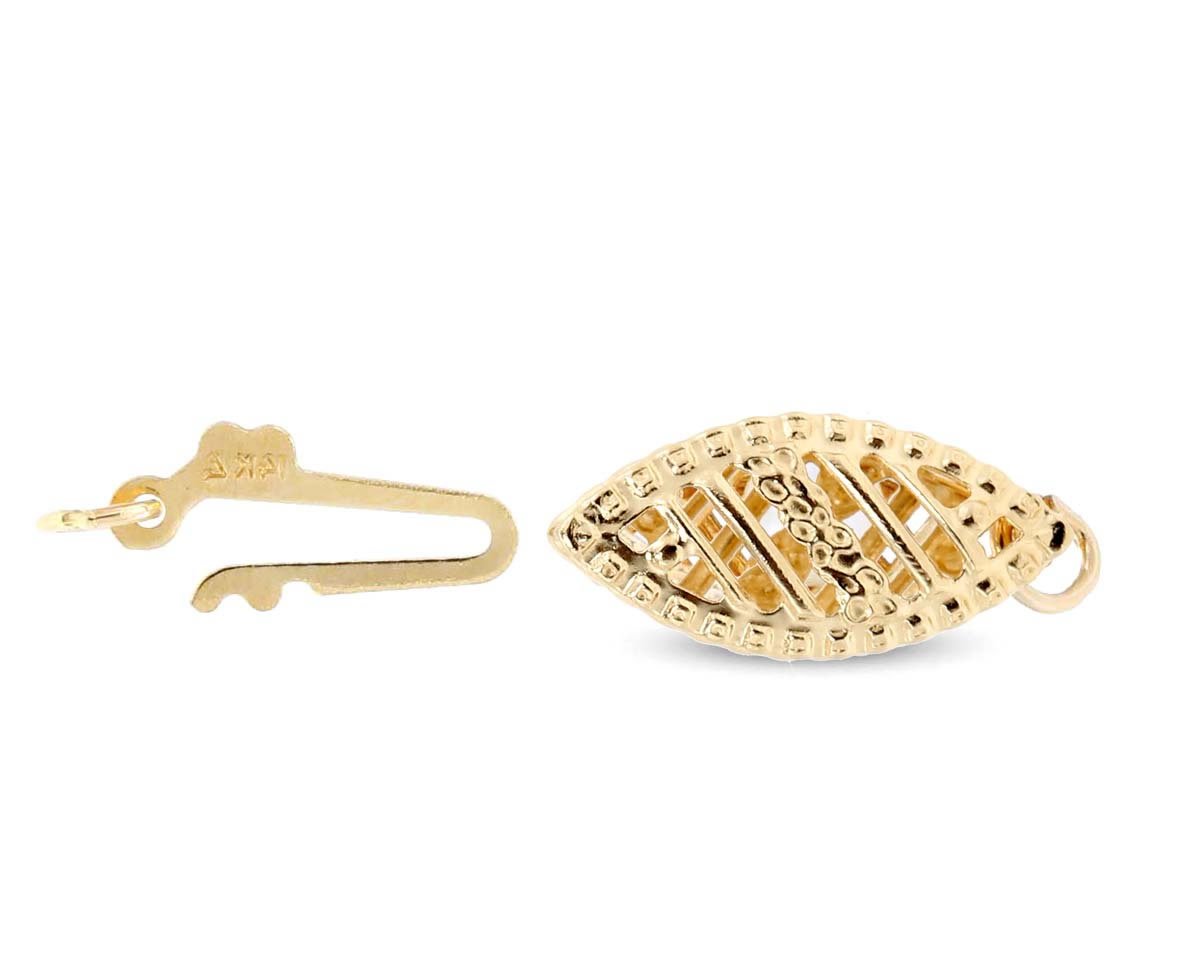
Fish hook clasps — a curved hook that passes through a ring, loop or eye — are among the oldest Western necklace fastening mechanisms and their simplicity is their enduring strength. On genuine Georgian pieces (pre-1837), fish hook clasps are always handmade: the hook shows hammer marks, slight asymmetry, and the gold has a distinctive slightly orange warmth that reflects the higher alloy gold of the period.
On Victorian pieces, fish hook clasps often feature decorative cannetille work, engraving, or a decorative "muff" around the hook mechanism. The hook itself on fine pieces may be set with stones. Ornate decorative fish hooks from the 1840s–1870s are a collector item in their own right.
Distinctive Elements
- Elongated curved hook — profile varies by period and maker
- Georgian examples: hand-forged, asymmetric, slightly orange 18–22ct gold
- Victorian: often with decorative cannetille, engraving or stone setting around hook
- Look for hallmark on the tag or ring end, not always on the hook itself
- Very ornate examples — c.1840–1870 — can themselves be valuable collector items
Spring Ring Clasp
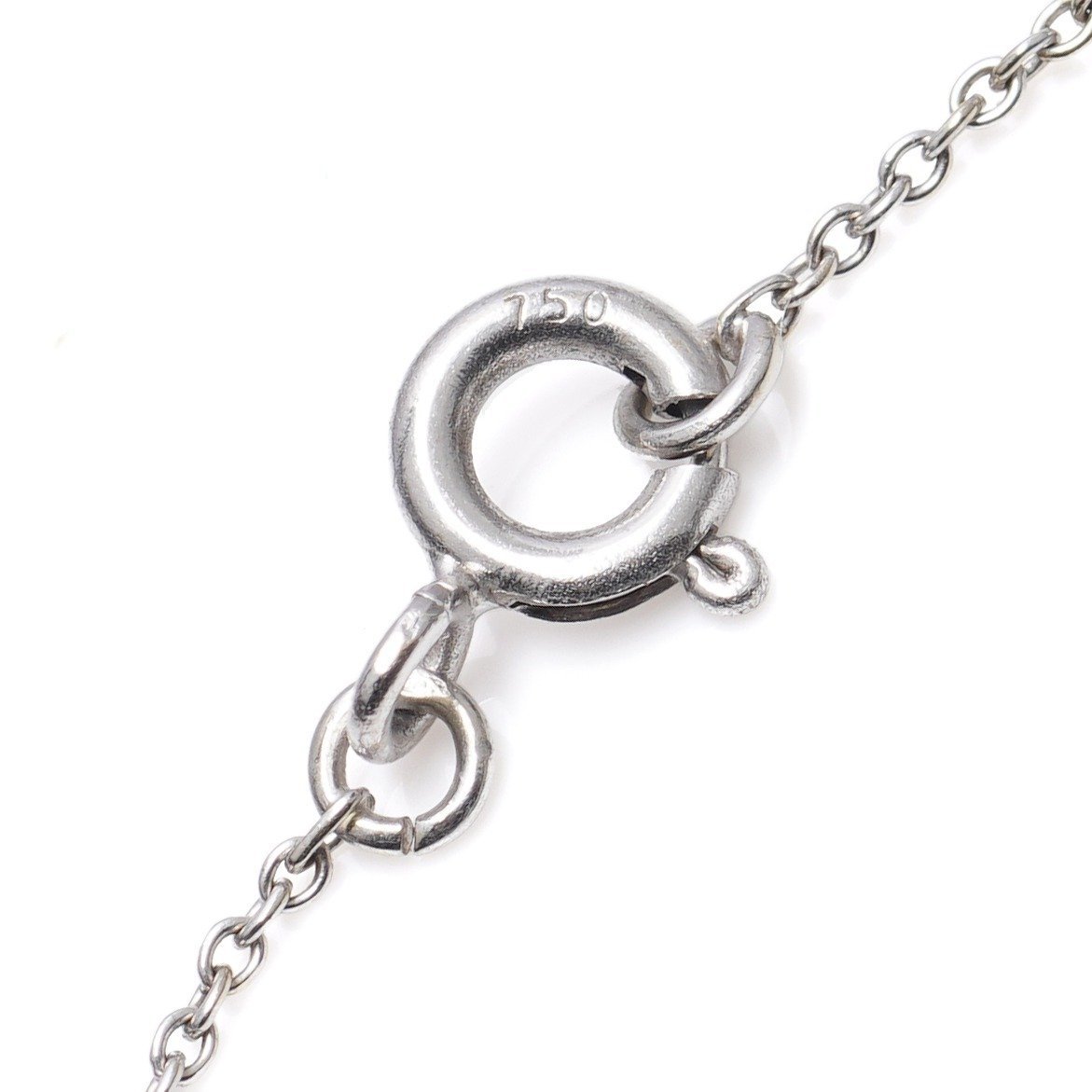
Spring ring clasps were a late Victorian / Edwardian innovation that used a spring-loaded plunger inside a circular ring to open and close a gap in the ring itself. They were mass-manufactured from around 1900 onwards and became the standard clasp for lighter necklaces and chains through the first half of the 20th century. The spring ring itself is often stamped with the metal purity (750 for 18ct, 375 for 9ct, 925 for sterling silver).
Early spring ring clasps (pre-1920) were made with heavier gauge metal and a stiffer spring action. Later examples (1930s–1950s) tend to be finer and lighter. If a spring ring clasp on an otherwise Edwardian chain is very fine and lightweight, check whether it is original or a replacement.
Key Characteristics
- Circular ring body with spring-loaded plunger on one side
- Often stamped with metal purity — 375, 585, 750, 925
- Pre-1920: heavier gauge, stiffer action; post-1920: finer, lighter
- Very common on Edwardian and Art Deco chain necklaces
- Easily replaced — check consistency with the chain's own hallmark date
Lobster Clasp
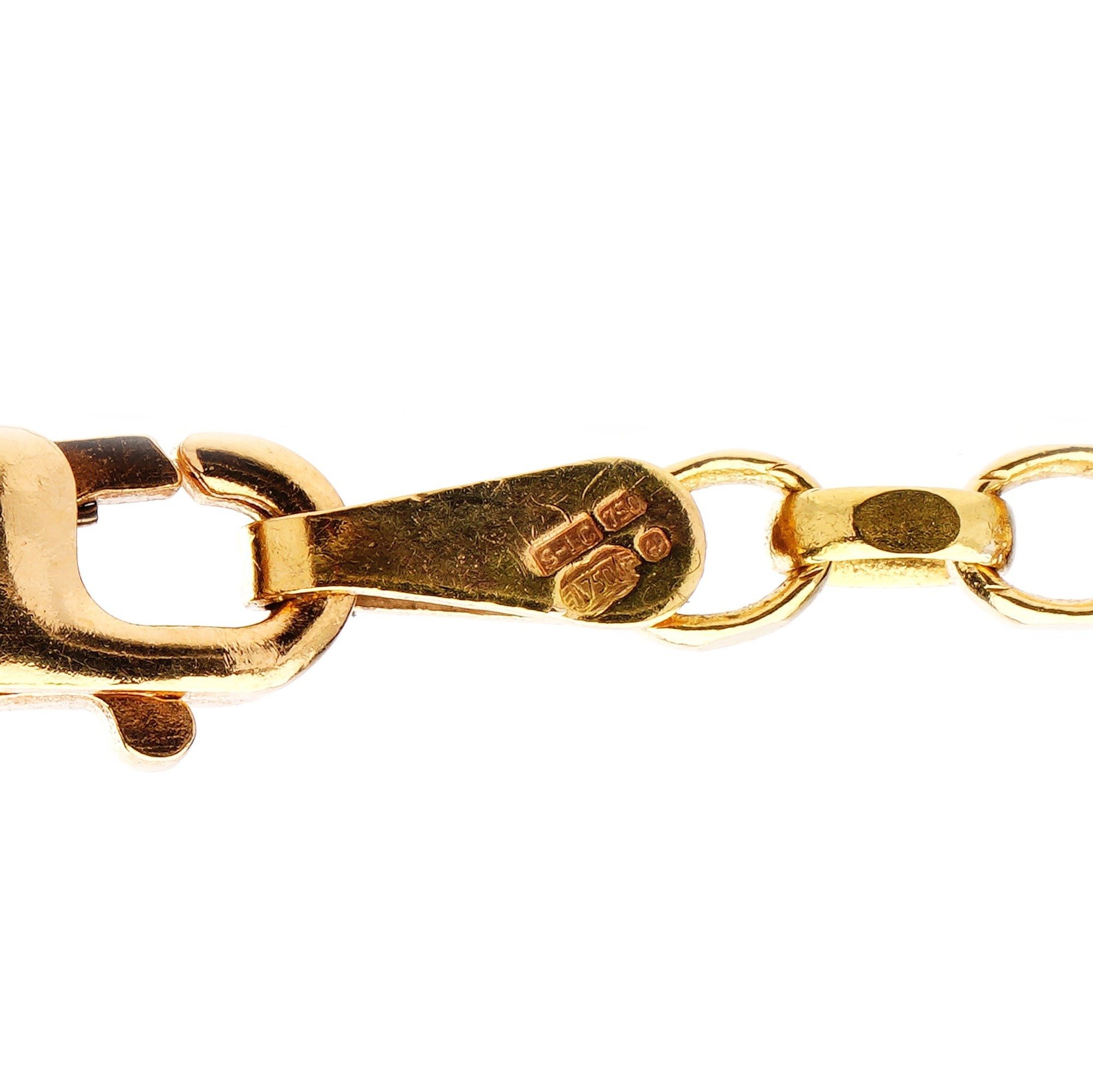
The lobster claw clasp — named for the asymmetric shape of the housing — became the dominant fastening for fine chain necklaces from the 1970s onward. A spring-loaded lever on one side opens a hinged jaw; release the lever and the jaw closes onto a jump ring, soldered ring, or the chain end itself. The mechanism is more secure than a spring ring and easier to operate one-handed.
Lobster clasps on otherwise antique pieces almost always indicate a later replacement. This is fine for everyday wear but matters for auction value. Premium examples by luxury houses (Cartier, Bulgari, Van Cleef & Arpels) are stamped with maker's marks and can be identified as original to the piece if the stamps match.
Notable Attributes
- Asymmetric claw body with spring-loaded lever on the jaw
- Available in micro (fine chains) to large (heavy belcher links)
- Designer pieces bear maker's stamp on the barrel — worth checking
- On antique pieces: near-certain later replacement — note for valuation
- The jump ring the clasp attaches to is often where the hallmark lives
Selling a Victorian or Edwardian necklace? The clasp type, metal purity and any gemstones all affect the price we can offer. Bring it in or send photos for a free same-day quote.
Get a Quote →Hook and Eye Clasp
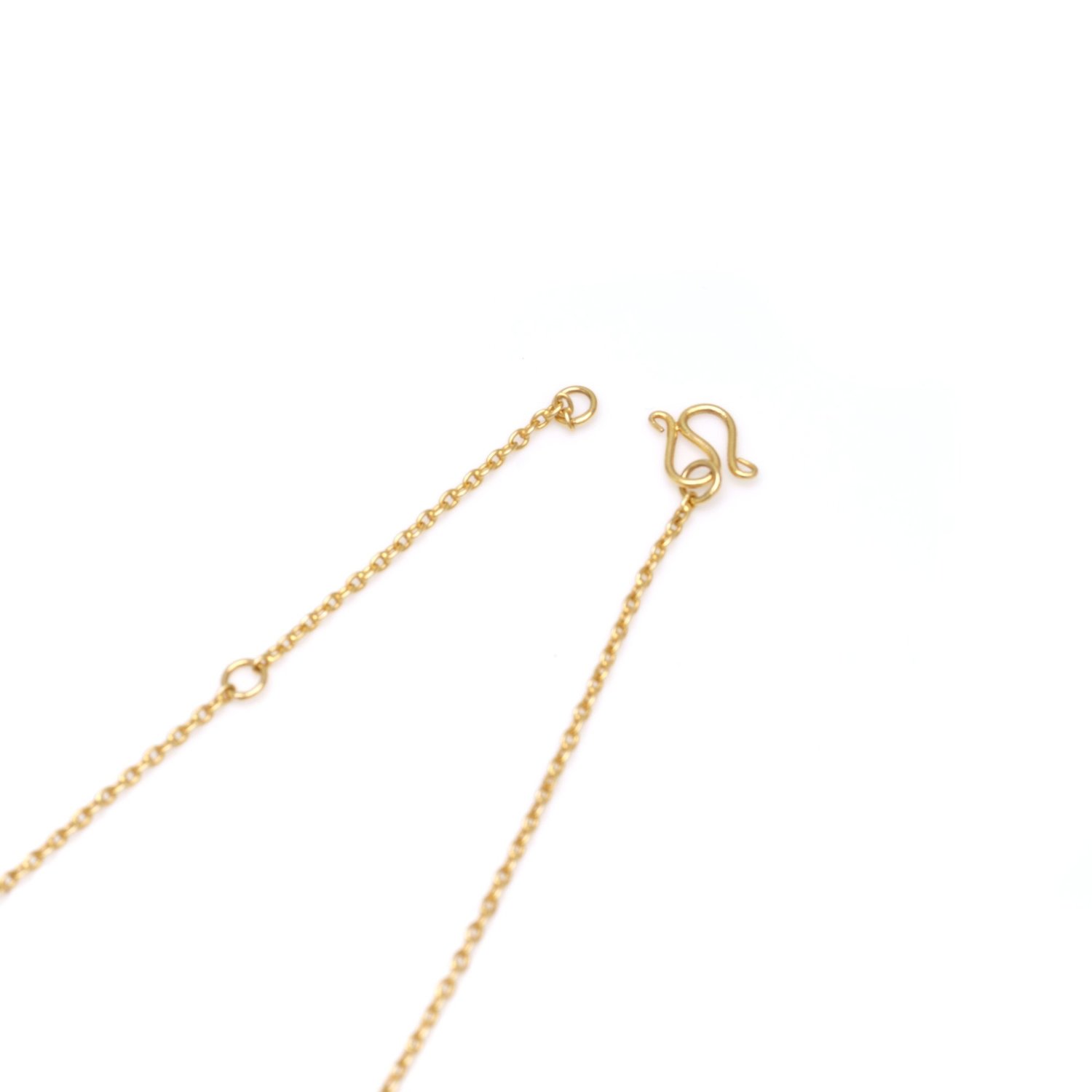
Hook and eye clasps — a simple S-shaped hook engaging a round or oval eye — are the oldest and most minimal Western necklace fastening. They appear on Georgian mourning jewellery, hair-work chains, early gold trace chains, and cut-steel jewellery. Their simplicity makes them hard to date precisely, but on genuine Georgian pieces the hook is always hand-formed: the S-curve shows slight irregularity and the wire gauge is consistent with the chain itself.
Hook and eye clasps were also used on very fine, lightweight Edwardian pieces where a more substantial mechanism would have disturbed the drape of the chain. If the hook is platinum-tipped or set with a tiny diamond, the piece is almost certainly Edwardian rather than Georgian.
Design Elements
- Simple S-hook engaging a soldered ring or eye
- Georgian: hand-formed, slight asymmetry, no purity stamp on clasp itself
- Very fine examples: Edwardian, platinum or white gold, sometimes stone-tipped
- Minimal visual impact — check the chain itself for hallmarks
- Reproduction alert: very common on reproduction Georgian pieces — check chain links
Snap Clasp
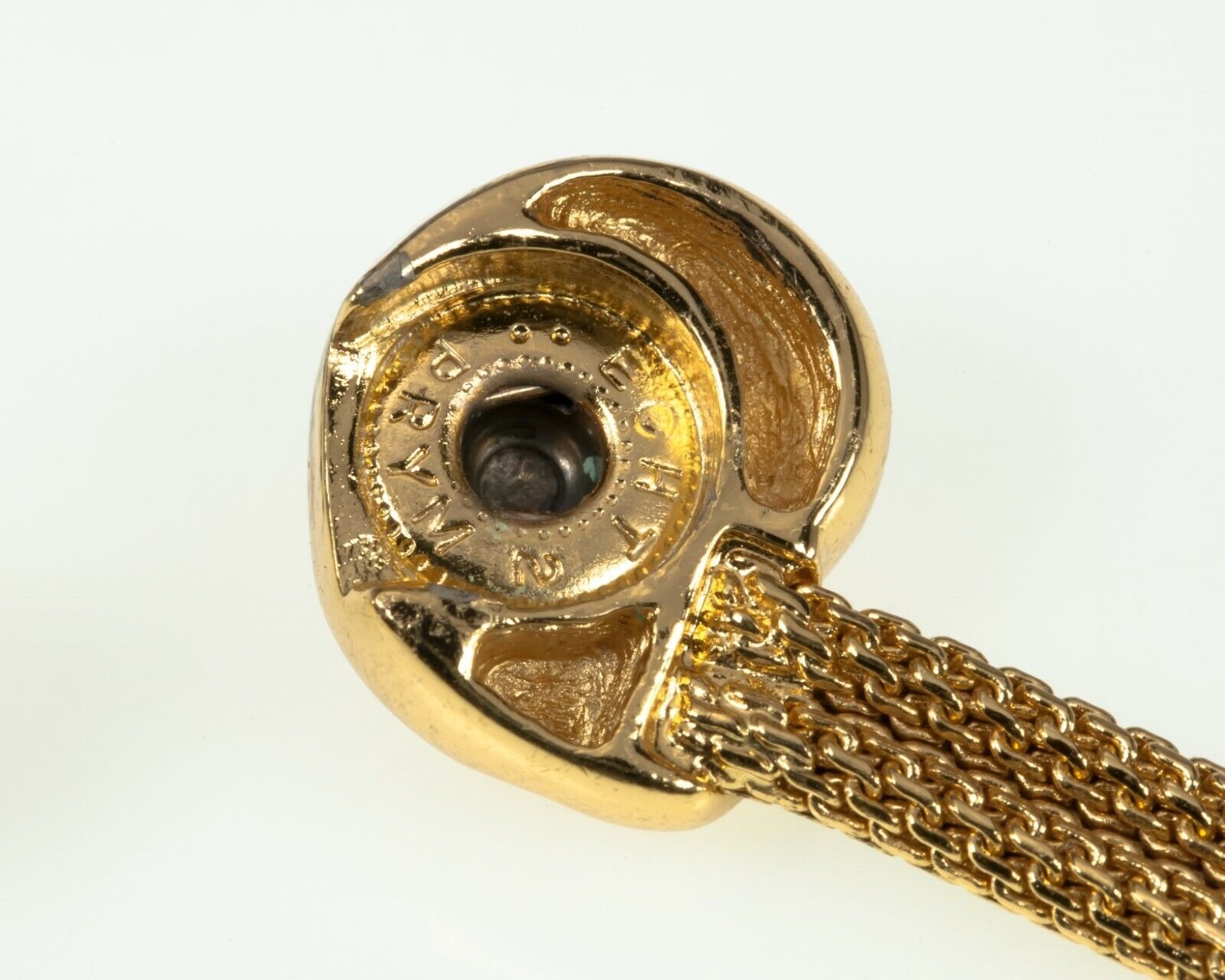
Snap clasps use a push-button mechanism: press a small lever or button and the clasp springs open; release it and it snaps firmly closed. They were widely used on pearl necklaces, bead strands and chain necklaces from the Edwardian period through to the 1950s. The push-button is often decorative — faceted like a gem, engraved with a pattern, or set with a cabochon stone.
High-quality snap clasps from the Art Deco period are particularly desirable. Platinum snap clasps with pavé diamond or geometric enamel decoration are collector items. The audible click when closed is a sign of a well-maintained mechanism — a worn or silent snap clasp may need re-springing before sale.
Identifying Features
- Push-button or lever on one face — press to open, release to snap closed
- Often decorated — faceted, engraved, stone-set or enamelled button
- Art Deco platinum examples with diamonds: high collector value
- The spring mechanism fatigues over time — test for firm closure before selling
- Hallmark usually on the flat body of the clasp housing
Free Antique Necklace Valuation
Identified your clasp type? The next step is knowing what your full piece is worth. Our specialists assess metal, gemstones, period, maker and condition — and give you an honest market value, free of charge.
FAQ — Valuation & Selling
Get Your Free Necklace Valuation
Submit photos and details of your piece — our team will respond with a no-obligation valuation, usually within one business day.
Do you want to sell your jewellery?
Get a professional evaluation of your antique or vintage pieces.
Get Your Free EvaluationFrequently Asked Questions
How can I determine the age of an antique or vintage necklace based on its clasp?
The clasp type can provide valuable clues about the age of an antique or vintage necklace. By familiarizing yourself with the historical timeline of different clasp types and their prevalence in specific eras, you can make an educated estimation of the necklace's age.
Are certain clasp types more valuable than others in antique and vintage necklaces?
The value of an antique or vintage necklace depends on various factors, including the overall design, materials used, and rarity of the clasp type. While some collectors may prioritize specific clasp types, it is important to consider the necklace as a whole, appreciating its aesthetics and historical significance.
Can I replace a missing or damaged clasp on an antique or vintage necklace?
It is possible to replace a missing or damaged clasp on an antique or vintage necklace; however, it is crucial to consider the necklace's historical integrity. If the original clasp contributes significantly to the necklace's value or design, consulting a professional jeweler experienced in antique and vintage jewelry restoration is recommended.
How can I differentiate between an authentic antique or vintage clasp and a reproduction?
Authentic antique and vintage clasps often exhibit signs of age, such as wear, patina, or unique characteristics associated with the era they originate from. Studying design details, and construction techniques, and using reputable reference materials can assist in identifying genuine antique and vintage clasps.
Are there reliable resources or books available to help with antique and vintage necklace clasp identification?
Certainly! Several reputable resources and books offer valuable insights into antique and vintage necklace clasps. Some notable titles include "Antique and Vintage Jewelry: A Guide to Identifying, Dating, and Valuing" by Leigh Leshner and "Costume Jewelry Identification and Price Guide" by Pamela Y. Wiggins.
Can antique and vintage necklace clasps be repaired or restored?
Yes, professional jewelers experienced in the restoration of antique and vintage jewelry can repair or restore clasps. They can clean, recondition, or replace components while ensuring the preservation of the necklace's authenticity and historical value.