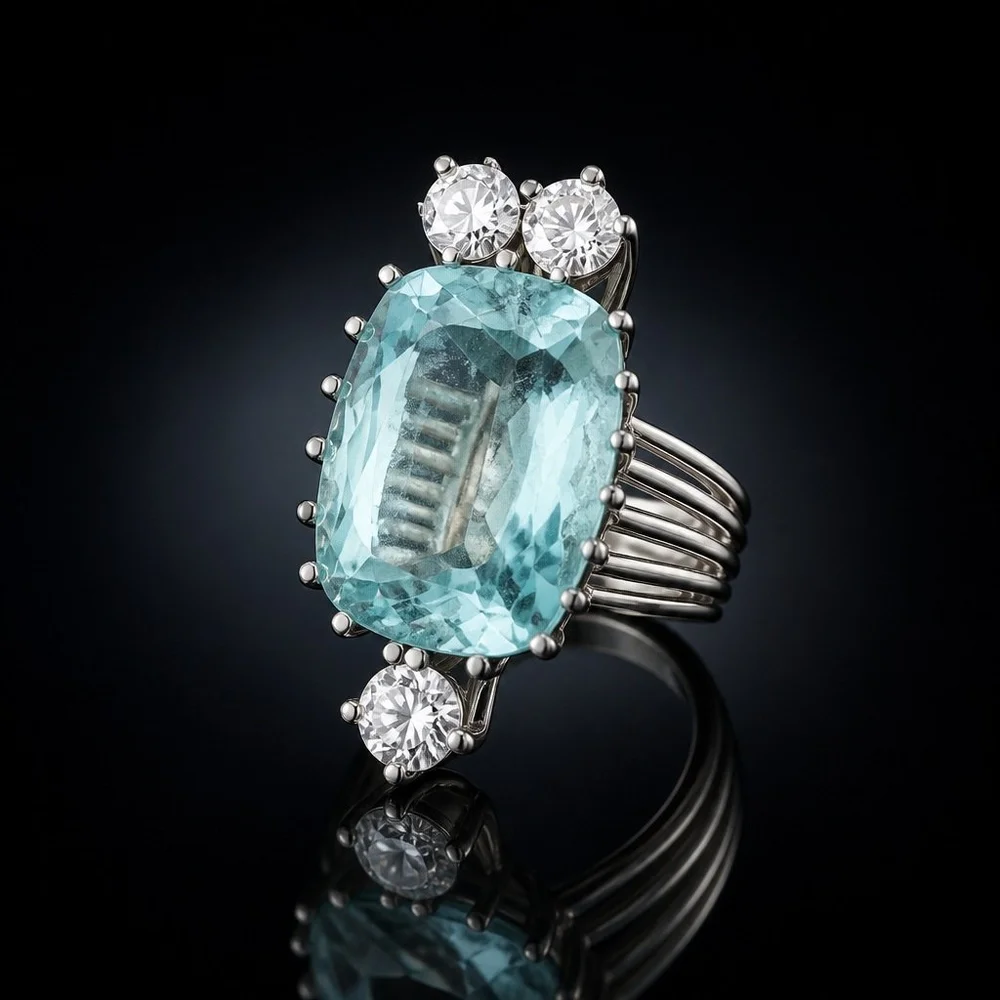
What is aquamarine?
Aquamarine is the blue to greenish-blue variety of beryl, the same mineral species as emerald. Its colour comes from traces of iron: one form of iron gives blue, another gives yellow, and the balance decides the shade. The name comes from the Latin for sea water. It is the birthstone for March.
Beryl is 7.5 to 8 on the Mohs scale, so aquamarine resists scratching well. It grows in large, clean crystals, which is why aquamarines of 10 ct and more appear regularly in cocktail rings and pendants.
Colour, clarity and cut
| Factor | What to look for |
|---|---|
| Colour | A strong, pure blue to slightly greenish blue; deeper colour is valued most, while very pale stones look watery |
| Clarity | Usually eye-clean; visible inclusions lower value, and included material is often cut as cabochons |
| Cut | Step or emerald cuts show the colour evenly; ovals, pears and cushions add brightness |
| Size | Colour deepens with size, so large stones show more blue than small ones from the same rough |
Santa Maria is a trade name for an intense blue, taken from a Brazilian mine; it describes a colour rather than a guaranteed origin. Browse aquamarine rings and aquamarine jewellery.
Heat treatment and imitations
Most aquamarine is mined as a blue-green crystal. Heating at moderate temperatures shifts the iron towards blue, and nearly all aquamarine on the market today has been heated this way. The change is permanent and cannot be detected by current tests, so it is accepted in the trade (International Gem Society). Irradiated blue beryl, whose colour fades in light, is not accepted.
Blue topaz, synthetic spinel and glass have all been used to imitate aquamarine. A gemmologist separates them by refractive index and density: topaz, for example, is much denser than beryl. For an important stone, ask for a laboratory report.
Vintage and antique aquamarine jewellery
Large aquamarines appear often in Art Deco platinum jewellery and in the gold cocktail rings of the mid 20th century. Vintage pieces of the 1960s and 1970s often pair an aquamarine with a cluster or halo of diamonds in white or yellow gold.
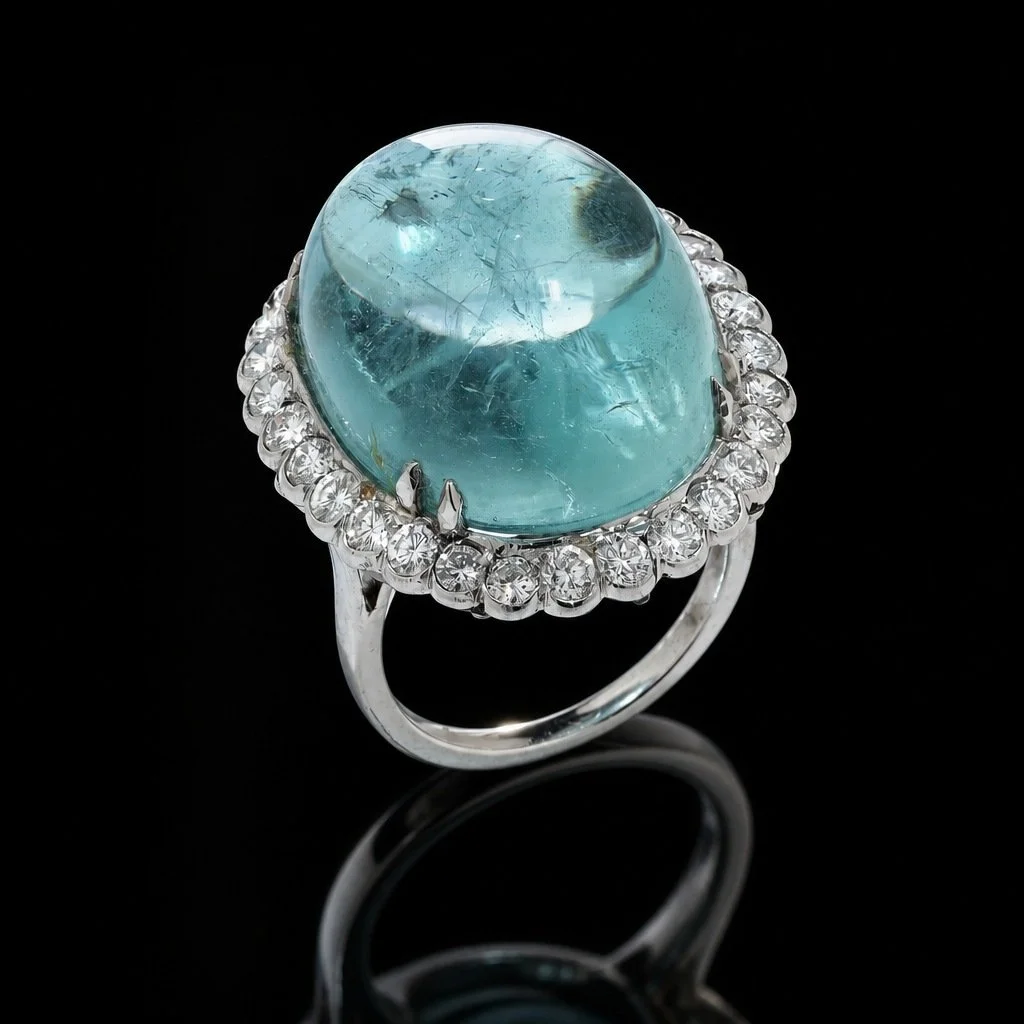
Cabochon and step cut
Our platinum cabochon aquamarine ring shows the soft glow of a domed stone; the 10 ct aquamarine cocktail ring shows a large faceted stone.
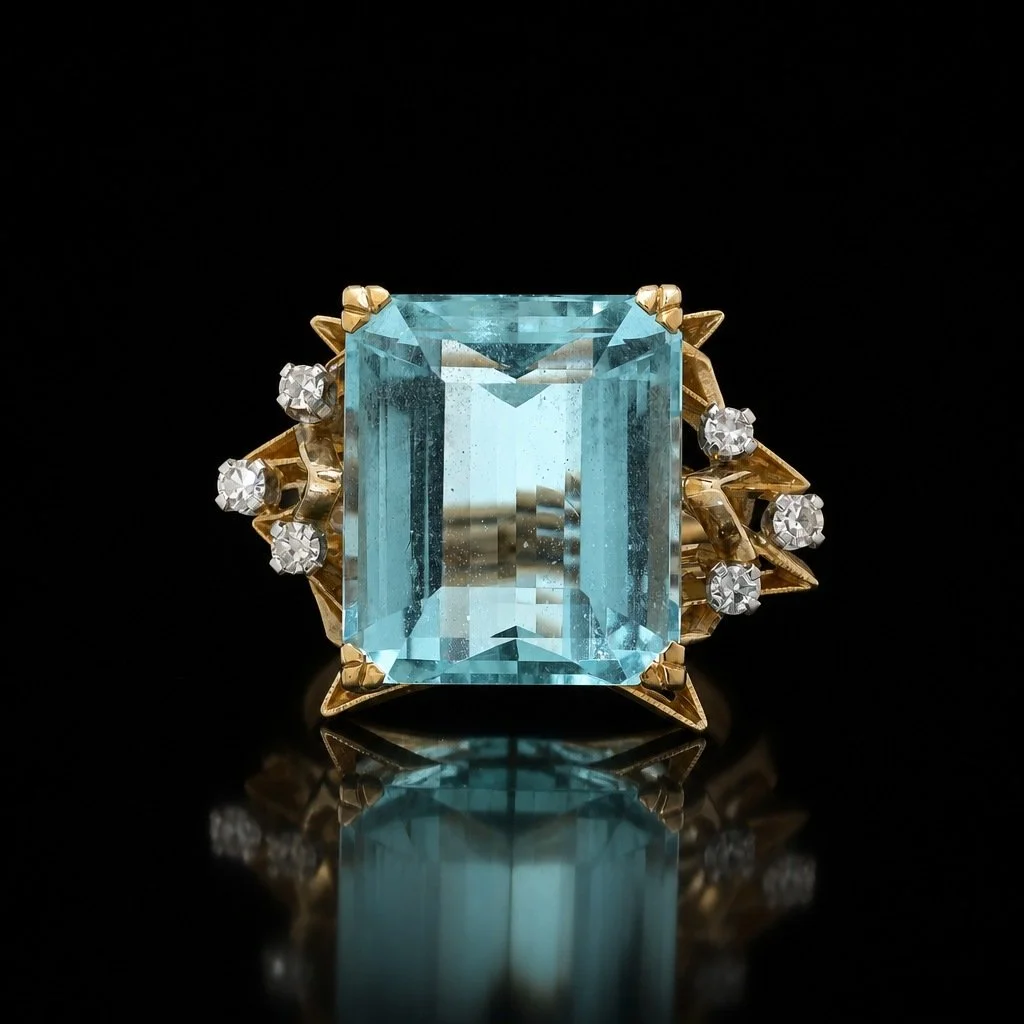
1970s clusters
See the 1970s 18KT gold aquamarine and diamond ring, the 1970s aquamarine cluster ring in 18KT white gold and the 3.00 ct aquamarine cluster ring.
Aquamarine jewellery in stock
Shop all 6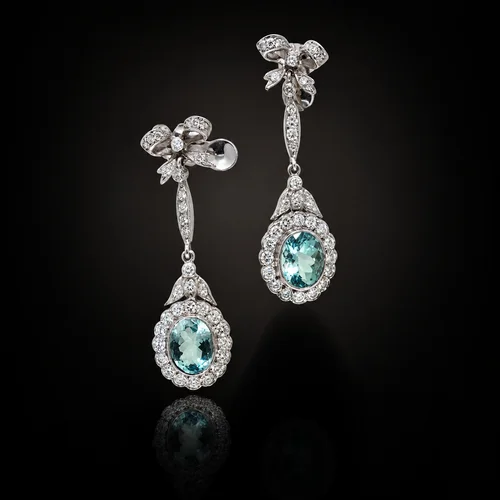
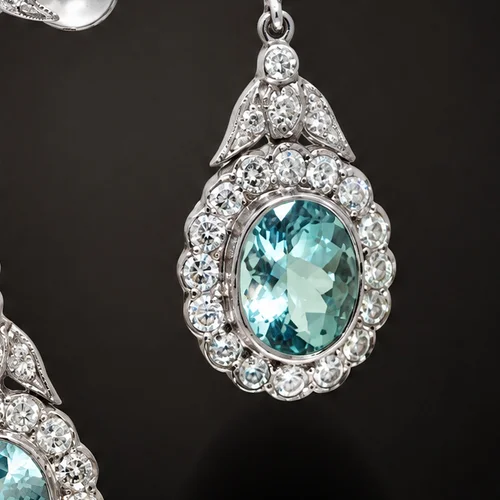 18KT White Gold Aquamarine and Diamond Bow Drop Earrings£5,160
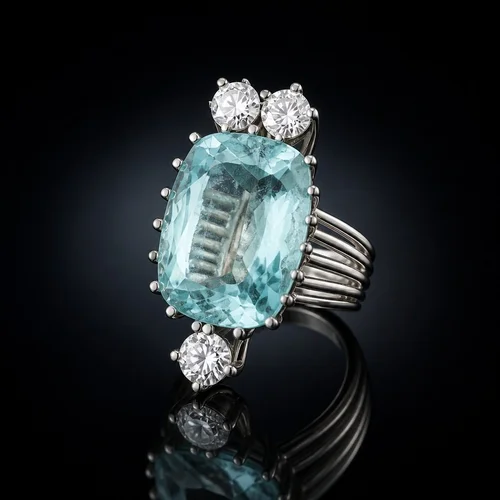
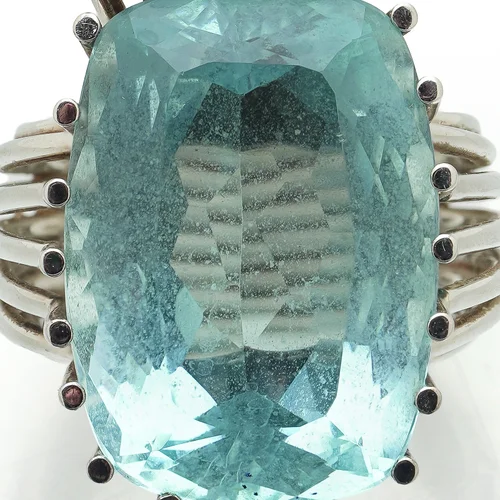 14KT White Gold Aquamarine and Diamond Cocktail Ring, 10 ct Aquamarine£3,450
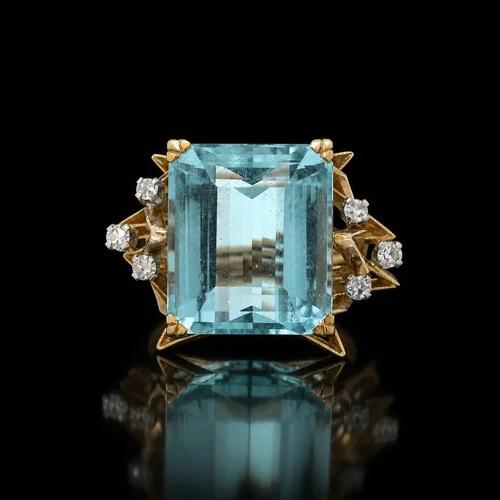
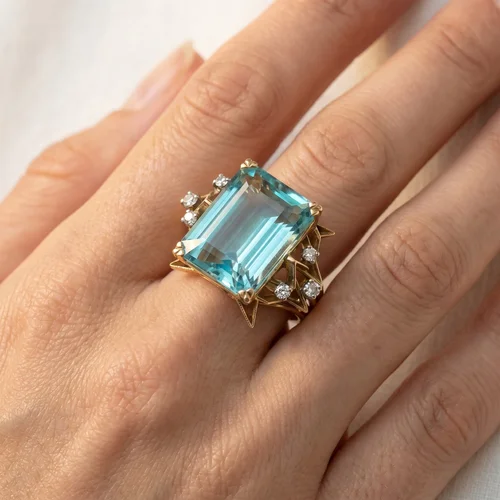 Vintage 1970s 18KT Gold Aquamarine and Diamond Ring£6,985
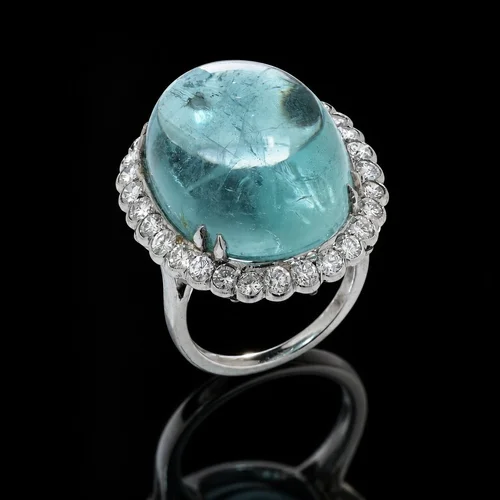
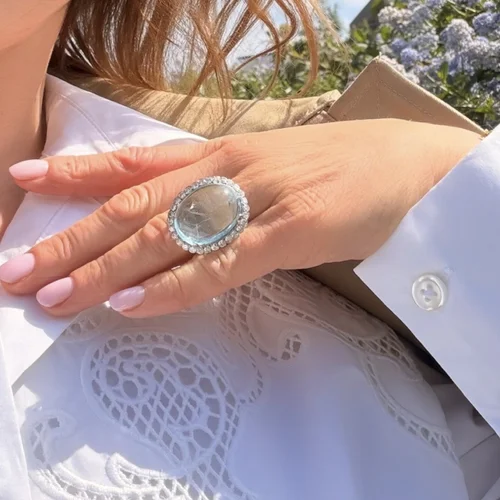 Vintage Platinum Cabochon Aquamarine and Diamond Ring£7,995
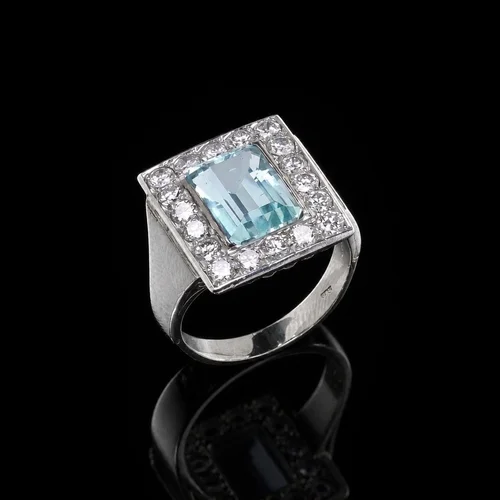
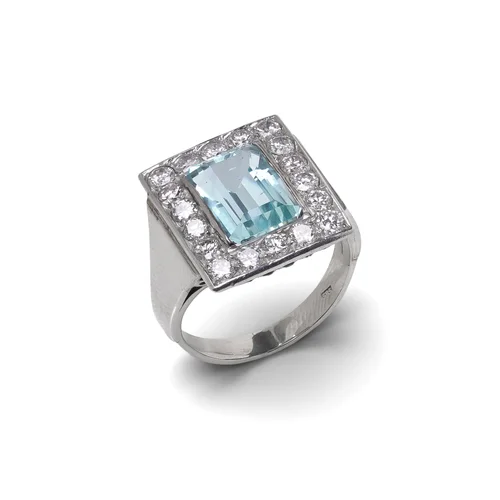 Vintage Aquamarine and Diamond Cluster Ring, 14KT White Gold, 3.00 ct£4,200
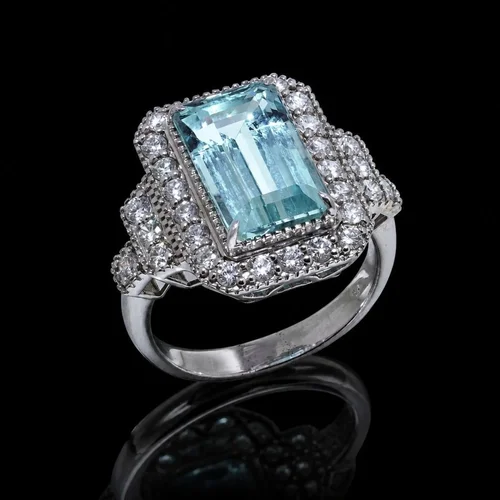
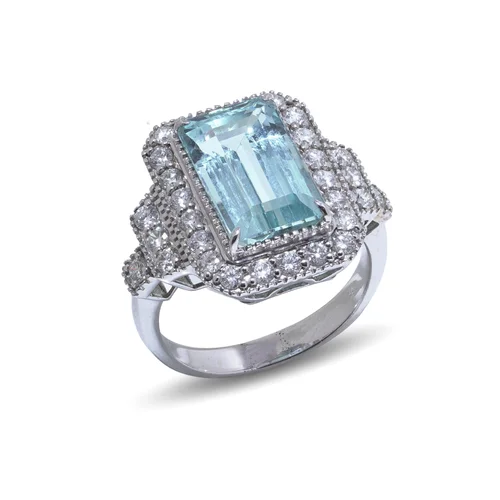 Vintage Aquamarine and Diamond Cluster Ring, 18KT White Gold, 1970s£3,950
Care and selling
Aquamarine is hard, but its corners and edges can chip if knocked, so a protective setting helps on a ring worn every day. Clean it with warm soapy water and a soft brush, and store it apart from diamonds, which can scratch it.
Selling aquamarine jewellery? Send photographs for a free valuation. Post it to us by Royal Mail Special Delivery or book a free insured FedEx collection, or bring it to an appointment in Mayfair, London, or Braintree, Essex. You are paid the same day after inspection, by bank transfer.