Engagement Ring Guides
Diamond Shapes: A Guide for Engagement Rings
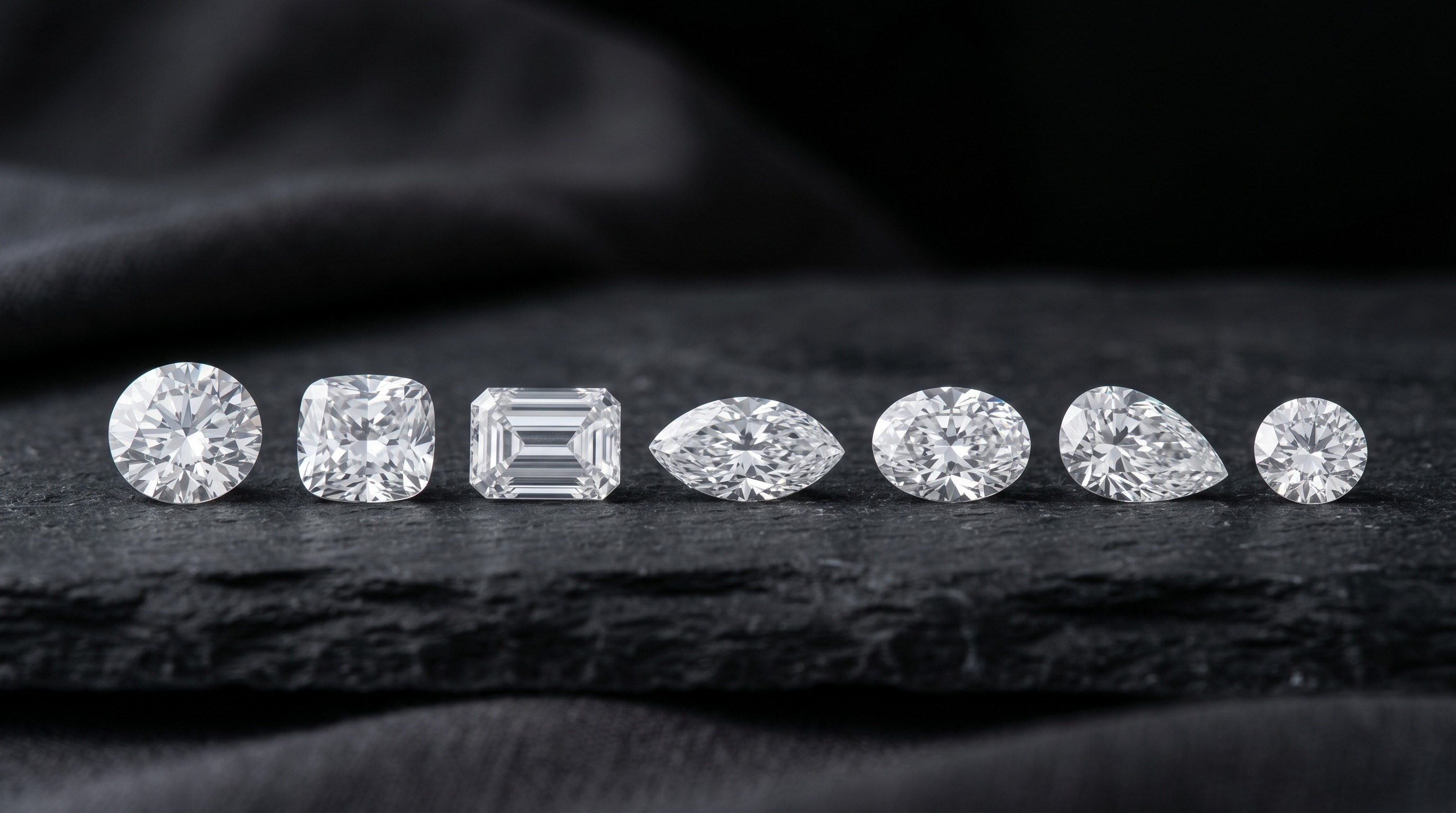
A diamond's shape sets the character of the whole ring. Here are the main shapes, modern and antique, and what each one offers.
What is an emerald cut?
An emerald cut is a rectangular step cut with cut-off corners and long, parallel facets that give broad flashes of light rather than sparkle. It takes its name from emeralds, whose corners it protects, but it is used for diamonds, aquamarine, tourmaline, garnet and many other gems. Its open table shows clarity and colour clearly.
Round brilliant
The most popular and most sparkling shape. In antique rings, its forerunners are the old European cut and old mine cut, which glow more softly.
Cushion & old cuts
The cushion cut: a soft-cornered square, descends from antique cuts and suits vintage-style rings. Romantic and full of character.
Emerald & asscher (step cuts)
The emerald cut (rectangular) and asscher cut (square) are step cuts with broad, elegant flashes: hallmarks of Art Deco rings.
Marquise, oval & pear
The marquise (pointed oval), oval and pear shapes lengthen the finger and look larger for their weight: elegant, distinctive choices.
Which shape should you choose?
Round and cushion are classic; emerald and asscher are sophisticated; marquise, oval and pear are striking. Match the shape to your partner's taste and browse diamond engagement rings.
Shop Diamond Engagement Rings
Antique and vintage diamond rings in every shape and cut.
Frequently asked questions
The round brilliant is the most popular and sparkling. Cushion, oval and emerald cuts are also very popular.
Elongated shapes (marquise, oval and pear) look larger for their carat weight and lengthen the finger.
Old mine, old European, cushion and rose cuts suit antique and vintage rings, giving a softer, characterful glow.
A princess cut is a square or slightly rectangular brilliant cut with pointed corners and many facets arranged to give strong sparkle, developed around 1980. It keeps more of the rough crystal than a round brilliant. Its corners are vulnerable, so they are protected by claws. It is also cut in aquamarine and other gems.
An Asscher cut is a square step cut with cut corners, a high crown and a small table, giving an octagonal look and a pattern of concentric squares. Joseph Asscher of Amsterdam designed it in 1902, and it was popular in Art Deco jewellery. It is used in eternity bands and for sapphires as well as diamonds.
A cushion cut is a square or rectangular shape with rounded corners and curved sides, like a pillow. It descends from the old mine cut of the 18th and 19th centuries, which had a small table, high crown and open culet. Modern cushions have more facets. Amethyst, garnet and aquamarine are often cushion cut.
A rose cut has a flat base and a domed top covered in triangular facets, like the petals of an opening rose, giving a soft, candlelit glow rather than sparkle. Rose cuts were used from the 16th century and fill much Georgian and Victorian jewellery. They are often set with closed or open backs.
For the same carat weight and quality, round brilliants usually cost the most, because cutting a round from rough crystal wastes more of the stone and demand is highest. Fancy shapes such as princess, cushion and emerald cuts keep more of the rough. Old cuts are judged on their own merits and period.
Yes. Diamond is the hardest natural material, 10 on the Mohs scale, so it scratches glass easily, and diamond tipped tools are used to cut glass. Scratching glass does not prove a stone is diamond, though: sapphire, moissanite, cubic zirconia and quartz scratch glass too, so it is not a reliable test.
A marquise cut is a long, boat-shaped brilliant with pointed ends, which makes a diamond look larger for its weight and the finger look slimmer. It was popular in 18th century France, in Victorian cluster rings and again in the 1970s. The points are fragile and are usually protected by V-shaped claws.
A baguette is a small, narrow rectangular step cut, named after the French loaf. Baguettes became popular in Art Deco jewellery of the 1920s and 1930s, set in lines and geometric patterns, and are used as side stones beside a centre diamond. Tapered baguettes narrow at one end.
An old mine cut is cushion shaped, with a high crown, small table and large open culet, cut by hand in the 18th and 19th centuries. The old European cut, from about the 1870s to the 1930s, is round with similar proportions. The modern round brilliant has a larger table, a pointed culet and calculated angles.
The emerald cut is a rectangular step cut with cut corners. It was developed for emerald because the cut corners protect a brittle crystal, and it shows the colour of clear stones well. Aquamarine, tourmaline, garnet, topaz, peridot, morganite, ruby and sapphire are also cut this way, as are black onyx panels.
Thinking of selling? Find out how to sell a diamond ring with a free valuation from photographs.